
Recent from talks
History of Icelandic
Knowledge base stats:
Talk channels stats:
Members stats:
History of Icelandic
The history of the Icelandic language began in the 9th century when the settlement of Iceland, mostly by Norwegians, brought a dialect of Old Norse to the island.
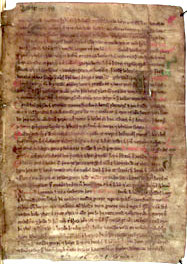
The oldest preserved texts in Icelandic were written around 1100, the oldest single text being Íslendingabók followed by Landnámabók. Some of the poetry, such as the Eddas, that were written down a little later nevertheless contain older language because poetic language was kept in memory unchanged over sometimes a remarkably long time. The most famous of these, written in Iceland from the 12th century onward, are without doubt the Icelandic Sagas, the historical writings of Snorri Sturluson, and the Poetic Edda.
The language of the era of the sagas is called Old Icelandic, a dialect of (Western) Old Norse, the common Scandinavian language of the Viking Age. The Danish rule of Iceland from 1380 to 1918 had little effect on the evolution of Icelandic, which remained in daily use among the general population: Danish was not used for official communications.
Though Icelandic is considered more archaic than other living Germanic languages, especially in its morphology and other grammatical aspects, as well as in its lexicon, the language has nevertheless been subject to some important changes. The pronunciation, for instance, changed considerably between the 12th and 16th centuries, especially that of vowels.
Nevertheless, written Icelandic has changed relatively little since the 13th century. As a result of this, and of the similarity between the modern and ancient grammar, modern speakers can still understand, more or less, the original sagas and Eddas that were written some 800 years ago. This ability is sometimes mildly overstated by Icelanders themselves, most of whom actually read the Sagas with updated modern spelling and footnotes—though otherwise intact.
Most of the original settlers of Iceland came from Western Norway, bringing with them the western dialect of Old Norse. Due to its geographic isolation and consequent lack of influence from other stratum languages, the development of the language was entirely independent. However, it would be wrong to suggest that the language that was brought to Iceland was completely homogeneous; even though most of the settlers were from western Norway, there were a number from other parts of the country and also from other Scandinavian countries. Therefore, the language that grew up in Iceland was influenced by all of the Norwegian dialects of the time. The close intermingling of the people of the island, especially at the Alþingi (the general meeting that took place at the beginning of each summer at Þingvellir) contributed to even out the differences between the various dialects: traits common to all dialects were reinforced, while the most marked differences gradually disappeared. Although it is not known exactly how the language developed, modern Icelandic has evolved less than other Scandinavian languages. The unique development of Icelandic, which eventually resulted in its complete separation from Norwegian and the other Scandinavian languages, began with the landnám or first settlement. Icelandic has lost all trace of the tonal nature of early Scandinavian languages, traces of which are noticeable in modern Norwegian and especially Swedish. Research has been carried out to identify certain traits of the language, for example the so-called preaspiration, but the results were inconclusive. Icelandic shares such characteristics with two other languages: Faroese and the Swedish spoken in Finland.
The period from 550 to 1050 is called the Scandinavian or "Common Nordic" period. During this time, a notably unified common language was spoken throughout Scandinavia. The key position of Denmark as the focal point of the whole area meant that the language was often simply called "Danish" (dǫnsk tunga). Even though the first hints of individual future developments were already identifiable in different parts of the vast region, there were no problems with mutual intelligibility.
With regard to the dǫnsk tunga spoken in Iceland, there are no written documents from this period. Ancient Scandinavian runes were certainly widely known but were never used to write on papyrus (except Codex Runicus) or skin. Few runic inscriptions have been found and nearly all are dated after 1200.
Hub AI
History of Icelandic AI simulator
(@History of Icelandic_simulator)
History of Icelandic
The history of the Icelandic language began in the 9th century when the settlement of Iceland, mostly by Norwegians, brought a dialect of Old Norse to the island.
The oldest preserved texts in Icelandic were written around 1100, the oldest single text being Íslendingabók followed by Landnámabók. Some of the poetry, such as the Eddas, that were written down a little later nevertheless contain older language because poetic language was kept in memory unchanged over sometimes a remarkably long time. The most famous of these, written in Iceland from the 12th century onward, are without doubt the Icelandic Sagas, the historical writings of Snorri Sturluson, and the Poetic Edda.
The language of the era of the sagas is called Old Icelandic, a dialect of (Western) Old Norse, the common Scandinavian language of the Viking Age. The Danish rule of Iceland from 1380 to 1918 had little effect on the evolution of Icelandic, which remained in daily use among the general population: Danish was not used for official communications.
Though Icelandic is considered more archaic than other living Germanic languages, especially in its morphology and other grammatical aspects, as well as in its lexicon, the language has nevertheless been subject to some important changes. The pronunciation, for instance, changed considerably between the 12th and 16th centuries, especially that of vowels.
Nevertheless, written Icelandic has changed relatively little since the 13th century. As a result of this, and of the similarity between the modern and ancient grammar, modern speakers can still understand, more or less, the original sagas and Eddas that were written some 800 years ago. This ability is sometimes mildly overstated by Icelanders themselves, most of whom actually read the Sagas with updated modern spelling and footnotes—though otherwise intact.
Most of the original settlers of Iceland came from Western Norway, bringing with them the western dialect of Old Norse. Due to its geographic isolation and consequent lack of influence from other stratum languages, the development of the language was entirely independent. However, it would be wrong to suggest that the language that was brought to Iceland was completely homogeneous; even though most of the settlers were from western Norway, there were a number from other parts of the country and also from other Scandinavian countries. Therefore, the language that grew up in Iceland was influenced by all of the Norwegian dialects of the time. The close intermingling of the people of the island, especially at the Alþingi (the general meeting that took place at the beginning of each summer at Þingvellir) contributed to even out the differences between the various dialects: traits common to all dialects were reinforced, while the most marked differences gradually disappeared. Although it is not known exactly how the language developed, modern Icelandic has evolved less than other Scandinavian languages. The unique development of Icelandic, which eventually resulted in its complete separation from Norwegian and the other Scandinavian languages, began with the landnám or first settlement. Icelandic has lost all trace of the tonal nature of early Scandinavian languages, traces of which are noticeable in modern Norwegian and especially Swedish. Research has been carried out to identify certain traits of the language, for example the so-called preaspiration, but the results were inconclusive. Icelandic shares such characteristics with two other languages: Faroese and the Swedish spoken in Finland.
The period from 550 to 1050 is called the Scandinavian or "Common Nordic" period. During this time, a notably unified common language was spoken throughout Scandinavia. The key position of Denmark as the focal point of the whole area meant that the language was often simply called "Danish" (dǫnsk tunga). Even though the first hints of individual future developments were already identifiable in different parts of the vast region, there were no problems with mutual intelligibility.
With regard to the dǫnsk tunga spoken in Iceland, there are no written documents from this period. Ancient Scandinavian runes were certainly widely known but were never used to write on papyrus (except Codex Runicus) or skin. Few runic inscriptions have been found and nearly all are dated after 1200.
Recent media