
Recent from talks
History of Saint Helena
Knowledge base stats:
Talk channels stats:
Members stats:
History of Saint Helena
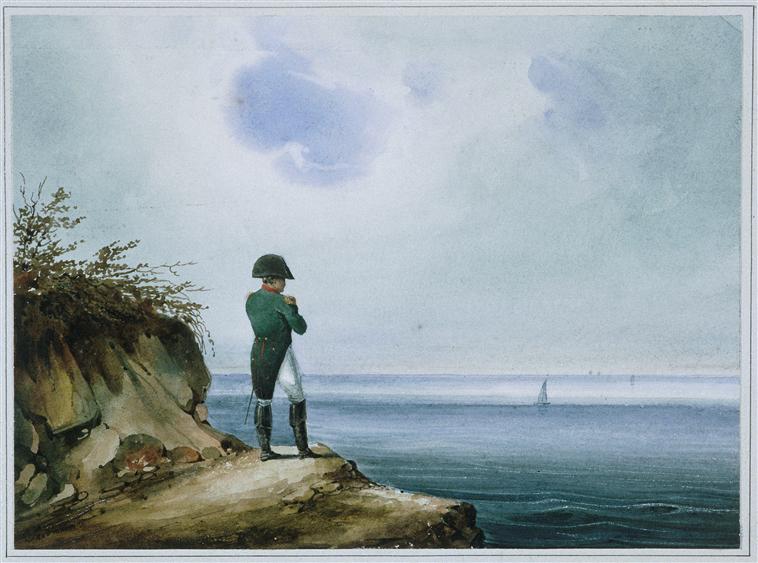
Saint Helena has a known history of over 500 years since its recorded discovery by the Portuguese in 1502. Claiming to be Britain's second oldest colony, after Bermuda, this is one of the most remote settlements in the world and was for several centuries of vital strategic importance to ships sailing to Europe from Asia and South Africa. Since the early 19th century, the British occasionally used the island as a place of exile, most notably for Napoleon Bonaparte, Dinuzulu kaCetshwayo and over 5,000 Boer prisoners.
By long tradition the island was sighted on 21 May 1502 by the four ships of the 3rd Portuguese Armada commanded by Galician navigator João da Nova during the return voyage to Lisbon, and that he named it Santa Helena after Saint Helena of Constantinople. This tradition has been reviewed by a 2022 paper which concluded the Portuguese chronicles published at least 50 years later, are the sole primary source to the discovery. Although contradictory in describing other events, these chronicles almost unanimously claim João da Nova found St Helena sometime in 1502, although none quote the precise date.
However, there are several reasons for doubting da Nova made this discovery. First, given that da Nova either returned on 11 September or 13 September 1502 it is usually assumed the Cantino planisphere completed by the following November includes his discovery of Ascension Island (shown as an archipelago with one of six islands marked as "ilha achada e chamada Ascenssam"), yet this map fails to show St Helena. Second, when a section of the Fourth Armada under the command of Estêvão da Gama sighted and landed at St Helena the following year on 30 July 1503 its scrivener Thomé Lopes regarded it as an unknown island yet named Ascension as one of five reference points to the new island’s location. On 12 July 1502, nearly three weeks before reaching St Helena, Lopes described how Estêvão da Gama’s ships met up with a section of the Fifth Armada led by Afonso de Albuquerque off the Cape of Good Hope. The latter left Lisbon about six months after João da Nova’s return so Albuquerque and his captains should all have known whether João da Nova had indeed found St Helena. An anonymous Flemish traveler on one of da Gama's ships reporting that bread and victuals were running short by the time they reached the Cape, so from da Gama's perspective there was a pressing need that he be told water and meat could be found at St Helena. The fact that nothing seems to have been said about the island, da Gama's scrivener Lopes regarding the island as unknown, again implies da Nova found Ascension but not St Helena. The 2022 paper also reviews cartographic evidence that St Helena and Ascension were known to the Spanish in 1500, before either João da Nova or Estêvão da Gama sailed for India. The suggestion that João da Nova discovered Tristan da Cunha naming it St Helena is discounted.
If João da Nova indeed found St Helena, a separate 2015 paper has reviewed another tradition that he did so on 21 May 1502. This date appears to have first been suggested by Jan Huyghen van Linschoten in a book published in Holland in 1596. This described how his ships left St Helena on 21 May 1589, this being both the feast of Saint Helena and Whitsunday. At first sight, this statement seems to be a contradiction - the Roman Catholic Church certainly celebrated Whitsunday that day but their feast-day of Saint Helena was on 18 August. Linschoten's statement did not fit in with the Eastern Orthodox Church either - this faith certainly marked Saint Helena on 21 May but in 1589 celebrated Whitsun a week later, on 28 May. The paper suggested the solution to this apparent paradox was the fact that by the time his book was published in 1596 Linschoten had converted to the Protestant Dutch Reformed Church. This faith celebrated Whitsunday on the same day as Catholics while Saint Helena was marked on 21 May, the same day as the Orthodox Church. Quite apart from the fact that the discoverers were Catholics, Linschoten failed to realise the impossibility that the island was named after a Protestant feast-day, it being found more than a decade before the Reformation and start of Protestantism. An alternative discovery date of 3 May on the Catholic feast-day celebrating the finding of the True Cross by Saint Helena in Jerusalem, as quoted by Odoardo Duarte Lopes in 1591 and by Sir Thomas Herbert in 1638, is suggested as historically more credible than the Protestant date of 21 May. The paper observes that if da Nova made the discovery on 3 May 1502, he may have been inhibited from naming the island Ilha de Vera Cruz (Island of the True Cross) because Pedro Álvares Cabral had already assigned that same name to the Brazilian coastline, which he thought to be a large island, on 3 May 1500. News of Cabral's discovery reached Lisbon directly from South America before da Nova's fleet set off on the voyage to India in 1501. If da Nova knew the True Cross name had already been assigned, the most obvious and plausible alternative name for him to give the island was "Santa Helena".
The long tradition that João da Nova built a chapel from one of his wrecked carracks has been shown to be based on a misreading of the records.
The Portuguese found it uninhabited, with an abundance of trees and fresh water. They imported livestock (mainly goats), fruit trees, and vegetables, built a chapel and one or two houses, and left their sick, suffering from scurvy and other ailments, to be taken home, if they recovered, by the next ship, but they formed no permanent settlement. The island thereby became crucially important for the collection of food and as a rendezvous point for homebound voyages from Asia. The island was directly in line with the Trade Winds which took ships rounding the Cape of Good Hope into the South Atlantic. St Helena was much less frequently visited by Asia-bound ships, the northern trade winds taking ships towards the South American continent rather than the island. An analysis has been published of the Portuguese ships arriving at St Helena in the period 1502–1613.
It is a popular belief that the Portuguese managed to keep the location of this remote island a secret until almost the end of the 16th century. However, both the location of the island and its name were quoted in a Dutch book in 1508, which described a 1505 Portuguese expedition led by Francisco de Almeida from the East Indies: "[o]n the twenty-first day of July we saw land, and it was an island lyng six hundred and fifty miles from the Cape, and called Saint Helena, howbeit we could not land there. [...] And after we left the island of Saint Helena, we saw another island two hundred miles from there, which is called Ascension". Additional references to Saint Helena as a rendezvous point were publicly documented in the early 16th century, such as the account of Dürer's Rhinoceros's voyage to Portugal in 1515.
Also, Lopo Homem-Reineis published the Atlas Universal about 1519 which clearly showed the locations of St Helena and Ascension. The first residents all arrived on Portuguese vessels. Its first known permanent resident was Portuguese, Fernão Lopes (also Fernando Lopes) who had turned traitor in India and had been mutilated by order of Alphonso d'Albuquerque, the Governor of Goa. Fernão Lopes preferred being marooned to returning to Portugal in his maimed condition, and lived on Saint Helena from about 1516. By royal command, Lopes returned to Portugal about 1526 and then travelled to Rome, where Pope Clement VII granted him an audience. Lopes returned to Saint Helena, where he died in 1545.
Hub AI
History of Saint Helena AI simulator
(@History of Saint Helena_simulator)
History of Saint Helena
Saint Helena has a known history of over 500 years since its recorded discovery by the Portuguese in 1502. Claiming to be Britain's second oldest colony, after Bermuda, this is one of the most remote settlements in the world and was for several centuries of vital strategic importance to ships sailing to Europe from Asia and South Africa. Since the early 19th century, the British occasionally used the island as a place of exile, most notably for Napoleon Bonaparte, Dinuzulu kaCetshwayo and over 5,000 Boer prisoners.
By long tradition the island was sighted on 21 May 1502 by the four ships of the 3rd Portuguese Armada commanded by Galician navigator João da Nova during the return voyage to Lisbon, and that he named it Santa Helena after Saint Helena of Constantinople. This tradition has been reviewed by a 2022 paper which concluded the Portuguese chronicles published at least 50 years later, are the sole primary source to the discovery. Although contradictory in describing other events, these chronicles almost unanimously claim João da Nova found St Helena sometime in 1502, although none quote the precise date.
However, there are several reasons for doubting da Nova made this discovery. First, given that da Nova either returned on 11 September or 13 September 1502 it is usually assumed the Cantino planisphere completed by the following November includes his discovery of Ascension Island (shown as an archipelago with one of six islands marked as "ilha achada e chamada Ascenssam"), yet this map fails to show St Helena. Second, when a section of the Fourth Armada under the command of Estêvão da Gama sighted and landed at St Helena the following year on 30 July 1503 its scrivener Thomé Lopes regarded it as an unknown island yet named Ascension as one of five reference points to the new island’s location. On 12 July 1502, nearly three weeks before reaching St Helena, Lopes described how Estêvão da Gama’s ships met up with a section of the Fifth Armada led by Afonso de Albuquerque off the Cape of Good Hope. The latter left Lisbon about six months after João da Nova’s return so Albuquerque and his captains should all have known whether João da Nova had indeed found St Helena. An anonymous Flemish traveler on one of da Gama's ships reporting that bread and victuals were running short by the time they reached the Cape, so from da Gama's perspective there was a pressing need that he be told water and meat could be found at St Helena. The fact that nothing seems to have been said about the island, da Gama's scrivener Lopes regarding the island as unknown, again implies da Nova found Ascension but not St Helena. The 2022 paper also reviews cartographic evidence that St Helena and Ascension were known to the Spanish in 1500, before either João da Nova or Estêvão da Gama sailed for India. The suggestion that João da Nova discovered Tristan da Cunha naming it St Helena is discounted.
If João da Nova indeed found St Helena, a separate 2015 paper has reviewed another tradition that he did so on 21 May 1502. This date appears to have first been suggested by Jan Huyghen van Linschoten in a book published in Holland in 1596. This described how his ships left St Helena on 21 May 1589, this being both the feast of Saint Helena and Whitsunday. At first sight, this statement seems to be a contradiction - the Roman Catholic Church certainly celebrated Whitsunday that day but their feast-day of Saint Helena was on 18 August. Linschoten's statement did not fit in with the Eastern Orthodox Church either - this faith certainly marked Saint Helena on 21 May but in 1589 celebrated Whitsun a week later, on 28 May. The paper suggested the solution to this apparent paradox was the fact that by the time his book was published in 1596 Linschoten had converted to the Protestant Dutch Reformed Church. This faith celebrated Whitsunday on the same day as Catholics while Saint Helena was marked on 21 May, the same day as the Orthodox Church. Quite apart from the fact that the discoverers were Catholics, Linschoten failed to realise the impossibility that the island was named after a Protestant feast-day, it being found more than a decade before the Reformation and start of Protestantism. An alternative discovery date of 3 May on the Catholic feast-day celebrating the finding of the True Cross by Saint Helena in Jerusalem, as quoted by Odoardo Duarte Lopes in 1591 and by Sir Thomas Herbert in 1638, is suggested as historically more credible than the Protestant date of 21 May. The paper observes that if da Nova made the discovery on 3 May 1502, he may have been inhibited from naming the island Ilha de Vera Cruz (Island of the True Cross) because Pedro Álvares Cabral had already assigned that same name to the Brazilian coastline, which he thought to be a large island, on 3 May 1500. News of Cabral's discovery reached Lisbon directly from South America before da Nova's fleet set off on the voyage to India in 1501. If da Nova knew the True Cross name had already been assigned, the most obvious and plausible alternative name for him to give the island was "Santa Helena".
The long tradition that João da Nova built a chapel from one of his wrecked carracks has been shown to be based on a misreading of the records.
The Portuguese found it uninhabited, with an abundance of trees and fresh water. They imported livestock (mainly goats), fruit trees, and vegetables, built a chapel and one or two houses, and left their sick, suffering from scurvy and other ailments, to be taken home, if they recovered, by the next ship, but they formed no permanent settlement. The island thereby became crucially important for the collection of food and as a rendezvous point for homebound voyages from Asia. The island was directly in line with the Trade Winds which took ships rounding the Cape of Good Hope into the South Atlantic. St Helena was much less frequently visited by Asia-bound ships, the northern trade winds taking ships towards the South American continent rather than the island. An analysis has been published of the Portuguese ships arriving at St Helena in the period 1502–1613.
It is a popular belief that the Portuguese managed to keep the location of this remote island a secret until almost the end of the 16th century. However, both the location of the island and its name were quoted in a Dutch book in 1508, which described a 1505 Portuguese expedition led by Francisco de Almeida from the East Indies: "[o]n the twenty-first day of July we saw land, and it was an island lyng six hundred and fifty miles from the Cape, and called Saint Helena, howbeit we could not land there. [...] And after we left the island of Saint Helena, we saw another island two hundred miles from there, which is called Ascension". Additional references to Saint Helena as a rendezvous point were publicly documented in the early 16th century, such as the account of Dürer's Rhinoceros's voyage to Portugal in 1515.
Also, Lopo Homem-Reineis published the Atlas Universal about 1519 which clearly showed the locations of St Helena and Ascension. The first residents all arrived on Portuguese vessels. Its first known permanent resident was Portuguese, Fernão Lopes (also Fernando Lopes) who had turned traitor in India and had been mutilated by order of Alphonso d'Albuquerque, the Governor of Goa. Fernão Lopes preferred being marooned to returning to Portugal in his maimed condition, and lived on Saint Helena from about 1516. By royal command, Lopes returned to Portugal about 1526 and then travelled to Rome, where Pope Clement VII granted him an audience. Lopes returned to Saint Helena, where he died in 1545.
Recent media