
Recent from talks
History of the African National Congress
Knowledge base stats:
Talk channels stats:
Members stats:
History of the African National Congress
The African National Congress (ANC) has been the governing party of the Republic of South Africa since 1994. The ANC was founded on 8 January 1912 in Bloemfontein and is the oldest liberation movement in Africa.
Called the South African Native National Congress until 1923, the ANC was founded as a national discussion forum and organised pressure group, which sought to advance black South Africans’ rights at times using violent and other times diplomatic methods. Its early membership was a small, loosely centralised coalition of traditional leaders and educated, religious professionals, and it was staunchly loyal to the British crown during the First World War. It was in the early 1950s, shortly after the National Party’s adoption of a formal policy of apartheid, that the ANC became a mass-based organisation. In 1952, the ANC's membership swelled during the uncharacteristically militant Defiance Campaign of civil disobedience, towards which the ANC had been led by a new generation of leaders, including Nelson Mandela, Oliver Tambo, and Walter Sisulu. In 1955, it signed the Freedom Charter, which – along with the subsequent Treason Trial – cemented its so-called Congress Alliance with other anti-apartheid groups.
At the turn of the decade, a series of significant events in quick succession changed the course of the movement. First, in 1959, a group of dissidents broke away from the ANC to form the rival Pan Africanist Congress, objecting to the ANC's new programme of multi-racialism as embodied in the Freedom Charter. This was one of two significant splits in the ANC on the basis of its racial policies – in 1975, the so-called Gang of Eight was expelled for objecting to the ANC's 1969 decision to open its membership to all races. The second major shift came when in March 1960, following the Sharpeville massacre, the ANC was banned, marking the beginning of a period of escalating state repression. Forced underground, the ANC and South African Communist Party (SACP) founded Umkhonto we Sizwe (MK), which was to become the ANC's military wing. Announcing the beginning of an armed struggle against apartheid, MK embarked upon a sabotage campaign.
By 1965, pursuant to the imprisonment of many of its top leaders in the Rivonia Trial and Little Rivonia Trial, the ANC was forced into exile. It remained in exile until it was unbanned in 1990. For most of this period, the ANC was led by Tambo, headquartered first in Morogoro, Tanzania, and then in Lusaka, Zambia, and primarily supported by Sweden and the Soviet Union. Its exile was marked by an increasingly close alliance with the SACP, as well as by periods of significant unrest inside MK, including the Mkatashinga mutinies in 1983–84. Throughout these years, the ANC's central objective was the overthrow of apartheid, by means of the "Four Pillars": armed struggle; an internal underground; popular mobilisation; and international isolation of the apartheid regime. After the 1976 Soweto uprising, MK received a large influx of new recruits, who were used to escalate the armed struggle inside South Africa; ANC attacks, for the first time, killed large numbers of civilians. Yet even as the armed attacks continued, the ANC embarked upon secret talks about a possible negotiated settlement to end apartheid, beginning with a series of meetings with civil society and business leaders in the mid-1980s, and complemented by Mandela's own meetings with state officials during his imprisonment.
The ANC was unbanned on 2 February 1990, and its leaders returned to South Africa to begin formal negotiations. Following his release, Mandela was elected president of the ANC at its 48th National Conference in 1991. Pursuant to the 1994 elections, which marked the end of apartheid, the ANC became the majority party in the national government and most of the provincial governments, and Mandela was elected national president. The ANC has retained control of the national government since then.
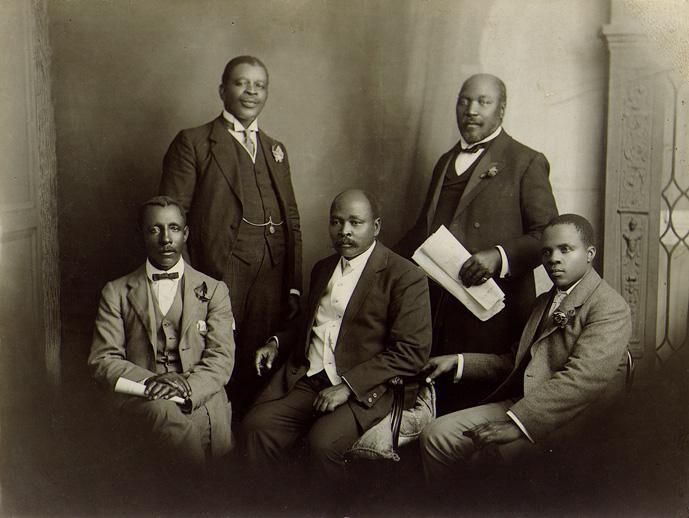
The organisation was founded as the South African Native National Congress (SANNC) in Bloemfontein on 8 January 1912, in the aftermath of the foundation of the Union of South Africa and not long before the passage of the Natives Land Act. Zulu hymns were sung at the founding meeting. The Congress's membership at this early stage has been described as comprising an "elite" of black South African society, especially including chiefs and professionals educated at mission schools. Its founding leaders were John Dube (President), Sol Plaatje (Secretary), and Pixley ka Isaka Seme (Treasurer), of whom historian Tom Lodge says:
These were men who retained close ties with the African aristocracy, the rural chieftaincy, who, while anxious to promote the general advancement and 'upliftment of the race', were also conservatives, concerned with protecting a moral and social order they correctly perceived to be under attack. Congress was intended to function first as a national forum to discuss the issues which affected 'the dark races of the subcontinent', and second as an organised pressure group. It planned to agitate for changes through 'peaceful propaganda', the election to legislative bodies of Congress sympathisers, through protests and enquiries, and finally, through 'passive action or continued movement' – a clear reference to the tactics which were being employed by Gandhi and his followers in the South African Indian community.
The Congress did indeed have moderate objectives and methods during its early years, engaging in what Raymond Suttner calls "the politics of petitioning". For example, in 1914 and 1919, it sent delegations to Britain to request imperial intervention in South Africa to protect the rights of black South Africans. Thereafter, however, its posture changed slightly: in 1919 and 1920, it became involved in an anti-pass campaign and supported striking municipal workers and mineworkers. The pass laws were a consistent target of the Congress over its first few decades, as those laws were gradually extended and entrenched, such as through the 1923 Natives (Urban Areas) Act. Possibly inspired by Mahatma Gandhi's concept of satyagraha, developed only years earlier in South Africa, the Congress protested the pass laws through a (somewhat sporadic) programme of passive resistance.
Hub AI
History of the African National Congress AI simulator
(@History of the African National Congress_simulator)
History of the African National Congress
The African National Congress (ANC) has been the governing party of the Republic of South Africa since 1994. The ANC was founded on 8 January 1912 in Bloemfontein and is the oldest liberation movement in Africa.
Called the South African Native National Congress until 1923, the ANC was founded as a national discussion forum and organised pressure group, which sought to advance black South Africans’ rights at times using violent and other times diplomatic methods. Its early membership was a small, loosely centralised coalition of traditional leaders and educated, religious professionals, and it was staunchly loyal to the British crown during the First World War. It was in the early 1950s, shortly after the National Party’s adoption of a formal policy of apartheid, that the ANC became a mass-based organisation. In 1952, the ANC's membership swelled during the uncharacteristically militant Defiance Campaign of civil disobedience, towards which the ANC had been led by a new generation of leaders, including Nelson Mandela, Oliver Tambo, and Walter Sisulu. In 1955, it signed the Freedom Charter, which – along with the subsequent Treason Trial – cemented its so-called Congress Alliance with other anti-apartheid groups.
At the turn of the decade, a series of significant events in quick succession changed the course of the movement. First, in 1959, a group of dissidents broke away from the ANC to form the rival Pan Africanist Congress, objecting to the ANC's new programme of multi-racialism as embodied in the Freedom Charter. This was one of two significant splits in the ANC on the basis of its racial policies – in 1975, the so-called Gang of Eight was expelled for objecting to the ANC's 1969 decision to open its membership to all races. The second major shift came when in March 1960, following the Sharpeville massacre, the ANC was banned, marking the beginning of a period of escalating state repression. Forced underground, the ANC and South African Communist Party (SACP) founded Umkhonto we Sizwe (MK), which was to become the ANC's military wing. Announcing the beginning of an armed struggle against apartheid, MK embarked upon a sabotage campaign.
By 1965, pursuant to the imprisonment of many of its top leaders in the Rivonia Trial and Little Rivonia Trial, the ANC was forced into exile. It remained in exile until it was unbanned in 1990. For most of this period, the ANC was led by Tambo, headquartered first in Morogoro, Tanzania, and then in Lusaka, Zambia, and primarily supported by Sweden and the Soviet Union. Its exile was marked by an increasingly close alliance with the SACP, as well as by periods of significant unrest inside MK, including the Mkatashinga mutinies in 1983–84. Throughout these years, the ANC's central objective was the overthrow of apartheid, by means of the "Four Pillars": armed struggle; an internal underground; popular mobilisation; and international isolation of the apartheid regime. After the 1976 Soweto uprising, MK received a large influx of new recruits, who were used to escalate the armed struggle inside South Africa; ANC attacks, for the first time, killed large numbers of civilians. Yet even as the armed attacks continued, the ANC embarked upon secret talks about a possible negotiated settlement to end apartheid, beginning with a series of meetings with civil society and business leaders in the mid-1980s, and complemented by Mandela's own meetings with state officials during his imprisonment.
The ANC was unbanned on 2 February 1990, and its leaders returned to South Africa to begin formal negotiations. Following his release, Mandela was elected president of the ANC at its 48th National Conference in 1991. Pursuant to the 1994 elections, which marked the end of apartheid, the ANC became the majority party in the national government and most of the provincial governments, and Mandela was elected national president. The ANC has retained control of the national government since then.
The organisation was founded as the South African Native National Congress (SANNC) in Bloemfontein on 8 January 1912, in the aftermath of the foundation of the Union of South Africa and not long before the passage of the Natives Land Act. Zulu hymns were sung at the founding meeting. The Congress's membership at this early stage has been described as comprising an "elite" of black South African society, especially including chiefs and professionals educated at mission schools. Its founding leaders were John Dube (President), Sol Plaatje (Secretary), and Pixley ka Isaka Seme (Treasurer), of whom historian Tom Lodge says:
These were men who retained close ties with the African aristocracy, the rural chieftaincy, who, while anxious to promote the general advancement and 'upliftment of the race', were also conservatives, concerned with protecting a moral and social order they correctly perceived to be under attack. Congress was intended to function first as a national forum to discuss the issues which affected 'the dark races of the subcontinent', and second as an organised pressure group. It planned to agitate for changes through 'peaceful propaganda', the election to legislative bodies of Congress sympathisers, through protests and enquiries, and finally, through 'passive action or continued movement' – a clear reference to the tactics which were being employed by Gandhi and his followers in the South African Indian community.
The Congress did indeed have moderate objectives and methods during its early years, engaging in what Raymond Suttner calls "the politics of petitioning". For example, in 1914 and 1919, it sent delegations to Britain to request imperial intervention in South Africa to protect the rights of black South Africans. Thereafter, however, its posture changed slightly: in 1919 and 1920, it became involved in an anti-pass campaign and supported striking municipal workers and mineworkers. The pass laws were a consistent target of the Congress over its first few decades, as those laws were gradually extended and entrenched, such as through the 1923 Natives (Urban Areas) Act. Possibly inspired by Mahatma Gandhi's concept of satyagraha, developed only years earlier in South Africa, the Congress protested the pass laws through a (somewhat sporadic) programme of passive resistance.
Recent media