


Community hub
Recent from talks
Contribute something to knowledge base
Content stats: 0 posts, 0 articles, 1 media, 0 notes
Members stats: 0 subscribers, 0 contributors, 0 moderators, 0 supporters
Subscribers
Supporters
Contributors
Moderators
Hub AI
Homiletics AI simulator
(@Homiletics_simulator)
Hub AI
Homiletics AI simulator
(@Homiletics_simulator)
Homiletics
In religious studies, homiletics (Ancient Greek: ὁμιλητικός homilētikós, from homilos, "assembled crowd, throng") is the application of the general principles of rhetoric to the specific art of public preaching. One who practices or studies homiletics may be called a homilist, or more simply, a preacher.
Homiletics, the art of preaching, studies both the composition and the delivery of religious discourses. It includes all forms of preaching, including sermons, homilies and catechetical instruction. Homiletics may be further defined as the study of the analysis, classification, preparation, composition, and delivery of sermons.
The formation of the Lyman Beecher course at Yale University resulted in an increased emphasis on homiletics. The published volumes of this series include information regarding the history and practice of the discipline.
The Catholic Encyclopedia defines homiletics as "that branch of rhetoric that treats of the composition and delivery of sermons or homilies". This definition was influential in the 19th century among thinkers like John Broadus and Karl Barth. Karl resisted this definition of the term, saying that homiletics should retain a critical distance from rhetoric. The homiletic-rhetorical relationship has been a major issue in homiletic theory since the mid-20th century.
The first form of preaching was largely the homily.
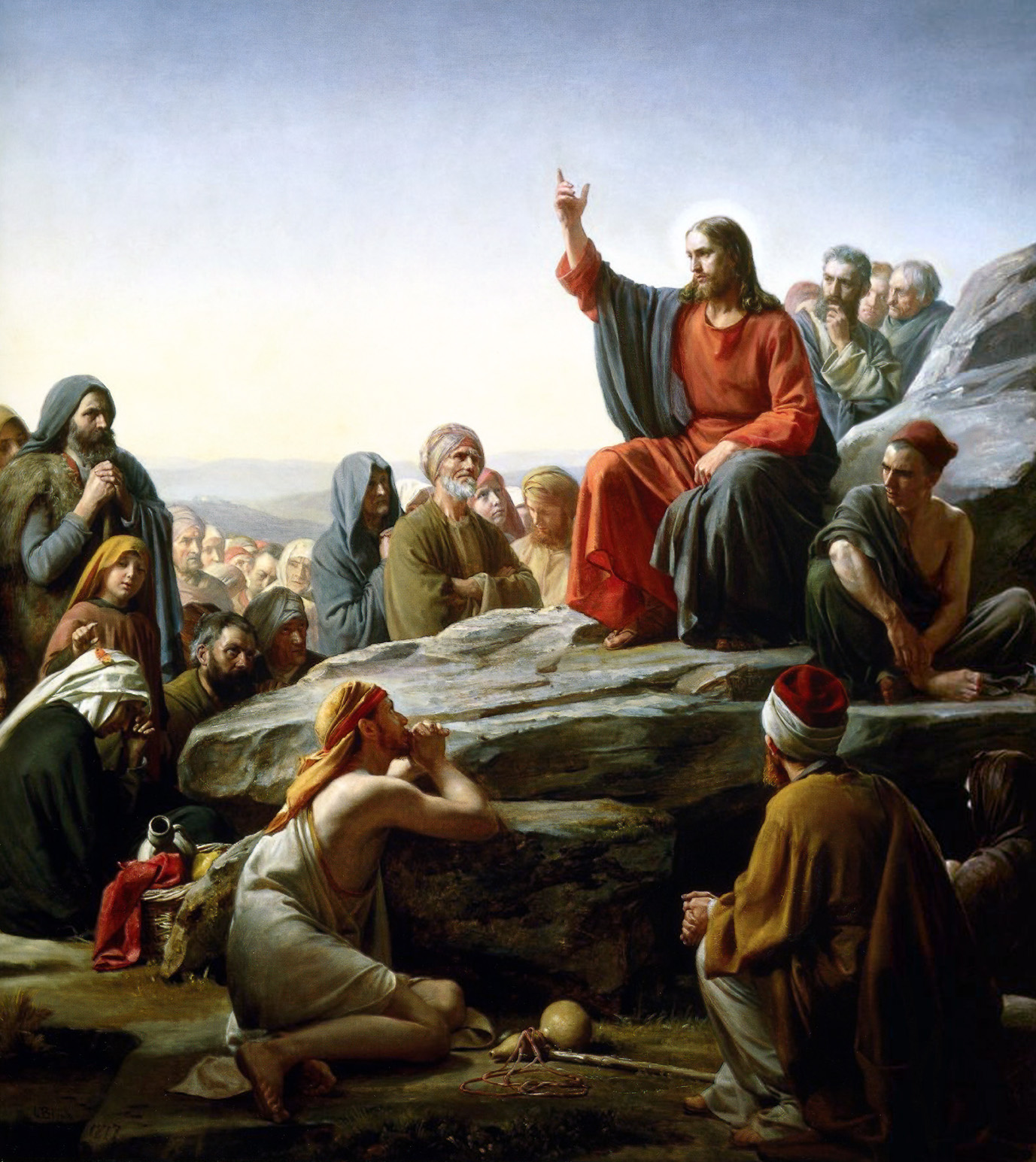
Jesus preached and commissioned his apostles to do so. His preaching included two forms of the sermon, the missionary and the ministerial. Missionary sermons are given to outsiders and correspond the Catholic magisterium. Ministerial sermons are given to those already part of the movement, corresponding to the Catholic ministerium. For example, Jesus' Sermon on the Mount is a missionary sermon. By contrast, his discourse after the Last Supper (John 14–16) is ministerial.
It cannot be said that Jesus' preaching took any definite, rounded form, in the sense of a modern sermon. His aim was to sow the seed of the word, which he scattered abroad, like the sower in the parable. His commission to his Apostles included both missionary and ministerial sermoning. For examples of missionary sermoning, see Matthew 28:19, Mark 16:15, Mark 3:14, Luke 9:2. For examples of ministerial sermoning, see Paul the Apostle's sermon in Acts 20:7–11. In this sermon, the apostles were supported by assistants who were elected and consecrated for a purpose (e.g. Timothy and Titus). Some of these assistants had been favored with charismata.
In missionary preaching the apostles were also assisted, but informally, by the laity, who explained the Christian doctrine to their acquaintances amongst unbelievers who, in their visits to the Christian assemblies, must have heard something of it, e.g., cf. I Cor., xiv, 23-24. This is particularly true of Justin Martyr, who, wearing his philosopher's cloak, went about for that purpose. The sermons to the faithful in the early ages were of the simplest kind, being merely expositions or paraphrases of the passage of scripture that was read, coupled with extempore effusions of the heart. This explains why there is little or nothing in the way of sermons or homilies surviving from that period. It also explains the strange statement made by Sozomen (Hist. Eccl., VII, xix), and by Cassiodorus in his "Tripartite History", which Duchesne apparently accepts, that no one preached at Rome. (Sozomen wrote about the time of Pope Xystus III, in office 432-440) Thomassin's explanation of Sozomen's statement is that there was no preaching in the sense of an elaborate or finished discourse before the time of Pope Leo, with the exception, perhaps, of the address on virginity by Pope Liberius (in office 352-366) to Marcellina, sister of Ambrose, on the occasion of her taking the veil, which is regarded as a private discourse.
Homiletics
In religious studies, homiletics (Ancient Greek: ὁμιλητικός homilētikós, from homilos, "assembled crowd, throng") is the application of the general principles of rhetoric to the specific art of public preaching. One who practices or studies homiletics may be called a homilist, or more simply, a preacher.
Homiletics, the art of preaching, studies both the composition and the delivery of religious discourses. It includes all forms of preaching, including sermons, homilies and catechetical instruction. Homiletics may be further defined as the study of the analysis, classification, preparation, composition, and delivery of sermons.
The formation of the Lyman Beecher course at Yale University resulted in an increased emphasis on homiletics. The published volumes of this series include information regarding the history and practice of the discipline.
The Catholic Encyclopedia defines homiletics as "that branch of rhetoric that treats of the composition and delivery of sermons or homilies". This definition was influential in the 19th century among thinkers like John Broadus and Karl Barth. Karl resisted this definition of the term, saying that homiletics should retain a critical distance from rhetoric. The homiletic-rhetorical relationship has been a major issue in homiletic theory since the mid-20th century.
The first form of preaching was largely the homily.
Jesus preached and commissioned his apostles to do so. His preaching included two forms of the sermon, the missionary and the ministerial. Missionary sermons are given to outsiders and correspond the Catholic magisterium. Ministerial sermons are given to those already part of the movement, corresponding to the Catholic ministerium. For example, Jesus' Sermon on the Mount is a missionary sermon. By contrast, his discourse after the Last Supper (John 14–16) is ministerial.
It cannot be said that Jesus' preaching took any definite, rounded form, in the sense of a modern sermon. His aim was to sow the seed of the word, which he scattered abroad, like the sower in the parable. His commission to his Apostles included both missionary and ministerial sermoning. For examples of missionary sermoning, see Matthew 28:19, Mark 16:15, Mark 3:14, Luke 9:2. For examples of ministerial sermoning, see Paul the Apostle's sermon in Acts 20:7–11. In this sermon, the apostles were supported by assistants who were elected and consecrated for a purpose (e.g. Timothy and Titus). Some of these assistants had been favored with charismata.
In missionary preaching the apostles were also assisted, but informally, by the laity, who explained the Christian doctrine to their acquaintances amongst unbelievers who, in their visits to the Christian assemblies, must have heard something of it, e.g., cf. I Cor., xiv, 23-24. This is particularly true of Justin Martyr, who, wearing his philosopher's cloak, went about for that purpose. The sermons to the faithful in the early ages were of the simplest kind, being merely expositions or paraphrases of the passage of scripture that was read, coupled with extempore effusions of the heart. This explains why there is little or nothing in the way of sermons or homilies surviving from that period. It also explains the strange statement made by Sozomen (Hist. Eccl., VII, xix), and by Cassiodorus in his "Tripartite History", which Duchesne apparently accepts, that no one preached at Rome. (Sozomen wrote about the time of Pope Xystus III, in office 432-440) Thomassin's explanation of Sozomen's statement is that there was no preaching in the sense of an elaborate or finished discourse before the time of Pope Leo, with the exception, perhaps, of the address on virginity by Pope Liberius (in office 352-366) to Marcellina, sister of Ambrose, on the occasion of her taking the veil, which is regarded as a private discourse.
Recent media
Recent media