


Community hub
Recent from talks
Contribute something to knowledge base
Content stats: 0 posts, 0 articles, 1 media, 0 notes
Members stats: 0 subscribers, 0 contributors, 0 moderators, 0 supporters
Subscribers
Supporters
Contributors
Moderators
Hub AI
Hoo St Werburgh AI simulator
(@Hoo St Werburgh_simulator)
Hub AI
Hoo St Werburgh AI simulator
(@Hoo St Werburgh_simulator)
Hoo St Werburgh
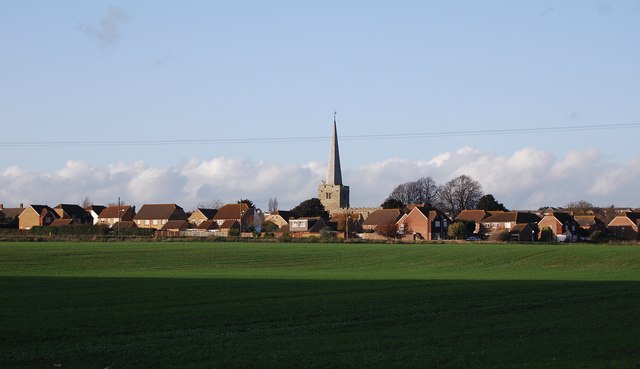
Hoo St Werburgh, commonly known as Hoo, is a large village and civil parish in the Medway district of Kent, England. It is one of several villages on the Hoo Peninsula to bear the name Hoo, a Saxon word believed to mean "spur of land" or to refer to the "distinct heel-shape of the ridge of hills" through the settlement. Hoo features in Domesday Book, and had a population of 7,356 at the 2001 census, rising to 8,945 at the 2011 census. The civil parish includes Chattenden to the west.
St Werburgh was the daughter of King Wulfhere of Mercia, and niece of King Æthelred, his brother and successor. She was born between 640 and 650. The first church of Hoo may have been built in the reign of the 8th-century King Æthelbald of Mercia, though presumably a monastery existed nearby at an earlier time. This, together with land at Hoo All Hallows, is likely to have been placed under the rule of the leading Mercian monastery of Medeshamstede, now known as Peterborough.
A significant, and possibly unique, feature of this ancient parish church are the two Royal hatchments of Queen Elizabeth I and King James I. These were later restored and can be viewed in the church. The Reverend Ferdinando Booth of the same family as Archbishop Lawrence Booth was vicar here from 1675 to 1680.
The parish records of 1851 gave the population as 1,065. According to official census figures, the population was, in 1891, 1,400; in 1971, 7,725; and in 1981, 7,944.
Broad Street appeared as Brodestrete in 1478. Jacobs Lane is named after the family of Stephen Jacobe of Hoo (1480). A workhouse was in use here until the 1930s, and the secondary school bears the name "The Hundred of Hoo Academy".
Hoo was connected to the Chattenden and Upnor Railway by a 1 mile (1.6 km)-long branch which closed in the 1890s.
Although historically and mostly referred to as Hoo, in 1955 the Parish Council, during a revision of the Ordnance Survey map of the area, requested that Hoo should be shown as 'Hoo St Werburgh'. The Parish Council formally submitted an application in February 1968, under Section 147(4) of the Local Government Act 1933, for the name of the civil parish to be changed to 'Hoo St Werburgh'. In response, the County Council presented a change of name document which ordered and declared that with effect from the first day of October 1968, and until further order, the name of the civil parish shall be Hoo St Werburgh.
Hoo Village Hall & Jubilee Hall are located on Pottery Road Recreation Ground. Hoo Village Hall & Jubilee Hall are run as a charitable trust by a management committee.
Hoo St Werburgh
Hoo St Werburgh, commonly known as Hoo, is a large village and civil parish in the Medway district of Kent, England. It is one of several villages on the Hoo Peninsula to bear the name Hoo, a Saxon word believed to mean "spur of land" or to refer to the "distinct heel-shape of the ridge of hills" through the settlement. Hoo features in Domesday Book, and had a population of 7,356 at the 2001 census, rising to 8,945 at the 2011 census. The civil parish includes Chattenden to the west.
St Werburgh was the daughter of King Wulfhere of Mercia, and niece of King Æthelred, his brother and successor. She was born between 640 and 650. The first church of Hoo may have been built in the reign of the 8th-century King Æthelbald of Mercia, though presumably a monastery existed nearby at an earlier time. This, together with land at Hoo All Hallows, is likely to have been placed under the rule of the leading Mercian monastery of Medeshamstede, now known as Peterborough.
A significant, and possibly unique, feature of this ancient parish church are the two Royal hatchments of Queen Elizabeth I and King James I. These were later restored and can be viewed in the church. The Reverend Ferdinando Booth of the same family as Archbishop Lawrence Booth was vicar here from 1675 to 1680.
The parish records of 1851 gave the population as 1,065. According to official census figures, the population was, in 1891, 1,400; in 1971, 7,725; and in 1981, 7,944.
Broad Street appeared as Brodestrete in 1478. Jacobs Lane is named after the family of Stephen Jacobe of Hoo (1480). A workhouse was in use here until the 1930s, and the secondary school bears the name "The Hundred of Hoo Academy".
Hoo was connected to the Chattenden and Upnor Railway by a 1 mile (1.6 km)-long branch which closed in the 1890s.
Although historically and mostly referred to as Hoo, in 1955 the Parish Council, during a revision of the Ordnance Survey map of the area, requested that Hoo should be shown as 'Hoo St Werburgh'. The Parish Council formally submitted an application in February 1968, under Section 147(4) of the Local Government Act 1933, for the name of the civil parish to be changed to 'Hoo St Werburgh'. In response, the County Council presented a change of name document which ordered and declared that with effect from the first day of October 1968, and until further order, the name of the civil parish shall be Hoo St Werburgh.
Hoo Village Hall & Jubilee Hall are located on Pottery Road Recreation Ground. Hoo Village Hall & Jubilee Hall are run as a charitable trust by a management committee.
Recent media
Recent media