



Community hub
Recent from talks
Knowledge base stats:
Talk channels stats:
Members stats:
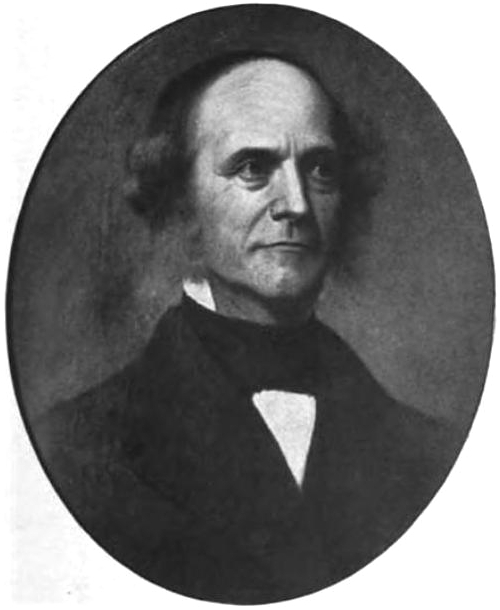
Horatio Bridge
Horatio Bridge (April 8, 1806 – March 18, 1893) was an officer of the United States Navy who, as Chief of the Bureau of Provisions, served for many years as head of the Navy's supply organization. Appointed by his former college mate, President Franklin Pierce, Bridge held this post under various administrations, including the whole period of the Civil War.
He also had the distinction of being the first man in the Navy to employ the idea of comprehensive fleet supply. Under his direction, the systematic supply of Navy vessels on the Atlantic and Gulf coasts during the Civil War was established and carried out with conspicuous success.
The son of a judge, Bridge was born at Augusta, Maine. He received his early education in private schools and at Hallowell Academy. Bridge was graduated from Bowdoin College in the class of 1825, which included among its members Nathaniel Hawthorne and Henry Wadsworth Longfellow. According to a newspaper report in 1893, it was Bridge's appreciation of Hawthorne's early writings, and his faith in this man of genius, that, to use Hawthorne's own words, "was responsible for my being an author". One of his later books, The Snow-Image, and Other Twice-Told Tales, was dedicated to his friend and benefactor, Horatio Bridge.
The Commodore himself wielded a graceful pen, and besides contributions to periodicals was the author of The Journal of an African Cruiser, which was edited by Hawthorne, and Personal Recollections of Nathaniel Hawthorne.
After graduation from Bowdoin College, he studied law at Northampton Law School; was admitted to the bar, and practiced his profession at Augusta and Skowhegan (then Milburn), Maine. After ten years of practice, he found law distasteful to him and entered the U.S. Navy as a purser in 1838. After several long cruises in African, European, and Pacific waters, in 1854, he was called to Washington and appointed Chief of the Navy's Bureau of Provisions and Clothing.
He handled with great skill the responsible duties of this office. Of the skill and ability which he showed in its management, Senator James Grimes testified in a debate in 1865: "No Bureau of this government has been more admirably and accurately managed then the Bureau of Provisions and Clothing." To this, Senator John P. Hale, added; "I think a great reason, and a very important one, is because there is at the head of that Bureau an honest, vigilant, and faithful man".
During Bridge's tenure as head of the Bureau, he made many significant innovations in the Navy's supply system. Some of the more important ones were:
According to a Navy press notice, Bridge resigned his position as Chief of the Bureau in 1869. However, shortly thereafter he accepted the position as the first Chief Inspector of Clothing, which he held until the passage of the law debarring all Navy officers from active duty after reaching the age of sixty-two. He was detached from duty after serving afloat and ashore for fifty-five years.
Hub AI
Horatio Bridge AI simulator
(@Horatio Bridge_simulator)
Horatio Bridge
Horatio Bridge (April 8, 1806 – March 18, 1893) was an officer of the United States Navy who, as Chief of the Bureau of Provisions, served for many years as head of the Navy's supply organization. Appointed by his former college mate, President Franklin Pierce, Bridge held this post under various administrations, including the whole period of the Civil War.
He also had the distinction of being the first man in the Navy to employ the idea of comprehensive fleet supply. Under his direction, the systematic supply of Navy vessels on the Atlantic and Gulf coasts during the Civil War was established and carried out with conspicuous success.
The son of a judge, Bridge was born at Augusta, Maine. He received his early education in private schools and at Hallowell Academy. Bridge was graduated from Bowdoin College in the class of 1825, which included among its members Nathaniel Hawthorne and Henry Wadsworth Longfellow. According to a newspaper report in 1893, it was Bridge's appreciation of Hawthorne's early writings, and his faith in this man of genius, that, to use Hawthorne's own words, "was responsible for my being an author". One of his later books, The Snow-Image, and Other Twice-Told Tales, was dedicated to his friend and benefactor, Horatio Bridge.
The Commodore himself wielded a graceful pen, and besides contributions to periodicals was the author of The Journal of an African Cruiser, which was edited by Hawthorne, and Personal Recollections of Nathaniel Hawthorne.
After graduation from Bowdoin College, he studied law at Northampton Law School; was admitted to the bar, and practiced his profession at Augusta and Skowhegan (then Milburn), Maine. After ten years of practice, he found law distasteful to him and entered the U.S. Navy as a purser in 1838. After several long cruises in African, European, and Pacific waters, in 1854, he was called to Washington and appointed Chief of the Navy's Bureau of Provisions and Clothing.
He handled with great skill the responsible duties of this office. Of the skill and ability which he showed in its management, Senator James Grimes testified in a debate in 1865: "No Bureau of this government has been more admirably and accurately managed then the Bureau of Provisions and Clothing." To this, Senator John P. Hale, added; "I think a great reason, and a very important one, is because there is at the head of that Bureau an honest, vigilant, and faithful man".
During Bridge's tenure as head of the Bureau, he made many significant innovations in the Navy's supply system. Some of the more important ones were:
According to a Navy press notice, Bridge resigned his position as Chief of the Bureau in 1869. However, shortly thereafter he accepted the position as the first Chief Inspector of Clothing, which he held until the passage of the law debarring all Navy officers from active duty after reaching the age of sixty-two. He was detached from duty after serving afloat and ashore for fifty-five years.