
Recent from talks
Horse behavior
Knowledge base stats:
Talk channels stats:
Members stats:
Horse behavior
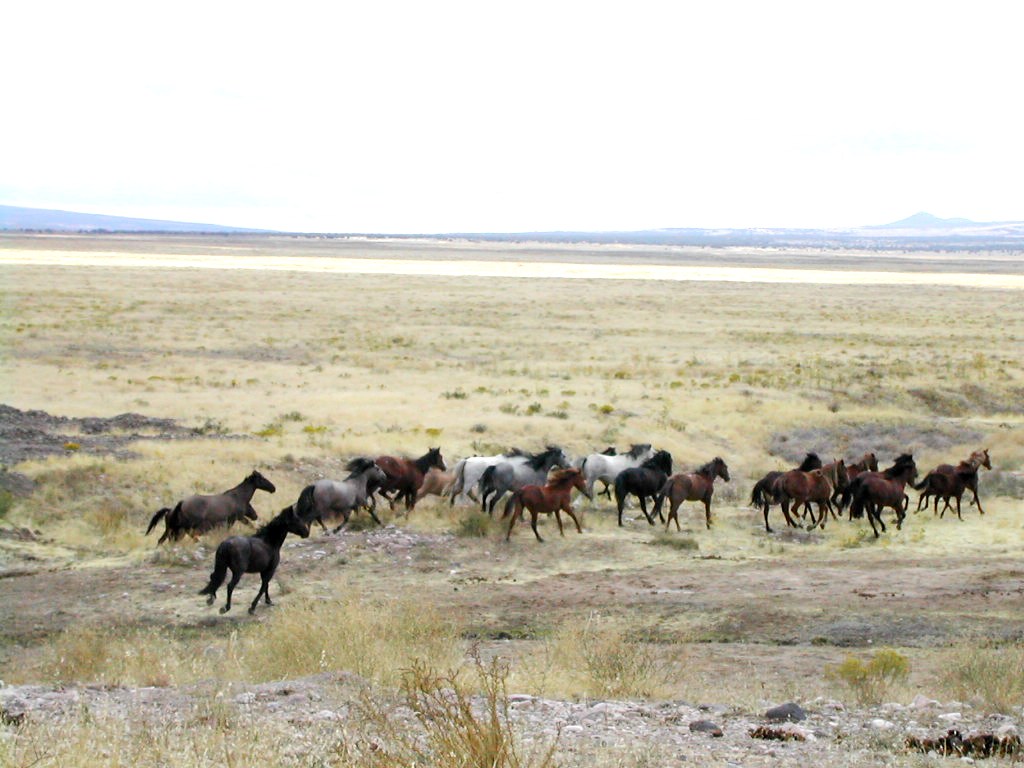
Horse behavior is best understood from the view that horses are prey animals with a well-developed fight-or-flight response. Their first reaction to a threat is often to flee, although sometimes they stand their ground and defend themselves or their offspring in cases where flight is untenable, such as when a foal would be threatened.
Nonetheless, because of their physiology horses are also suited to a number of work and entertainment-related tasks. Humans domesticated horses thousands of years ago, and they have been used by humans ever since. Through selective breeding, some breeds of horses have been bred to be quite docile, particularly certain large draft horses. On the other hand, most light horse riding breeds were developed for speed, agility, alertness, and endurance; building on natural qualities that extended from their wild ancestors.
Horses' instincts can be used to human advantage to create a bond between human and horse. These techniques vary, but are part of the art of horse training.
Horses evolved from small mammals whose survival depended on their ability to flee from predators (for example: wolves, big cats, bears). This survival mechanism still exists in the modern domestic horse. Humans have removed many predators from the life of the domestic horse; however, its first instinct when frightened is to escape. If running is not possible, the horse resorts to biting, kicking, striking or rearing to protect itself. Many of the horse's natural behavior patterns, such as herd-formation and social facilitation of activities, are directly related to their being a prey species.
The fight-or-flight response involves nervous impulses which result in hormone secretions into the bloodstream. When a horse reacts to a threat, it may initially "freeze" in preparation to take flight. The fight-or-flight reaction begins in the amygdala, which triggers a neural response in the hypothalamus. The initial reaction is followed by activation of the pituitary gland and secretion of the hormone ACTH. The adrenal gland is activated almost simultaneously and releases the neurotransmitters epinephrine (adrenaline) and norepinephrine (noradrenaline). The release of chemical messengers results in the production of the hormone cortisol, which increases blood pressure and blood sugar, and suppresses the immune system. Catecholamine hormones, such as epinephrine and norepinephrine, facilitate immediate physical reactions associated with a preparation for violent muscular action. The result is a rapid rise in blood pressure, resulting in an increased supply of oxygen and glucose for energy to the brain and skeletal muscles, the most vital organs the horse needs when fleeing from a perceived threat. However, the increased supply of oxygen and glucose to these areas is at the expense of "non-essential" flight organs, such as the skin and abdominal organs.
Once the horse has removed itself from immediate danger, the body is returned to more "normal" conditions via the parasympathetic nervous system. This is triggered by the release of endorphins into the brain, and it effectively reverses the effects of noradrenaline – metabolic rate, blood pressure and heart rate all decrease and the increased oxygen and glucose being supplied to the muscles and brain are returned to normal. This is also known as the "rest and digest" state.
Horses are highly social herd animals that prefer to live in a group.
An older theory of hierarchy in herd of horses is the "linear dominance hierarchy". Newer research shows that there is no "pecking order" in horse herds. Free ranging, wild horses are mostly communicating via positive reinforcement and less via punishment.
Hub AI
Horse behavior AI simulator
(@Horse behavior_simulator)
Horse behavior
Horse behavior is best understood from the view that horses are prey animals with a well-developed fight-or-flight response. Their first reaction to a threat is often to flee, although sometimes they stand their ground and defend themselves or their offspring in cases where flight is untenable, such as when a foal would be threatened.
Nonetheless, because of their physiology horses are also suited to a number of work and entertainment-related tasks. Humans domesticated horses thousands of years ago, and they have been used by humans ever since. Through selective breeding, some breeds of horses have been bred to be quite docile, particularly certain large draft horses. On the other hand, most light horse riding breeds were developed for speed, agility, alertness, and endurance; building on natural qualities that extended from their wild ancestors.
Horses' instincts can be used to human advantage to create a bond between human and horse. These techniques vary, but are part of the art of horse training.
Horses evolved from small mammals whose survival depended on their ability to flee from predators (for example: wolves, big cats, bears). This survival mechanism still exists in the modern domestic horse. Humans have removed many predators from the life of the domestic horse; however, its first instinct when frightened is to escape. If running is not possible, the horse resorts to biting, kicking, striking or rearing to protect itself. Many of the horse's natural behavior patterns, such as herd-formation and social facilitation of activities, are directly related to their being a prey species.
The fight-or-flight response involves nervous impulses which result in hormone secretions into the bloodstream. When a horse reacts to a threat, it may initially "freeze" in preparation to take flight. The fight-or-flight reaction begins in the amygdala, which triggers a neural response in the hypothalamus. The initial reaction is followed by activation of the pituitary gland and secretion of the hormone ACTH. The adrenal gland is activated almost simultaneously and releases the neurotransmitters epinephrine (adrenaline) and norepinephrine (noradrenaline). The release of chemical messengers results in the production of the hormone cortisol, which increases blood pressure and blood sugar, and suppresses the immune system. Catecholamine hormones, such as epinephrine and norepinephrine, facilitate immediate physical reactions associated with a preparation for violent muscular action. The result is a rapid rise in blood pressure, resulting in an increased supply of oxygen and glucose for energy to the brain and skeletal muscles, the most vital organs the horse needs when fleeing from a perceived threat. However, the increased supply of oxygen and glucose to these areas is at the expense of "non-essential" flight organs, such as the skin and abdominal organs.
Once the horse has removed itself from immediate danger, the body is returned to more "normal" conditions via the parasympathetic nervous system. This is triggered by the release of endorphins into the brain, and it effectively reverses the effects of noradrenaline – metabolic rate, blood pressure and heart rate all decrease and the increased oxygen and glucose being supplied to the muscles and brain are returned to normal. This is also known as the "rest and digest" state.
Horses are highly social herd animals that prefer to live in a group.
An older theory of hierarchy in herd of horses is the "linear dominance hierarchy". Newer research shows that there is no "pecking order" in horse herds. Free ranging, wild horses are mostly communicating via positive reinforcement and less via punishment.
Recent media