Hubbry Logo
Draft horseDraft horseMain
Open search
Draft horse
Community hub
Draft horse
logo
8 pages, 0 posts
0 subscribers
Be the first to start a discussion here.
Draft horse
Draft horse
from Wikipedia

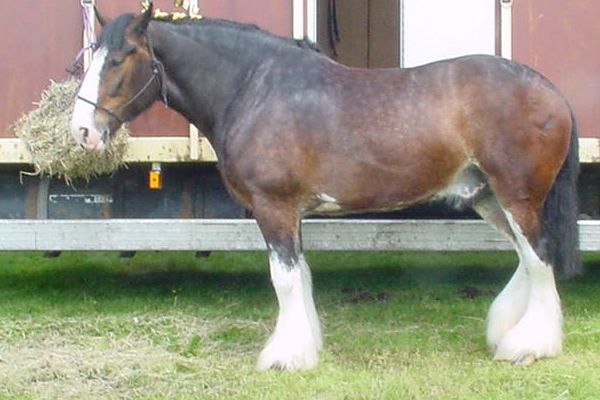
A draft horse is generally a large, heavy horse suitable for farm labor, like this Shire horse.

A draft horse (US) or draught horse (UK), also known as dray horse, carthorse, work horse or heavy horse, is a large horse bred to be a working animal hauling freight and doing heavy agricultural tasks such as plowing. There are a number of breeds, with varying characteristics, but all share common traits of strength, patience, and a docile temperament.

While indispensable to generations of pre-industrial farmers, draft horses are used today for a multitude of purposes, including farming, draft horse showing, logging, recreation, and other uses. Draft breeds have been crossbred with light riding breeds such as the Thoroughbred to create sport horses or warmbloods. While most draft horses are used for driving, they can be ridden and some of the lighter draft breeds are capable performers under saddle.

Characteristics

[edit]
Comparison of a typical-sized carriage horse (top) to a heavy draft horse (bottom)

Draft horses are recognizable by their extremely muscular build. They tend to have broad, short backs with powerful hindquarters. In general, they are taller and tend to have heavier bone and a more upright shoulder than riding horses, producing conformation that is well suited for pulling. Many draft breeds have heavier hair, called feathering on their lower legs. Draft breeds range from approximately 163 to 193 cm (16 to 19 hands) high and from 640 to 910 kg (1,400 to 2,000 lb).

Background

[edit]

Humans domesticated horses and used them to perform a variety of duties. One type of horse-powered work was the hauling of heavy loads, plowing fields, and other tasks that required pulling ability. A heavy, calm, patient, and well-muscled animal was desired for this work. Conversely, a light, more energetic horse was needed for riding and rapid transport. Thus, to the extent possible, a certain amount of selective breeding was used to develop different types of horse for different types of work.

It is a common misunderstanding that the Destrier that carried the armoured knight of the Middle Ages had the size and conformation of a modern draft horse, and some of these Medieval war horses may have provided some bloodlines for some of the modern draft breeds. The reality was that the high-spirited, quick-moving Destrier was closer to the size, build, and temperament of a modern Andalusian or Friesian. There also were horses of more phlegmatic temperaments used for pulling military wagons or performing ordinary farm work which provided bloodlines of the modern draft horse. Records indicate that even medieval drafts were not as large as those today. Of the modern draft breeds, the Percheron probably has the closest ties to the medieval war horse.[1]

By the 19th century horses weighing more than 730 kilograms (1,600 lb) that also moved at a quick pace were in demand. Tall stature, muscular backs, and powerful hindquarters made the draft horse a source of horsepower for farming, hauling freight and moving passengers. The advent of railroads increased demand for working horses, as a growing economy still needed transport over the 'last mile' between the goods yard or station and the final customer.[2] Even in the 20th century, until motor vehicles became an affordable and reliable substitute, draft horses were used for practical work.

Over half a million draft horses were used during World War I. The British were importing American draft horses to supplement their dwindling stock even before America joined the war, preferring Percheron crosses which they said had "great endurance, fine physique, soundness, activity, willingness to work, and almost unfailing good temper". British buyers were buying 10,000 to 25,000 American horses and mules a month, eventually making up about two-thirds of British Army war horses.[3]: 118 

In the late 19th century and early 20th century, thousands of draft horses were imported from Western Europe into the United States. Percherons came from France, Belgians from Brabant, Shires from England, Clydesdales from Scotland. Many American draft breed registries were founded in the late 19th century. The Percheron, with 40,000 broodmares registered as of 1915, was America's most numerous draft breed at the turn of the 20th century.[1] A breed developed exclusively in the U.S. was the American Cream Draft, which had a stud book established by the 1930s.

Beginning in the late 19th century, and with increasing mechanization in the 20th century, especially following World War I in the US and after World War II in Europe, the popularity of the internal combustion engine, and particularly the tractor, reduced the need for the draft horse. Many were sold to slaughter and a number of breeds went into significant decline.[4]: 141, 348, 362 

Modern uses

[edit]
Two horses hitched to a plow.

Today, draft horses can be seen in horse shows, pulling competitions, heavy horse trials, parades pulling large wagons, pulling tourist carriages, and they are still seen on some smaller farms in the US and Europe. They are still used by agrarian groups such as the Amish and Mennonites. Draft horses are used for logging in dense woodland where there is insufficient space for mechanized vehicles or for other conservation considerations.

Draft horse breeds have played a significant role in the development of many warmblood breeds, popular today in advanced level equine sports.

Small areas still exist where draft horses are widely used as transportation due to legislation preventing automotive traffic, such as on Mackinac Island in the United States.

Care

[edit]

Management of a large draft horse can be costly, including feed, shoeing, and veterinary care. Although many draft horses can work without a need for shoes, if they are required, farriers may charge twice the price to shoe a draft horse as a light riding horse because of the extra labor and specialized equipment required.[5] Historically, draft horses were shod with horseshoes that were significantly wider and heavier than those for other types of horses, custom-made, often with caulkins.[6]

The draft horse's metabolism is a bit slower than lighter horse breeds, more akin to that of ponies, requiring less feed per pound of body weight. This is possibly due to their calmer nature. Nonetheless, because of their sheer size, most require a significant amount of feed per day. Generally a supplement to balance nutrients is preferred over a large quantity of grain. They consume hay or other forage from 1.5% to 3% of their body weight per day, depending on work level. They also can drink up to 95 litres; 21 imperial gallons (25 US gal) of water a day. Overfeeding can lead to obesity, and risk of laminitis can be a concern.[7]

World records

[edit]
Brooklyn Supreme (1928–1948) a Belgian draft horse, 198 cm (19.2 hands) high and weighed 1,451 kg (3,200 lb)

The largest horse in recorded history was probably a Shire born in 1846 named Sampson (renamed Mammoth). He stood 218 cm (21.2 hands) high, and his peak weight was estimated at 1,524 kilograms (3,360 lb).[8][9]

At over 193 cm (19 hands), a Shire gelding named Goliath (1977–2001) was the Guinness Book of World Records record holder for the world's tallest living horse (until his death).[10][11] Big Jake (2001–2021), an American Belgian standing 210.2 cm (20.275 hands), held the record for tallest living horse from 2010 until his death in 2021. As of 2024, there is no living record holder.[9]

Draft breeds

[edit]

The following breeds of horse are considered draft breeds:[12][13][14][15]

See also

[edit]

References

[edit]
Revisions and contributorsEdit on WikipediaRead on Wikipedia
from Grokipedia
A draft horse, also known as a draught horse or heavy horse, is a large equine selectively developed for its exceptional strength, endurance, and calm disposition to perform heavy work such as pulling plows, wagons, and loads in , , and transportation. These horses typically stand between 16 and 19 hands high (64 to 76 inches at the shoulder) and weigh from 1,400 to 2,200 pounds, featuring a muscular build with a short, strong back, broad chest, powerful hindquarters, large hooves, and often feathered hair on their lower legs. Draft horses trace their origins to ancient heavy warhorses like the Great Horse of , documented around 200 BCE, which evolved through medieval into specialized work animals for farming, trade, and purposes. By the 17th century, European breeds were imported to , where they powered colonial agriculture and industry; their population peaked at over 25 million in the United States by 1920, driven by the demands of and rural expansion. The rise of and in the mid-20th century led to a sharp decline, reducing numbers to fewer than 200,000 by 1950, though a resurgence has occurred since the late 20th century due to interest in sustainable farming, heritage preservation, and recreational activities. Prominent draft breeds include the Belgian, originating from Belgium and prized for its bay or roan coat and immense pulling power; the Clydesdale, from , known for its striking white markings and feathering; the Percheron, from , valued for its gray coat and versatility; the Shire, England's tallest breed, renowned for its size and gentle nature; and the Suffolk Punch, a chestnut-colored English breed celebrated for stamina and early maturity. All are classified as "cold-blooded" horses, indicating their phlegmatic, patient temperament suited to laborious tasks without excitability. In modern contexts, draft horses continue to serve in niche roles such as , forest , tours, parades, and competitive pulling events, while also gaining popularity in therapeutic riding programs and as family companions due to their docile personalities and low-maintenance needs compared to lighter . Conservation efforts by breed associations emphasize their cultural and genetic importance, ensuring these gentle giants remain a vital part of equine heritage.

History

Origins and Early Development

The of the ancestors of modern horses occurred around 4,200 years ago (~2200 BCE) in the Pontic-Caspian steppe region of western Eurasia, based on genetic evidence from a single founding population of wild Equus ferus caballus. Early management of horses is evidenced ~5,500 years ago by the in modern-day , with archaeological findings including bit wear on teeth and corrals indicating control, though this lineage contributed minimally to modern domestics. Initial selection favored traits like docility and endurance for riding and light use by ~2000 BCE, distinguishing them from wild variants; heavier types for load-bearing emerged later. The precursors to modern draft horses trace to heavy medieval war horses in , such as the Great Horse of and Norman destriers (11th-14th centuries), bred for carrying armored knights and later adapted for draft work as warfare evolved. By around 2000 BCE, evidence of harness use for pulling loads emerged in the Sintashta-Petrovka culture of the southern Urals, where horses were harnessed to wheeled chariots, enabling efficient transport of goods and warriors across vast distances. These innovations spread rapidly to ancient civilizations, including , where horses were integrated into Sumerian and Akkadian societies by the early second millennium BCE, primarily for drawing chariots in warfare and logistical support such as hauling supplies during campaigns. In Egypt, horses arrived around 1600 BCE via invaders, revolutionizing logistics by powering light chariots for rapid troop movements and supply conveyance along the and in battles. Similarly, in during the (c. 1600–1046 BCE), imported steppe horses were employed for chariot-pulled transport in warfare, facilitating the movement of armies and resources across the plain. Early artifacts, such as cuneiform tablets and reliefs from Mesopotamian sites like , depict equids harnessed to sledges and four-wheeled wagons for pulling heavy loads, foreshadowing the specialized draft role of horses despite initial reliance on onagers. A key advancement in draft horse utility came with the invention of the padded in around the 5th century CE during the period, which distributed pulling pressure across the shoulders rather than the throat, allowing horses to exert up to three times more force than previous systems without respiratory hindrance. This innovation, evidenced in tomb figurines and agricultural texts, enabled more effective plowing and heavy hauling in northern , transforming horses from primarily military assets to vital tools in agrarian economies and further promoting for robust, strength-oriented lineages.

Regional Evolution and Breeding Practices

In medieval , monasteries emerged as key breeding centers for heavy horses, utilizing their structured communities and record-keeping abilities to selectively propagate stock for agricultural and transport needs. From the 12th to 14th centuries, this led to the development of regional heavy types, including the in the , prized for its robust build suitable for plowing and hauling in fertile , and the Norman horse in northern , which contributed to larger war and draft lineages through crosses with local and imported bloodlines. These efforts marked a shift toward intentional selection for size and stamina, laying the groundwork for modern draft breeds. The of the 18th and 19th centuries accelerated breeding programs across , as mechanized and expanding rail networks demanded horses capable of pulling heavier loads over longer distances. In Britain, initiatives emphasized enlarging existing heavy types, such as through government-supported shows and sales that promoted sires for increased bone mass and pulling power to support haulage and urban dray work. Belgian programs similarly refined Flemish and Brabant stock into the modern Belgian draft, with royal and private breeders focusing on massive frames to meet industrial traction requirements, resulting in horses often exceeding 1,800 pounds. These developments prioritized scale to align with machinery like multi-furrow plows, transforming regional variants into specialized work animals. North American draft horse evolution stemmed directly from 19th-century imports of European heavy stock, fueled by westward expansion and the demands of frontier farming and logging. As settlers pushed into the Midwest and beyond, breeds like the Clydesdale, Percheron, and Belgian were imported in increasing numbers starting in the mid-19th century—thousands by the 1880s—to bolster local breeding programs, resulting in millions of draft horses by the early 20th century to power sod-breaking plows and freight wagons across vast prairies, adapting to harsher climates through local crosses that enhanced cold tolerance. This influx supported the agricultural boom, with breeding farms in states like Illinois and Iowa emerging to sustain supplies amid labor shortages from migration and urbanization. Central to these regional advancements were breeding practices like linebreeding, which concentrated genetics from superior sires to reinforce traits such as docility for handler safety, endurance for prolonged labor, and structural soundness for heavy loads. Early formal registries formalized these methods; notably, the Society in launched its stud book in 1877, documenting pedigrees to eliminate inferior lines and promote uniformity in feathering, height, and temperament across litters. Such systematic approaches ensured draft horses remained viable amid evolving economic pressures, prioritizing heritable qualities over mere size.

Physical Characteristics

Size, Build, and Conformation

Draft horses are characterized by their imposing size, with most breeds standing between 16 and 19 hands (64 to 76 inches) at the and weighing 1,400 to 2,200 pounds, allowing them to handle substantial workloads while exhibiting variations across different breeds such as the Belgian or . This large stature provides the leverage and necessary for pulling heavy loads, distributing effectively over long periods. Their muscular build features a broad chest for accommodating large lungs and heart capacity, a short and strong back to prevent sagging under weight, powerful hindquarters that generate propulsion during pulling tasks, and large, round hooves that offer stability on varied terrains like or plowed fields. These structural elements contribute to endurance and power, enabling the horse to exert sustained traction without compromising balance or risking injury. Conformation standards emphasize upright shoulders, which optimize pulling by aligning the forelimbs for direct forward rather than , and a dense structure supporting the horse's massive frame and resisting stress from heavy draft work. Leg feathering—long, silky covering the lower legs—and thick manes and are common traits that protect against environmental hazards; feathering shields tendons and ligaments from mud, debris, and abrasions while aiding in water runoff to prevent infections, and abundant mane and tail provides insulation against , repels , and facilitates during labor.

Temperament and Behavioral Traits

Draft horses are renowned for their calm, patient, and willing disposition, qualities that have earned them the affectionate moniker of "gentle giants" owing to their low reactivity and steady demeanor despite their imposing stature. This temperament is evident across major breeds, such as the Belgian, which is described as docile, cooperative, and rarely prone to spooking, making them particularly suitable for labor-intensive roles. Their physical size contributes to this perceived docility, as the breed's robust build fosters a composed presence that belies their power. These horses demonstrate notable , particularly in mastering complex harness routines required for pulling tasks, a trait honed through generations of aimed at enhancing work suitability. This breeding emphasis has cultivated a strong work ethic, with breeds like the noted for their alert, proud, and eager approach to labor, reflecting an innate drive for productivity. In social contexts, draft horses exhibit robust dynamics, forming deep bonds with both conspecifics and handlers that significantly boost team performance. When paired for pulling, their —built on mutual trust and rhythmic coordination—allows teams to exert up to three times the force of a single , far exceeding additive efforts. This behavior underscores their adaptability in group settings, where handler relationships further enhance reliability and efficiency. While generally amenable, overworked individuals may occasionally exhibit resistance, though such traits are uncommon and often linked to rather than inherent . Historical records affirm their dependability in high-stakes scenarios, including wartime , where their unflappable nature supported critical supply transport under duress.

Breeds

Major Recognized Draft Breeds

The Belgian, also known as the Brabant, is one of the largest and heaviest draft horse breeds, originating in Belgium as a direct descendant of the medieval Great Flemish Horse. Formal breeding efforts began in the 17th century, with the breed reaching peak popularity in the late 19th and early 20th centuries due to high demand for heavy agricultural and industrial work. Distinguished by its massive build, typically weighing 1,800 to 2,400 pounds and standing 16 to 18 hands high, the Belgian features a short, muscular neck, broad chest, and powerful hindquarters, with preferred coat colors of bay, roan, or chestnut. The breed standard emphasizes a calm temperament, dense feathering on the legs, and exceptional pulling strength, holding records such as two Belgians pulling over 17,000 pounds in competition. The Clydesdale, a Scottish breed developed in the 18th century in near the River Clyde, traces its origins to Flemish stallions crossed with local mares to enhance farm horse capabilities. Known for its elegant yet robust conformation, the Clydesdale stands 16 to 18 hands tall and weighs 1,800 to 2,200 pounds, with a calling for a strong back, deep ribcage, and well-muscled quarters. Its distinguishing features include extensive feathering on the legs, a white blaze on the face, and typically or brown coats with white markings, contributing to its iconic appearance in ceremonial roles like the official hitch teams. Originating in the Le Perche region of , the is a versatile draft breed descended from medieval war horses refined with Arabian influences for added refinement and endurance. The prioritizes a muscular yet elegant frame, with heights of 16 to 18 hands and weights up to 2,200 pounds, featuring predominantly gray or black coats that often lighten with age. Notable for its historical use in pulling French artillery during wars, including , the Percheron combines draft power with a lighter, more agile build suitable for both heavy work and under-saddle riding. The , England's tallest draft breed, evolved from the medieval "great horses" used by knights, with formal development in the rural shires during the . Standing up to 19 hands and weighing 1,800 to 2,300 pounds, the adheres to standards of a broad, deep body, silky feathering, and coats in black, bay, or gray, emphasizing its imposing stature and gentle disposition. Linked to historical war roles, such as carrying armored cavalry in the , the breed's massive size and strength made it ideal for heavy hauling and plowing. The , a rare British breed and one of the oldest English draft types, originated in around the for farm labor, with records dating to a foundation stallion in 1768. Exclusive to shades ranging from light to deep red, the Suffolk stands 16 to 17 hands and weighs 1,800 to 2,200 pounds, with a compact, round build, short legs, and minimal feathering per breed standards. Renowned for —often working into their 20s—and inherent disease resistance due to its hardy constitution, the breed's active and stamina made it a staple for efficient agricultural tasks.

Regional and Emerging Draft Types

The North American , a hybrid resulting from breeding a male (jack) with a female draft horse , has been valued for its exceptional and in demanding tasks such as since the . This cross, which produces larger and stronger animals than donkey-jackass hybrids, became prominent in the United States during westward expansion, where mules powered timber operations in rugged terrains like the and forests, often outlasting horses in prolonged hauls over uneven ground. Their hybrid vigor contributes to a lifespan of 30-50 years and resistance to parasites, making them ideal for sustained heavy labor without the frailty sometimes seen in purebred horses. The Russian Heavy Draft, developed during the Soviet era in the early from local stock crossed with Belgian Brabant and imports, features a compact build suited to cold climates and agricultural work in vast Russian steppes. Standing 15 to 16 hands high with a muscular, stocky frame and thick-boned legs, this breed was selectively bred for efficiency in harsh winters, exhibiting resilience to extreme cold and rapid maturation compared to larger Western drafts. Following the of and the in the 1990s, the breed's population has drastically declined, with numbers dropping from tens of thousands to fewer than 1,000 registered animals by the early 21st century and continuing to decrease as of 2023. In , the Japanese Ban'ei horse represents a regionally adapted draft type, selectively bred in since the early 20th century from , Belgian, and Breton ancestors for pulling heavy loads in snowy conditions. These horses, weighing 800 to 1,200 kg, possess a unique short-legged, broad-chested conformation that enhances stability and power during snow pulling and plowing, allowing them to navigate deep drifts where taller breeds might falter. Today, they are primarily featured in Ban'ei racing, a traditional involving sled pulls over ramps simulating winter terrain, preserving their cultural role in northern Japan's agricultural heritage. Conservation efforts for rare draft types are led by organizations like , which prioritizes endangered breeds through breed registries, genetic preservation, and educational programs to prevent extinction. For instance, the , the only draft breed originating in the United States, is classified as critically endangered with fewer than 200 annual registrations and around 400 total registered individuals as of 2024. Similarly, the is critically endangered, with fewer than 500 individuals in the UK and under 80 breeding females globally as of 2024, benefiting from the Conservancy's focus on rare historic strains to safeguard diverse equine genetics.

Uses

Historical Roles in Agriculture and Transport

Draft horses have played a pivotal role in since antiquity, serving as essential draft animals for plowing fields and facilitating harvesting in pre-mechanized societies. Their robust build and strength enabled farmers to till heavier soils more efficiently than earlier methods relying on oxen or manual labor. In medieval , the invention of the horse collar around the 8th or marked a significant advancement, allowing horses to pull loads four to five times heavier by distributing pressure to the shoulders rather than the neck. This innovation, combined with improved harnesses and the , dramatically increased , enabling the cultivation of marginal lands and the production of food surpluses that supported and urbanization. By the (c. 1000–1300 CE), draft horses were integral to manorial farming systems, where teams of horses pulled heavy wheeled plows across northern 's clay-heavy soils, contributing to and the feudal economy's stability. During the 18th and 19th centuries, draft horses were indispensable for transportation, hauling heavy wagons loaded with goods across rural roads, powering stagecoaches for passenger travel on long-distance routes, and managing urban delivery services in growing cities. , their use peaked around 1915, when the national horse population reached approximately 21 million, primarily employed in agricultural transport and urban freight to support the expanding industrial . These animals facilitated the movement of timber, , and produce, underpinning networks before the widespread of railroads and motorized vehicles. In military contexts, draft horses were crucial for logistical support during conflicts, particularly in , where they pulled artillery pieces, supply wagons, and ambulances across trench-ridden battlefields. Both Allied and relied heavily on equine power due to the limitations of early mechanized transport in muddy terrains; the British Army alone required over 500,000 horses and mules by 1917. Tragically, the war exacted a heavy toll, with an estimated 8 million horses dying from exhaustion, , shellfire, and starvation across all fronts, underscoring their vital yet vulnerable role in sustaining armies. Beyond practical functions, draft horses held profound cultural significance in agrarian societies, often serving as status symbols for prosperous farmers who could afford to maintain large teams, signifying wealth and agricultural success in medieval and . They also featured prominently in traditional festivals, such as European plowing contests and celebrations, where demonstrations of their strength reinforced ties and preserved rural heritage.

Modern Applications and Adaptations

In contemporary operations, draft horses are employed for sustainable practices that minimize environmental impact, particularly in ecologically sensitive areas such as the . These horses excel in selective thinning, where they drag logs through dense underbrush without the or tree damage caused by heavy machinery, preserving forest health and regeneration. For instance, in Oregon's woodlands, draft horses are used to harvest smaller-diameter trees, allowing for low-impact extraction that supports long-term timber management on family-owned lands. Draft horses also play a prominent role in and public events, enhancing experiences through rides, parades, and demonstrations at county fairs. These activities draw visitors to rural areas, contributing to local economies; for example, equine-related events, including draft horse plowing exhibitions, generate significant within the broader U.S. sector, which supports diversification and community engagement. Iconic examples include the in promotional parades, which bolster by showcasing the breed's historical and cultural appeal. Their calm and gentle temperament makes draft horses suitable for therapeutic and educational applications, particularly in programs for individuals with disabilities. These programs leverage the horses' steady demeanor to foster emotional regulation and physical coordination, as draft crosses are often selected for their mellow nature and broad backs that provide stability during sessions. Such initiatives highlight the breed's adaptability beyond traditional labor, promoting benefits in clinical settings. Modern adaptations include crossbreeding draft horses with lighter breeds to create versatile animals for tasks like cultivation and light hauling, reducing the need for fossil fuel-dependent equipment. This approach aligns with by lowering carbon emissions and soil disturbance. In the United States, draft horses number approximately 338,000, representing about 4.7% of the equine population as of the mid-2010s, with ongoing interest in their use for eco-friendly alternatives amid rising concerns. Recent trends show increased breeding efforts to revive draft power as a regenerative option, emphasizing reduced outputs compared to mechanized methods.

Care and Management

Nutrition and Feeding Requirements

Draft horses, owing to their substantial size and capacity for demanding physical labor, necessitate a diet rich in to sustain muscle mass, overall health, and performance. For a typical mature draft horse weighing 1,600 to 2,000 pounds, daily should constitute 1.5% to 2.5% of body weight in , equating to approximately 25 to 50 pounds of hay or grass to meet basic needs. Working draft horses engaged in heavy labor require additional caloric , up to 40-50 Mcal of digestible per day depending on body weight and work intensity, often supplemented with grains such as oats at 2 to 5 pounds daily to provide readily available carbohydrates without excessive starch that could disrupt . Forage forms the cornerstone of a draft horse's diet, with grass offering a balanced source of fiber and energy for idle or lightly active individuals, while hays like are incorporated to supply higher protein levels (14-16%) essential for muscle repair and growth during periods of work. However, due to their slower compared to lighter breeds, idle draft horses face an elevated risk of if overfed high-quality , which can lead to excessive fat accumulation and associated health complications. To support optimal health, supplements are often necessary, particularly vitamins and minerals tailored to the demands of large-framed equines. , functioning as an , is crucial for maintaining muscle integrity and preventing oxidative damage during exertion, with recommendations of 2,000-5,000 IU daily for working horses. Minerals must maintain a calcium-to-phosphorus balance of approximately 2:1 to promote strength and metabolic function, achievable through fortified feeds or supplements if alone is insufficient. Feeding regimens should prioritize small, frequent meals—ideally two to three times daily for concentrates and free-choice or divided portions—to mimic natural patterns and minimize the risk of from rapid fermentation or digestive overload. Adequate access is vital, with draft horses consuming 10 to 15 gallons daily under normal conditions and up to 20 gallons during heavy work or hot weather to aid and prevent impaction.

Health, Training, and Welfare Considerations

Draft horses, due to their large size and substantial body weight, are particularly susceptible to certain health conditions. , a painful inflammation of the sensitive laminae within the , is a prevalent issue often linked to overfeeding and resulting , which exacerbates equine in heavier breeds. Draft horses are also prone to equine polysaccharide storage (PSSM), a genetic muscle disorder managed through low-starch diets, and chronic progressive lymphedema (CPL) in feathered legs, treated with hygiene and elevation to prevent secondary infections. problems, including —the most common cause of lameness accounting for over 60% of cases in horses—are also frequent, as the animals' weight places excessive stress on fetlocks, pasterns, and stifles. Prevention strategies emphasize regular care, such as trimming and balancing to maintain proper alignment, alongside controlled exercise on soft surfaces like sand to reduce strain and manage weight without promoting further metabolic imbalances. Training for draft horses typically begins with halter breaking around 1-2 years of age, using positive reinforcement techniques like rewards to build trust and encourage voluntary compliance, which helps young animals associate handling with positive outcomes. Harness introduction follows gradually, starting with short sessions to accustom the horse to the equipment's feel and weight, progressing to pulling light loads while continuing positive reinforcement—such as verbal praise or —to reinforce desired behaviors like steady forward movement. These methods minimize stress and leverage the breed's calm , ensuring safer and more effective long-term working partnerships. In the United States, welfare of draft horses in exhibitions and interstate transport is governed by the federal Animal Welfare Act, which mandates minimum standards for housing, handling, sanitation, and veterinary care to prevent undue suffering, while most uses, including work, fall under state and local regulations. However, challenges persist in settings, where carriage horses—often drafts—are prone to , leading to exhaustion, respiratory issues, and injuries from prolonged hours on hard urban surfaces without adequate rest or monitoring. The typical lifespan of draft horses ranges from 18 to 25 years, influenced by , workload, and care quality, necessitating proactive to transition animals to lighter activities or pasture rest as they age to preserve mobility and . For rare draft breeds facing extinction risks, conservation efforts through organizations like focus on programs, including and registry support, to maintain healthy populations and prevent . Post-2020, equine health management has intensified with a focus on biosecurity protocols amid outbreaks of equine herpesvirus-1 (EHV-1), a respiratory and neurological disease that has affected draft horses in multiple U.S. incidents, prompting recommendations for vaccination, quarantine, and restricted movement to curb spread in shared facilities.

Records and Notable Examples

Strength and Pulling Records

Draft horse strength is prominently showcased in competitive pulling events, where teams or individual horses haul weighted sleds over a specified distance, typically 27.5 feet in North American contests. These competitions, governed by various regional and state associations and fair rules, emphasize animal welfare with strict prohibitions on whipping, prodding, or excessive line handling, while using standardized weighted sleds or stone-boats to ensure fair comparisons. Events are widespread in North America, particularly at agricultural fairs in the Midwest and Northeast, and in Europe, including traditional pulls in the UK and France that highlight breeds like Shires and Percherons. Historical feats underscore the remarkable pulling capacity of draft horses, often tested on rollers or dynamometers before modern competitions. In 1924, at a British , a pair of horses pulled an estimated load of 50 tons, breaking the scale in the process, demonstrating the breed's exceptional power in a controlled demonstration. That same year, a single reportedly pulled 29 tons—equivalent to 58,000 pounds—over a quarter mile, highlighting the limits of individual equine strength in early 20th-century tests. These pre-mechanized records, while not part of formal competitions, established benchmarks for draft horse capabilities. In contemporary competitions, verified records focus on teams of two horses, as single-horse pulls are rarer and typically lighter. A notable example occurred in 2021 at the , where a team of Belgian draft horses pulled 13,500 pounds for the full distance, securing the event win and illustrating modern pulling limits under regulated conditions. For larger teams, six-horse hitches in showcase events, such as those at the , demonstrate coordinated strength in ceremonial pulls, though competitive records prioritize smaller teams for precision. In October 2025, a record-breaking team of 62 draught horses in Barellan, , pulled an wagon, setting a for the largest horse team and showcasing exceptional coordination among draft breeds. These achievements reflect ongoing traditions in North American fairs, where pulls test both raw power and . Belgian draft horses dominate modern pulling competitions, particularly in , due to their genetic predisposition for explosive hindquarter strength and extensive for pulling tasks. Training regimens emphasize conditioning on varied terrain and for teams, enabling Belgians to claim the majority of top placements in classes at major events. This breed's prevalence stems from their historical role in heavy and , combined with robust health that supports intense, short-duration efforts without excessive strain.

Famous Draft Horses in History and Media

The , a team of majestic Clydesdale draft horses, have been a symbol of American tradition since 1933, when August A. Busch Jr. gifted a hitch of them to his father to celebrate the end of ; the horses pulled a beer wagon from to for a , marking the beginning of their role in promotional events, parades, and iconic that have captivated audiences for decades. These horses, known for their striking white blazed faces, feathered legs, and gentle temperament, continue to represent 's heritage, appearing in high-profile appearances like the annual and national tours that draw millions of viewers. In military history, Warrior, a courageous bay horse ridden by General Jack Seely during World War I, exemplifies the valor of war horses; foaled in 1908 on the Isle of Wight, Warrior served on the Western Front from 1914 to 1918, surviving intense battles including gas attacks and artillery fire, and was later honored posthumously with the PDSA Order of Merit in 2017, recognized as the animal equivalent of the Victoria Cross for his bravery and loyalty. Although not a pure draft breed, Warrior's story highlights the critical role of strong, resilient horses—often including draft crosses—in the cavalry charges and transport duties of the era, inspiring tributes like the book Warrior: The Amazing Story of a Real War Horse by Jack Seely and Brough Scott. Draft horses have left a lasting mark in media, with the 2011 film War Horse, directed by and based on Michael Morpurgo's novel, depicting the harrowing journey of Joey, a horse inspired by real WWI mounts including heavy breeds used for pulling and ambulances; the movie's emotional portrayal of equine sacrifice grossed over $177 million worldwide and raised awareness of historical horse welfare issues. In literature, Anna Sewell's 1877 novel draws on the experiences of working horses, including those in heavy draft roles like cab pulling and farm labor, to advocate for kinder treatment, influencing animal rights movements and remaining a classic that underscores the societal impact of draft horses in 19th-century urban and rural life. In contemporary times, draft horses have gained fame through programs and viral stories, such as those from rescues like Gentle Giants Draft Horse Rescue in , where retired working horses rediscover playful behaviors after years of labor, highlighting rehabilitation efforts for these gentle giants. These modern examples, including initiatives where draft horses provide emotional support to veterans and children due to their calm demeanor and size, continue to showcase the breed's gentle nature beyond traditional roles, with viral content from rescues amplifying calls for their preservation and welfare in the 2020s.

References

Add your contribution
Related Hubs
User Avatar
No comments yet.