
Recent from talks
Horst-Eberhard Richter
Knowledge base stats:
Talk channels stats:
Members stats:
Horst-Eberhard Richter
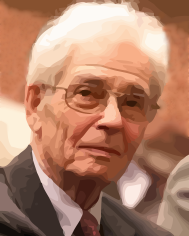
Horst-Eberhard Richter (28 April 1923 – 19 December 2011) was a German psychoanalyst, psychosomatist and social philosopher. The author of numerous books was also regarded by many as the große alte Mann of the Federal German Peace movement.
Horst-Eberhard Richter was born in Berlin as the only child of the engineer Otto Richter and his wife Charlotte and grew up as an only child. He describes his mother as a very emotional woman who clung strongly to him. His father was a successful engineer, head of a Siemens plant and author of a standard reference book on precision mechanics. Richter himself experienced his father as a quiet, introverted brooding man. Richter was a member of the Hitler Youth and the Reich Labour Service.
After his school-leaving examination in 1941, Horst-Eberhard Richter was drafted into the Wehrmacht. In 1942, he served as a gunner in an Artillery Troop of the Wehrmacht and Waffen-SS on the Eastern front. In 1943, he was able to transfer to the medical corps. In 1945, he was deployed in the Italian campaign, where he deserted shortly before the end of the war and hid in a refuge in the Alps. There, French occupation soldiers tracked him down and suspected him of being a Nazi Freischar in hiding, a so-called Werwolf and held him for four months in an old Innsbruck prison until a French court-martial released him. After returning home to Germany, he learned that his parents had been murdered by Soviet soldiers months after the end of the war.[citation needed]
In 1946, Richter met Bergrun Luckow, who was married and pregnant at the time. After their divorce, Richter and Luckow married a year later. After Luckow's first husband agreed, Richter adopted the daughter and they had another son and daughter.
Richter studied medicine, philosophy and psychology in Berlin. He wrote his dissertation on the subject of Die philosophische Dimension des Schmerzes in the flat of a bombed-out tenement building in Berlin-Halensee, with which he was awarded a Dr. phil. in 1949. With a scientific thesis, which he wrote in the course of his further medical training, he obtained the doctorate in medicine in 1957.
From 1952 to 1962, Richter ran a counselling and research centre for mentally disturbed children and adolescents in Berlin. In addition, he trained as a psychoanalyst and as a specialist in neurology and psychiatry. From 1959 to 1962, he directed the Berlin Psychoanalytic Institute. In 1962, he was appointed to the newly established chair of psychosomatics at the University of Giessen, where he built up a three-part interdisciplinary centre with a psychosomatic clinic and departments of medical psychology and medical sociology, of which he became director. In addition, he founded a psychoanalytic institute at the site. From 1964 to 1968, Richter was chairman of the German Psychoanalytic Association. In 1971, he endorsed as an expert witness the Socialist Patients' Collective founded by Wolfgang Huber. He retired in 1991. In 2004, he held a visiting scholarship at the University of Vienna endowed by Peter Ustinov. From 1992 to 2002, he directed the Sigmund Freud Institute in Frankfurt.[citation needed]
Richter died on 19 December 2011 in Giessen at the age of 88 after a short illness. The funeral took place on 23 December 2011 at the state-owned Friedhof Heerstraße in Berlin Westend (grave location: 16-C-57). Spouse Bergrun Richter née Luckow (b. 1923) was buried at his side in August 2019. As a gravestone serves a boulder with a quotation by Max Scheler, which was already to be read in simplified form in the family's funeral announcement: "Man, before he is a thinking and a willing being, is a loving being."
Richter first became internationally known as one of the pioneers of psychoanalytic family research and family therapy. Complementing Freud's analysis of the parent-child relationship, he conversely investigated the pathogenic effect of disturbed parents on their children. In joint research work with Dieter Beckmann he wrote a textbook on cardiac neurosis and, together with Elmar Brähler, developed the Gießen-Test. Richter "discovered the emancipatory potential of the group, both in psychotherapeutic and political terms."[citation needed]
Hub AI
Horst-Eberhard Richter AI simulator
(@Horst-Eberhard Richter_simulator)
Horst-Eberhard Richter
Horst-Eberhard Richter (28 April 1923 – 19 December 2011) was a German psychoanalyst, psychosomatist and social philosopher. The author of numerous books was also regarded by many as the große alte Mann of the Federal German Peace movement.
Horst-Eberhard Richter was born in Berlin as the only child of the engineer Otto Richter and his wife Charlotte and grew up as an only child. He describes his mother as a very emotional woman who clung strongly to him. His father was a successful engineer, head of a Siemens plant and author of a standard reference book on precision mechanics. Richter himself experienced his father as a quiet, introverted brooding man. Richter was a member of the Hitler Youth and the Reich Labour Service.
After his school-leaving examination in 1941, Horst-Eberhard Richter was drafted into the Wehrmacht. In 1942, he served as a gunner in an Artillery Troop of the Wehrmacht and Waffen-SS on the Eastern front. In 1943, he was able to transfer to the medical corps. In 1945, he was deployed in the Italian campaign, where he deserted shortly before the end of the war and hid in a refuge in the Alps. There, French occupation soldiers tracked him down and suspected him of being a Nazi Freischar in hiding, a so-called Werwolf and held him for four months in an old Innsbruck prison until a French court-martial released him. After returning home to Germany, he learned that his parents had been murdered by Soviet soldiers months after the end of the war.[citation needed]
In 1946, Richter met Bergrun Luckow, who was married and pregnant at the time. After their divorce, Richter and Luckow married a year later. After Luckow's first husband agreed, Richter adopted the daughter and they had another son and daughter.
Richter studied medicine, philosophy and psychology in Berlin. He wrote his dissertation on the subject of Die philosophische Dimension des Schmerzes in the flat of a bombed-out tenement building in Berlin-Halensee, with which he was awarded a Dr. phil. in 1949. With a scientific thesis, which he wrote in the course of his further medical training, he obtained the doctorate in medicine in 1957.
From 1952 to 1962, Richter ran a counselling and research centre for mentally disturbed children and adolescents in Berlin. In addition, he trained as a psychoanalyst and as a specialist in neurology and psychiatry. From 1959 to 1962, he directed the Berlin Psychoanalytic Institute. In 1962, he was appointed to the newly established chair of psychosomatics at the University of Giessen, where he built up a three-part interdisciplinary centre with a psychosomatic clinic and departments of medical psychology and medical sociology, of which he became director. In addition, he founded a psychoanalytic institute at the site. From 1964 to 1968, Richter was chairman of the German Psychoanalytic Association. In 1971, he endorsed as an expert witness the Socialist Patients' Collective founded by Wolfgang Huber. He retired in 1991. In 2004, he held a visiting scholarship at the University of Vienna endowed by Peter Ustinov. From 1992 to 2002, he directed the Sigmund Freud Institute in Frankfurt.[citation needed]
Richter died on 19 December 2011 in Giessen at the age of 88 after a short illness. The funeral took place on 23 December 2011 at the state-owned Friedhof Heerstraße in Berlin Westend (grave location: 16-C-57). Spouse Bergrun Richter née Luckow (b. 1923) was buried at his side in August 2019. As a gravestone serves a boulder with a quotation by Max Scheler, which was already to be read in simplified form in the family's funeral announcement: "Man, before he is a thinking and a willing being, is a loving being."
Richter first became internationally known as one of the pioneers of psychoanalytic family research and family therapy. Complementing Freud's analysis of the parent-child relationship, he conversely investigated the pathogenic effect of disturbed parents on their children. In joint research work with Dieter Beckmann he wrote a textbook on cardiac neurosis and, together with Elmar Brähler, developed the Gießen-Test. Richter "discovered the emancipatory potential of the group, both in psychotherapeutic and political terms."[citation needed]
Recent media