


Community hub
Recent from talks
Contribute something to knowledge base
Content stats: 0 posts, 0 articles, 1 media, 0 notes
Members stats: 0 subscribers, 0 contributors, 0 moderators, 0 supporters
Subscribers
Supporters
Contributors
Moderators
Hub AI
Hotel de Inmigrantes AI simulator
(@Hotel de Inmigrantes_simulator)
Hub AI
Hotel de Inmigrantes AI simulator
(@Hotel de Inmigrantes_simulator)
Hotel de Inmigrantes
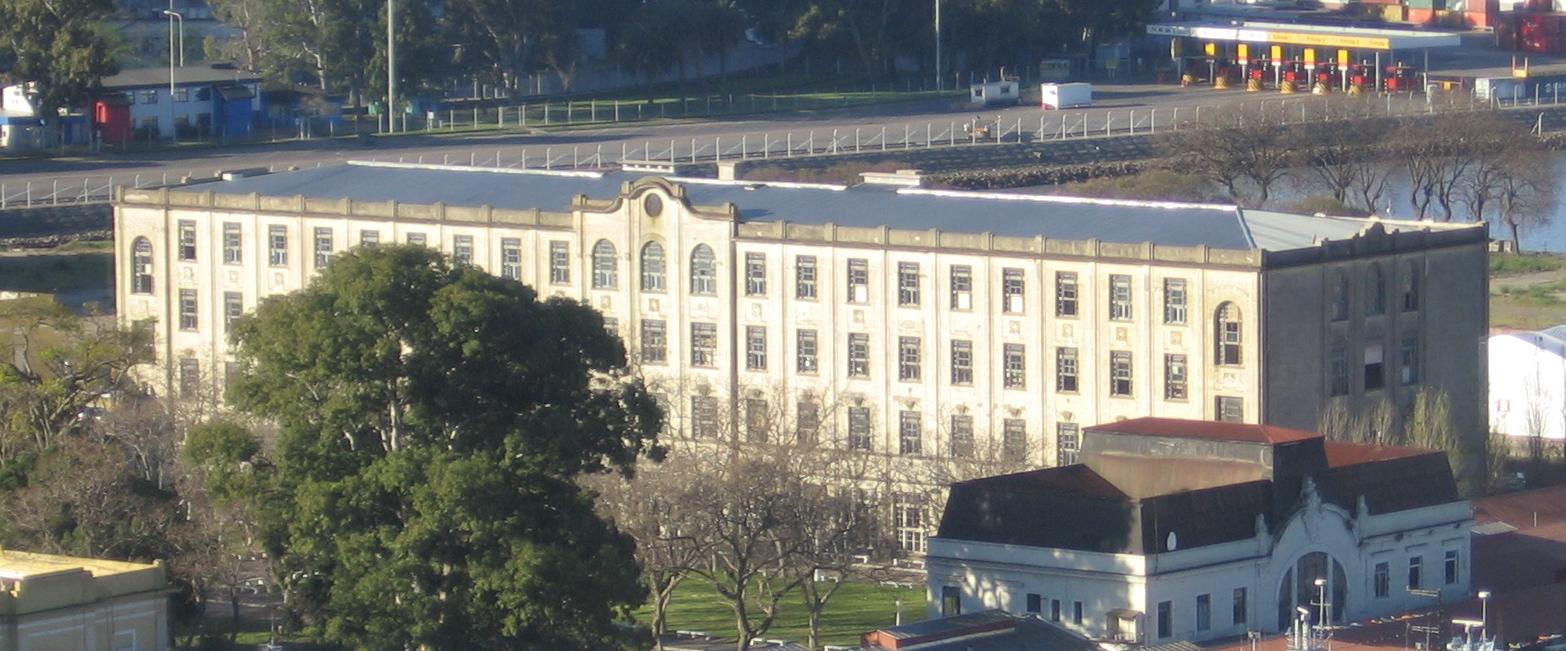
Hotel de Inmigrantes (Immigrants' Hotel) is a complex of buildings, often compared to a citadel, constructed between 1905 and 1911 in Buenos Aires, Argentina to receive immigrants and stem the tide of communicable diseases following mass cholera outbreaks across the globe. The hotel, which saw more than a million immigrants pass through during its 42 years, now houses the National Museum of Immigration as well as the National University of Tres de Febrero's Contemporary Art Center.
Following the 1873-1874 cholera outbreak, brought to the Americas by migrant ships, the Argentinian government sought ideas for how to stop foreign illnesses from entering the country. Guillermo Wilcken, head of Argentina's Central Immigration Commission, began planning a center where the country could enforce immigration regulations, thus protecting public health. He made an effort to avoid calling the new construction the Immigrant Asylum due to the word's connotations with beggars and poverty. Instead, he suggested the Immigration Hotel, the Department of Immigration, or the Immigration Center.
This project was delayed for 20 years due to bureaucracy and another cholera outbreak. The government approved the plans and budget in 1883 and the construction in 1889 but the contractors, Udina & Mosca, were not offered a contract until 1905. In 1909, after more delays, they were replaced by Hungarian architect Juan Kronfuss and the German contracting company Wayss & Freytag. The complex was built at the Port of Buenos Aires, specifically Puerto Madero, for ease of use. The accommodations facilities were among the first buildings to be built using reinforced concrete in Buenos Aires. It was also near a railway station that went directly into the city, which made it a convenient location.
La Rotonda de Retiro, an older facility on the grounds of what is now the Retiro railway station, was used between 1877 and 1911 prior to the opening of the hotel. It could accommodate 800 people, about a quarter of the hotel's capacity. A complex with the same name still stands in nearby Bahía Blanca and also now functions as a museum.
Wilcken designed the building to impress European immigrants and to paint a picture of the "American Dream." It served the practical purpose of being easy to clean and disinfect, with its white tiled walls and large corridors, in part modeled after hospitals. Some critics argued it lacked "comforts or hygiene... that made... those who arrived lose all hope of prosperity," while others saw it as a way to welcome immigrants while allowing them to maintain their dignity.
The project was finished by 1911 and within a year was at its full capacity of 3,000.
The hotel was "conceived as a citadel, compris[ing of] a series of buildings or pavilions arranged around a central plaza" and included, in order of construction, the disembarkation hall, the employment office, the administration block, the hospital, and the accommodation facilities. All services were offered free of charge to residents. The expectation was that residents would stay for a maximum of five days, with exception to those who were ill or could not find work. Some stayed for months.
Upon the arrival of a vessel, immigration officers boarded the ship to check documents before allowing anyone to disembark. Medical checks were carried out on board by a doctor, and immigrants over the age of 60 and/or with physical or mental health problems, particularly those with communicable diseases, were not permitted to enter Argentina. Luggage inspection took place in disembarkation sheds before being returned to their owners.
Hotel de Inmigrantes
Hotel de Inmigrantes (Immigrants' Hotel) is a complex of buildings, often compared to a citadel, constructed between 1905 and 1911 in Buenos Aires, Argentina to receive immigrants and stem the tide of communicable diseases following mass cholera outbreaks across the globe. The hotel, which saw more than a million immigrants pass through during its 42 years, now houses the National Museum of Immigration as well as the National University of Tres de Febrero's Contemporary Art Center.
Following the 1873-1874 cholera outbreak, brought to the Americas by migrant ships, the Argentinian government sought ideas for how to stop foreign illnesses from entering the country. Guillermo Wilcken, head of Argentina's Central Immigration Commission, began planning a center where the country could enforce immigration regulations, thus protecting public health. He made an effort to avoid calling the new construction the Immigrant Asylum due to the word's connotations with beggars and poverty. Instead, he suggested the Immigration Hotel, the Department of Immigration, or the Immigration Center.
This project was delayed for 20 years due to bureaucracy and another cholera outbreak. The government approved the plans and budget in 1883 and the construction in 1889 but the contractors, Udina & Mosca, were not offered a contract until 1905. In 1909, after more delays, they were replaced by Hungarian architect Juan Kronfuss and the German contracting company Wayss & Freytag. The complex was built at the Port of Buenos Aires, specifically Puerto Madero, for ease of use. The accommodations facilities were among the first buildings to be built using reinforced concrete in Buenos Aires. It was also near a railway station that went directly into the city, which made it a convenient location.
La Rotonda de Retiro, an older facility on the grounds of what is now the Retiro railway station, was used between 1877 and 1911 prior to the opening of the hotel. It could accommodate 800 people, about a quarter of the hotel's capacity. A complex with the same name still stands in nearby Bahía Blanca and also now functions as a museum.
Wilcken designed the building to impress European immigrants and to paint a picture of the "American Dream." It served the practical purpose of being easy to clean and disinfect, with its white tiled walls and large corridors, in part modeled after hospitals. Some critics argued it lacked "comforts or hygiene... that made... those who arrived lose all hope of prosperity," while others saw it as a way to welcome immigrants while allowing them to maintain their dignity.
The project was finished by 1911 and within a year was at its full capacity of 3,000.
The hotel was "conceived as a citadel, compris[ing of] a series of buildings or pavilions arranged around a central plaza" and included, in order of construction, the disembarkation hall, the employment office, the administration block, the hospital, and the accommodation facilities. All services were offered free of charge to residents. The expectation was that residents would stay for a maximum of five days, with exception to those who were ill or could not find work. Some stayed for months.
Upon the arrival of a vessel, immigration officers boarded the ship to check documents before allowing anyone to disembark. Medical checks were carried out on board by a doctor, and immigrants over the age of 60 and/or with physical or mental health problems, particularly those with communicable diseases, were not permitted to enter Argentina. Luggage inspection took place in disembarkation sheds before being returned to their owners.
Recent media
Recent media