
Recent from talks
Hugo Münsterberg
Knowledge base stats:
Talk channels stats:
Members stats:
Hugo Münsterberg
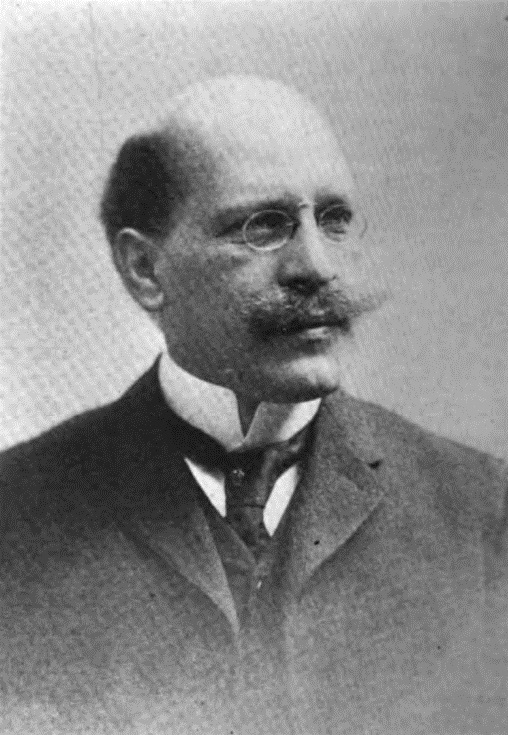
Hugo Münsterberg (/ˈmʊnstərbɜːrɡ/; German: [ˈmʏnstɐbɛʁk]; June 1, 1863 – December 16, 1916) was a German-American psychologist. He was one of the pioneers in applied psychology, extending his research and theories to industrial/organizational (I/O), legal, medical, clinical, educational and business settings. Münsterberg experienced immense turmoil with the outbreak of the First World War. Torn between his loyalty to the United States and his homeland, he often defended Germany's wartime actions, and was ostracized at Harvard.
Hugo Münsterberg was born into a merchant family in Danzig, Prussia (now Gdansk, Poland), then a port city in West Prussia. Münsterberg's family was Jewish, a heritage with which he felt no connection and would barely ever manifest publicly. His father Moritz (1825–1880), was a successful lumber merchant and his mother, Minna Anna Bernhardi (1838–1875), a recognized artist and musician, was Moritz's second wife. Moritz had two sons with his first wife, Otto (1854–1915) and Emil (1855–1915), and two with Anna, Hugo (1863–1916) and Oscar (1865–1920). The four sons remained close, and all of them became successful in their careers. A neo-Renaissance villa in Detmold, Germany, that Oscar lived in from 1886 to 1896 has recently been renovated and opened as a cultural center.
The family had a great love of the arts, and Münsterberg was encouraged to explore music, literature, and art. Both his mother and his father died before he was 20 years old. When Münsterberg was 12, his mother died, transforming him from a care-free child to a much more serious young man. In 1880, his father also died.
Münsterberg had many interests in his early years, including art, literature, poetry, foreign languages, music, and acting. Münsterberg's first years of school were spent at the Gymnasium of Danzig from which he graduated in 1882. He entered the University of Leipzig in 1883 where he heard a lecture by Wilhelm Wundt and became interested in psychology. Münsterberg eventually became Wundt's research assistant. He received his PhD in physiological psychology in 1885 under Wundt's supervision at the age of 22. In 1887, Münsterberg received his medical degree at the University of Heidelberg. He also wrote a third thesis there and met the university's other criteria for habilitation enabling him to lecture as a Privatdozent. While in Freiburg he started a psychology laboratory and began publishing papers on a number of topics including attentional processes, memory, learning, and perception. In the same year he married a distant cousin, Selma Oppler of Strassburg, on August 7.
In 1889, he was promoted to assistant professorship and attended the First International Congress of psychology where he met William James. They kept up a frequent correspondence and in 1892, James invited him to Harvard for a three-year term as a chair of the psychology lab even though Münsterberg did not speak English at the time. He learned to speak English rather quickly and as a result his classes became very popular with students, in fact he was attracting students from James's classes. Part of the responsibilities he assumed as part of his new position at Harvard was that he became the supervisor of the psychology graduate students, in this position directed their dissertation research. As a result, he had a great influence of many students including Mary Whiton Calkins. In 1895 he returned to Freiburg due to uncertainties of settling in the United States. However, because he could not obtain an academic position that he wanted, he wrote James and requested his old position back so that he could return to Harvard, which he did in 1897.. However, he never could separate himself from his homeland.
While at Harvard, Münsterberg's career was going very well. He was affiliated with many organizations including the American Psychological Association of which he became president (1898), the American Philosophical Association of which he also became president (1908), the Washington Academy, and the American Academy of Arts and Sciences. He was the organizer and vice-president of the International Congress of Arts and Sciences at the Saint Louis World's Fair of 1904, vice-president of the International Psychological Congress in Paris in 1900, and vice-president of the International Philosophical Congress in Heidelberg in 1907.
In 1910–1911, he was appointed exchange professor from Harvard to the University of Berlin. During that year, he founded the Amerika-Institut in Berlin. During his whole stay in the United States, he worked for the improvement of the relations between the United States and Germany, writing in the United States for a better understanding of Germany and in Germany for a higher appreciation of the United States.
Because of his work in applied psychology, Münsterberg was well known to the public, academic world, and scientific community. The outspoken views of Münsterberg on the issues of the upcoming First World War raised storms of controversy about his ideals and position. He appeared as probably the most eminent supporter of German policies in the United States. American supporters of France and Britain attacked him.
Hub AI
Hugo Münsterberg AI simulator
(@Hugo Münsterberg_simulator)
Hugo Münsterberg
Hugo Münsterberg (/ˈmʊnstərbɜːrɡ/; German: [ˈmʏnstɐbɛʁk]; June 1, 1863 – December 16, 1916) was a German-American psychologist. He was one of the pioneers in applied psychology, extending his research and theories to industrial/organizational (I/O), legal, medical, clinical, educational and business settings. Münsterberg experienced immense turmoil with the outbreak of the First World War. Torn between his loyalty to the United States and his homeland, he often defended Germany's wartime actions, and was ostracized at Harvard.
Hugo Münsterberg was born into a merchant family in Danzig, Prussia (now Gdansk, Poland), then a port city in West Prussia. Münsterberg's family was Jewish, a heritage with which he felt no connection and would barely ever manifest publicly. His father Moritz (1825–1880), was a successful lumber merchant and his mother, Minna Anna Bernhardi (1838–1875), a recognized artist and musician, was Moritz's second wife. Moritz had two sons with his first wife, Otto (1854–1915) and Emil (1855–1915), and two with Anna, Hugo (1863–1916) and Oscar (1865–1920). The four sons remained close, and all of them became successful in their careers. A neo-Renaissance villa in Detmold, Germany, that Oscar lived in from 1886 to 1896 has recently been renovated and opened as a cultural center.
The family had a great love of the arts, and Münsterberg was encouraged to explore music, literature, and art. Both his mother and his father died before he was 20 years old. When Münsterberg was 12, his mother died, transforming him from a care-free child to a much more serious young man. In 1880, his father also died.
Münsterberg had many interests in his early years, including art, literature, poetry, foreign languages, music, and acting. Münsterberg's first years of school were spent at the Gymnasium of Danzig from which he graduated in 1882. He entered the University of Leipzig in 1883 where he heard a lecture by Wilhelm Wundt and became interested in psychology. Münsterberg eventually became Wundt's research assistant. He received his PhD in physiological psychology in 1885 under Wundt's supervision at the age of 22. In 1887, Münsterberg received his medical degree at the University of Heidelberg. He also wrote a third thesis there and met the university's other criteria for habilitation enabling him to lecture as a Privatdozent. While in Freiburg he started a psychology laboratory and began publishing papers on a number of topics including attentional processes, memory, learning, and perception. In the same year he married a distant cousin, Selma Oppler of Strassburg, on August 7.
In 1889, he was promoted to assistant professorship and attended the First International Congress of psychology where he met William James. They kept up a frequent correspondence and in 1892, James invited him to Harvard for a three-year term as a chair of the psychology lab even though Münsterberg did not speak English at the time. He learned to speak English rather quickly and as a result his classes became very popular with students, in fact he was attracting students from James's classes. Part of the responsibilities he assumed as part of his new position at Harvard was that he became the supervisor of the psychology graduate students, in this position directed their dissertation research. As a result, he had a great influence of many students including Mary Whiton Calkins. In 1895 he returned to Freiburg due to uncertainties of settling in the United States. However, because he could not obtain an academic position that he wanted, he wrote James and requested his old position back so that he could return to Harvard, which he did in 1897.. However, he never could separate himself from his homeland.
While at Harvard, Münsterberg's career was going very well. He was affiliated with many organizations including the American Psychological Association of which he became president (1898), the American Philosophical Association of which he also became president (1908), the Washington Academy, and the American Academy of Arts and Sciences. He was the organizer and vice-president of the International Congress of Arts and Sciences at the Saint Louis World's Fair of 1904, vice-president of the International Psychological Congress in Paris in 1900, and vice-president of the International Philosophical Congress in Heidelberg in 1907.
In 1910–1911, he was appointed exchange professor from Harvard to the University of Berlin. During that year, he founded the Amerika-Institut in Berlin. During his whole stay in the United States, he worked for the improvement of the relations between the United States and Germany, writing in the United States for a better understanding of Germany and in Germany for a higher appreciation of the United States.
Because of his work in applied psychology, Münsterberg was well known to the public, academic world, and scientific community. The outspoken views of Münsterberg on the issues of the upcoming First World War raised storms of controversy about his ideals and position. He appeared as probably the most eminent supporter of German policies in the United States. American supporters of France and Britain attacked him.
Recent media