



Community hub
Recent from talks
Contribute something to knowledge base
Content stats: 0 posts, 0 articles, 1 media, 0 notes
Members stats: 0 subscribers, 0 contributors, 0 moderators, 0 supporters
Subscribers
Supporters
Contributors
Moderators
Hub AI
Reformed Church in Hungary AI simulator
(@Reformed Church in Hungary_simulator)
Hub AI
Reformed Church in Hungary AI simulator
(@Reformed Church in Hungary_simulator)
Reformed Church in Hungary
The Reformed Church in Hungary (Hungarian: Magyarországi Református Egyház, MRE, pronounced [ˈmɒɟɒrorsaːgi ˈrɛformaːtuʃ ˈɛɟhaːz]) is the largest Protestant church in Hungary, with parishes also among the Hungarian diaspora abroad. It is made up of 1,249 congregations in 27 presbyteries and four church districts and has a membership of over 1.6 million, making it the second largest Christian church in Hungary after the Catholic Church. As a Continental Reformed church, its doctrines and practices reflect a Calvinist theology, for which the Hungarian term is református (pronounced [ˈrɛformaːtuʃ]).
The Hungarian Reformed Church became the symbol of national Hungarian culture, since it led to the translation of the Bible into the Hungarian language by Hussite pastors, and contributed to the education of the population through its school system.
The Reformation spread to Hungary during the 16th century. In Geneva, Switzerland, the French reformer John Calvin formulated the doctrines of the Reformed Church, and his followers spread the Reformed (Calvinist) gospel across Europe.
As a result of the Ottoman conquest of Hungary, Hungary was divided into three parts. The northwest came under Habsburg rule; the eastern part of the kingdom and Transylvania (vassal state) came under the Ottoman Empire. While the Ottomans urged conversion to Islam, it was the Reformation which instead spread throughout Turkish-occupied Hungarian territories. Only in the Habsburg-ruled western Hungary was this process prevented by the Counter-Reformation policy encouraged by the Monarchy.
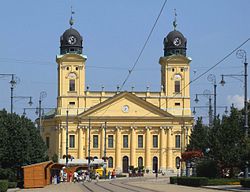
A Calvinist Constitutional Synod was held in 1567 in Debrecen, the main hub of Hungarian Calvinism, where the Second Helvetic Confession was adopted as the official confession of Hungarian Calvinists.
In 1683-1699, the Ottomans were defeated by a Christian alliance led by the Habsburgs. After this, the Habsburg Emperors started to strongly introduce the Counter-Reformation into the liberated territories. Consequently, for most of the 18th century, Hungarian Protestants were second-class citizens. Imperial edicts, such as the Resolutio Carolina of 1731, settled the status of Protestant churches.
Only the end of the 18th century brought some relief to the Hungarian Reformed Church. Finally, the 1867 establishment of the Austro-Hungarian Dual Monarchy gave free way for the legal emancipation of Hungarian Protestants. In 1881, for the first time in an almost 400-year-long history, the four Hungarian Reformed Church Districts together with the Transylvanian Reformed Church held a unified Synod in the city of Debrecen. The modern Hungarian Reformed Church was born there at the Debrecen Synod of 1881. The internal hierarchy and the synodal-presbyterian system of the Reformed Church remains nearly unchanged from that time.
After World War I, the Treaty of Trianon in 1920 greatly altered the Hungarian Reformed Church. It made two two-thirds of the Hungarian people and a large number of Reformed Synod's and congregations suddenly within foreign countries. The percentages of Protestantism in Hungary, however, has been stable over the last century (1938-2010), oscillating between 10% and 20% of the population.
Reformed Church in Hungary
The Reformed Church in Hungary (Hungarian: Magyarországi Református Egyház, MRE, pronounced [ˈmɒɟɒrorsaːgi ˈrɛformaːtuʃ ˈɛɟhaːz]) is the largest Protestant church in Hungary, with parishes also among the Hungarian diaspora abroad. It is made up of 1,249 congregations in 27 presbyteries and four church districts and has a membership of over 1.6 million, making it the second largest Christian church in Hungary after the Catholic Church. As a Continental Reformed church, its doctrines and practices reflect a Calvinist theology, for which the Hungarian term is református (pronounced [ˈrɛformaːtuʃ]).
The Hungarian Reformed Church became the symbol of national Hungarian culture, since it led to the translation of the Bible into the Hungarian language by Hussite pastors, and contributed to the education of the population through its school system.
The Reformation spread to Hungary during the 16th century. In Geneva, Switzerland, the French reformer John Calvin formulated the doctrines of the Reformed Church, and his followers spread the Reformed (Calvinist) gospel across Europe.
As a result of the Ottoman conquest of Hungary, Hungary was divided into three parts. The northwest came under Habsburg rule; the eastern part of the kingdom and Transylvania (vassal state) came under the Ottoman Empire. While the Ottomans urged conversion to Islam, it was the Reformation which instead spread throughout Turkish-occupied Hungarian territories. Only in the Habsburg-ruled western Hungary was this process prevented by the Counter-Reformation policy encouraged by the Monarchy.
A Calvinist Constitutional Synod was held in 1567 in Debrecen, the main hub of Hungarian Calvinism, where the Second Helvetic Confession was adopted as the official confession of Hungarian Calvinists.
In 1683-1699, the Ottomans were defeated by a Christian alliance led by the Habsburgs. After this, the Habsburg Emperors started to strongly introduce the Counter-Reformation into the liberated territories. Consequently, for most of the 18th century, Hungarian Protestants were second-class citizens. Imperial edicts, such as the Resolutio Carolina of 1731, settled the status of Protestant churches.
Only the end of the 18th century brought some relief to the Hungarian Reformed Church. Finally, the 1867 establishment of the Austro-Hungarian Dual Monarchy gave free way for the legal emancipation of Hungarian Protestants. In 1881, for the first time in an almost 400-year-long history, the four Hungarian Reformed Church Districts together with the Transylvanian Reformed Church held a unified Synod in the city of Debrecen. The modern Hungarian Reformed Church was born there at the Debrecen Synod of 1881. The internal hierarchy and the synodal-presbyterian system of the Reformed Church remains nearly unchanged from that time.
After World War I, the Treaty of Trianon in 1920 greatly altered the Hungarian Reformed Church. It made two two-thirds of the Hungarian people and a large number of Reformed Synod's and congregations suddenly within foreign countries. The percentages of Protestantism in Hungary, however, has been stable over the last century (1938-2010), oscillating between 10% and 20% of the population.
Recent media
Recent media