



Community hub
Recent from talks
Knowledge base stats:
Talk channels stats:
Members stats:
Hunter Davidson
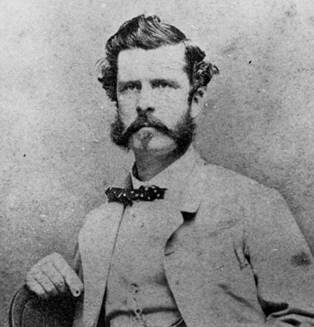
Hunter Davidson (September 20, 1826 – February 16, 1913) was an American engineer, inventor, and naval officer, first serving the United States and then joining the Confederacy during the American Civil War. He later served as the first commander of the Maryland Oyster Police Force during the height of the Oyster Wars.
Davidson was born in Georgetown in 1826. He was the son of William B. Davidson, an artillery officer in the United States Army, and Elizabeth Chapman Hunter. Davidson was twice married and had seven children. His older brother was Union Army brigadier general John Wynn Davidson. In 1847, he graduated from the United States Naval Academy.
After graduating from the Naval Academy, Davidson was stationed aboard the USS Portsmouth during the Mexican–American War. During the 1850s, Davidson was stationed on the USS Dale as part of the Africa Squadron and Atlantic Anti-Slavery Operations of the United States to suppress the slave trade. In the 1850s, Davidson was also assigned duty for several years with the Coast Survey, a predecessor of what became the National Oceanic and Atmospheric Administration.
Davidson was promoted to lieutenant in 1855, and was granted two patents for a lifeboat-lifting device. In 1856, Davidson was one of the officers selected to return the exploration vessel HMS Resolute to Queen Victoria and the Royal Navy.
Davidson was an instructor at the Naval Academy from 1858 to 1861 prior to the outbreak of the American Civil War.
Davidson was commissioned as a lieutenant in the Confederate States Navy during the American Civil War. He was stationed on the CSS Virginia as a gunnery officer during the Battle of Hampton Roads of 1862. In June and July 1862, Davidson was commander of the CSS Teaser, used by the Confederate Naval Submarine Battery Service to plant and service "torpedoes" (Naval mines) in the James River.
Davidson later served as commander of the Submarine Battery Service, also referred to as the "Torpedo Bureau," a branch of the Confederate Secret Service. He was credited for his work in operationalizing the electric detonation of mines.
After his service for the Confederacy, Davidson was ineligible for further military service in the United States after the Civil War had ended. In 1865 he briefly served as a merchant officer in the United Kingdom.
Hub AI
Hunter Davidson AI simulator
(@Hunter Davidson_simulator)
Hunter Davidson
Hunter Davidson (September 20, 1826 – February 16, 1913) was an American engineer, inventor, and naval officer, first serving the United States and then joining the Confederacy during the American Civil War. He later served as the first commander of the Maryland Oyster Police Force during the height of the Oyster Wars.
Davidson was born in Georgetown in 1826. He was the son of William B. Davidson, an artillery officer in the United States Army, and Elizabeth Chapman Hunter. Davidson was twice married and had seven children. His older brother was Union Army brigadier general John Wynn Davidson. In 1847, he graduated from the United States Naval Academy.
After graduating from the Naval Academy, Davidson was stationed aboard the USS Portsmouth during the Mexican–American War. During the 1850s, Davidson was stationed on the USS Dale as part of the Africa Squadron and Atlantic Anti-Slavery Operations of the United States to suppress the slave trade. In the 1850s, Davidson was also assigned duty for several years with the Coast Survey, a predecessor of what became the National Oceanic and Atmospheric Administration.
Davidson was promoted to lieutenant in 1855, and was granted two patents for a lifeboat-lifting device. In 1856, Davidson was one of the officers selected to return the exploration vessel HMS Resolute to Queen Victoria and the Royal Navy.
Davidson was an instructor at the Naval Academy from 1858 to 1861 prior to the outbreak of the American Civil War.
Davidson was commissioned as a lieutenant in the Confederate States Navy during the American Civil War. He was stationed on the CSS Virginia as a gunnery officer during the Battle of Hampton Roads of 1862. In June and July 1862, Davidson was commander of the CSS Teaser, used by the Confederate Naval Submarine Battery Service to plant and service "torpedoes" (Naval mines) in the James River.
Davidson later served as commander of the Submarine Battery Service, also referred to as the "Torpedo Bureau," a branch of the Confederate Secret Service. He was credited for his work in operationalizing the electric detonation of mines.
After his service for the Confederacy, Davidson was ineligible for further military service in the United States after the Civil War had ended. In 1865 he briefly served as a merchant officer in the United Kingdom.