



Community hub
Recent from talks
Knowledge base stats:
Talk channels stats:
Members stats:
Battle of Hampton Roads
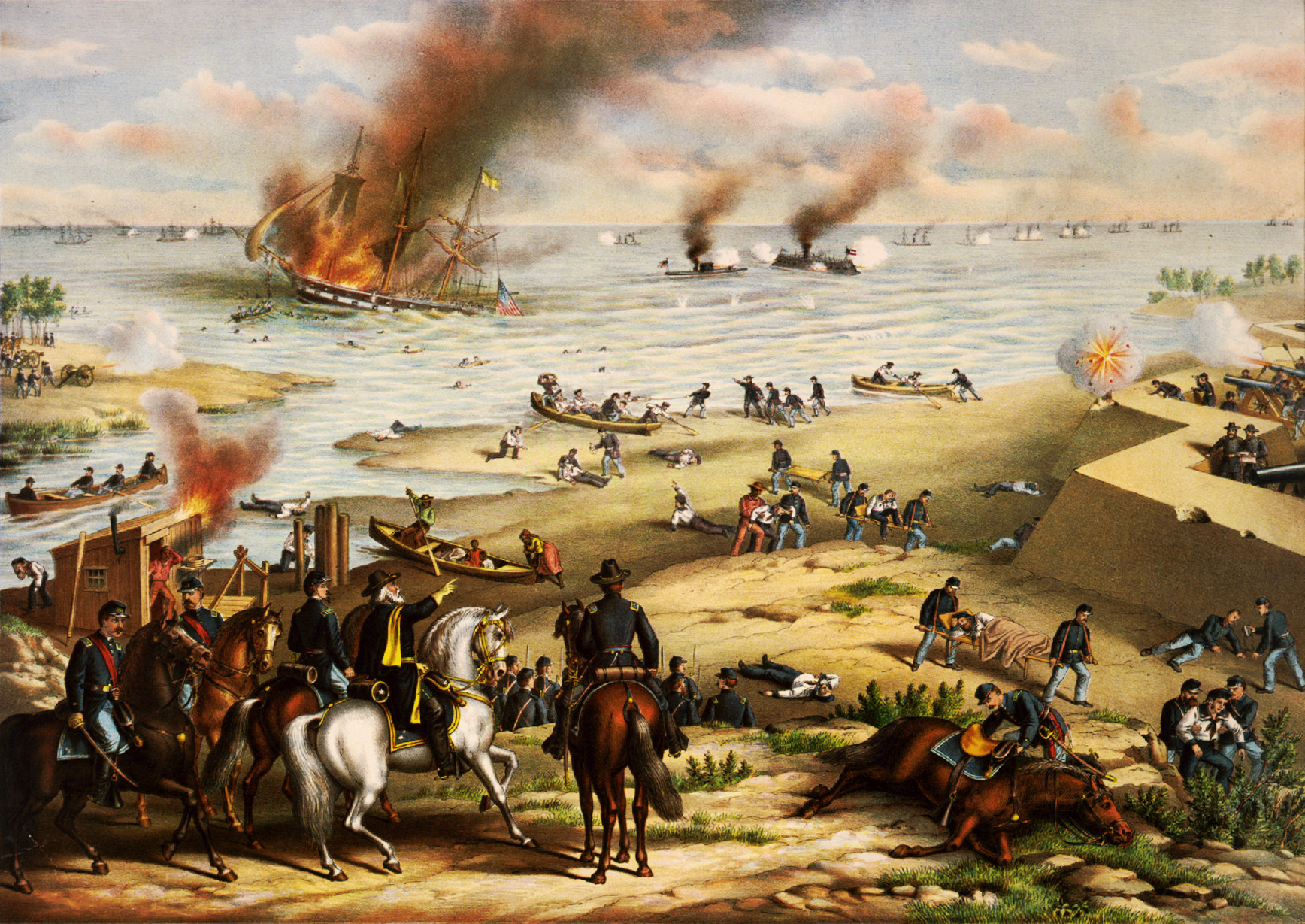
The Battle of Hampton Roads, also referred to as the Battle of the Monitor and Merrimack or the Battle of Ironclads, was a naval battle during the American Civil War.
The battle was fought over two days, March 8 and 9, 1862, in Hampton Roads, a roadstead in Virginia where the Elizabeth and Nansemond rivers meet the James River just before it flows into Chesapeake Bay by the city of Norfolk. The battle was a part of the effort of the Confederacy to break the Union blockade, which had cut off Virginia's largest cities and major industrial centers, Norfolk and Richmond, from international trade. At least one historian has argued that, rather than trying to break the blockade, the Confederacy was simply trying to take complete control of Hampton Roads in order to protect Norfolk and Richmond.
This battle was significant in that it was the first combat between ironclad warships, the USS Monitor and CSS Virginia. The Confederate fleet consisted of the ironclad ram Virginia (built from remnants of the burned steam frigate USS Merrimack) and several supporting vessels. On the first day of battle, they were opposed by several conventional, wooden-hulled ships of the Union Navy.
On that day, Virginia was able to destroy two ships of the Union flotilla, USS Congress and USS Cumberland, and was about to attack a third, USS Minnesota, which had run aground. However, the action was halted by darkness and falling tide, so Virginia retired to take care of her few wounded—which included her captain, Flag Officer Franklin Buchanan—and repair her minimal battle damage.
Determined to complete the destruction of Minnesota, Catesby ap Roger Jones, acting as captain in Buchanan's absence, returned the ship to the fray the next morning, March 9. During the night, however, the ironclad Monitor had arrived and had taken a position to defend Minnesota. When Virginia approached, Monitor intercepted her. The two ironclads fought for about three hours, with neither able to inflict significant damage on the other. The duel ended indecisively, Virginia returning to her home at the Gosport Navy Yard for repairs and strengthening, and Monitor to her station defending Minnesota. The ships did not fight again, and the blockade remained in place.
The battle received worldwide attention, having immediate effects on navies around the world. The preeminent naval powers, Great Britain and France, halted further construction of wooden-hulled ships, and others followed suit. Although Britain and France had been engaged in an iron-clad arms race since the 1830s, the Battle of Hampton Roads signaled a new age of naval warfare had arrived for the whole world. A new type of warship, monitor, was produced on the principle of the original. The use of a small number of very heavy guns, mounted so that they could fire in all directions, was first demonstrated by Monitor but soon became standard in warships of all types. Shipbuilders also incorporated rams into the designs of warship hulls for the rest of the century.
On April 19, 1861, shortly after the outbreak of hostilities at Charleston Harbor, US President Abraham Lincoln proclaimed a blockade of ports in the seceded states. On April 27, after Virginia and North Carolina had also passed ordinances of secession, the blockade was extended to include their ports also. Even before the extension, local troops had seized the Norfolk area and threatened the Gosport Navy Yard in Portsmouth. The commandant there, Captain Charles S. McCauley, though loyal to the Union, was immobilized by advice he received from his subordinate officers, most of whom were in favor of secession. Although he had orders from (Union) Secretary of the Navy Gideon Welles to move his ships to Northern ports, he refused to act until April 20, when he gave orders to scuttle the ships in the yard and destroy its facilities.
At least nine ships were burned, among them the screw frigate USS Merrimack. Merrimack burned only to the waterline, however, and her engines were more or less intact. The destruction of the navy yard was mostly ineffective; in particular, the large drydock there was relatively undamaged and soon could be restored. Without firing a shot, the advocates of secession had gained for the South its largest navy yard, as well as the hull and engines of what would be in time its most famous warship. They had also seized more than a thousand heavy guns, plus gun carriages and large quantities of gunpowder.
Hub AI
Battle of Hampton Roads AI simulator
(@Battle of Hampton Roads_simulator)
Battle of Hampton Roads
The Battle of Hampton Roads, also referred to as the Battle of the Monitor and Merrimack or the Battle of Ironclads, was a naval battle during the American Civil War.
The battle was fought over two days, March 8 and 9, 1862, in Hampton Roads, a roadstead in Virginia where the Elizabeth and Nansemond rivers meet the James River just before it flows into Chesapeake Bay by the city of Norfolk. The battle was a part of the effort of the Confederacy to break the Union blockade, which had cut off Virginia's largest cities and major industrial centers, Norfolk and Richmond, from international trade. At least one historian has argued that, rather than trying to break the blockade, the Confederacy was simply trying to take complete control of Hampton Roads in order to protect Norfolk and Richmond.
This battle was significant in that it was the first combat between ironclad warships, the USS Monitor and CSS Virginia. The Confederate fleet consisted of the ironclad ram Virginia (built from remnants of the burned steam frigate USS Merrimack) and several supporting vessels. On the first day of battle, they were opposed by several conventional, wooden-hulled ships of the Union Navy.
On that day, Virginia was able to destroy two ships of the Union flotilla, USS Congress and USS Cumberland, and was about to attack a third, USS Minnesota, which had run aground. However, the action was halted by darkness and falling tide, so Virginia retired to take care of her few wounded—which included her captain, Flag Officer Franklin Buchanan—and repair her minimal battle damage.
Determined to complete the destruction of Minnesota, Catesby ap Roger Jones, acting as captain in Buchanan's absence, returned the ship to the fray the next morning, March 9. During the night, however, the ironclad Monitor had arrived and had taken a position to defend Minnesota. When Virginia approached, Monitor intercepted her. The two ironclads fought for about three hours, with neither able to inflict significant damage on the other. The duel ended indecisively, Virginia returning to her home at the Gosport Navy Yard for repairs and strengthening, and Monitor to her station defending Minnesota. The ships did not fight again, and the blockade remained in place.
The battle received worldwide attention, having immediate effects on navies around the world. The preeminent naval powers, Great Britain and France, halted further construction of wooden-hulled ships, and others followed suit. Although Britain and France had been engaged in an iron-clad arms race since the 1830s, the Battle of Hampton Roads signaled a new age of naval warfare had arrived for the whole world. A new type of warship, monitor, was produced on the principle of the original. The use of a small number of very heavy guns, mounted so that they could fire in all directions, was first demonstrated by Monitor but soon became standard in warships of all types. Shipbuilders also incorporated rams into the designs of warship hulls for the rest of the century.
On April 19, 1861, shortly after the outbreak of hostilities at Charleston Harbor, US President Abraham Lincoln proclaimed a blockade of ports in the seceded states. On April 27, after Virginia and North Carolina had also passed ordinances of secession, the blockade was extended to include their ports also. Even before the extension, local troops had seized the Norfolk area and threatened the Gosport Navy Yard in Portsmouth. The commandant there, Captain Charles S. McCauley, though loyal to the Union, was immobilized by advice he received from his subordinate officers, most of whom were in favor of secession. Although he had orders from (Union) Secretary of the Navy Gideon Welles to move his ships to Northern ports, he refused to act until April 20, when he gave orders to scuttle the ships in the yard and destroy its facilities.
At least nine ships were burned, among them the screw frigate USS Merrimack. Merrimack burned only to the waterline, however, and her engines were more or less intact. The destruction of the navy yard was mostly ineffective; in particular, the large drydock there was relatively undamaged and soon could be restored. Without firing a shot, the advocates of secession had gained for the South its largest navy yard, as well as the hull and engines of what would be in time its most famous warship. They had also seized more than a thousand heavy guns, plus gun carriages and large quantities of gunpowder.