
Recent from talks
Hunting in Spain
Knowledge base stats:
Talk channels stats:
Members stats:
Hunting in Spain
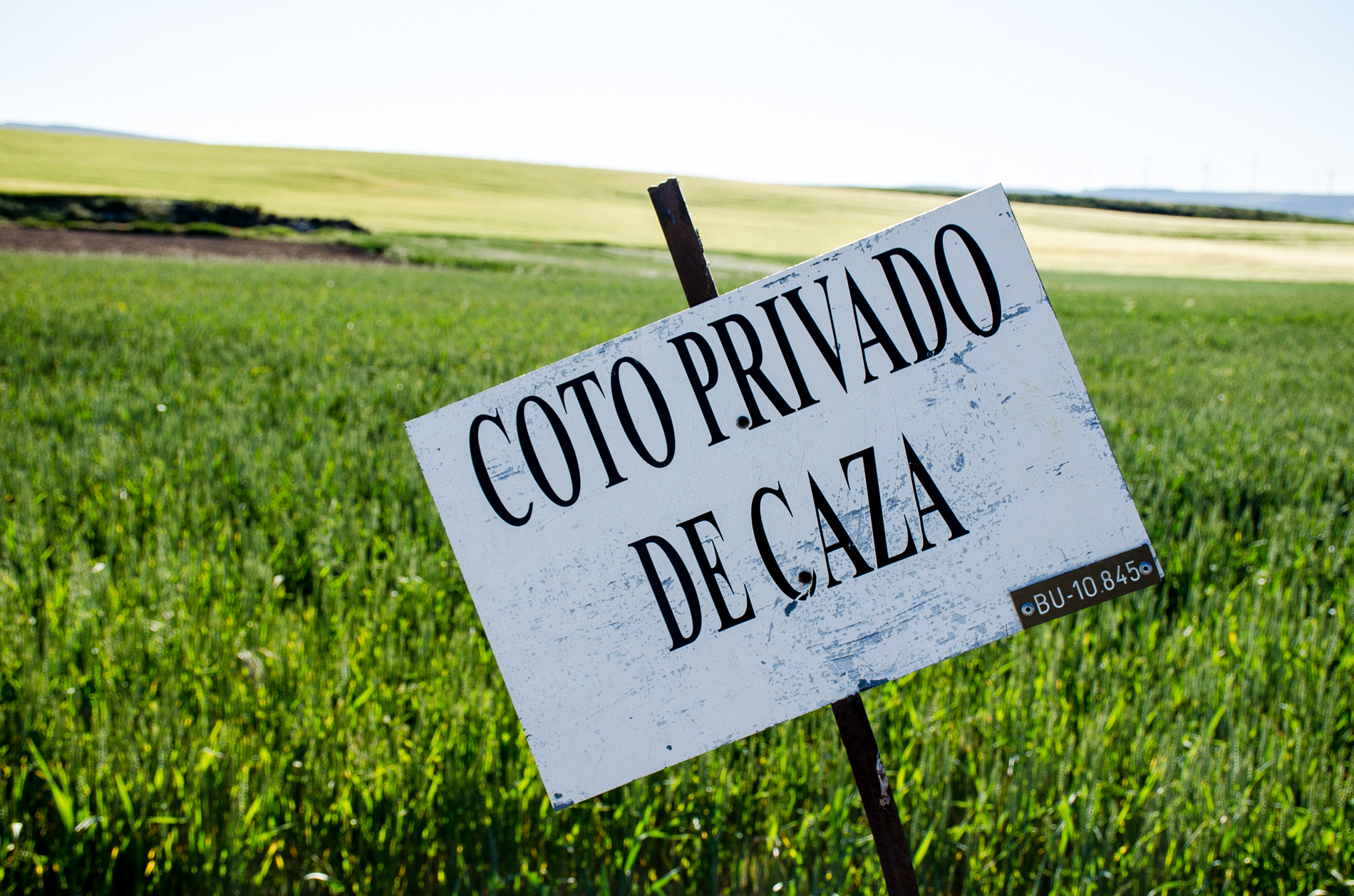
Hunting in Spain is a significant regulated subsistence and recreational activity in Spain with a long-recorded history. It is widely considered one of the most relevant hunting destinations in the world, backed by the variety of its species, climates, terrains as well as sheer size and relatively low density of human population. With almost 1 million licenses in 2017, it is the second country with most hunters in Europe. Internationally, it is also the second country that imports most big-game hunting trophies from overseas after the United States.
Hunting is regulated and administered by the Ministry of Agriculture, which oversees its correct functioning. The Junta Nacional de Homologación de Trofeos de Caza is the governing body for the control and assessment of trophy hunting, in charge of measuring them and granting gold, silver or bronze medals to the more exceptional harvested animals, broadly in line with the CIC guidelines.
Spain offers a variety of different big-game species, most commonly the Spanish red deer, fallow, roe, Iberian ibex and its four subspecies, mouflon, arrui, Pyrenean and Cantabrian chamois and boc. Cantabrian brown bears and Iberian lynxes have been protected since the 1970s after almost becoming extinct, and more recently the Socialist government of Pedro Sánchez oversaw the protection of the Iberian wolf, whose hunting north of the Douro river was legal until 2021.
Some of the most popular small-game species include the red-legged partridge, duck, hare, rabbit, woodcock, pheasant and the red fox. The iconic Cantabrian grouse was protected in the second half of the 20th century.
The two most common modalities of hunting are monterías (big-game) which take place from mid October until end of February, and regular stalking (both big and small-game) which can be practiced regularly throughout the year, with some exceptions such as the month of March.
Almost 85% of Spain is officially declared as 'hunting grounds', and in 2020 there were 32,187 hunting grounds (both public and private) in which 17 million animals were harvested. The total spending in hunting in Spain was €5.5 billion in 2016, equivalent to €6.5 billion when calculated as gross domestic product (0.3% of the total Spanish GDP for that year) with a tax revenue generation of €614 million and supporting almost 200,000 full-time equivalent jobs.
In the Neolithic, and with the discovery of agriculture, humans became sedentary and a significant change occurred in their way of hunting. Where previously humans had only hunted for food, they were now hunting to protect their cattle and crops from other predators.
In the Middle Ages, hunting became a privilege as it was an activity enjoyed by kings and nobility, and this continued even well into the arrival of the industrialization in the 19th century.
Hub AI
Hunting in Spain AI simulator
(@Hunting in Spain_simulator)
Hunting in Spain
Hunting in Spain is a significant regulated subsistence and recreational activity in Spain with a long-recorded history. It is widely considered one of the most relevant hunting destinations in the world, backed by the variety of its species, climates, terrains as well as sheer size and relatively low density of human population. With almost 1 million licenses in 2017, it is the second country with most hunters in Europe. Internationally, it is also the second country that imports most big-game hunting trophies from overseas after the United States.
Hunting is regulated and administered by the Ministry of Agriculture, which oversees its correct functioning. The Junta Nacional de Homologación de Trofeos de Caza is the governing body for the control and assessment of trophy hunting, in charge of measuring them and granting gold, silver or bronze medals to the more exceptional harvested animals, broadly in line with the CIC guidelines.
Spain offers a variety of different big-game species, most commonly the Spanish red deer, fallow, roe, Iberian ibex and its four subspecies, mouflon, arrui, Pyrenean and Cantabrian chamois and boc. Cantabrian brown bears and Iberian lynxes have been protected since the 1970s after almost becoming extinct, and more recently the Socialist government of Pedro Sánchez oversaw the protection of the Iberian wolf, whose hunting north of the Douro river was legal until 2021.
Some of the most popular small-game species include the red-legged partridge, duck, hare, rabbit, woodcock, pheasant and the red fox. The iconic Cantabrian grouse was protected in the second half of the 20th century.
The two most common modalities of hunting are monterías (big-game) which take place from mid October until end of February, and regular stalking (both big and small-game) which can be practiced regularly throughout the year, with some exceptions such as the month of March.
Almost 85% of Spain is officially declared as 'hunting grounds', and in 2020 there were 32,187 hunting grounds (both public and private) in which 17 million animals were harvested. The total spending in hunting in Spain was €5.5 billion in 2016, equivalent to €6.5 billion when calculated as gross domestic product (0.3% of the total Spanish GDP for that year) with a tax revenue generation of €614 million and supporting almost 200,000 full-time equivalent jobs.
In the Neolithic, and with the discovery of agriculture, humans became sedentary and a significant change occurred in their way of hunting. Where previously humans had only hunted for food, they were now hunting to protect their cattle and crops from other predators.
In the Middle Ages, hunting became a privilege as it was an activity enjoyed by kings and nobility, and this continued even well into the arrival of the industrialization in the 19th century.
Recent media