
Recent from talks
Hydrogen sulfide
Knowledge base stats:
Talk channels stats:
Members stats:
Hydrogen sulfide
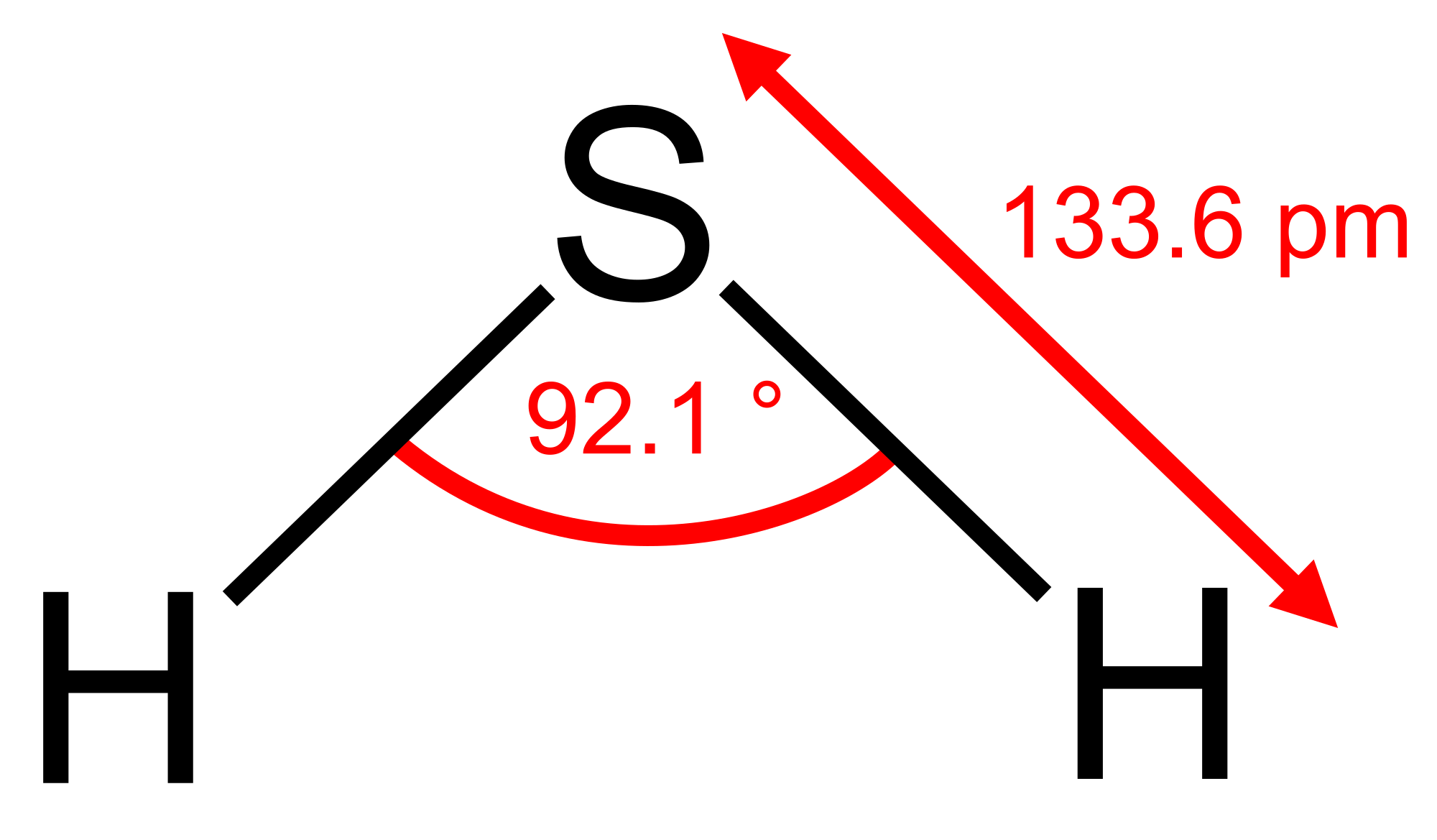
Hydrogen sulfide or hydrogen sulphide (Commonwealth English) is a chemical compound with the formula H2S. It is a colorless hydrogen chalcogenide gas, and is toxic, corrosive, and flammable. Trace amounts in ambient atmosphere have a characteristic foul odor of rotten eggs. Swedish chemist Carl Wilhelm Scheele is credited with having discovered the chemical composition of purified hydrogen sulfide in 1777.
Hydrogen sulfide is toxic to humans and most other animals by inhibiting cellular respiration in a manner similar to hydrogen cyanide. When it is inhaled or its salts are ingested in high amounts, damage to organs occurs rapidly with symptoms ranging from breathing difficulties to convulsions and death. Despite this, the human body produces small amounts of this sulfide and its mineral salts, and uses it as a signalling molecule.
Hydrogen sulfide is often produced from the microbial breakdown of organic matter in the absence of oxygen, such as in swamps and sewers; this process is commonly known as anaerobic digestion, which is done by sulfate-reducing microorganisms. It also occurs in volcanic gases, natural gas deposits, and sometimes in well-drawn water.
Hydrogen sulfide is slightly denser than air. A mixture of H2S and air can be explosive.
In general, hydrogen sulfide acts as a reducing agent, as indicated by its ability to reduce sulfur dioxide in the Claus process. Hydrogen sulfide burns in oxygen with a blue flame to form sulfur dioxide (SO2) and water:
If an excess of oxygen is present, sulfur trioxide (SO3) is formed, which quickly hydrates to sulfuric acid:
It is slightly soluble in water and acts as a weak acid (pKa = 6.9 in 0.01–0.1 mol/litre solutions at 18 °C), giving the hydrosulfide ion HS−. Hydrogen sulfide and its solutions are colorless. When exposed to air, it slowly oxidizes to form elemental sulfur, which is not soluble in water. The sulfide anion S2− is not formed in aqueous solution.
H2S and H2O exchange protons rapidly. This behavior is the basis of technologies for the purification of deuterium oxide ("heavy water" or D2O), which exploits the easy distillation of these compounds.
Hub AI
Hydrogen sulfide AI simulator
(@Hydrogen sulfide_simulator)
Hydrogen sulfide
Hydrogen sulfide or hydrogen sulphide (Commonwealth English) is a chemical compound with the formula H2S. It is a colorless hydrogen chalcogenide gas, and is toxic, corrosive, and flammable. Trace amounts in ambient atmosphere have a characteristic foul odor of rotten eggs. Swedish chemist Carl Wilhelm Scheele is credited with having discovered the chemical composition of purified hydrogen sulfide in 1777.
Hydrogen sulfide is toxic to humans and most other animals by inhibiting cellular respiration in a manner similar to hydrogen cyanide. When it is inhaled or its salts are ingested in high amounts, damage to organs occurs rapidly with symptoms ranging from breathing difficulties to convulsions and death. Despite this, the human body produces small amounts of this sulfide and its mineral salts, and uses it as a signalling molecule.
Hydrogen sulfide is often produced from the microbial breakdown of organic matter in the absence of oxygen, such as in swamps and sewers; this process is commonly known as anaerobic digestion, which is done by sulfate-reducing microorganisms. It also occurs in volcanic gases, natural gas deposits, and sometimes in well-drawn water.
Hydrogen sulfide is slightly denser than air. A mixture of H2S and air can be explosive.
In general, hydrogen sulfide acts as a reducing agent, as indicated by its ability to reduce sulfur dioxide in the Claus process. Hydrogen sulfide burns in oxygen with a blue flame to form sulfur dioxide (SO2) and water:
If an excess of oxygen is present, sulfur trioxide (SO3) is formed, which quickly hydrates to sulfuric acid:
It is slightly soluble in water and acts as a weak acid (pKa = 6.9 in 0.01–0.1 mol/litre solutions at 18 °C), giving the hydrosulfide ion HS−. Hydrogen sulfide and its solutions are colorless. When exposed to air, it slowly oxidizes to form elemental sulfur, which is not soluble in water. The sulfide anion S2− is not formed in aqueous solution.
H2S and H2O exchange protons rapidly. This behavior is the basis of technologies for the purification of deuterium oxide ("heavy water" or D2O), which exploits the easy distillation of these compounds.
Recent media