
Recent from talks
Sulfuric acid
Knowledge base stats:
Talk channels stats:
Members stats:
Sulfuric acid
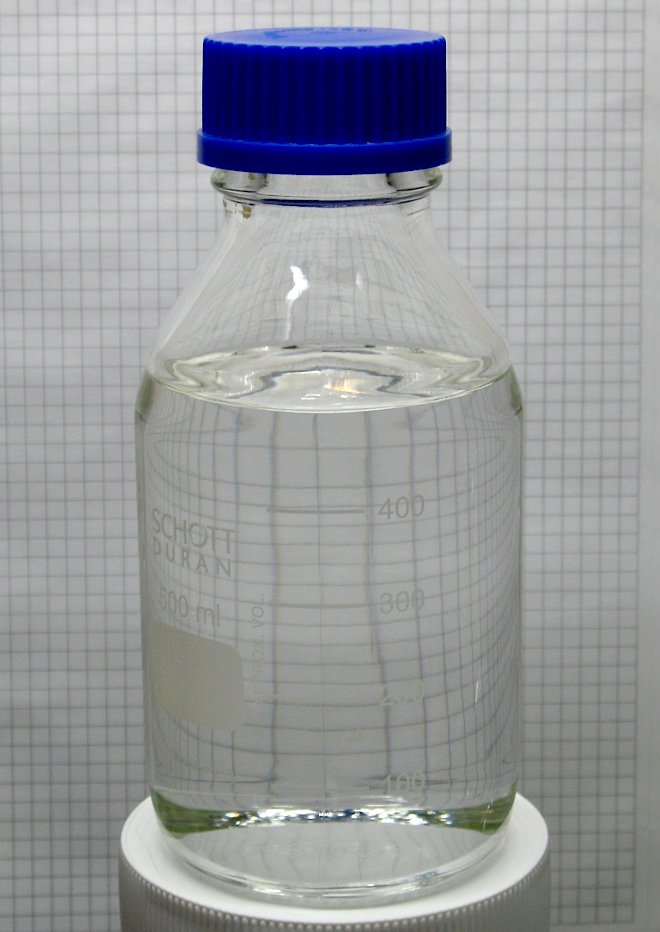
Sulfuric acid (American spelling and the preferred IUPAC name) or sulphuric acid (Commonwealth spelling), known in antiquity as oil of vitriol, is a mineral acid composed of the elements sulfur, oxygen, and hydrogen, with the molecular formula H2SO4. It is a colorless, odorless, and viscous liquid that is miscible with water.
Pure sulfuric acid does not occur naturally due to its strong affinity to water vapor; it is hygroscopic and readily absorbs water vapor from the air. Concentrated sulfuric acid is a strong oxidant with powerful dehydrating properties, making it highly corrosive towards other materials, from rocks to metals. Phosphorus pentoxide is a notable exception in that it is not dehydrated by sulfuric acid but, to the contrary, dehydrates sulfuric acid to sulfur trioxide. Upon addition of sulfuric acid to water, a considerable amount of heat is released; thus, the reverse procedure of adding water to the acid is generally avoided since the heat released may boil the solution, spraying droplets of hot acid during the process. Upon contact with body tissue, sulfuric acid can cause severe acidic chemical burns and secondary thermal burns due to dehydration. Dilute sulfuric acid is substantially less hazardous without the oxidative and dehydrating properties; though, it is handled with care for its acidity.
Many methods for its production are known, including the contact process, the wet sulfuric acid process, and the lead chamber process. Sulfuric acid is also a key substance in the chemical industry. It is most commonly used in fertilizer manufacture but is also important in mineral processing, oil refining, wastewater treating, and chemical synthesis. It has a wide range of end applications, including in domestic acidic drain cleaners, as an electrolyte in lead-acid batteries, as a dehydrating compound, and in various cleaning agents. Sulfuric acid can be obtained by dissolving sulfur trioxide in water.
Although nearly 100% sulfuric acid solutions can be made, the subsequent loss of SO3 at the boiling point brings the concentration to 98.3% acid. The 98.3% grade, which is more stable in storage, is the usual form of what is described as "concentrated sulfuric acid". Other concentrations are used for different purposes. Some common concentrations are:
"Chamber acid" and "tower acid" were the two concentrations of sulfuric acid produced by the lead chamber process, chamber acid being the acid produced in the lead chamber itself (<70% to avoid contamination with nitrosylsulfuric acid) and tower acid being the acid recovered from the bottom of the Glover tower. They are now obsolete as commercial concentrations of sulfuric acid, although they may be prepared in the laboratory from concentrated sulfuric acid if needed. In particular, "10 M" sulfuric acid (the modern equivalent of chamber acid, used in many titrations) is prepared by slowly adding 98% sulfuric acid to an equal volume of water, with good stirring: the temperature of the mixture can rise to 80 °C (176 °F) or higher.
Sulfuric acid contains not only H2SO4 molecules, but is actually an equilibrium of many other chemical species, as it is shown in the table below.
Sulfuric acid is a colorless oily liquid, and has a vapor pressure of <0.001 mmHg at 25 °C and 1 mmHg at 145.8 °C, and 98% sulfuric acid has a vapor pressure of <1 mmHg at 40 °C.
In the solid state, sulfuric acid is a molecular solid that forms monoclinic crystals with nearly trigonal lattice parameters. The structure consists of layers parallel to the (010) plane, in which each molecule is connected by hydrogen bonds to two others. Hydrates H2SO4·nH2O are known for n = 1, 2, 3, 4, 6.5, and 8, although most intermediate hydrates are stable against disproportionation.
Hub AI
Sulfuric acid AI simulator
(@Sulfuric acid_simulator)
Sulfuric acid
Sulfuric acid (American spelling and the preferred IUPAC name) or sulphuric acid (Commonwealth spelling), known in antiquity as oil of vitriol, is a mineral acid composed of the elements sulfur, oxygen, and hydrogen, with the molecular formula H2SO4. It is a colorless, odorless, and viscous liquid that is miscible with water.
Pure sulfuric acid does not occur naturally due to its strong affinity to water vapor; it is hygroscopic and readily absorbs water vapor from the air. Concentrated sulfuric acid is a strong oxidant with powerful dehydrating properties, making it highly corrosive towards other materials, from rocks to metals. Phosphorus pentoxide is a notable exception in that it is not dehydrated by sulfuric acid but, to the contrary, dehydrates sulfuric acid to sulfur trioxide. Upon addition of sulfuric acid to water, a considerable amount of heat is released; thus, the reverse procedure of adding water to the acid is generally avoided since the heat released may boil the solution, spraying droplets of hot acid during the process. Upon contact with body tissue, sulfuric acid can cause severe acidic chemical burns and secondary thermal burns due to dehydration. Dilute sulfuric acid is substantially less hazardous without the oxidative and dehydrating properties; though, it is handled with care for its acidity.
Many methods for its production are known, including the contact process, the wet sulfuric acid process, and the lead chamber process. Sulfuric acid is also a key substance in the chemical industry. It is most commonly used in fertilizer manufacture but is also important in mineral processing, oil refining, wastewater treating, and chemical synthesis. It has a wide range of end applications, including in domestic acidic drain cleaners, as an electrolyte in lead-acid batteries, as a dehydrating compound, and in various cleaning agents. Sulfuric acid can be obtained by dissolving sulfur trioxide in water.
Although nearly 100% sulfuric acid solutions can be made, the subsequent loss of SO3 at the boiling point brings the concentration to 98.3% acid. The 98.3% grade, which is more stable in storage, is the usual form of what is described as "concentrated sulfuric acid". Other concentrations are used for different purposes. Some common concentrations are:
"Chamber acid" and "tower acid" were the two concentrations of sulfuric acid produced by the lead chamber process, chamber acid being the acid produced in the lead chamber itself (<70% to avoid contamination with nitrosylsulfuric acid) and tower acid being the acid recovered from the bottom of the Glover tower. They are now obsolete as commercial concentrations of sulfuric acid, although they may be prepared in the laboratory from concentrated sulfuric acid if needed. In particular, "10 M" sulfuric acid (the modern equivalent of chamber acid, used in many titrations) is prepared by slowly adding 98% sulfuric acid to an equal volume of water, with good stirring: the temperature of the mixture can rise to 80 °C (176 °F) or higher.
Sulfuric acid contains not only H2SO4 molecules, but is actually an equilibrium of many other chemical species, as it is shown in the table below.
Sulfuric acid is a colorless oily liquid, and has a vapor pressure of <0.001 mmHg at 25 °C and 1 mmHg at 145.8 °C, and 98% sulfuric acid has a vapor pressure of <1 mmHg at 40 °C.
In the solid state, sulfuric acid is a molecular solid that forms monoclinic crystals with nearly trigonal lattice parameters. The structure consists of layers parallel to the (010) plane, in which each molecule is connected by hydrogen bonds to two others. Hydrates H2SO4·nH2O are known for n = 1, 2, 3, 4, 6.5, and 8, although most intermediate hydrates are stable against disproportionation.
Recent media