
Recent from talks
Hypochromic anemia
Knowledge base stats:
Talk channels stats:
Members stats:
Hypochromic anemia
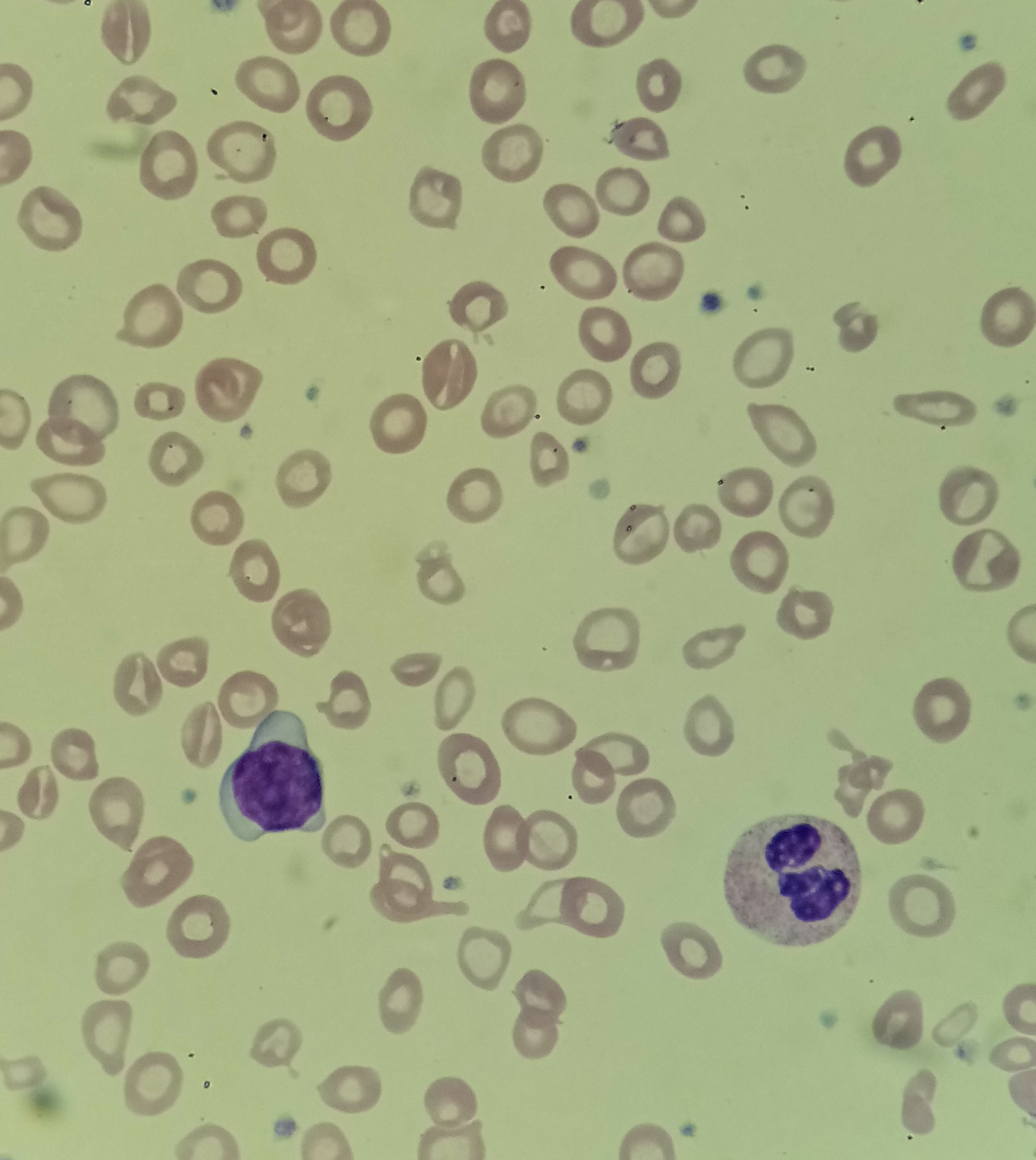
Hypochromic anemia is a generic term for any type of anemia in which the red blood cells are paler than normal. (Hypo- refers to less, and chromic means colour.) A normal red blood cell has a biconcave disk shape and will have an area of pallor in its center when viewed microscopically. In hypochromic cells, this area of central pallor is increased. This decrease in redness is due to a disproportionate reduction of red cell hemoglobin (the pigment that imparts the red color) in proportion to the volume of the cell. Clinically the color can be evaluated by the mean corpuscular hemoglobin (MCH) or mean corpuscular hemoglobin concentration (MCHC). The MCHC is considered the better parameter of the two as it adjusts for effect the size of the cell has on its amount of hemoglobin. Hypochromia is clinically defined as below the normal MCH reference range of 27–33 picograms/cell in adults or below the normal MCHC reference range of 33–36 g/dL in adults.
Red blood cells will also be small (microcytic), leading to substantial overlap with the category of microcytic anemia. The most common causes of this kind of anemia are iron deficiency and thalassemia.
Hypochromic anemia was historically known as chlorosis or green sickness for the distinct skin tinge sometimes present in patients, in addition to more general symptoms such as a lack of energy, shortness of breath, dyspepsia, headaches, a capricious or scanty appetite and amenorrhea.
In 1554, German physician Johannes Lange described a condition, which he called "the disease of virgins" because, he said, it was "peculiar to virgins". The symptoms were wide-ranging, including an appearance which is "pale, as if bloodless", an aversion to food (especially meat), difficulty in breathing, palpitations and swollen ankles. He prescribed that those affected should "live with men and copulate. If they conceive, they will recover." The symptom picture overlaps to some extent with an earlier condition described in English medical texts, "the green sickness", which was a form of jaundice. However, Lange shifted the cause from digestive errors to the patient remaining a virgin, despite being of the age for marriage. The name "chlorosis" was coined in 1615 by Montpellier professor of medicine Jean Varandal from the ancient Greek word "chloros" meaning "greenish-yellow", "pale green", "pale", "pallid" or "fresh". Both Lange and Varandal claimed Hippocrates as a reference, but their lists of symptoms do not match that in the Hippocratic Disease of Virgins, a treatise that was translated into Latin in the 1520s and thus became available to early modern Europe.
In addition to "green sickness", the condition was known as morbus virgineus ("virgin's disease") or febris amatoria ("lover's fever"). Francis Grose's 1811 Dictionary of the Vulgar Tongue defined "green sickness" as: "The disease of maids occasioned by celibacy."
In 1681, English physician Thomas Sydenham classified chlorosis as a hysterical disease affecting not only adolescent girls but also "slender and weakly women that seem consumptive." He advocated iron as a treatment: "To the worn out or languid blood it gives a spur or fillip whereby the animal spirits which lay prostrate and sunken under their own weight are raised and excited".
Daniel Turner in 1714 preferred to term chlorosis "the Pale or White Sickness ... since in its worst State the Complexion is rarely or ever a true Green, tho' bordering on that Hue". He went on to describe it as "an ill Habit of Body, arising either from Obstructions, particularly of the menstrual Purgation, or from a Congestion of crude Humours in the Viscera, vitiating the Ferments of the Bowels, especially those of Concoction, and placing therein a depraved Appetite of Things directly preternatural, as Chalk, Cinders, Earth, Sand, &c". One of his case studies was that of an 11-year-old girl who was found, on investigation, to have been eating large quantities of coal.
Chlorosis is briefly mentioned in Casanova's Histoire de ma vie: "I do not know, but we have some physicians who say that chlorosis in girls is the result of that pleasure onanism indulged in to excess".
Hub AI
Hypochromic anemia AI simulator
(@Hypochromic anemia_simulator)
Hypochromic anemia
Hypochromic anemia is a generic term for any type of anemia in which the red blood cells are paler than normal. (Hypo- refers to less, and chromic means colour.) A normal red blood cell has a biconcave disk shape and will have an area of pallor in its center when viewed microscopically. In hypochromic cells, this area of central pallor is increased. This decrease in redness is due to a disproportionate reduction of red cell hemoglobin (the pigment that imparts the red color) in proportion to the volume of the cell. Clinically the color can be evaluated by the mean corpuscular hemoglobin (MCH) or mean corpuscular hemoglobin concentration (MCHC). The MCHC is considered the better parameter of the two as it adjusts for effect the size of the cell has on its amount of hemoglobin. Hypochromia is clinically defined as below the normal MCH reference range of 27–33 picograms/cell in adults or below the normal MCHC reference range of 33–36 g/dL in adults.
Red blood cells will also be small (microcytic), leading to substantial overlap with the category of microcytic anemia. The most common causes of this kind of anemia are iron deficiency and thalassemia.
Hypochromic anemia was historically known as chlorosis or green sickness for the distinct skin tinge sometimes present in patients, in addition to more general symptoms such as a lack of energy, shortness of breath, dyspepsia, headaches, a capricious or scanty appetite and amenorrhea.
In 1554, German physician Johannes Lange described a condition, which he called "the disease of virgins" because, he said, it was "peculiar to virgins". The symptoms were wide-ranging, including an appearance which is "pale, as if bloodless", an aversion to food (especially meat), difficulty in breathing, palpitations and swollen ankles. He prescribed that those affected should "live with men and copulate. If they conceive, they will recover." The symptom picture overlaps to some extent with an earlier condition described in English medical texts, "the green sickness", which was a form of jaundice. However, Lange shifted the cause from digestive errors to the patient remaining a virgin, despite being of the age for marriage. The name "chlorosis" was coined in 1615 by Montpellier professor of medicine Jean Varandal from the ancient Greek word "chloros" meaning "greenish-yellow", "pale green", "pale", "pallid" or "fresh". Both Lange and Varandal claimed Hippocrates as a reference, but their lists of symptoms do not match that in the Hippocratic Disease of Virgins, a treatise that was translated into Latin in the 1520s and thus became available to early modern Europe.
In addition to "green sickness", the condition was known as morbus virgineus ("virgin's disease") or febris amatoria ("lover's fever"). Francis Grose's 1811 Dictionary of the Vulgar Tongue defined "green sickness" as: "The disease of maids occasioned by celibacy."
In 1681, English physician Thomas Sydenham classified chlorosis as a hysterical disease affecting not only adolescent girls but also "slender and weakly women that seem consumptive." He advocated iron as a treatment: "To the worn out or languid blood it gives a spur or fillip whereby the animal spirits which lay prostrate and sunken under their own weight are raised and excited".
Daniel Turner in 1714 preferred to term chlorosis "the Pale or White Sickness ... since in its worst State the Complexion is rarely or ever a true Green, tho' bordering on that Hue". He went on to describe it as "an ill Habit of Body, arising either from Obstructions, particularly of the menstrual Purgation, or from a Congestion of crude Humours in the Viscera, vitiating the Ferments of the Bowels, especially those of Concoction, and placing therein a depraved Appetite of Things directly preternatural, as Chalk, Cinders, Earth, Sand, &c". One of his case studies was that of an 11-year-old girl who was found, on investigation, to have been eating large quantities of coal.
Chlorosis is briefly mentioned in Casanova's Histoire de ma vie: "I do not know, but we have some physicians who say that chlorosis in girls is the result of that pleasure onanism indulged in to excess".
Recent media