
Recent from talks
Ian Meckiff
Knowledge base stats:
Talk channels stats:
Members stats:
Ian Meckiff
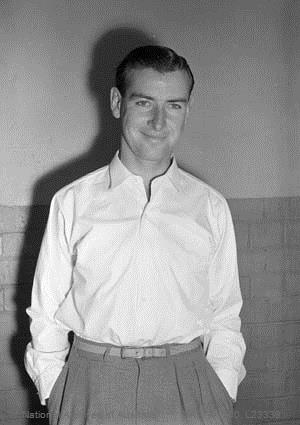
Ian Meckiff (born 6 January 1935) is an Australian former cricketer who represented Australia in 18 Test matches between 1957 and 1963. A left-arm fast bowler, he is best known for two matters that were unrelated to his skill as a player: he was the batsman run out by Joe Solomon in 1960, causing the first Tied Test in cricket history; and in December 1963, his career was sensationally ended when he was called for throwing in the First Test against South Africa by Australian umpire Col Egar. During the late 1950s and early 1960s, there had been a media frenzy about the perceived prevalence of illegal bowling actions in world cricket. The controversy and speculation that dogged Meckiff in the years preceding his final match caused sections of the cricket community to believe that he had been made a scapegoat by the Australian cricket authorities to prove their intent to stamp out throwing.
With an unconventional front-on bowling action, Meckiff progressed through the district cricket ranks at South Melbourne Cricket Club, making his first-class debut for Victoria in 1956–57. After a productive first season, Meckiff was named in a new-look Australian team for the 1957–58 tour of South Africa. This was the result of a generational change in the Australian Test team after a decline in performances in the 1950s. The shift saw Meckiff open the bowling in his debut Test, where he performed strongly to take eight wickets. Generating his pace from an unusual bent-arm action which involved a flick of the wrist, Meckiff reached his peak in the Second Test of the 1958–59 season against England at the Melbourne Cricket Ground. He took 6/38 in the second innings as England were dismissed for 87, setting up an Australian victory. His achievement was engulfed by controversy, as English media and former players accused him of throwing Australia to victory.
The controversy over Meckiff's action persisted as throwing was in the spotlight in England, where it was regarded as a growing problem. The issue prompted numerous international discussions and meetings on amending the throwing law and the interpretation thereof. An expected confrontation with English umpires in 1961 was averted when the bowler suffered multiple injuries in the preceding Australian summer and was omitted from the team to tour England, but Meckiff had two strong seasons in domestic cricket that forced the Australian selectors to recall him for the Tests against South Africa in 1963–64. The Victorian's recall had occurred despite his being no-balled for throwing in two separate Sheffield Shield matches in the previous season. In his first over of the Test, Meckiff was no-balled four times by umpire Egar. Australian captain Richie Benaud chose to not bowl his paceman again, and Meckiff retired from all cricket at the end of the match. The throwing controversy provoked heavy debate among cricket commentators, players and umpires, past and present; some praised Egar's no-ball call while others condemned the umpire and felt that the paceman had bowled in the same way as he had always done. Others felt that Meckiff had been set up so that he would be no-balled in an "execution" or "sacrifice" to prove Australia's resolve against throwing.
Meckiff was the second of three children born to Vera and Walter Meckiff; he had an older brother Don and a younger sister Margaret. Growing up in the south-eastern Melbourne suburb of Mentone, the children went to Mentone Primary School before progressing to Mordialloc-Chelsea High School, where both brothers became prefects. All of the children represented their high school for sport—Don and Ian in athletics, swimming, football and cricket; and Margaret in softball. The brothers played for Mentone Cricket Club in the Federal District Cricket Association, Ian as a left-arm unorthodox spinner. He routinely dominated the opposition batsmen in the competition, taking 200 wickets at a bowling average of only 4.50 during his career with Mentone. He began playing in Mentone's under-16 team at the age of 11.
Having failed as a spin bowler in a trial at Richmond in 1950, Meckiff switched to fast bowling in 1951–52 when he began his district career in Victorian Premier Cricket with South Melbourne. He started in the Fourth XI after his brother had to withdraw from a match. The following summer, aged 17, Meckiff was in the senior team and played in South Melbourne's first championship-winning side in his debut season in the First XI, although his club career was sometimes interrupted by national service in the reserves. After receiving requests from cricket administrators, the military authorities scheduled the leave of young players for weekends, so that the impact on their careers would be minimised. At the time, Australia lacked bowlers of great pace, so a teammate advised Meckiff to bowl as fast as he could, without regard for accuracy—a plan he successfully adopted.
Meckiff made his first-class debut for Victoria in 1956–1957 against Western Australia. Coming in to bat with his state's score at 8 wickets for 77 (8/77), he made 19 not out to help them reach 131, before taking three wickets for 45 runs (3/45) to restrict Western Australia to a 34-run first innings lead. His first wicket was future Australian captain Bob Simpson for a duck, and he followed up by removing Test batsmen Barry Shepherd and Ken Meuleman. Meckiff made 11 in the second innings and took 0/40 as Victoria lost by four wickets.
Meckiff's most prominent showing in his debut season was in the Sheffield Shield match against New South Wales during the Christmas period of 1956. At the time, the two states were by far the strongest in Australia; in the past decade, the teams had 18 of the 20 top-two Shield placings between them, and New South Wales were in the process of winning nine consecutive titles. The arch-rivals were at full strength as no international matches were held during the season.
Coming in at 7/173, Meckiff top-scored with 55—his only first-class 50—as Victoria batted first and made a late recovery to end with 244. Meckiff took 3/65, including the wickets of Test players Bill Watson and Richie Benaud as New South Wales responded with 281. In the Victorian second innings Meckiff managed only 8 as Victoria left their opponents a target of 161 runs for victory. The paceman took 4/56 and claimed the final wicket, removing Test opener Jim Burke caught for 8 as New South Wales mustered 160, causing the match to end in the first tie in Shield history. Burke had returned to bat after being injured earlier in the innings, while New South Wales captain Ian Craig, who had been ill, hauled himself out of bed in an attempt to salvage the match after his team had fallen to 7/70. Meckiff's other victims in the final innings included Test players Alan Davidson and Johnny Martin.
Hub AI
Ian Meckiff AI simulator
(@Ian Meckiff_simulator)
Ian Meckiff
Ian Meckiff (born 6 January 1935) is an Australian former cricketer who represented Australia in 18 Test matches between 1957 and 1963. A left-arm fast bowler, he is best known for two matters that were unrelated to his skill as a player: he was the batsman run out by Joe Solomon in 1960, causing the first Tied Test in cricket history; and in December 1963, his career was sensationally ended when he was called for throwing in the First Test against South Africa by Australian umpire Col Egar. During the late 1950s and early 1960s, there had been a media frenzy about the perceived prevalence of illegal bowling actions in world cricket. The controversy and speculation that dogged Meckiff in the years preceding his final match caused sections of the cricket community to believe that he had been made a scapegoat by the Australian cricket authorities to prove their intent to stamp out throwing.
With an unconventional front-on bowling action, Meckiff progressed through the district cricket ranks at South Melbourne Cricket Club, making his first-class debut for Victoria in 1956–57. After a productive first season, Meckiff was named in a new-look Australian team for the 1957–58 tour of South Africa. This was the result of a generational change in the Australian Test team after a decline in performances in the 1950s. The shift saw Meckiff open the bowling in his debut Test, where he performed strongly to take eight wickets. Generating his pace from an unusual bent-arm action which involved a flick of the wrist, Meckiff reached his peak in the Second Test of the 1958–59 season against England at the Melbourne Cricket Ground. He took 6/38 in the second innings as England were dismissed for 87, setting up an Australian victory. His achievement was engulfed by controversy, as English media and former players accused him of throwing Australia to victory.
The controversy over Meckiff's action persisted as throwing was in the spotlight in England, where it was regarded as a growing problem. The issue prompted numerous international discussions and meetings on amending the throwing law and the interpretation thereof. An expected confrontation with English umpires in 1961 was averted when the bowler suffered multiple injuries in the preceding Australian summer and was omitted from the team to tour England, but Meckiff had two strong seasons in domestic cricket that forced the Australian selectors to recall him for the Tests against South Africa in 1963–64. The Victorian's recall had occurred despite his being no-balled for throwing in two separate Sheffield Shield matches in the previous season. In his first over of the Test, Meckiff was no-balled four times by umpire Egar. Australian captain Richie Benaud chose to not bowl his paceman again, and Meckiff retired from all cricket at the end of the match. The throwing controversy provoked heavy debate among cricket commentators, players and umpires, past and present; some praised Egar's no-ball call while others condemned the umpire and felt that the paceman had bowled in the same way as he had always done. Others felt that Meckiff had been set up so that he would be no-balled in an "execution" or "sacrifice" to prove Australia's resolve against throwing.
Meckiff was the second of three children born to Vera and Walter Meckiff; he had an older brother Don and a younger sister Margaret. Growing up in the south-eastern Melbourne suburb of Mentone, the children went to Mentone Primary School before progressing to Mordialloc-Chelsea High School, where both brothers became prefects. All of the children represented their high school for sport—Don and Ian in athletics, swimming, football and cricket; and Margaret in softball. The brothers played for Mentone Cricket Club in the Federal District Cricket Association, Ian as a left-arm unorthodox spinner. He routinely dominated the opposition batsmen in the competition, taking 200 wickets at a bowling average of only 4.50 during his career with Mentone. He began playing in Mentone's under-16 team at the age of 11.
Having failed as a spin bowler in a trial at Richmond in 1950, Meckiff switched to fast bowling in 1951–52 when he began his district career in Victorian Premier Cricket with South Melbourne. He started in the Fourth XI after his brother had to withdraw from a match. The following summer, aged 17, Meckiff was in the senior team and played in South Melbourne's first championship-winning side in his debut season in the First XI, although his club career was sometimes interrupted by national service in the reserves. After receiving requests from cricket administrators, the military authorities scheduled the leave of young players for weekends, so that the impact on their careers would be minimised. At the time, Australia lacked bowlers of great pace, so a teammate advised Meckiff to bowl as fast as he could, without regard for accuracy—a plan he successfully adopted.
Meckiff made his first-class debut for Victoria in 1956–1957 against Western Australia. Coming in to bat with his state's score at 8 wickets for 77 (8/77), he made 19 not out to help them reach 131, before taking three wickets for 45 runs (3/45) to restrict Western Australia to a 34-run first innings lead. His first wicket was future Australian captain Bob Simpson for a duck, and he followed up by removing Test batsmen Barry Shepherd and Ken Meuleman. Meckiff made 11 in the second innings and took 0/40 as Victoria lost by four wickets.
Meckiff's most prominent showing in his debut season was in the Sheffield Shield match against New South Wales during the Christmas period of 1956. At the time, the two states were by far the strongest in Australia; in the past decade, the teams had 18 of the 20 top-two Shield placings between them, and New South Wales were in the process of winning nine consecutive titles. The arch-rivals were at full strength as no international matches were held during the season.
Coming in at 7/173, Meckiff top-scored with 55—his only first-class 50—as Victoria batted first and made a late recovery to end with 244. Meckiff took 3/65, including the wickets of Test players Bill Watson and Richie Benaud as New South Wales responded with 281. In the Victorian second innings Meckiff managed only 8 as Victoria left their opponents a target of 161 runs for victory. The paceman took 4/56 and claimed the final wicket, removing Test opener Jim Burke caught for 8 as New South Wales mustered 160, causing the match to end in the first tie in Shield history. Burke had returned to bat after being injured earlier in the innings, while New South Wales captain Ian Craig, who had been ill, hauled himself out of bed in an attempt to salvage the match after his team had fallen to 7/70. Meckiff's other victims in the final innings included Test players Alan Davidson and Johnny Martin.
Recent media