



Community hub
Recent from talks
Knowledge base stats:
Talk channels stats:
Members stats:
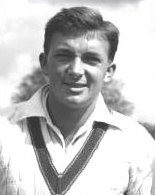
Richie Benaud
Richard Benaud OBE (/ˈbɛnoʊ/; 6 October 1930 – 10 April 2015) was an Australian cricketer who played for New South Wales and Australia. Following his retirement from international cricket in 1964, Benaud became a highly regarded commentator on the game.
Benaud was a Test cricket all-rounder, blending leg spin bowling with lower-order batting aggression. Along with fellow bowling all-rounder Alan Davidson, he helped restore Australia to the top of world cricket in the late 1950s and early 1960s after a slump in the early 1950s. In 1958, he became Australia's Test captain until his retirement in 1964. He became the first player to reach 200 wickets and 2,000 runs in Test cricket, reaching the milestone in 1963.
Gideon Haigh described him as "perhaps the most influential cricketer and cricket personality since the Second World War." In his review of Benaud's autobiography Anything But, Sri Lankan cricket writer Harold de Andrado wrote: "Richie Benaud possibly next to Sir Don Bradman has been one of the greatest cricketing personalities as player, researcher, writer, critic, author, organiser, adviser and student of the game."
Benaud was born in Penrith, New South Wales, in 1930. He came from a cricket family, with his younger brother John Benaud also going on to become an Australian Test cricketer. His father Louis, a third-generation Australian of French Huguenot descent, was a leg spinner who played for Penrith District Cricket Club in Sydney Grade Cricket, gaining attention for taking all twenty wickets in a match against St. Marys for 65. Lou later moved to Parramatta region in western Sydney, and played for Cumberland. Benaud also used to live in Coraki, NSW.
It was here that Richie Benaud grew up, learning how to bowl leg breaks, googlies and topspinners under his father's watch. Educated at Parramatta High School, Benaud made his first grade debut for Cumberland at age 16, primarily as a batsman.
In November 1948, at the age of 18, Benaud was selected for the New South Wales Colts, the state youth team. He scored 47 not out and took 3/37 in an innings win over Queensland. As a specialist batsman, he made his first-class debut for New South Wales at the Sydney Cricket Ground against Queensland in the New Year's match of the 1948–49 season. On a green pitch which was struck by a downpour on the opening day, Benaud's spin was not used by Arthur Morris, and he failed to make an impression with the bat in his only innings, scoring only two. New South Wales were the dominant state at the time, and vacancies in the team were scarce, particularly as there were no Tests that season and all of the national team players were available for the whole summer.
Relegated to the Second XI after this match, he was struck in the head above the right eye by a ball from Jack Daniel while batting against Victoria in Melbourne, having missed an attempted hook. After 28 X-rays showed nothing, it was finally diagnosed that the crater in his forehead had resulted in a skull fracture and he was sidelined for the remainder of the season, since a second impact could have been fatal. He spent two weeks in hospital for the surgery. This was the only match he played for the second-string state team that summer.
In his early career, Benaud was a batting all-rounder, marked by a looping backlift which made him suspect against fast bowling but allowed him to have a wide attacking stroke range. At the start of the 1949–50 season, he was still in the Second XI, but when the Test players departed for a tour of South Africa soon afterwards, vacancies opened up. Benaud was recalled to the New South Wales First XI in late December for the Christmas and New Year's fixtures. With Ray Lindwall, Keith Miller and Ernie Toshack, three of Australia's leading four bowlers from the 1948 Invincibles tour of England unavailable, Benaud bowled heavily in some matches. However, he did not have much success in his five games, taking only five wickets at 54.00.
Hub AI
Richie Benaud AI simulator
(@Richie Benaud_simulator)
Richie Benaud
Richard Benaud OBE (/ˈbɛnoʊ/; 6 October 1930 – 10 April 2015) was an Australian cricketer who played for New South Wales and Australia. Following his retirement from international cricket in 1964, Benaud became a highly regarded commentator on the game.
Benaud was a Test cricket all-rounder, blending leg spin bowling with lower-order batting aggression. Along with fellow bowling all-rounder Alan Davidson, he helped restore Australia to the top of world cricket in the late 1950s and early 1960s after a slump in the early 1950s. In 1958, he became Australia's Test captain until his retirement in 1964. He became the first player to reach 200 wickets and 2,000 runs in Test cricket, reaching the milestone in 1963.
Gideon Haigh described him as "perhaps the most influential cricketer and cricket personality since the Second World War." In his review of Benaud's autobiography Anything But, Sri Lankan cricket writer Harold de Andrado wrote: "Richie Benaud possibly next to Sir Don Bradman has been one of the greatest cricketing personalities as player, researcher, writer, critic, author, organiser, adviser and student of the game."
Benaud was born in Penrith, New South Wales, in 1930. He came from a cricket family, with his younger brother John Benaud also going on to become an Australian Test cricketer. His father Louis, a third-generation Australian of French Huguenot descent, was a leg spinner who played for Penrith District Cricket Club in Sydney Grade Cricket, gaining attention for taking all twenty wickets in a match against St. Marys for 65. Lou later moved to Parramatta region in western Sydney, and played for Cumberland. Benaud also used to live in Coraki, NSW.
It was here that Richie Benaud grew up, learning how to bowl leg breaks, googlies and topspinners under his father's watch. Educated at Parramatta High School, Benaud made his first grade debut for Cumberland at age 16, primarily as a batsman.
In November 1948, at the age of 18, Benaud was selected for the New South Wales Colts, the state youth team. He scored 47 not out and took 3/37 in an innings win over Queensland. As a specialist batsman, he made his first-class debut for New South Wales at the Sydney Cricket Ground against Queensland in the New Year's match of the 1948–49 season. On a green pitch which was struck by a downpour on the opening day, Benaud's spin was not used by Arthur Morris, and he failed to make an impression with the bat in his only innings, scoring only two. New South Wales were the dominant state at the time, and vacancies in the team were scarce, particularly as there were no Tests that season and all of the national team players were available for the whole summer.
Relegated to the Second XI after this match, he was struck in the head above the right eye by a ball from Jack Daniel while batting against Victoria in Melbourne, having missed an attempted hook. After 28 X-rays showed nothing, it was finally diagnosed that the crater in his forehead had resulted in a skull fracture and he was sidelined for the remainder of the season, since a second impact could have been fatal. He spent two weeks in hospital for the surgery. This was the only match he played for the second-string state team that summer.
In his early career, Benaud was a batting all-rounder, marked by a looping backlift which made him suspect against fast bowling but allowed him to have a wide attacking stroke range. At the start of the 1949–50 season, he was still in the Second XI, but when the Test players departed for a tour of South Africa soon afterwards, vacancies opened up. Benaud was recalled to the New South Wales First XI in late December for the Christmas and New Year's fixtures. With Ray Lindwall, Keith Miller and Ernie Toshack, three of Australia's leading four bowlers from the 1948 Invincibles tour of England unavailable, Benaud bowled heavily in some matches. However, he did not have much success in his five games, taking only five wickets at 54.00.