



Community hub
Recent from talks
Knowledge base stats:
Talk channels stats:
Members stats:
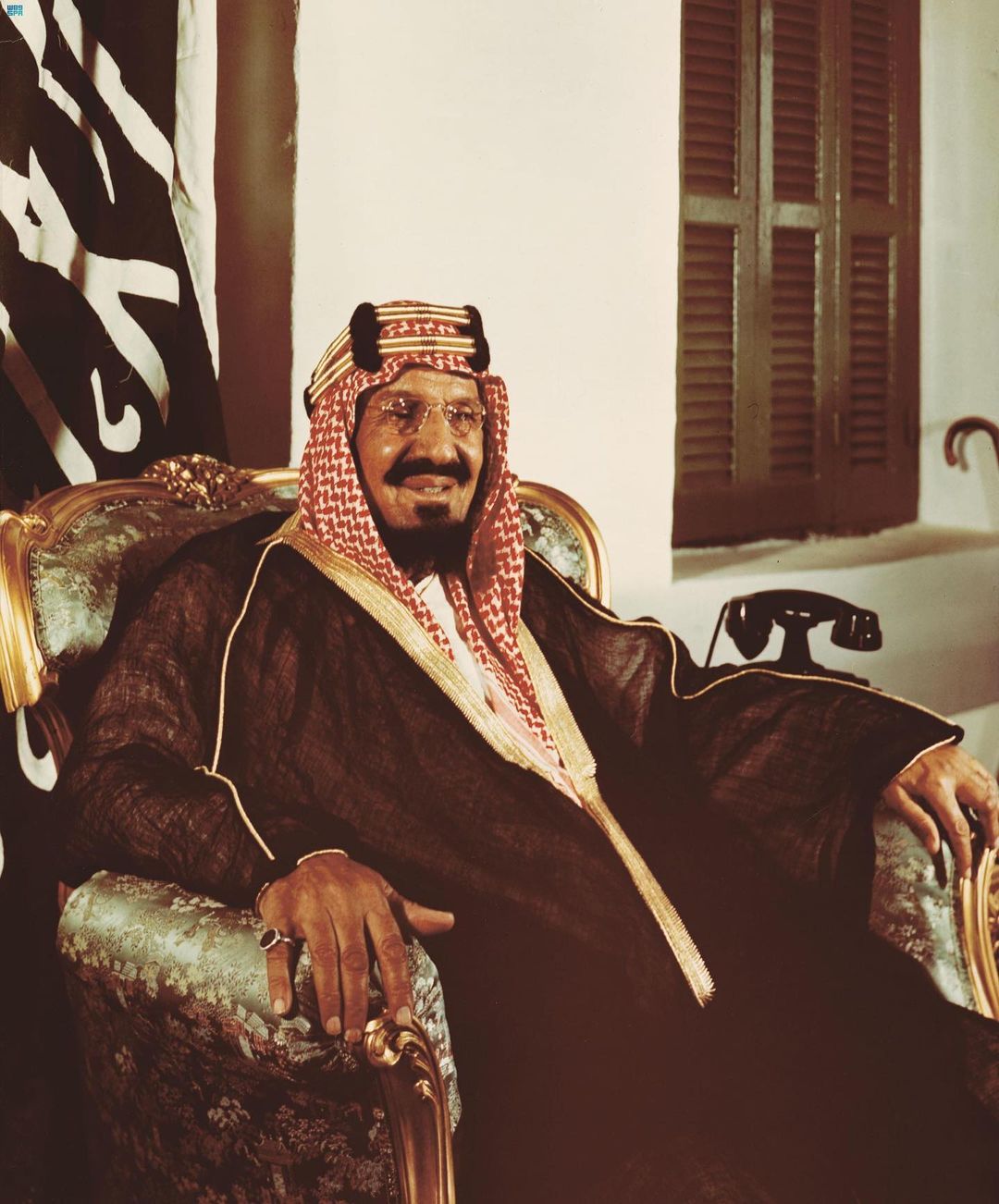
Ibn Saud
Abdulaziz bin Abdul Rahman Al Saud (Arabic: عبد العزيز بن عبد الرحمن آل سعود; 15 January 1876 – 9 November 1953), known in the Western world as Ibn Saud (Arabic: ابن سعود; Ibn Suʿūd), was a Najdi statesman and tribal leader who became the founder and first king of Saudi Arabia, reigning from 23 September 1932 until his death in 1953. He had ruled parts of the kingdom since 1902, having previously been Emir, Sultan, King of Nejd, and King of Hejaz.
Ibn Saud was the son of Abdul Rahman bin Faisal, Emir of Nejd, and Sara bint Ahmed Al Sudairi. The family were exiled from their residence in the city of Riyadh in 1890. Ibn Saud reconquered Riyadh in 1902, starting three decades of conquests that made him the ruler of nearly all of central and north Arabia. He consolidated his control over Najd in 1921, then conquered the Hejaz in 1925. He extended his dominions into what later became the Kingdom of Saudi Arabia in 1932. Ibn Saud's victory and his support for Islamic revivalists would greatly bolster pan-Islamism across the Islamic world. Concording with Wahhabi beliefs, he ordered the demolition of several shrines, the Al-Baqi Cemetery and the Jannat al-Mu'alla. As King, he presided over the discovery of petroleum in Saudi Arabia in 1938 and the beginning of large-scale oil production after World War II. He fathered many children, including 45 sons, and all of the subsequent kings of Saudi Arabia as of 2025.
The Al Saud family had been a power in central Arabia for the previous 130 years. Under the influence and inspiration of Wahhabism, the Saudis had previously attempted to control much of the Arabian Peninsula in the form of the Emirate of Diriyah, the first Saudi state, until its destruction by an Ottoman army in the Ottoman–Wahhabi war in the early nineteenth century.
Abdulaziz bin Abdul Rahman, also known as Ibn Saud, was born on 15 January 1877 in Riyadh. He was the fourth child and third son of Abdul Rahman bin Faisal, one of the last rulers of the Emirate of Nejd, the second Saudi state, a tribal sheikhdom centered on Riyadh. Ibn Saud's mother was Sara bint Ahmed Al Sudairi of the Sudairi family. She died in 1910. His full-siblings were Faisal, Noura, Bazza, Haya and Saad. He also had a number of half-siblings from his father's other marriages, including Muhammad, Abdullah, Ahmed, and Musaid, who all had roles in the Saudi government. Ibn Saud was taught Quran by Abdullah Al Kharji in Riyadh.
In 1891, the House of Saud's long-term regional rivals led by Muhammad bin Abdullah Al Rashid conquered Riyadh. Ibn Saud was 15 at the time. He and his family initially took refuge with the Al Murrah, a Bedouin tribe in the southern desert of Arabia. Later, the Al Sauds moved to Qatar and stayed there for two months. Their next stop was Bahrain where they stayed briefly. The Ottoman State allowed them to settle in Kuwait where they settled and lived for nearly a decade. Ibn Saud developed a rapport with the Kuwaiti ruler Mubarak Al Sabah and frequently visited his majlis. His father, Abdul Rahman, did not endorse these visits, perceiving Mubarak's lifestyle as immoral and unorthodox.
On 14 November 1901 Ibn Saud and some relatives, including his half-brother Muhammad and several cousins (amongst them Abdullah bin Jiluwi), set out on a raiding expedition into the Nejd, targeting mainly tribes associated with the Rashidis. On 12 December they reached Al Ahsa and then proceeded south towards the Empty Quarter with the support from various tribes. Upon this Abdulaziz Al Rashid sent messages to Qatari ruler Jassim bin Mohammed Al Thani and to the Ottoman governor of Baghdad asking their help to stop Ibn Saud's raids on the tribes loyal to Al Rashid. These events led to a decrease in the number of Ibn Saud's raiders, and his father also asked him to cancel his plans to capture Riyadh. However, Ibn Saud did not cancel the raid and managed to reach Riyadh. On the night of 15 January 1902, he led 40 men over the city walls on tilted palm trees and took the city. The Rashidi governor of the city, Ajlan, was killed by Abdullah bin Jiluwi in front of his own fortress. The Saudi recapture of the city marked the beginning of the third Saudi State.
Following Ibn Saud's victory the Kuwaiti ruler Mubarak Al Sabah sent him an additional seventy warriors commanded by Ibn Saud's younger brother Saad. Upon settling in Riyadh, Ibn Saud took up residence in the palace of his grandfather, Faisal bin Turki.
Following the capture of Riyadh, many former supporters of the House of Saud rallied to Ibn Saud's call to arms. He was a charismatic leader and kept his men supplied with arms. Over the next two years, he and his forces recaptured almost half of the Nejd from the Rashidis.
Hub AI
Ibn Saud AI simulator
(@Ibn Saud_simulator)
Ibn Saud
Abdulaziz bin Abdul Rahman Al Saud (Arabic: عبد العزيز بن عبد الرحمن آل سعود; 15 January 1876 – 9 November 1953), known in the Western world as Ibn Saud (Arabic: ابن سعود; Ibn Suʿūd), was a Najdi statesman and tribal leader who became the founder and first king of Saudi Arabia, reigning from 23 September 1932 until his death in 1953. He had ruled parts of the kingdom since 1902, having previously been Emir, Sultan, King of Nejd, and King of Hejaz.
Ibn Saud was the son of Abdul Rahman bin Faisal, Emir of Nejd, and Sara bint Ahmed Al Sudairi. The family were exiled from their residence in the city of Riyadh in 1890. Ibn Saud reconquered Riyadh in 1902, starting three decades of conquests that made him the ruler of nearly all of central and north Arabia. He consolidated his control over Najd in 1921, then conquered the Hejaz in 1925. He extended his dominions into what later became the Kingdom of Saudi Arabia in 1932. Ibn Saud's victory and his support for Islamic revivalists would greatly bolster pan-Islamism across the Islamic world. Concording with Wahhabi beliefs, he ordered the demolition of several shrines, the Al-Baqi Cemetery and the Jannat al-Mu'alla. As King, he presided over the discovery of petroleum in Saudi Arabia in 1938 and the beginning of large-scale oil production after World War II. He fathered many children, including 45 sons, and all of the subsequent kings of Saudi Arabia as of 2025.
The Al Saud family had been a power in central Arabia for the previous 130 years. Under the influence and inspiration of Wahhabism, the Saudis had previously attempted to control much of the Arabian Peninsula in the form of the Emirate of Diriyah, the first Saudi state, until its destruction by an Ottoman army in the Ottoman–Wahhabi war in the early nineteenth century.
Abdulaziz bin Abdul Rahman, also known as Ibn Saud, was born on 15 January 1877 in Riyadh. He was the fourth child and third son of Abdul Rahman bin Faisal, one of the last rulers of the Emirate of Nejd, the second Saudi state, a tribal sheikhdom centered on Riyadh. Ibn Saud's mother was Sara bint Ahmed Al Sudairi of the Sudairi family. She died in 1910. His full-siblings were Faisal, Noura, Bazza, Haya and Saad. He also had a number of half-siblings from his father's other marriages, including Muhammad, Abdullah, Ahmed, and Musaid, who all had roles in the Saudi government. Ibn Saud was taught Quran by Abdullah Al Kharji in Riyadh.
In 1891, the House of Saud's long-term regional rivals led by Muhammad bin Abdullah Al Rashid conquered Riyadh. Ibn Saud was 15 at the time. He and his family initially took refuge with the Al Murrah, a Bedouin tribe in the southern desert of Arabia. Later, the Al Sauds moved to Qatar and stayed there for two months. Their next stop was Bahrain where they stayed briefly. The Ottoman State allowed them to settle in Kuwait where they settled and lived for nearly a decade. Ibn Saud developed a rapport with the Kuwaiti ruler Mubarak Al Sabah and frequently visited his majlis. His father, Abdul Rahman, did not endorse these visits, perceiving Mubarak's lifestyle as immoral and unorthodox.
On 14 November 1901 Ibn Saud and some relatives, including his half-brother Muhammad and several cousins (amongst them Abdullah bin Jiluwi), set out on a raiding expedition into the Nejd, targeting mainly tribes associated with the Rashidis. On 12 December they reached Al Ahsa and then proceeded south towards the Empty Quarter with the support from various tribes. Upon this Abdulaziz Al Rashid sent messages to Qatari ruler Jassim bin Mohammed Al Thani and to the Ottoman governor of Baghdad asking their help to stop Ibn Saud's raids on the tribes loyal to Al Rashid. These events led to a decrease in the number of Ibn Saud's raiders, and his father also asked him to cancel his plans to capture Riyadh. However, Ibn Saud did not cancel the raid and managed to reach Riyadh. On the night of 15 January 1902, he led 40 men over the city walls on tilted palm trees and took the city. The Rashidi governor of the city, Ajlan, was killed by Abdullah bin Jiluwi in front of his own fortress. The Saudi recapture of the city marked the beginning of the third Saudi State.
Following Ibn Saud's victory the Kuwaiti ruler Mubarak Al Sabah sent him an additional seventy warriors commanded by Ibn Saud's younger brother Saad. Upon settling in Riyadh, Ibn Saud took up residence in the palace of his grandfather, Faisal bin Turki.
Following the capture of Riyadh, many former supporters of the House of Saud rallied to Ibn Saud's call to arms. He was a charismatic leader and kept his men supplied with arms. Over the next two years, he and his forces recaptured almost half of the Nejd from the Rashidis.