


Community hub
Recent from talks
Contribute something to knowledge base
Content stats: 0 posts, 0 articles, 1 media, 0 notes
Members stats: 0 subscribers, 0 contributors, 0 moderators, 0 supporters
Subscribers
Supporters
Contributors
Moderators
Hub AI
Illinois Confederation AI simulator
(@Illinois Confederation_simulator)
Hub AI
Illinois Confederation AI simulator
(@Illinois Confederation_simulator)
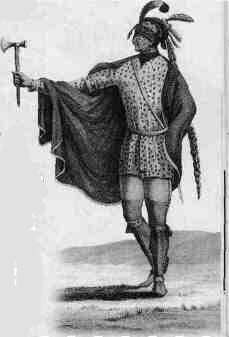
Illinois Confederation
The Illinois Confederation, also referred to as the Illiniwek or Illini, were made up of a loosely organized group of 12 or 13 tribes who lived in the Mississippi River Valley. Eventually, member tribes occupied an area reaching from Lake Michigan to Iowa, Illinois, Missouri, and Arkansas. The five main tribes were the Cahokia, Kaskaskia, Michigamea, Peoria, and Tamaroa. Other related tribes are described as the Maroa (which may have been the same as Tamaroa), Tapourao, Coiracoentanon, Espeminka, Moingwena, Chinkoa, and Chepoussa. By 1700, only the Cahokia, Kaskaskia, Michigamea, Peoria, and Tamaroa remained. Over time, these tribes continued to merge, with the Tamaroa joining the Kaskaskia, the Cahokia joining the Peoria, and with a portion of the Michigamea merging with the Kaskaskia and the remainder merging with the Quapaw.
The spelling "Illinois" was derived from the transliteration by French explorers of iliniwe to the orthography of their own language. The tribes are estimated to have had tens of thousands of members, before the advancement of European contact in the 17th century that inhibited their growth and resulted in a marked decline in population.
The Illinois, like many Native American groups, sustained themselves through agriculture, hunting, and fishing. A partially nomadic group, the Illinois often lived in longhouses and wigwams, according to the season and resources that were available to them in the surrounding land. While the men usually hunted, traded, or participated in war, the women cultivated and processed their crops, created tools and clothing from game, and preserved food in various ways for storage and travel. Not officially a Confederation, the villages were led by one Great Chief. The villages had several chiefs who led each individual clan. The Illinois people eventually declined because of losses to infectious disease and war, mostly brought through the arrival of French colonists.
In 1832, the last of the Illinois homelands were being ceded, and survivors were removed to Kansas. In 1840, 200 Peoria and eight Kaskaskia were reported. In 1851, an Indian agent reported that the Peoria and the Kaskaskia, along with their allies, had intermarried among themselves and among White people to such an extent that they had practically lost their tribal identities. An 1854 treaty recognized this as a factual union and classified these groups as the Confederated Peoria. The treaty also provided for opening the Peoria-Kaskaskia and the Wea-Piankashaw reserves in Kansas to settlement by non-Indians Eventually, the remnants of these tribal groups reorganized under the name of the Confederated Peoria. They are now known as the federally recognized "Peoria Tribe of Indians" and reside in present-day Oklahoma.
French missionaries who documented their interactions with the tribes noted that the people referred to themselves as the Inoka. The meaning of this word is unknown. Jacques Marquette, a French Jesuit missionary, claimed that Illinois was derived from Illini in their Algonquian language, meaning "the men". Louis Hennepin claimed the aforementioned men were a symbol of maturity and strength, and representative of the prime of a man's age.
In the 21st century, however, linguistic research demonstrates that Illinois derives indirectly from irenweewa, meaning "he speaks in the ordinary way". When the French encountered the Ojibwa, who occupied neighboring areas around the eastern Great Lakes, their pronunciation for this concept sounded to the French like ilinwe, which is the singular form of ilinwek. The French explorers who first heard it recorded it in various transliterated forms, such as "liniouek", "Aliniouek", "Iliniouek", and "Abimiouec".
The Illinois Confederation comprised 12 separate tribes who shared common language and culture. These tribes are the Kaskaskia, Cahokia, Peoria, Tamaroa, Moingwena, Michigamea, Chepoussa, Chinkoa, Coiracoentanon, Espeminkia, Maroa, and Tapouara. Of these 12, only the Kaskaskia, Cahokia, Peoria, Tamaora, and Michigamea remain; others were lost as distinct tribes to disease and warfare. Although the number of Illinois has been significantly reduced by colonization and genocide, many of their descendants are today part of the Peoria Tribe of Miami, Oklahoma, as part of the merged Confederated Peoria Tribe.
When the French first encountered the Illiniwek tribes, as many as 10,000 members were thought to be living in a vast area stretching from Lake Michigan west to the heart of Iowa and as far south as Arkansas. In the 1670s, the French found a village of the Kaskaskia, in the Illinois River Valley (the later site of present-day Utica), a village of Peoria in present-day Iowa (near the later site of Keokuk), and a village of the Michigamea in northeast Arkansas.
Illinois Confederation
The Illinois Confederation, also referred to as the Illiniwek or Illini, were made up of a loosely organized group of 12 or 13 tribes who lived in the Mississippi River Valley. Eventually, member tribes occupied an area reaching from Lake Michigan to Iowa, Illinois, Missouri, and Arkansas. The five main tribes were the Cahokia, Kaskaskia, Michigamea, Peoria, and Tamaroa. Other related tribes are described as the Maroa (which may have been the same as Tamaroa), Tapourao, Coiracoentanon, Espeminka, Moingwena, Chinkoa, and Chepoussa. By 1700, only the Cahokia, Kaskaskia, Michigamea, Peoria, and Tamaroa remained. Over time, these tribes continued to merge, with the Tamaroa joining the Kaskaskia, the Cahokia joining the Peoria, and with a portion of the Michigamea merging with the Kaskaskia and the remainder merging with the Quapaw.
The spelling "Illinois" was derived from the transliteration by French explorers of iliniwe to the orthography of their own language. The tribes are estimated to have had tens of thousands of members, before the advancement of European contact in the 17th century that inhibited their growth and resulted in a marked decline in population.
The Illinois, like many Native American groups, sustained themselves through agriculture, hunting, and fishing. A partially nomadic group, the Illinois often lived in longhouses and wigwams, according to the season and resources that were available to them in the surrounding land. While the men usually hunted, traded, or participated in war, the women cultivated and processed their crops, created tools and clothing from game, and preserved food in various ways for storage and travel. Not officially a Confederation, the villages were led by one Great Chief. The villages had several chiefs who led each individual clan. The Illinois people eventually declined because of losses to infectious disease and war, mostly brought through the arrival of French colonists.
In 1832, the last of the Illinois homelands were being ceded, and survivors were removed to Kansas. In 1840, 200 Peoria and eight Kaskaskia were reported. In 1851, an Indian agent reported that the Peoria and the Kaskaskia, along with their allies, had intermarried among themselves and among White people to such an extent that they had practically lost their tribal identities. An 1854 treaty recognized this as a factual union and classified these groups as the Confederated Peoria. The treaty also provided for opening the Peoria-Kaskaskia and the Wea-Piankashaw reserves in Kansas to settlement by non-Indians Eventually, the remnants of these tribal groups reorganized under the name of the Confederated Peoria. They are now known as the federally recognized "Peoria Tribe of Indians" and reside in present-day Oklahoma.
French missionaries who documented their interactions with the tribes noted that the people referred to themselves as the Inoka. The meaning of this word is unknown. Jacques Marquette, a French Jesuit missionary, claimed that Illinois was derived from Illini in their Algonquian language, meaning "the men". Louis Hennepin claimed the aforementioned men were a symbol of maturity and strength, and representative of the prime of a man's age.
In the 21st century, however, linguistic research demonstrates that Illinois derives indirectly from irenweewa, meaning "he speaks in the ordinary way". When the French encountered the Ojibwa, who occupied neighboring areas around the eastern Great Lakes, their pronunciation for this concept sounded to the French like ilinwe, which is the singular form of ilinwek. The French explorers who first heard it recorded it in various transliterated forms, such as "liniouek", "Aliniouek", "Iliniouek", and "Abimiouec".
The Illinois Confederation comprised 12 separate tribes who shared common language and culture. These tribes are the Kaskaskia, Cahokia, Peoria, Tamaroa, Moingwena, Michigamea, Chepoussa, Chinkoa, Coiracoentanon, Espeminkia, Maroa, and Tapouara. Of these 12, only the Kaskaskia, Cahokia, Peoria, Tamaora, and Michigamea remain; others were lost as distinct tribes to disease and warfare. Although the number of Illinois has been significantly reduced by colonization and genocide, many of their descendants are today part of the Peoria Tribe of Miami, Oklahoma, as part of the merged Confederated Peoria Tribe.
When the French first encountered the Illiniwek tribes, as many as 10,000 members were thought to be living in a vast area stretching from Lake Michigan west to the heart of Iowa and as far south as Arkansas. In the 1670s, the French found a village of the Kaskaskia, in the Illinois River Valley (the later site of present-day Utica), a village of Peoria in present-day Iowa (near the later site of Keokuk), and a village of the Michigamea in northeast Arkansas.
Recent media
Recent media