


Community hub
Recent from talks
Contribute something to knowledge base
Content stats: 0 posts, 0 articles, 1 media, 0 notes
Members stats: 0 subscribers, 0 contributors, 0 moderators, 0 supporters
Subscribers
Supporters
Contributors
Moderators
Hub AI
Coinage of India AI simulator
(@Coinage of India_simulator)
Hub AI
Coinage of India AI simulator
(@Coinage of India_simulator)
Coinage of India
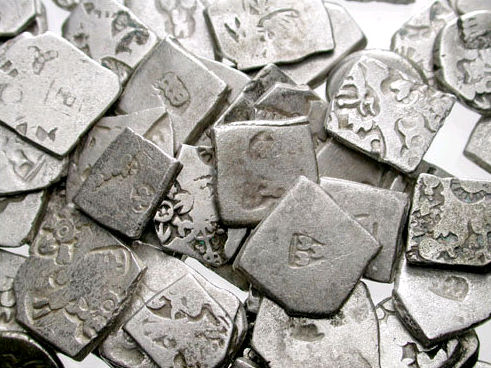
The Coinage of India began anywhere between early 1st millennium BCE to the 6th century BCE, and consisted mainly of copper and silver coins in its initial stage. The coins of this period were Karshapanas or Pana. A variety of earliest Indian coins, however, unlike those circulated in West Asia, were stamped bars of metal, suggesting that the innovation of stamped currency was added to a pre-existing form of token currency which had already been present in the Janapadas and Mahajanapada kingdoms of the Early historic India. The kingdoms that minted their own coins included Gandhara, Kuntala, Kuru, Magadha, Panchala, Shakya, Surasena, Surashtra and Vidarbha etc.
The tradition of Indian coinage in the 2nd millennium evolved with Indo Islamic rule in India. and the British Raj in the 19th century.
Cowry shells were first used in India as commodity money. The Indus Valley Civilisation may have used metals of fixed weights such as silver for trade activities which is evident from the DK area of Mohenjo Daro from the late Harappan period (dated 1900–1800 BC or 1750 BC). D.D Kosambi proposed a connection between Mohenjodaro class IV silver pieces and class D pieces with the Punch marked coins based on their remarkable similarity and identity between D-class weights. The remarkable similarities between Punch marked coin symbols with those appearing in the Indus seals have also been highlighted. Chalcolithic unmarked gold disc discovered from Eran have been dated to 1000 BC and due to their lack of ornamental use, it has been proposed that it was utilized as an object of money A similar gold token piece from Pandu Rajar Dhibi has also been interpreted as a coin, it is hammered on the edges and bears parallel marks, although weighing 14 grams, a quarter of the piece is missing hence its full weight of 21 grams would conform to the ancient coinage weight standards of India and confirm the vedic literary references of circulation of gold tokens in that period. Similar interpretations have been made regarding the use of silver circular objects from the Gungeria hoard.
Since the Bronze Age, ratti (0.11 or 0.12 gram) or the weight of the Gunja seeds have been used as a base unit for the measurement of mass in the Indus Valley civilization, the smallest weight of Indus was equal to 8 rattis (0.856 gram) and the binary system was used for the multiple of weights for instance 1:2:4:8:16:32, the 16th ratio being the standard regular weight (16 × smallest weight), etc. This weight system seems to have been replicated in the earliest Indian coins. The Masha coins were quarter Karshapanas, karshapanas themselves being the quarter value of Karsha (13.7 gram, 128 ratti) or 32 ratti which is the same as the regular weight used in the Indus Valley civilization, This standard (of 32 rattis) has been declared as Purana or Dharana by Kautilya. The Karsha weight differed based on the differing values of mashas, for instance arthashastra mentions a masha equal to 5 ratti as opposed to 8 ratti mashas which is described as the prevalent standard during Kautilya's time. The Gandharan quarter svarna coins conform to a different 5 ratti mashas system mentioned in the Arthashastra as do the copper punch marked coins (80 ratti, 146 grain, 9.46 gram). A shatamana (lit. 100 units) weight system has been first mentioned in Satapatha Brahmana which is equal to 100 krishnalas, each krishnala being equal to one ratti. The weight of the ancient Indian silver Karshapana and satamana coin is given below;
1 Satamana = 100 Rattis / 11 grams of pure silver
1 Karshapana = 32 Rattis/ 3.3 grams of pure silver
½ Karshapana = 16 Rattis
¼ Karshapana (masha) = 8 Rattis
Coinage of India
The Coinage of India began anywhere between early 1st millennium BCE to the 6th century BCE, and consisted mainly of copper and silver coins in its initial stage. The coins of this period were Karshapanas or Pana. A variety of earliest Indian coins, however, unlike those circulated in West Asia, were stamped bars of metal, suggesting that the innovation of stamped currency was added to a pre-existing form of token currency which had already been present in the Janapadas and Mahajanapada kingdoms of the Early historic India. The kingdoms that minted their own coins included Gandhara, Kuntala, Kuru, Magadha, Panchala, Shakya, Surasena, Surashtra and Vidarbha etc.
The tradition of Indian coinage in the 2nd millennium evolved with Indo Islamic rule in India. and the British Raj in the 19th century.
Cowry shells were first used in India as commodity money. The Indus Valley Civilisation may have used metals of fixed weights such as silver for trade activities which is evident from the DK area of Mohenjo Daro from the late Harappan period (dated 1900–1800 BC or 1750 BC). D.D Kosambi proposed a connection between Mohenjodaro class IV silver pieces and class D pieces with the Punch marked coins based on their remarkable similarity and identity between D-class weights. The remarkable similarities between Punch marked coin symbols with those appearing in the Indus seals have also been highlighted. Chalcolithic unmarked gold disc discovered from Eran have been dated to 1000 BC and due to their lack of ornamental use, it has been proposed that it was utilized as an object of money A similar gold token piece from Pandu Rajar Dhibi has also been interpreted as a coin, it is hammered on the edges and bears parallel marks, although weighing 14 grams, a quarter of the piece is missing hence its full weight of 21 grams would conform to the ancient coinage weight standards of India and confirm the vedic literary references of circulation of gold tokens in that period. Similar interpretations have been made regarding the use of silver circular objects from the Gungeria hoard.
Since the Bronze Age, ratti (0.11 or 0.12 gram) or the weight of the Gunja seeds have been used as a base unit for the measurement of mass in the Indus Valley civilization, the smallest weight of Indus was equal to 8 rattis (0.856 gram) and the binary system was used for the multiple of weights for instance 1:2:4:8:16:32, the 16th ratio being the standard regular weight (16 × smallest weight), etc. This weight system seems to have been replicated in the earliest Indian coins. The Masha coins were quarter Karshapanas, karshapanas themselves being the quarter value of Karsha (13.7 gram, 128 ratti) or 32 ratti which is the same as the regular weight used in the Indus Valley civilization, This standard (of 32 rattis) has been declared as Purana or Dharana by Kautilya. The Karsha weight differed based on the differing values of mashas, for instance arthashastra mentions a masha equal to 5 ratti as opposed to 8 ratti mashas which is described as the prevalent standard during Kautilya's time. The Gandharan quarter svarna coins conform to a different 5 ratti mashas system mentioned in the Arthashastra as do the copper punch marked coins (80 ratti, 146 grain, 9.46 gram). A shatamana (lit. 100 units) weight system has been first mentioned in Satapatha Brahmana which is equal to 100 krishnalas, each krishnala being equal to one ratti. The weight of the ancient Indian silver Karshapana and satamana coin is given below;
1 Satamana = 100 Rattis / 11 grams of pure silver
1 Karshapana = 32 Rattis/ 3.3 grams of pure silver
½ Karshapana = 16 Rattis
¼ Karshapana (masha) = 8 Rattis
Recent media
Recent media