



Community hub
Recent from talks
Knowledge base stats:
Talk channels stats:
Members stats:
Indische Party
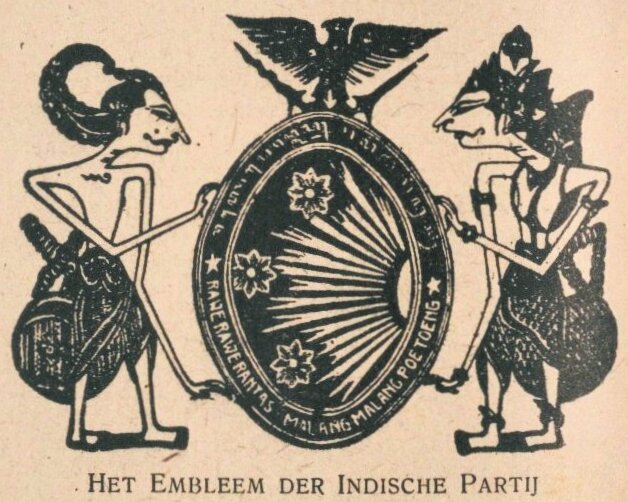
The Indische Partij (IP) or Indies Party (Indonesian: Partai Hindia) was a short-lived but influential political organisation founded in 1912 by the Indo-European (Eurasian) journalist E.F.E. Douwes Dekker and the Javanese physicians Tjipto Mangoenkoesoemo and Soewardi Soerjaningrat. As one of the first political organisations pioneering Indonesian nationalism in the colonial Dutch East Indies it inspired several later organisations such as the Nationaal Indische Party (N.I.P.) or Sarekat Hindia in 1919 and Indo Europeesch Verbond (I.E.V.) in 1919. Its direct successor was Insulinde.
As an Indo, Douwes Dekker felt that there was discrimination between the Dutch totok (native), Indo (mixed) and Bumiputera (indigenous) social status by the Dutch East Indies government. The position and fate of the Indo were not much different from the Bumiputera. Destitute Indo's were found in Jakarta (Kemayoran), Semarang (Karangbidara), and Surabaya (Kerambangan). The totok Dutch viewed the Indo's as inferior to them. This view was expressed in the newsletter of the ‘Bond van geneesheeren’ (Association of doctors) in September 1912. In the bulletin, the native Dutch doctors denounced the government's intention to establish a second Medical School (NIAS) in Surabaya that was open to all nations. They considered the lowly Indo people unfit to become doctors.
According to Dekker, if Indo's wanted to change their fate, then they had to work together with the Bumiputera to bring about change. The Indies were not just for the full-blooded Dutch, but for everyone who felt they were an Indies (Hindia or Indian). This view became the basis of the nationalist ideology espoused by the Indische Partij.
Criticism of colonial life dates back to the early 20th century. Suwardi Suryaningrat criticised the Dutch East Indies government in his writings. Various writings containing his views on the unequal life of colonial society were published in newspapers and magazines such as Het Tijdschrift and De Expres. Suwardi was of the view that the domination of the Dutch totok group over Indo and Bumiputera people must end because it was based on the arbitrariness of the colonial government. In his writings, Suwardi pressed on the importance of Indies nationalism in every political struggle so as to end the exploitation carried out by the government. Meanwhile, Tjipto Mangunkusumo criticised it through his writings published in De Locomotief newspaper. According to him, Javanese society was difficult to progress because it was confined by feudalism and society as a whole experienced excessive exploitation. This led to so much poverty and backwardness that he thought colonialism had to end. According to him, the way to end colonialism was through political struggle. This is what caused Tjipto Mangunkusumo to leave Budi Utomo who did not share his views. Then he met with Dekker and Suwardi Suryaningrat who were like-minded and formed the Indische Partij.
Its influence as the first multi-racial political party that clearly stated the, at the time radical, notion of independence was far reaching. The IP's aim was to unite all native peoples of the Indies in a struggle for an independent nation. When the IP was banned and its leadership exiled, members of the IP founded the equally radical Insulinde. In Bandung, there have long been Indo-European organisations such as the Indische Bond (1898) and Insulinde (1907). Both organisations aimed to elevate the status of Indo-Europeans in the socio-economic field and forge an alliance with the Netherlands without separating from the mother country. This was, of course, the opposite of Dekker's thinking. In his speech to the members of the Indische Bond on 12 December 1911 entitled ‘Aansluiting tussen blank en bruin’ (The union of white and brown skin), Dekker stirred up the spirit of the Indo people to rebel and break away from the colonial government. And because of the small number of Indo's, they had to fight together with the Bumiputera with the Indo's being the pioneers.
His speech influenced some members of the Indische Bond to form the Committee of Seven, which was tasked with preparing the formation of a new organisation. The Committee of Seven consisted of J. R. Agerbeek, J. D. Brunveld van Hulten, G. P. Charli, E. C. I. Couvreur, E. V. E. Douwes Dekker, J van der Poel, and R. H. Teuscher. On 6 September 1912, the Committee of Seven held a meeting under Dekker's leadership in Bandung and the result was the formation of a new association called the Indische Partij. On 15 September 1912, three important figures of the Indische Partij (E. V. E. Douwes Dekker, J van der Poel, and J. D. Brunveld van Hulten) moved to the cities of Yogyakarta, Madiun, Surabaya, Semarang, Pekalongan, Tegal, and Cirebon. In each city visited, meetings were held attended by various associations such as Insulinde Sarekat Islam, Budi Utomo, Kartini Club, Mangunhardjo, and Tiong Hoa Hwee Koan associations and established party branches.
Cipto Mangunkusumo joined Surabaya with 70 other people. He travelled all the way from Malang to meet his old friend because he saw the similarity in his political vision with Dekker. Meanwhile, Suwardi joined because Dekker was impressed by his writings in De Expres and Oetoesan Hindia. In November 1912, both were drawn to Bandung to become directors of the daily De Expres.
Dekker gave speeches at vergadering to attract the masses and this was new in the Dutch East Indies. At the vergadering in Bandung, Dekker said that the founding of the Indische Partij was a declaration of war: light against darkness; civilisation against tyranny; good against evil; colonial tax-paying slaves against the tax-collecting state, the Netherlands. His passionate speeches easily attracted large crowds. At a vergadering in Semarang on 18 September 1912, around 300 people came to listen to Dekker's speech. Those who could not join Budi Utomo because they were not Javanese were welcome in the Indische Partij; non-Muslims who were reluctant to join Sarekat Islam could move freely in the Indische Partij; progressives of Budi Utomo who were dissatisfied with the organisation could easily find political satisfaction in the Indische Partij; and revolutionary Sarekat Islamists had their wishes fulfilled by joining the Indische Partij.
Hub AI
Indische Party AI simulator
(@Indische Party_simulator)
Indische Party
The Indische Partij (IP) or Indies Party (Indonesian: Partai Hindia) was a short-lived but influential political organisation founded in 1912 by the Indo-European (Eurasian) journalist E.F.E. Douwes Dekker and the Javanese physicians Tjipto Mangoenkoesoemo and Soewardi Soerjaningrat. As one of the first political organisations pioneering Indonesian nationalism in the colonial Dutch East Indies it inspired several later organisations such as the Nationaal Indische Party (N.I.P.) or Sarekat Hindia in 1919 and Indo Europeesch Verbond (I.E.V.) in 1919. Its direct successor was Insulinde.
As an Indo, Douwes Dekker felt that there was discrimination between the Dutch totok (native), Indo (mixed) and Bumiputera (indigenous) social status by the Dutch East Indies government. The position and fate of the Indo were not much different from the Bumiputera. Destitute Indo's were found in Jakarta (Kemayoran), Semarang (Karangbidara), and Surabaya (Kerambangan). The totok Dutch viewed the Indo's as inferior to them. This view was expressed in the newsletter of the ‘Bond van geneesheeren’ (Association of doctors) in September 1912. In the bulletin, the native Dutch doctors denounced the government's intention to establish a second Medical School (NIAS) in Surabaya that was open to all nations. They considered the lowly Indo people unfit to become doctors.
According to Dekker, if Indo's wanted to change their fate, then they had to work together with the Bumiputera to bring about change. The Indies were not just for the full-blooded Dutch, but for everyone who felt they were an Indies (Hindia or Indian). This view became the basis of the nationalist ideology espoused by the Indische Partij.
Criticism of colonial life dates back to the early 20th century. Suwardi Suryaningrat criticised the Dutch East Indies government in his writings. Various writings containing his views on the unequal life of colonial society were published in newspapers and magazines such as Het Tijdschrift and De Expres. Suwardi was of the view that the domination of the Dutch totok group over Indo and Bumiputera people must end because it was based on the arbitrariness of the colonial government. In his writings, Suwardi pressed on the importance of Indies nationalism in every political struggle so as to end the exploitation carried out by the government. Meanwhile, Tjipto Mangunkusumo criticised it through his writings published in De Locomotief newspaper. According to him, Javanese society was difficult to progress because it was confined by feudalism and society as a whole experienced excessive exploitation. This led to so much poverty and backwardness that he thought colonialism had to end. According to him, the way to end colonialism was through political struggle. This is what caused Tjipto Mangunkusumo to leave Budi Utomo who did not share his views. Then he met with Dekker and Suwardi Suryaningrat who were like-minded and formed the Indische Partij.
Its influence as the first multi-racial political party that clearly stated the, at the time radical, notion of independence was far reaching. The IP's aim was to unite all native peoples of the Indies in a struggle for an independent nation. When the IP was banned and its leadership exiled, members of the IP founded the equally radical Insulinde. In Bandung, there have long been Indo-European organisations such as the Indische Bond (1898) and Insulinde (1907). Both organisations aimed to elevate the status of Indo-Europeans in the socio-economic field and forge an alliance with the Netherlands without separating from the mother country. This was, of course, the opposite of Dekker's thinking. In his speech to the members of the Indische Bond on 12 December 1911 entitled ‘Aansluiting tussen blank en bruin’ (The union of white and brown skin), Dekker stirred up the spirit of the Indo people to rebel and break away from the colonial government. And because of the small number of Indo's, they had to fight together with the Bumiputera with the Indo's being the pioneers.
His speech influenced some members of the Indische Bond to form the Committee of Seven, which was tasked with preparing the formation of a new organisation. The Committee of Seven consisted of J. R. Agerbeek, J. D. Brunveld van Hulten, G. P. Charli, E. C. I. Couvreur, E. V. E. Douwes Dekker, J van der Poel, and R. H. Teuscher. On 6 September 1912, the Committee of Seven held a meeting under Dekker's leadership in Bandung and the result was the formation of a new association called the Indische Partij. On 15 September 1912, three important figures of the Indische Partij (E. V. E. Douwes Dekker, J van der Poel, and J. D. Brunveld van Hulten) moved to the cities of Yogyakarta, Madiun, Surabaya, Semarang, Pekalongan, Tegal, and Cirebon. In each city visited, meetings were held attended by various associations such as Insulinde Sarekat Islam, Budi Utomo, Kartini Club, Mangunhardjo, and Tiong Hoa Hwee Koan associations and established party branches.
Cipto Mangunkusumo joined Surabaya with 70 other people. He travelled all the way from Malang to meet his old friend because he saw the similarity in his political vision with Dekker. Meanwhile, Suwardi joined because Dekker was impressed by his writings in De Expres and Oetoesan Hindia. In November 1912, both were drawn to Bandung to become directors of the daily De Expres.
Dekker gave speeches at vergadering to attract the masses and this was new in the Dutch East Indies. At the vergadering in Bandung, Dekker said that the founding of the Indische Partij was a declaration of war: light against darkness; civilisation against tyranny; good against evil; colonial tax-paying slaves against the tax-collecting state, the Netherlands. His passionate speeches easily attracted large crowds. At a vergadering in Semarang on 18 September 1912, around 300 people came to listen to Dekker's speech. Those who could not join Budi Utomo because they were not Javanese were welcome in the Indische Partij; non-Muslims who were reluctant to join Sarekat Islam could move freely in the Indische Partij; progressives of Budi Utomo who were dissatisfied with the organisation could easily find political satisfaction in the Indische Partij; and revolutionary Sarekat Islamists had their wishes fulfilled by joining the Indische Partij.