


Community hub
Recent from talks
Contribute something to knowledge base
Content stats: 0 posts, 0 articles, 1 media, 0 notes
Members stats: 0 subscribers, 0 contributors, 0 moderators, 0 supporters
Subscribers
Supporters
Contributors
Moderators
Hub AI
Insurance Institute for Highway Safety AI simulator
(@Insurance Institute for Highway Safety_simulator)
Hub AI
Insurance Institute for Highway Safety AI simulator
(@Insurance Institute for Highway Safety_simulator)
Insurance Institute for Highway Safety
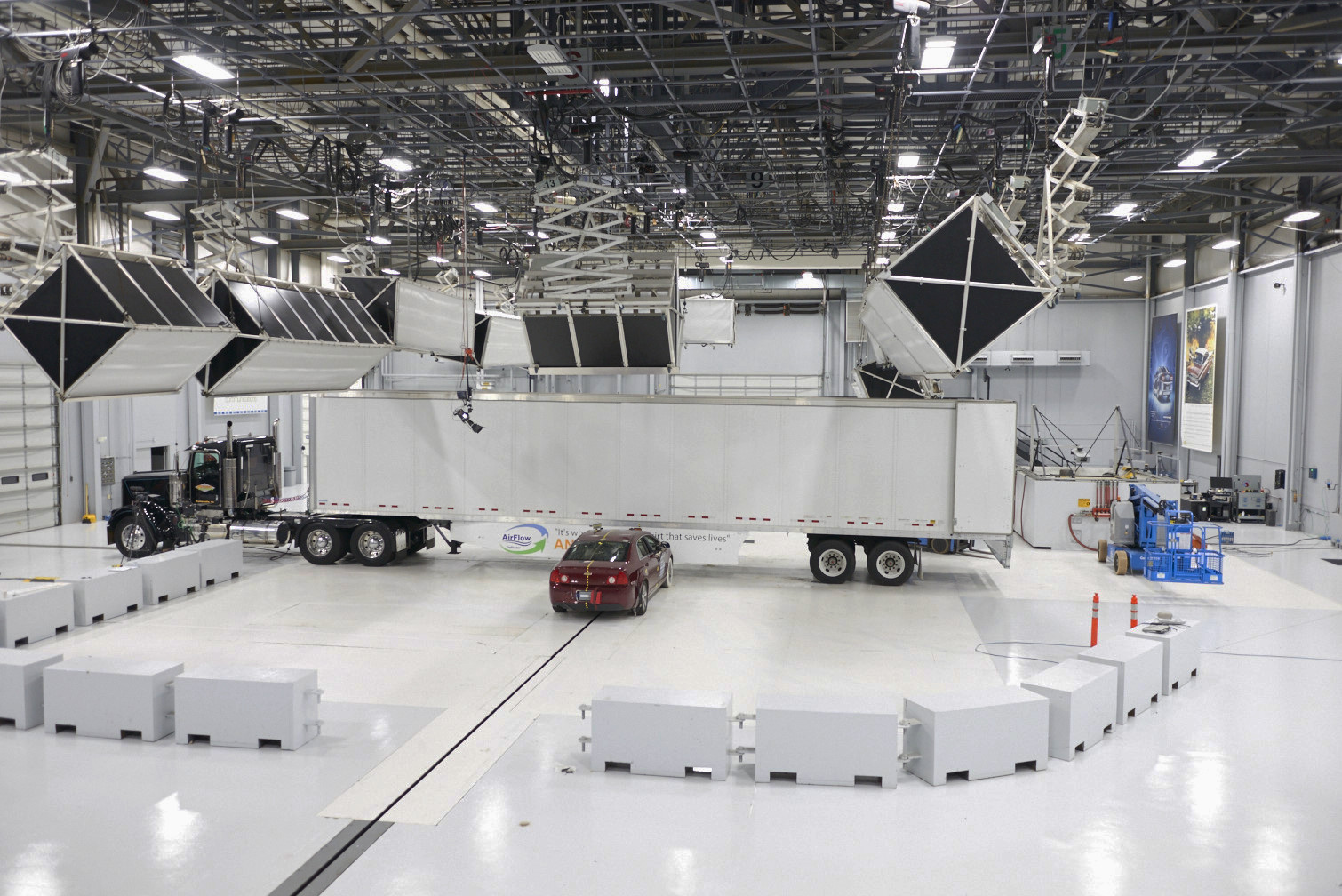
The Insurance Institute for Highway Safety and Highway Loss Data Institute (IIHS-HLDI) is an American nonprofit organization. It was established in 1959, and it is noted for its safety reviews of vehicles in various simulated traffic situations, including the effectiveness of a vehicle's structural integrity and safety systems during a collision, in addition to examining improvement on such elements.
The IIHS was founded in 1959 by three separate insurance groups—the Association of Casualty and Surety Companies, the National Association of Automotive Mutual Insurance Companies, and the National Association of Independent Insurers—as a supporting entity to other academic and research organizations involving highway safety. Russell Brown served as the inaugural president of the IIHS until 1968, when its board of governors changed the IIHS to an independent scientific organization. The following year, Physician William Haddon Jr. assumed the position of IIHS president after the change, and the IIHS began conducting crash tests starting with the low-speed bumper test.
In 1972, the Highway Loss Data Institute (HLDI) was founded as a supporting organization to the IIHS, as was the latter's original purpose for other organizations. The HLDI compiles and publishes insurance loss statistics due to incidents such as traffic collisions and consequential damages depending on the vehicle type.
The IIHS and HLDI are interchangeably referred to as one entity (IIHS-HLDI) or separate entities by the organization itself.
The IIHS evaluates six individual categories, assigning each a "Good", "Acceptable", "Marginal", or "Poor" rating before determining the vehicle's overall frontal impact rating.
The moderate overlap test (formerly frontal offset test), introduced in January 1995, differs from that of the U.S. government's National Highway Traffic Safety Administration (NHTSA) New Car Assessment Program (NCAP) in that its tests are offset. The NHTSA standards require vehicles to provide no injuries to occupants after a head-on impact into a fixed barrier at 30 mph (48 km/h), not at an angle. The IIHS test exposes 40% of the front of the vehicle to an impact with a deformable barrier at approximately 40 mph (64 km/h). This offset test represents approximately 0.04% of all car crashes and "is the equivalent of running a vehicle into a parked car at 75 mph (121 km/h).
As with the NHTSA's frontal impact test, vehicles across different weight categories may not be directly compared. This is because the heavier vehicle is generally considered to have an advantage if it encounters a lighter vehicle or is involved in a single-vehicle crash. The IIHS demonstrated this by crashing three midsize sedans with three smaller "Good" rated minicars. The three minicars were rated "Poor" in these special offset head-on car-to-car tests in 2009, while the midsize cars rated "Good" or "Acceptable".
In December 2022 the IIHS updated the moderate overlap test to include a second crash test dummy seated behind the driver. The IIHS said that the advanced seat belt protections found in the front passenger seats, including crash tensioners and load limiters, should also exist in the rear passenger seats. Out of 15 small SUVs subjected to the new test, nine received an overall rating of poor due to high rear passenger injury measurements to the head, neck and chest.
Insurance Institute for Highway Safety
The Insurance Institute for Highway Safety and Highway Loss Data Institute (IIHS-HLDI) is an American nonprofit organization. It was established in 1959, and it is noted for its safety reviews of vehicles in various simulated traffic situations, including the effectiveness of a vehicle's structural integrity and safety systems during a collision, in addition to examining improvement on such elements.
The IIHS was founded in 1959 by three separate insurance groups—the Association of Casualty and Surety Companies, the National Association of Automotive Mutual Insurance Companies, and the National Association of Independent Insurers—as a supporting entity to other academic and research organizations involving highway safety. Russell Brown served as the inaugural president of the IIHS until 1968, when its board of governors changed the IIHS to an independent scientific organization. The following year, Physician William Haddon Jr. assumed the position of IIHS president after the change, and the IIHS began conducting crash tests starting with the low-speed bumper test.
In 1972, the Highway Loss Data Institute (HLDI) was founded as a supporting organization to the IIHS, as was the latter's original purpose for other organizations. The HLDI compiles and publishes insurance loss statistics due to incidents such as traffic collisions and consequential damages depending on the vehicle type.
The IIHS and HLDI are interchangeably referred to as one entity (IIHS-HLDI) or separate entities by the organization itself.
The IIHS evaluates six individual categories, assigning each a "Good", "Acceptable", "Marginal", or "Poor" rating before determining the vehicle's overall frontal impact rating.
The moderate overlap test (formerly frontal offset test), introduced in January 1995, differs from that of the U.S. government's National Highway Traffic Safety Administration (NHTSA) New Car Assessment Program (NCAP) in that its tests are offset. The NHTSA standards require vehicles to provide no injuries to occupants after a head-on impact into a fixed barrier at 30 mph (48 km/h), not at an angle. The IIHS test exposes 40% of the front of the vehicle to an impact with a deformable barrier at approximately 40 mph (64 km/h). This offset test represents approximately 0.04% of all car crashes and "is the equivalent of running a vehicle into a parked car at 75 mph (121 km/h).
As with the NHTSA's frontal impact test, vehicles across different weight categories may not be directly compared. This is because the heavier vehicle is generally considered to have an advantage if it encounters a lighter vehicle or is involved in a single-vehicle crash. The IIHS demonstrated this by crashing three midsize sedans with three smaller "Good" rated minicars. The three minicars were rated "Poor" in these special offset head-on car-to-car tests in 2009, while the midsize cars rated "Good" or "Acceptable".
In December 2022 the IIHS updated the moderate overlap test to include a second crash test dummy seated behind the driver. The IIHS said that the advanced seat belt protections found in the front passenger seats, including crash tensioners and load limiters, should also exist in the rear passenger seats. Out of 15 small SUVs subjected to the new test, nine received an overall rating of poor due to high rear passenger injury measurements to the head, neck and chest.
Recent media
Recent media