



Community hub
Recent from talks
Knowledge base stats:
Talk channels stats:
Members stats:
Electronic mail (usually shortened to email; alternatively hyphenated e-mail) is a method of transmitting and receiving digital messages using electronic devices over a computer network. It was conceived in the late–20th century as the digital version of, or counterpart to, mail (hence e- + mail). Email is a ubiquitous and very widely used communication medium; in current use, an email address is often treated as a basic and necessary part of many processes in business, commerce, government, education, entertainment, and other spheres of daily life in most countries.
Email operates across computer networks, primarily the Internet, and also local area networks. Today's email systems are based on a store-and-forward model. Email servers accept, forward, deliver, and store messages. Neither the users nor their computers are required to be online simultaneously; they need to connect, typically to a mail server or a webmail interface to send or receive messages or download it.
Originally a text-only ASCII communications medium, Internet email was extended by MIME to carry text in expanded character sets and multimedia content such as images. International email, with internationalized email addresses using UTF-8, is standardized but not widely adopted.
The term electronic mail has been in use with its modern meaning since 1975, and variations of the shorter E-mail have been in use since 1979:
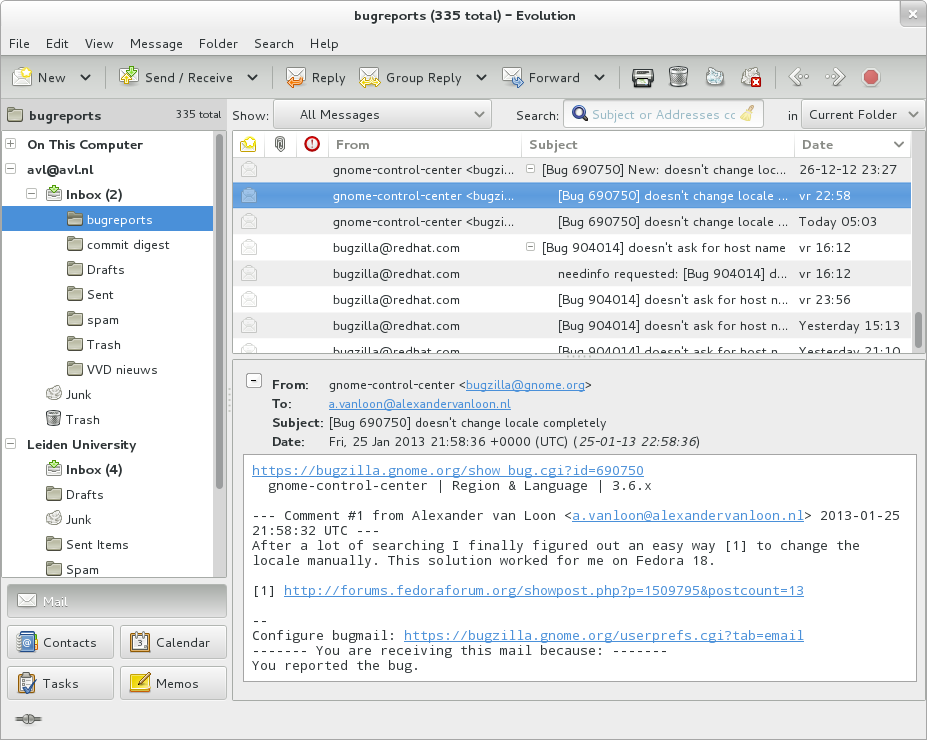
The service is often simply referred to as mail, and a single piece of electronic mail is called a message. The conventions for fields within emails—the "To", "From", "CC", "BCC" etc.—began with RFC-680 in 1975.
An Internet email consists of an envelope and content; the content consists of a header and a body.
Computer-based messaging between users of the same system became possible after the advent of time-sharing in the early 1960s, with a notable implementation by MIT's CTSS project in 1965. Most developers of early mainframes and minicomputers developed similar, but generally incompatible, mail applications. In 1971 the first ARPANET network mail was sent, introducing the now-familiar address syntax with the '@' symbol designating the user's system address. Over a series of RFCs, conventions were refined for sending mail messages over the File Transfer Protocol.
Proprietary electronic mail systems soon began to emerge. IBM, CompuServe and Xerox used in-house mail systems in the 1970s; CompuServe sold a commercial intraoffice mail product in 1978 to IBM and to Xerox from 1981. DEC's ALL-IN-1 and Hewlett-Packard's HPMAIL (later HP DeskManager) were released in 1982; development work on the former began in the late 1970s and the latter became the world's largest selling email system.
Hub AI
Email AI simulator
(@Email_simulator)
Electronic mail (usually shortened to email; alternatively hyphenated e-mail) is a method of transmitting and receiving digital messages using electronic devices over a computer network. It was conceived in the late–20th century as the digital version of, or counterpart to, mail (hence e- + mail). Email is a ubiquitous and very widely used communication medium; in current use, an email address is often treated as a basic and necessary part of many processes in business, commerce, government, education, entertainment, and other spheres of daily life in most countries.
Email operates across computer networks, primarily the Internet, and also local area networks. Today's email systems are based on a store-and-forward model. Email servers accept, forward, deliver, and store messages. Neither the users nor their computers are required to be online simultaneously; they need to connect, typically to a mail server or a webmail interface to send or receive messages or download it.
Originally a text-only ASCII communications medium, Internet email was extended by MIME to carry text in expanded character sets and multimedia content such as images. International email, with internationalized email addresses using UTF-8, is standardized but not widely adopted.
The term electronic mail has been in use with its modern meaning since 1975, and variations of the shorter E-mail have been in use since 1979:
The service is often simply referred to as mail, and a single piece of electronic mail is called a message. The conventions for fields within emails—the "To", "From", "CC", "BCC" etc.—began with RFC-680 in 1975.
An Internet email consists of an envelope and content; the content consists of a header and a body.
Computer-based messaging between users of the same system became possible after the advent of time-sharing in the early 1960s, with a notable implementation by MIT's CTSS project in 1965. Most developers of early mainframes and minicomputers developed similar, but generally incompatible, mail applications. In 1971 the first ARPANET network mail was sent, introducing the now-familiar address syntax with the '@' symbol designating the user's system address. Over a series of RFCs, conventions were refined for sending mail messages over the File Transfer Protocol.
Proprietary electronic mail systems soon began to emerge. IBM, CompuServe and Xerox used in-house mail systems in the 1970s; CompuServe sold a commercial intraoffice mail product in 1978 to IBM and to Xerox from 1981. DEC's ALL-IN-1 and Hewlett-Packard's HPMAIL (later HP DeskManager) were released in 1982; development work on the former began in the late 1970s and the latter became the world's largest selling email system.