
Recent from talks
Invasion of Algiers (1830)
Knowledge base stats:
Talk channels stats:
Members stats:
Invasion of Algiers (1830)
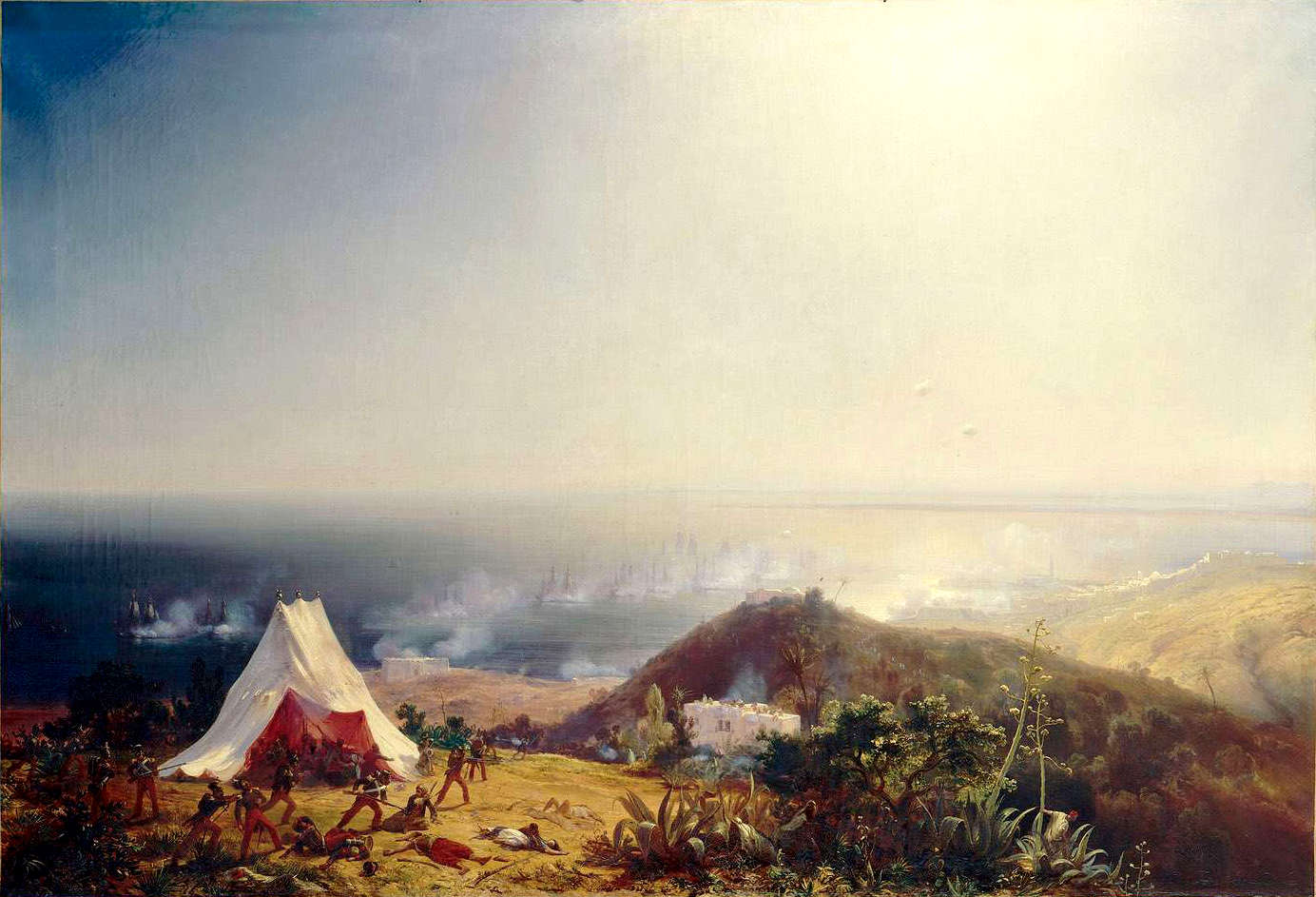
The invasion of Algiers was a large-scale military operation by which the Kingdom of France, ruled by King Charles X, invaded and conquered the Regency of Algiers. A diplomatic incident in 1827, the so-called 'Fan Affair' ('Fly Whisk Incident'), served as a pretext to initiate a blockade against the port of Algiers. After three years of standstill and a more severe incident in which a French ship carrying an ambassador to the dey with a proposal for negotiations was fired upon, the French determined that more forceful action was required. Charles X also sought to divert attention from turbulent French domestic affairs which culminated with his deposition during the later stages of the invasion in the July Revolution.
The invasion began on 14 June 1830 with a naval bombardment by a fleet under Admiral Duperré and a landing by troops under Louis Auguste Victor de Ghaisne, comte de Bourmont. The French quickly defeated the troops of Hussein Dey, the Deylikal ruler, but native resistance was widespread. This resulted in a protracted military campaign, ultimately lasting more than 45 years, to root out popular opposition to the colonization. The so-called "pacification" was marked by resistance from figures such as Ahmed Bey, Emir Abdelkader, and Lalla Fatma N'Soumer. The invasion marked the end of the centuries-old Regency of Algiers and the beginning of the colonial period of French Algeria. In 1848, the territories conquered around Algiers were organised into three départements, defining the territories of modern Algeria.
Algiers was annexed by the Ottoman Empire in 1529 after the capture of Algiers in 1529 and had been under its direct rule until 1710, when Baba Ali Chaouch achieved de facto independence from the Ottomans, though the Regency was still nominally a part of the Ottoman Empire. The Regency of Algiers elected its rulers through a parliament called the Divan of Algiers. These rulers/kings were known as Deys. The state could be best described as an elective monarchy.
During the Napoleonic Wars, the Kingdom of Algiers had greatly benefited from trade in the Mediterranean, and from the massive imports of food from France, largely bought on credit. The Dey of Algiers attempted to remedy his steadily decreasing revenues by increasing taxes, which was resisted by the local peasantry, increasing instability in the country and leading to increased piracy against merchant shipping from Europe and the young United States of America. This, in turn, led to the First Barbary War and the Second Barbary War, which culminated in August 1816 when Lord Exmouth executed a naval bombardment of Algiers in response to Algerian massacres of recently freed European slaves.
The widespread unpopularity of the Bourbon Restoration among the French populace at large also made France unstable. In an attempt to distract his people from domestic affairs, King Charles X decided to engage in a colonial expedition.
In 1827, Hussein Dey, the Dey of Algiers, demanded that the French pay a 28-year-old debt contracted in 1799 by purchasing supplies to feed the soldiers of the Napoleonic Campaign in Egypt. The French consul Pierre Deval refused to give answers satisfactory to the dey, and in an outburst of anger, Hussein Dey touched the consul with his fly-whisk. Charles X used this as an excuse to initiate a blockade against the port of Algiers. The French blockade of Algiers lasted for three years, and was primarily to the detriment of French merchants who were unable to do business with Algiers, while Barbary pirates were still able to evade the blockade. When France in 1829 sent an ambassador to the dey with a proposal for negotiations, he responded with cannon fire directed toward one of the blockading ships. The French then determined that more forceful action was required.
King Charles X decided to organise a punitive expedition on the coasts of Algiers to punish the "impudence" of the dey, as well as to root out Barbary corsairs who used Algiers as a safe haven. The naval part of the operation was given to Admiral Duperré, who advised against it, finding it too dangerous. He was nevertheless given command of the fleet. The land part was under the orders of Louis Auguste Victor de Ghaisne, comte de Bourmont.
On 16 May, a fleet comprising 103 warships and 464 transports departed Toulon, carrying a 37,612-man army. The ground was well-known, thanks to observations made during the First Empire, and the presque-isle of Sidi Ferruch was chosen as a landing spot, 25 kilometres (16 mi) west of Algiers. The vanguard of the fleet arrived off Algiers on 31 May, but it took until 14 June for the entire fleet to arrive.
Hub AI
Invasion of Algiers (1830) AI simulator
(@Invasion of Algiers (1830)_simulator)
Invasion of Algiers (1830)
The invasion of Algiers was a large-scale military operation by which the Kingdom of France, ruled by King Charles X, invaded and conquered the Regency of Algiers. A diplomatic incident in 1827, the so-called 'Fan Affair' ('Fly Whisk Incident'), served as a pretext to initiate a blockade against the port of Algiers. After three years of standstill and a more severe incident in which a French ship carrying an ambassador to the dey with a proposal for negotiations was fired upon, the French determined that more forceful action was required. Charles X also sought to divert attention from turbulent French domestic affairs which culminated with his deposition during the later stages of the invasion in the July Revolution.
The invasion began on 14 June 1830 with a naval bombardment by a fleet under Admiral Duperré and a landing by troops under Louis Auguste Victor de Ghaisne, comte de Bourmont. The French quickly defeated the troops of Hussein Dey, the Deylikal ruler, but native resistance was widespread. This resulted in a protracted military campaign, ultimately lasting more than 45 years, to root out popular opposition to the colonization. The so-called "pacification" was marked by resistance from figures such as Ahmed Bey, Emir Abdelkader, and Lalla Fatma N'Soumer. The invasion marked the end of the centuries-old Regency of Algiers and the beginning of the colonial period of French Algeria. In 1848, the territories conquered around Algiers were organised into three départements, defining the territories of modern Algeria.
Algiers was annexed by the Ottoman Empire in 1529 after the capture of Algiers in 1529 and had been under its direct rule until 1710, when Baba Ali Chaouch achieved de facto independence from the Ottomans, though the Regency was still nominally a part of the Ottoman Empire. The Regency of Algiers elected its rulers through a parliament called the Divan of Algiers. These rulers/kings were known as Deys. The state could be best described as an elective monarchy.
During the Napoleonic Wars, the Kingdom of Algiers had greatly benefited from trade in the Mediterranean, and from the massive imports of food from France, largely bought on credit. The Dey of Algiers attempted to remedy his steadily decreasing revenues by increasing taxes, which was resisted by the local peasantry, increasing instability in the country and leading to increased piracy against merchant shipping from Europe and the young United States of America. This, in turn, led to the First Barbary War and the Second Barbary War, which culminated in August 1816 when Lord Exmouth executed a naval bombardment of Algiers in response to Algerian massacres of recently freed European slaves.
The widespread unpopularity of the Bourbon Restoration among the French populace at large also made France unstable. In an attempt to distract his people from domestic affairs, King Charles X decided to engage in a colonial expedition.
In 1827, Hussein Dey, the Dey of Algiers, demanded that the French pay a 28-year-old debt contracted in 1799 by purchasing supplies to feed the soldiers of the Napoleonic Campaign in Egypt. The French consul Pierre Deval refused to give answers satisfactory to the dey, and in an outburst of anger, Hussein Dey touched the consul with his fly-whisk. Charles X used this as an excuse to initiate a blockade against the port of Algiers. The French blockade of Algiers lasted for three years, and was primarily to the detriment of French merchants who were unable to do business with Algiers, while Barbary pirates were still able to evade the blockade. When France in 1829 sent an ambassador to the dey with a proposal for negotiations, he responded with cannon fire directed toward one of the blockading ships. The French then determined that more forceful action was required.
King Charles X decided to organise a punitive expedition on the coasts of Algiers to punish the "impudence" of the dey, as well as to root out Barbary corsairs who used Algiers as a safe haven. The naval part of the operation was given to Admiral Duperré, who advised against it, finding it too dangerous. He was nevertheless given command of the fleet. The land part was under the orders of Louis Auguste Victor de Ghaisne, comte de Bourmont.
On 16 May, a fleet comprising 103 warships and 464 transports departed Toulon, carrying a 37,612-man army. The ground was well-known, thanks to observations made during the First Empire, and the presque-isle of Sidi Ferruch was chosen as a landing spot, 25 kilometres (16 mi) west of Algiers. The vanguard of the fleet arrived off Algiers on 31 May, but it took until 14 June for the entire fleet to arrive.
Recent media