


Community hub
Recent from talks
Contribute something to knowledge base
Content stats: 0 posts, 0 articles, 1 media, 0 notes
Members stats: 0 subscribers, 0 contributors, 0 moderators, 0 supporters
Subscribers
Supporters
Contributors
Moderators
Hub AI
Ion transporter AI simulator
(@Ion transporter_simulator)
Hub AI
Ion transporter AI simulator
(@Ion transporter_simulator)
Ion transporter
In biology, an ion transporter is a transmembrane protein that moves ions (or other small molecules) across a biological membrane to accomplish many different biological functions, including cellular communication, maintaining homeostasis, energy production, etc. There are different types of transporters including pumps, uniporters, antiporters, and symporters. Active transporters or ion pumps are transporters that convert energy from various sources—including adenosine triphosphate (ATP), sunlight, and other redox reactions—to potential energy by pumping an ion up its concentration gradient. This potential energy could then be used by secondary transporters, including ion carriers and ion channels, to drive vital cellular processes, such as ATP synthesis.
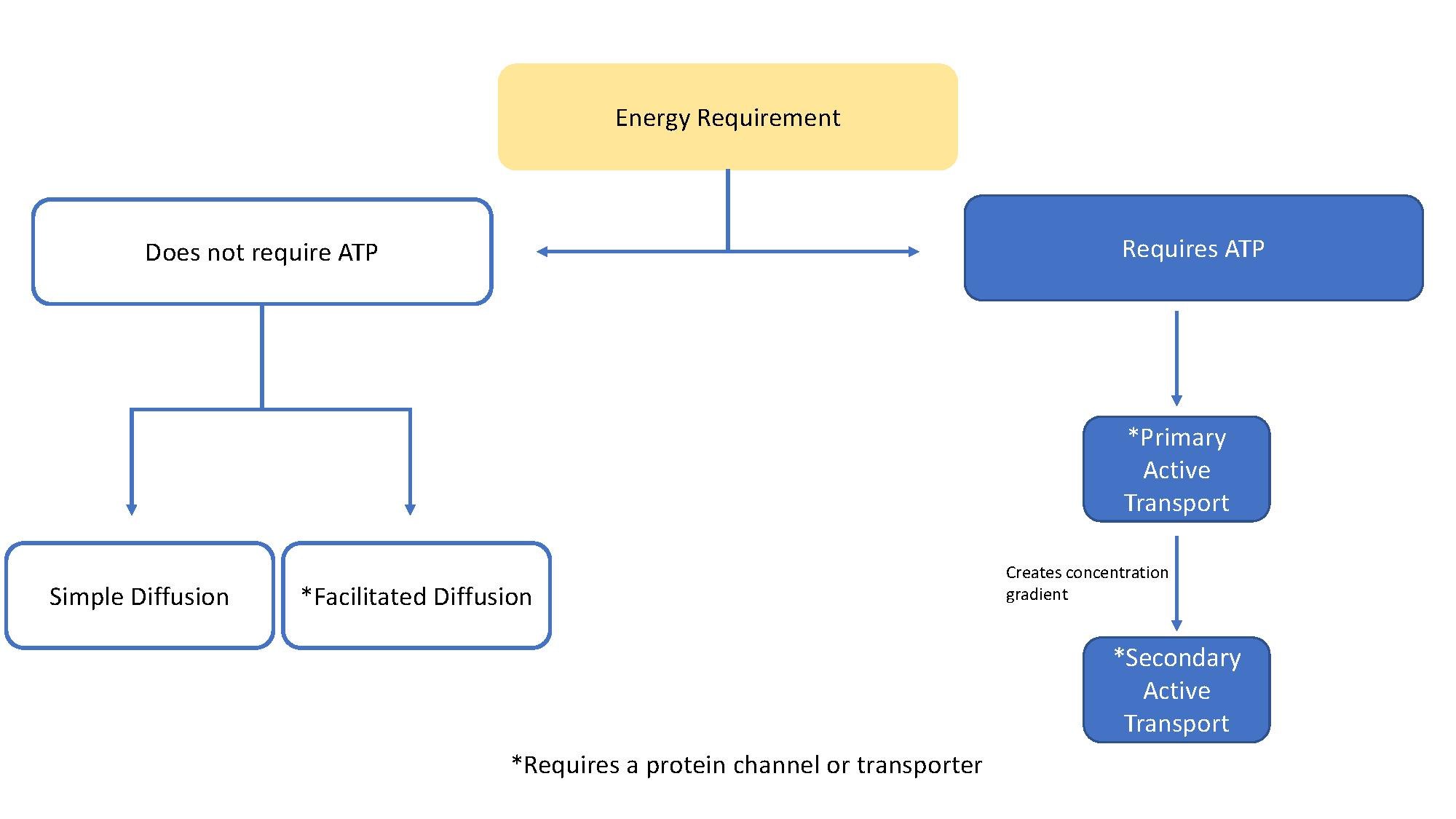
This article is focused mainly on ion transporters acting as pumps, but transporters can also function to move molecules through facilitated diffusion. Facilitated diffusion does not require ATP and allows molecules that are unable to quickly diffuse across the membrane (passive diffusion), to diffuse down their concentration gradient through these protein transporters.
Ion transporters are essential for proper cell function and thus they are highly regulated by the cell and studied by researchers using a variety of methods. Some examples of cell regulations and research methods will be given.
Ion transporters are classified as a super family of transporters that contain 12 families of transporters. These families are part of the Transport Classification (TC) system that is used by the International Union of Biochemistry and Molecular Biology (IUBMB) and are grouped according to characteristics such as the substrates being transported, the transport mechanism, the energy source used, and also by comparing the DNA sequences making up each protein. The most important unifying factor being the charged nature of the substrate which indicates the transport of an ion and not a neutral species. Ion transporters differ significantly from ion channels. Channels are pores that run through the membrane, whereas transports are proteins that must change shape to switch which side of the membrane it is open to. Because of this, transporters are much slower at moving molecules than channels.
An electrochemical gradient or concentration gradient is a difference in concentration of a chemical molecule or ion in two separate areas. At equilibrium the concentrations of the ion in both areas will be equal, so if there is a difference in concentration the ions will seek to flow "down" the concentration gradient or from a high concentration to low concentration. Ion channels allows the specific ions that will fit into the channel to flow down their concentration gradient, equalizing the concentrations on either side of the cell membrane. Ion channels and ion transporters accomplish this via facilitated diffusion which is a type of passive transport. However, only ion transporters can also perform active transport, which involves moving ions against their concentration gradient. Using energy sources such as ATP, ion transporters are able to move ions against their concentration gradient which can then be used by secondary transporters or other proteins as a source of energy.
Primary transporters use energy to transport ions such as Na+, K+, and Ca2+ across a cells membrane and can create concentration gradients. This transport can use ATP as an energy source or it can be used to generate ATP through methods such as the electron transport chain in plants.
Active transporters use ATP to convert the energy in ATP into potential energy in the form of a concentration gradient. They use the ATP to transport an ion from a low concentration to a higher concentration. Examples of proteins that use ATP are P-type ATPases that transfer Na+, K+, and Ca2+ ions by phosphorylation, A-type ATPases that transfer anions, and ABC transporters (ATP binding cassette transporters) that transport a broad set of molecules. Examples of the P-type ATPase include Na+/K+-ATPase that is regulated by Janus Kinase-2 as well as Ca2+ ATPase which exhibits sensitivity to ADP and ATP concentrations. P-glycoprotein is an example of an ABC transport binding protein in the human body.
ATP producing transporters run in the opposite direction of ATP Utilizing transporters. These proteins transport ions from high to low concentration with the gradient but in the process ATP is formed. Potential energy in the form of the concentration gradient is used to generate ATP. In animals, this ATP synthesis takes place in the mitochondria using F- type ATPase otherwise known as ATP synthase. This process utilizes the electron transport chain in a process called oxidative phosphorylation. V-type ATPase serves the opposite function as F-type ATPase and is used in plants to hydrolyze ATP to create a proton gradient. Examples of this are lysosomes that use V-type ATPase to acidify vesicles or plant vacuoles during the process of photosynthesis in the chloroplasts. This process can be regulated through various methods such as pH.
Ion transporter
In biology, an ion transporter is a transmembrane protein that moves ions (or other small molecules) across a biological membrane to accomplish many different biological functions, including cellular communication, maintaining homeostasis, energy production, etc. There are different types of transporters including pumps, uniporters, antiporters, and symporters. Active transporters or ion pumps are transporters that convert energy from various sources—including adenosine triphosphate (ATP), sunlight, and other redox reactions—to potential energy by pumping an ion up its concentration gradient. This potential energy could then be used by secondary transporters, including ion carriers and ion channels, to drive vital cellular processes, such as ATP synthesis.
This article is focused mainly on ion transporters acting as pumps, but transporters can also function to move molecules through facilitated diffusion. Facilitated diffusion does not require ATP and allows molecules that are unable to quickly diffuse across the membrane (passive diffusion), to diffuse down their concentration gradient through these protein transporters.
Ion transporters are essential for proper cell function and thus they are highly regulated by the cell and studied by researchers using a variety of methods. Some examples of cell regulations and research methods will be given.
Ion transporters are classified as a super family of transporters that contain 12 families of transporters. These families are part of the Transport Classification (TC) system that is used by the International Union of Biochemistry and Molecular Biology (IUBMB) and are grouped according to characteristics such as the substrates being transported, the transport mechanism, the energy source used, and also by comparing the DNA sequences making up each protein. The most important unifying factor being the charged nature of the substrate which indicates the transport of an ion and not a neutral species. Ion transporters differ significantly from ion channels. Channels are pores that run through the membrane, whereas transports are proteins that must change shape to switch which side of the membrane it is open to. Because of this, transporters are much slower at moving molecules than channels.
An electrochemical gradient or concentration gradient is a difference in concentration of a chemical molecule or ion in two separate areas. At equilibrium the concentrations of the ion in both areas will be equal, so if there is a difference in concentration the ions will seek to flow "down" the concentration gradient or from a high concentration to low concentration. Ion channels allows the specific ions that will fit into the channel to flow down their concentration gradient, equalizing the concentrations on either side of the cell membrane. Ion channels and ion transporters accomplish this via facilitated diffusion which is a type of passive transport. However, only ion transporters can also perform active transport, which involves moving ions against their concentration gradient. Using energy sources such as ATP, ion transporters are able to move ions against their concentration gradient which can then be used by secondary transporters or other proteins as a source of energy.
Primary transporters use energy to transport ions such as Na+, K+, and Ca2+ across a cells membrane and can create concentration gradients. This transport can use ATP as an energy source or it can be used to generate ATP through methods such as the electron transport chain in plants.
Active transporters use ATP to convert the energy in ATP into potential energy in the form of a concentration gradient. They use the ATP to transport an ion from a low concentration to a higher concentration. Examples of proteins that use ATP are P-type ATPases that transfer Na+, K+, and Ca2+ ions by phosphorylation, A-type ATPases that transfer anions, and ABC transporters (ATP binding cassette transporters) that transport a broad set of molecules. Examples of the P-type ATPase include Na+/K+-ATPase that is regulated by Janus Kinase-2 as well as Ca2+ ATPase which exhibits sensitivity to ADP and ATP concentrations. P-glycoprotein is an example of an ABC transport binding protein in the human body.
ATP producing transporters run in the opposite direction of ATP Utilizing transporters. These proteins transport ions from high to low concentration with the gradient but in the process ATP is formed. Potential energy in the form of the concentration gradient is used to generate ATP. In animals, this ATP synthesis takes place in the mitochondria using F- type ATPase otherwise known as ATP synthase. This process utilizes the electron transport chain in a process called oxidative phosphorylation. V-type ATPase serves the opposite function as F-type ATPase and is used in plants to hydrolyze ATP to create a proton gradient. Examples of this are lysosomes that use V-type ATPase to acidify vesicles or plant vacuoles during the process of photosynthesis in the chloroplasts. This process can be regulated through various methods such as pH.
Recent media
Recent media