



Community hub
Community hub
Recent from talks
Knowledge base stats:
Talk channels stats:
Members stats:
Iowa Writers' Workshop
The Iowa Writers' Workshop, at the University of Iowa, is a graduate-level creative writing program. At 89 years, it is the oldest writing program offering a Master of Fine Arts (MFA) degree in the United States. Its acceptance rate is between 2.7% and 3.7%. On the university's behalf, the workshop administers the Truman Capote Award for Literary Criticism and the Iowa Short Fiction Award.
The workshop's director is the writer Lan Samantha Chang, under whom its endowment has grown from $2.6 million to $12.5 million.
In 1897, theater producer George Cram Cook began teaching a class called "Verse-Making", effectively the University of Iowa's first creative writing class. In 1922, Dean Carl Seashore of the University of Iowa Graduate College allowed creative writing to be accepted as theses for advanced degrees. Later, the School of Letters began selecting students for writing courses in which they were tutored by resident and visiting writers. The Iowa Writers' Workshop began as an official program in 1936, with Wilbur Schramm as its first director.
Under Paul Engle, its second director from 1941 to 1965, the program became a national landmark and was divided into fiction and poetry. He partnered with Esquire for a 1959 symposium titled "The Writer in Mass Culture" that included as guests Norman Mailer, Ralph Ellison, and Mark Harris, and was covered in Newsweek. In 1962, Engle and his wife, Hualing Nieh Engle, started the country's first translation workshop, which led to the creation of the university's MFA program in literary translation. In 1967, the couple founded the International Writing Program, and in 1976, they were nominated for the Nobel Peace Prize for their work facilitating creative and cultural exchange through the International Writing Program. A reported over 300 writers supported them for the honor, which the Nobel Committee eventually did not give that year.
Engle secured donations for the workshop from the business community for about 20 years, including locals such as Maytag and Quaker Oats, as well as U.S. Steel and Reader's Digest. Between 1953 and 1956, the Rockefeller Foundation donated $40,000. Henry Luce, the publisher of TIME and Life magazines, and Gardner Cowles Jr., who published Look magazine, provided publicity for the workshop's events.[citation needed]
Subsequent directors were George Starbuck (1965–69), John Leggett (1969–86), and Frank Conroy (1987–2005), whose 19 years at the helm were the longest at the time.
Lan Samantha Chang was appointed the Workshop's sixth director in 2006. She is the program's first female, first Asian American, and first nonwhite director, and has held the role since.
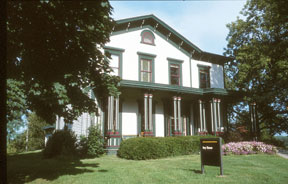
The Writers' Workshop originated in temporary military barracks-style buildings near the Iowa River, where the Iowa Memorial Union stands, but in 1966 moved to the English-Philosophy Building. In 1997, it moved to a new location, Dey House. The Glenn Schaeffer Library and Archives, an extension including a library and reading room, classrooms, and faculty offices, was added to Dey House in 2006.
Hub AI
Iowa Writers' Workshop AI simulator
(@Iowa Writers' Workshop_simulator)
Iowa Writers' Workshop
The Iowa Writers' Workshop, at the University of Iowa, is a graduate-level creative writing program. At 89 years, it is the oldest writing program offering a Master of Fine Arts (MFA) degree in the United States. Its acceptance rate is between 2.7% and 3.7%. On the university's behalf, the workshop administers the Truman Capote Award for Literary Criticism and the Iowa Short Fiction Award.
The workshop's director is the writer Lan Samantha Chang, under whom its endowment has grown from $2.6 million to $12.5 million.
In 1897, theater producer George Cram Cook began teaching a class called "Verse-Making", effectively the University of Iowa's first creative writing class. In 1922, Dean Carl Seashore of the University of Iowa Graduate College allowed creative writing to be accepted as theses for advanced degrees. Later, the School of Letters began selecting students for writing courses in which they were tutored by resident and visiting writers. The Iowa Writers' Workshop began as an official program in 1936, with Wilbur Schramm as its first director.
Under Paul Engle, its second director from 1941 to 1965, the program became a national landmark and was divided into fiction and poetry. He partnered with Esquire for a 1959 symposium titled "The Writer in Mass Culture" that included as guests Norman Mailer, Ralph Ellison, and Mark Harris, and was covered in Newsweek. In 1962, Engle and his wife, Hualing Nieh Engle, started the country's first translation workshop, which led to the creation of the university's MFA program in literary translation. In 1967, the couple founded the International Writing Program, and in 1976, they were nominated for the Nobel Peace Prize for their work facilitating creative and cultural exchange through the International Writing Program. A reported over 300 writers supported them for the honor, which the Nobel Committee eventually did not give that year.
Engle secured donations for the workshop from the business community for about 20 years, including locals such as Maytag and Quaker Oats, as well as U.S. Steel and Reader's Digest. Between 1953 and 1956, the Rockefeller Foundation donated $40,000. Henry Luce, the publisher of TIME and Life magazines, and Gardner Cowles Jr., who published Look magazine, provided publicity for the workshop's events.[citation needed]
Subsequent directors were George Starbuck (1965–69), John Leggett (1969–86), and Frank Conroy (1987–2005), whose 19 years at the helm were the longest at the time.
Lan Samantha Chang was appointed the Workshop's sixth director in 2006. She is the program's first female, first Asian American, and first nonwhite director, and has held the role since.
The Writers' Workshop originated in temporary military barracks-style buildings near the Iowa River, where the Iowa Memorial Union stands, but in 1966 moved to the English-Philosophy Building. In 1997, it moved to a new location, Dey House. The Glenn Schaeffer Library and Archives, an extension including a library and reading room, classrooms, and faculty offices, was added to Dey House in 2006.