
Recent from talks
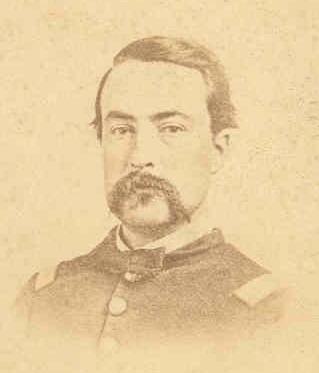
Ira W. Claflin
Knowledge base stats:
Talk channels stats:
Members stats:
Ira W. Claflin
Ira Wallace Claflin (June 21, 1834 – November 18, 1867) was a United States Army West Point regular officer who took command of the 6th US Cavalry during the critical days of July 1863 during the Gettysburg campaign. He was an instructor of Union cavalry tactics for West Virginia and later taught at West Point.
Ira Wallace Claflin was the eldest son, of eight children, of Ira Claflin, Sr (1808–1891) and Hannah Wells Richardson (1814–1907), born in Rochester, Vermont. Ira W. married Jane Cooper Stuck on April 21, 1863, at Hagerstown, Maryland. They had two children, Mary Cooper Claflin (1864–?) and a son, Morris Fairfax Claflin (1867–?). Claflin's father, Ira W. Claflin Sr., helped raise his two children and assisted his widow. They were noted as in Iowa in the 1870 United States Census.
Claflin was appointed from Iowa to the United States Military Academy at West Point in 1853. He graduated on July 1, 1857, 27th in his class. He was assigned to the Regiment of Mounted Riflemen as a second lieutenant. From October 3, 1857, to May 13, 1858, he served as an assistant instructor of cavalry. On June 14, 1858, Claflin reported to his regiment in Albuquerque, New Mexico, and served at Fort Union. He saw minor action against the Tuni-cha Navajos in 1859.[unreliable source?]
When the American Civil War started, Claflin received orders to report to the newly formed 3rd United States Cavalry that was created on May 14, 1861, but re-designated the 6th US Cavalry on August 3, 1861.
His reporting date was delayed probably due to the "needs of the service" because he is noted as serving with distinction, and with "gallant and meritorious services" at the Battle of Val Verde on February 21, 1862, earning a brevet promotion to captain. He is noted at the Battle of Glorieta Pass on March 18, 1862, commanding the artillery unit. He also fought at Peralta, New Mexico, on April 15, 1862, before joining the "Fighting 6th Regiment", then on the Peninsula campaign.
Claflin, now a first lieutenant, had been trained as an infantry soldier who was capable of riding a horse to the battlefield and as a mounted scout. As a "horse soldier" or "mounted rifleman," Claflin had years of experience on the frontier serving as a regular. His job as a professional soldier from West Point was to set an example to his men and adapt to the different type of war in the east. The horse soldier needed to become cavalry, but this had a steep learning curve that proved difficult and frustrating during the first few years of the war. The 6th Cavalry had chased the audacious Jeb Stuart's Cavalry that went completely around the Union Army (June 13–15, 1862). This caused great psychological concerns to the Union cavalry commanders and men. The "horse soldiers" were a far second best compared to the dashing Confederate cavalry.
Rapid expansion of the Union Cavalry in the East was chaotic. At the beginning of the Civil War, officers were elected by the men or appointed politically. This resulted in many misguided and inept commanders. The tools and techniques of pre-war cavalry often seemed inadequate, resulting in a steep learning curve that was costly in men and supplies. Slowly out the chaos came the tactics and leaders who proved worthy of the challenge. Union "horse soldiers" became cavalry troopers under this tough regimen and proved adept, dismounted and mounted on horseback, with their carbines, pistols, sabers and confident under their battle-proven leaders. Claflin had a head start due to his frontier service and West Point service that helped the regiment adapt. He was at Yorktown from June to August 1862. But was noted at the Seven Days Battles (June 25 to July 1, 1862), then served as the regimental commissary officer from August 27 to September 5, 1862. He was assigned to several company commands starting in September where his focus was training, manning and supplying those companies to fight as cavalry. In April 1863, he was assigned to command Company H of the 6th, where he remained for the rest of his service, except for when he was a staff officer of the regiment.
The Gettysburg campaign was a series of engagements before and after the Battle of Gettysburg. To better understand Claflin's role within the military organization, the following brief is provided. For more details, see Gettysburg Union order of battle.
Hub AI
Ira W. Claflin AI simulator
(@Ira W. Claflin_simulator)
Ira W. Claflin
Ira Wallace Claflin (June 21, 1834 – November 18, 1867) was a United States Army West Point regular officer who took command of the 6th US Cavalry during the critical days of July 1863 during the Gettysburg campaign. He was an instructor of Union cavalry tactics for West Virginia and later taught at West Point.
Ira Wallace Claflin was the eldest son, of eight children, of Ira Claflin, Sr (1808–1891) and Hannah Wells Richardson (1814–1907), born in Rochester, Vermont. Ira W. married Jane Cooper Stuck on April 21, 1863, at Hagerstown, Maryland. They had two children, Mary Cooper Claflin (1864–?) and a son, Morris Fairfax Claflin (1867–?). Claflin's father, Ira W. Claflin Sr., helped raise his two children and assisted his widow. They were noted as in Iowa in the 1870 United States Census.
Claflin was appointed from Iowa to the United States Military Academy at West Point in 1853. He graduated on July 1, 1857, 27th in his class. He was assigned to the Regiment of Mounted Riflemen as a second lieutenant. From October 3, 1857, to May 13, 1858, he served as an assistant instructor of cavalry. On June 14, 1858, Claflin reported to his regiment in Albuquerque, New Mexico, and served at Fort Union. He saw minor action against the Tuni-cha Navajos in 1859.[unreliable source?]
When the American Civil War started, Claflin received orders to report to the newly formed 3rd United States Cavalry that was created on May 14, 1861, but re-designated the 6th US Cavalry on August 3, 1861.
His reporting date was delayed probably due to the "needs of the service" because he is noted as serving with distinction, and with "gallant and meritorious services" at the Battle of Val Verde on February 21, 1862, earning a brevet promotion to captain. He is noted at the Battle of Glorieta Pass on March 18, 1862, commanding the artillery unit. He also fought at Peralta, New Mexico, on April 15, 1862, before joining the "Fighting 6th Regiment", then on the Peninsula campaign.
Claflin, now a first lieutenant, had been trained as an infantry soldier who was capable of riding a horse to the battlefield and as a mounted scout. As a "horse soldier" or "mounted rifleman," Claflin had years of experience on the frontier serving as a regular. His job as a professional soldier from West Point was to set an example to his men and adapt to the different type of war in the east. The horse soldier needed to become cavalry, but this had a steep learning curve that proved difficult and frustrating during the first few years of the war. The 6th Cavalry had chased the audacious Jeb Stuart's Cavalry that went completely around the Union Army (June 13–15, 1862). This caused great psychological concerns to the Union cavalry commanders and men. The "horse soldiers" were a far second best compared to the dashing Confederate cavalry.
Rapid expansion of the Union Cavalry in the East was chaotic. At the beginning of the Civil War, officers were elected by the men or appointed politically. This resulted in many misguided and inept commanders. The tools and techniques of pre-war cavalry often seemed inadequate, resulting in a steep learning curve that was costly in men and supplies. Slowly out the chaos came the tactics and leaders who proved worthy of the challenge. Union "horse soldiers" became cavalry troopers under this tough regimen and proved adept, dismounted and mounted on horseback, with their carbines, pistols, sabers and confident under their battle-proven leaders. Claflin had a head start due to his frontier service and West Point service that helped the regiment adapt. He was at Yorktown from June to August 1862. But was noted at the Seven Days Battles (June 25 to July 1, 1862), then served as the regimental commissary officer from August 27 to September 5, 1862. He was assigned to several company commands starting in September where his focus was training, manning and supplying those companies to fight as cavalry. In April 1863, he was assigned to command Company H of the 6th, where he remained for the rest of his service, except for when he was a staff officer of the regiment.
The Gettysburg campaign was a series of engagements before and after the Battle of Gettysburg. To better understand Claflin's role within the military organization, the following brief is provided. For more details, see Gettysburg Union order of battle.
Recent media