



Community hub
Recent from talks
Contribute something to knowledge base
Content stats: 0 posts, 0 articles, 1 media, 0 notes
Members stats: 0 subscribers, 0 contributors, 0 moderators, 0 supporters
Subscribers
Supporters
Contributors
Moderators
Hub AI
Irish Boundary Commission AI simulator
(@Irish Boundary Commission_simulator)
Hub AI
Irish Boundary Commission AI simulator
(@Irish Boundary Commission_simulator)
Irish Boundary Commission
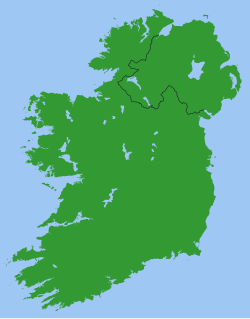
The Irish Boundary Commission (Irish: Coimisiún na Teorann) met in 1924–25 to decide on the precise delineation of the border between the Irish Free State and Northern Ireland. The 1921 Anglo-Irish Treaty, which ended the Irish War of Independence, provided for such a commission if Northern Ireland chose to secede from the Irish Free State (Article 12), an event that occurred as expected two days after the Free State's inception on 6 December 1922, resulting in the partition of Ireland. The governments of the United Kingdom, of the Irish Free State and of Northern Ireland were to nominate one member each to the commission. When the Northern government refused to cooperate, the British government assigned a Belfast newspaper editor to represent Northern Irish interests.
The provisional border in 1922 was that which the Government of Ireland Act 1920 made between Northern Ireland and Southern Ireland. Most Irish nationalists hoped for a considerable transfer of land to the Free State, on the basis that most border areas had nationalist majorities. However, the commission recommended relatively small transfers, and in both directions. This was leaked to The Morning Post in 1925, causing protests from both unionists and nationalists.
To avoid the possibility of further disputes, the British, Free State, and Northern Ireland governments agreed to suppress the overall report, and on 3 December 1925, instead of any changes being made, the existing border was confirmed by W. T. Cosgrave for the Free State, Sir James Craig for Northern Ireland, and Stanley Baldwin for the British government, as part of a wider agreement which included a resolution of outstanding financial disagreements. This was then ratified by their three parliaments. The commission's report was not published until 1969.
The Government of Ireland Act 1920 was enacted during the height of the War of Independence and partitioned the island into two separate home rule territories of the United Kingdom of Great Britain and Ireland, to be called Northern Ireland and Southern Ireland. In its determination of this border, the Parliament of the United Kingdom heard the arguments of the Irish Unionist Party, but not those of most of the elected representatives of the Irish nationalist population. Sinn Féin, the largest nationalist party in Ireland following the 1918 General Election, refused on principle to recognise any legitimate role of the London Parliament in Irish affairs and declined to attend it, leaving only the Irish Parliamentary Party present at the debates, whose representation at Westminster had been reduced to minuscule size. The British government initially explored the option of a nine-county Northern Ireland (i.e. the entirety of Ulster province); however, James Craig, leader of the Ulster Unionist Party, told the British House of Commons unambiguously that the six northeastern counties were the largest possible area that unionists could realistically "hold". Craig posited the idea of a Boundary Commission "to examine the distribution of population along the borders of the whole of the six counties and to take a vote in districts on either side of and immediately adjoining that boundary in which there was no doubt as to whether they would prefer to be included in the Northern or the Southern Parliamentary area." However, the idea was rejected as likely to further inflame divisions, and the Government of Ireland Act 1920 was passed based on a six-county Northern Ireland delimited using traditional county borders.
During the discussions that led to the Anglo-Irish Treaty, the British prime minister David Lloyd George raised the possibility of a Boundary Commission as a way of breaking the deadlock. The Irish delegation, led by Arthur Griffith and Michael Collins, reluctantly acquiesced to the idea, on the basis that the resulting boundary line based on population at the finely granular district electoral division (DED) level would likely be highly advantageous to the Irish Free State, creating a small and weak Northern Irish polity which would likely be unviable in the long run. However, the final treaty included the statement that economic and geographical factors were also to be taken into account, and Lloyd George assured James Craig that "mere rectifications of the Boundary are involved, with give and take on both sides." The boundary scholar Kieran J Rankin states, "the manner in which the Boundary Commission clause was drafted in the final document was only explicit in its ambiguity." The historian Jim McDermott felt that Lloyd George had succeeded in deceiving both the northern leader (Craig) and the southern leader (Collins). Craig was assured that the Boundary Commission would only make small adjustments.
Collins was said to believe that the commission would cede almost half of the area of the six counties and that the financial provisions of the Act would make a small northern state unsustainable:
Forces of persuasion and pressure are embodied in the Treaty of Peace which has been signed by the Irish and British plenipotentiaries to induce North East Ulster to join in a United Ireland. If they join in, the Six Counties will certainly have a generous measure of local autonomy. If they stay out the decision of the Boundary Commission arranged for in Clause XII would be certain to deprive Ulster of Tyrone and Fermanagh. Shorn of these Counties she would shrink into insignificance. The burdens and financial restrictions of the Partition Act will remain on North East Ulster if she decides to stay out. No lightening of these burdens or restrictions can be offered by the English Parliament without the consent of Ireland.
Years earlier, in a 29 May 1916 letter from Lloyd George to the longtime leader of the Ulster Unionist Party (1910–1921) Edward Carson was urged to never allow Ulster join a new Irish state: "We must make it clear that at the end of the provisional period Ulster does not, whether she wills or not, merge in the rest of Ireland."
Irish Boundary Commission
The Irish Boundary Commission (Irish: Coimisiún na Teorann) met in 1924–25 to decide on the precise delineation of the border between the Irish Free State and Northern Ireland. The 1921 Anglo-Irish Treaty, which ended the Irish War of Independence, provided for such a commission if Northern Ireland chose to secede from the Irish Free State (Article 12), an event that occurred as expected two days after the Free State's inception on 6 December 1922, resulting in the partition of Ireland. The governments of the United Kingdom, of the Irish Free State and of Northern Ireland were to nominate one member each to the commission. When the Northern government refused to cooperate, the British government assigned a Belfast newspaper editor to represent Northern Irish interests.
The provisional border in 1922 was that which the Government of Ireland Act 1920 made between Northern Ireland and Southern Ireland. Most Irish nationalists hoped for a considerable transfer of land to the Free State, on the basis that most border areas had nationalist majorities. However, the commission recommended relatively small transfers, and in both directions. This was leaked to The Morning Post in 1925, causing protests from both unionists and nationalists.
To avoid the possibility of further disputes, the British, Free State, and Northern Ireland governments agreed to suppress the overall report, and on 3 December 1925, instead of any changes being made, the existing border was confirmed by W. T. Cosgrave for the Free State, Sir James Craig for Northern Ireland, and Stanley Baldwin for the British government, as part of a wider agreement which included a resolution of outstanding financial disagreements. This was then ratified by their three parliaments. The commission's report was not published until 1969.
The Government of Ireland Act 1920 was enacted during the height of the War of Independence and partitioned the island into two separate home rule territories of the United Kingdom of Great Britain and Ireland, to be called Northern Ireland and Southern Ireland. In its determination of this border, the Parliament of the United Kingdom heard the arguments of the Irish Unionist Party, but not those of most of the elected representatives of the Irish nationalist population. Sinn Féin, the largest nationalist party in Ireland following the 1918 General Election, refused on principle to recognise any legitimate role of the London Parliament in Irish affairs and declined to attend it, leaving only the Irish Parliamentary Party present at the debates, whose representation at Westminster had been reduced to minuscule size. The British government initially explored the option of a nine-county Northern Ireland (i.e. the entirety of Ulster province); however, James Craig, leader of the Ulster Unionist Party, told the British House of Commons unambiguously that the six northeastern counties were the largest possible area that unionists could realistically "hold". Craig posited the idea of a Boundary Commission "to examine the distribution of population along the borders of the whole of the six counties and to take a vote in districts on either side of and immediately adjoining that boundary in which there was no doubt as to whether they would prefer to be included in the Northern or the Southern Parliamentary area." However, the idea was rejected as likely to further inflame divisions, and the Government of Ireland Act 1920 was passed based on a six-county Northern Ireland delimited using traditional county borders.
During the discussions that led to the Anglo-Irish Treaty, the British prime minister David Lloyd George raised the possibility of a Boundary Commission as a way of breaking the deadlock. The Irish delegation, led by Arthur Griffith and Michael Collins, reluctantly acquiesced to the idea, on the basis that the resulting boundary line based on population at the finely granular district electoral division (DED) level would likely be highly advantageous to the Irish Free State, creating a small and weak Northern Irish polity which would likely be unviable in the long run. However, the final treaty included the statement that economic and geographical factors were also to be taken into account, and Lloyd George assured James Craig that "mere rectifications of the Boundary are involved, with give and take on both sides." The boundary scholar Kieran J Rankin states, "the manner in which the Boundary Commission clause was drafted in the final document was only explicit in its ambiguity." The historian Jim McDermott felt that Lloyd George had succeeded in deceiving both the northern leader (Craig) and the southern leader (Collins). Craig was assured that the Boundary Commission would only make small adjustments.
Collins was said to believe that the commission would cede almost half of the area of the six counties and that the financial provisions of the Act would make a small northern state unsustainable:
Forces of persuasion and pressure are embodied in the Treaty of Peace which has been signed by the Irish and British plenipotentiaries to induce North East Ulster to join in a United Ireland. If they join in, the Six Counties will certainly have a generous measure of local autonomy. If they stay out the decision of the Boundary Commission arranged for in Clause XII would be certain to deprive Ulster of Tyrone and Fermanagh. Shorn of these Counties she would shrink into insignificance. The burdens and financial restrictions of the Partition Act will remain on North East Ulster if she decides to stay out. No lightening of these burdens or restrictions can be offered by the English Parliament without the consent of Ireland.
Years earlier, in a 29 May 1916 letter from Lloyd George to the longtime leader of the Ulster Unionist Party (1910–1921) Edward Carson was urged to never allow Ulster join a new Irish state: "We must make it clear that at the end of the provisional period Ulster does not, whether she wills or not, merge in the rest of Ireland."
Recent media
Recent media