
Recent from talks
Irtysh
Knowledge base stats:
Talk channels stats:
Members stats:
Irtysh
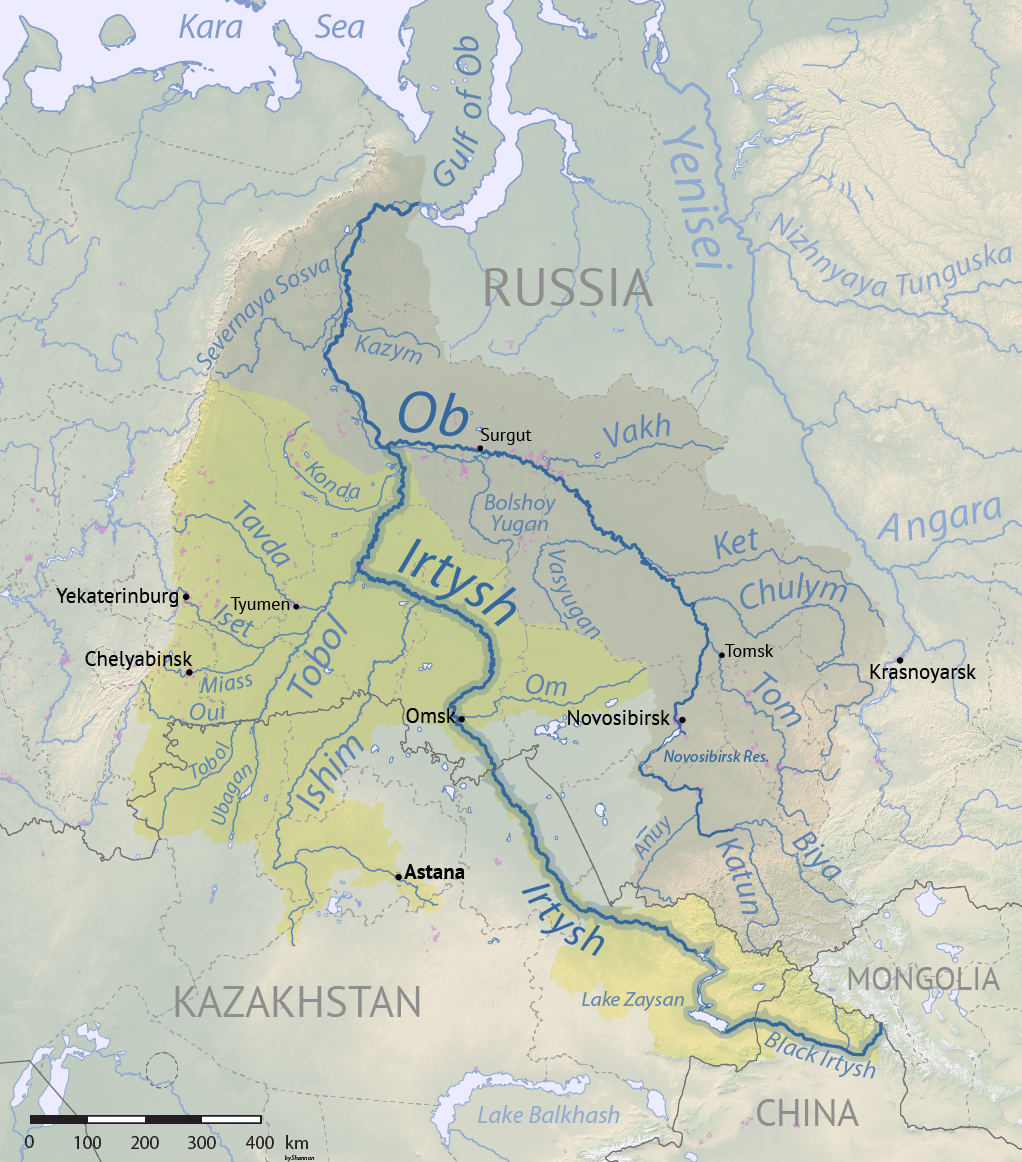
The Irtysh (/ɜːrˈtɪʃ, ˈɪərtɪʃ/) is a river in Russia, China, and Kazakhstan. It is the chief tributary of the Ob and is also the longest tributary in the world.
The river's source lies in the Mongolian Altai in Dzungaria (the northern part of Xinjiang, China) close to the border with Mongolia.
The Irtysh's main tributaries include the Tobol, Demyanka and the Ishim. The Ob-Irtysh system forms a major drainage basin in Asia, encompassing most of Western Siberia and the Altai Mountains.
The name was first encountered in the epitaphs of the Second Eastern Turkic Khaganate commanders Tonyukuku (646-724) and Kul-teginu (684-731).
The first to attempt to decipher the name of the Irtysh was the Turkic philologist Mahmud al-Kashgari (1029-1101). According to his interpretation, the river got its name from the word "ertishmak" (quick jump). At the same time, according to the legend cited by his contemporary, the Persian geographer al-Gardizi (d. 1061) in his treatise "Zayn al-akhbar", the author of the name is a slave of the founder of the Kimaks, Prince Shad. Seeing the Turks wandering near the river, she said to them «irtysh», which meant "stop".
G. F. Miller gives a version of the formation of the name of the river from the name of the Tatar Khan Irtyshak, the successor of Khan On-Som.
According to one version, the name of the river comes from the Turkic words: ir - "earth", tysh - "dig", that is, it means "digging the earth".
According to A. P. Dulzon and V. N. Popova, in the name Irtysh the segment tysh goes back to the Ket chesh, shesh, sis, ses - "river", and the initial ir is associated with the pre-Ket (Iranian) root meaning "stormy", "rapid".
Hub AI
Irtysh AI simulator
(@Irtysh_simulator)
Irtysh
The Irtysh (/ɜːrˈtɪʃ, ˈɪərtɪʃ/) is a river in Russia, China, and Kazakhstan. It is the chief tributary of the Ob and is also the longest tributary in the world.
The river's source lies in the Mongolian Altai in Dzungaria (the northern part of Xinjiang, China) close to the border with Mongolia.
The Irtysh's main tributaries include the Tobol, Demyanka and the Ishim. The Ob-Irtysh system forms a major drainage basin in Asia, encompassing most of Western Siberia and the Altai Mountains.
The name was first encountered in the epitaphs of the Second Eastern Turkic Khaganate commanders Tonyukuku (646-724) and Kul-teginu (684-731).
The first to attempt to decipher the name of the Irtysh was the Turkic philologist Mahmud al-Kashgari (1029-1101). According to his interpretation, the river got its name from the word "ertishmak" (quick jump). At the same time, according to the legend cited by his contemporary, the Persian geographer al-Gardizi (d. 1061) in his treatise "Zayn al-akhbar", the author of the name is a slave of the founder of the Kimaks, Prince Shad. Seeing the Turks wandering near the river, she said to them «irtysh», which meant "stop".
G. F. Miller gives a version of the formation of the name of the river from the name of the Tatar Khan Irtyshak, the successor of Khan On-Som.
According to one version, the name of the river comes from the Turkic words: ir - "earth", tysh - "dig", that is, it means "digging the earth".
According to A. P. Dulzon and V. N. Popova, in the name Irtysh the segment tysh goes back to the Ket chesh, shesh, sis, ses - "river", and the initial ir is associated with the pre-Ket (Iranian) root meaning "stormy", "rapid".
Recent media