
Recent from talks
Irving Berlin
Knowledge base stats:
Talk channels stats:
Members stats:
Irving Berlin
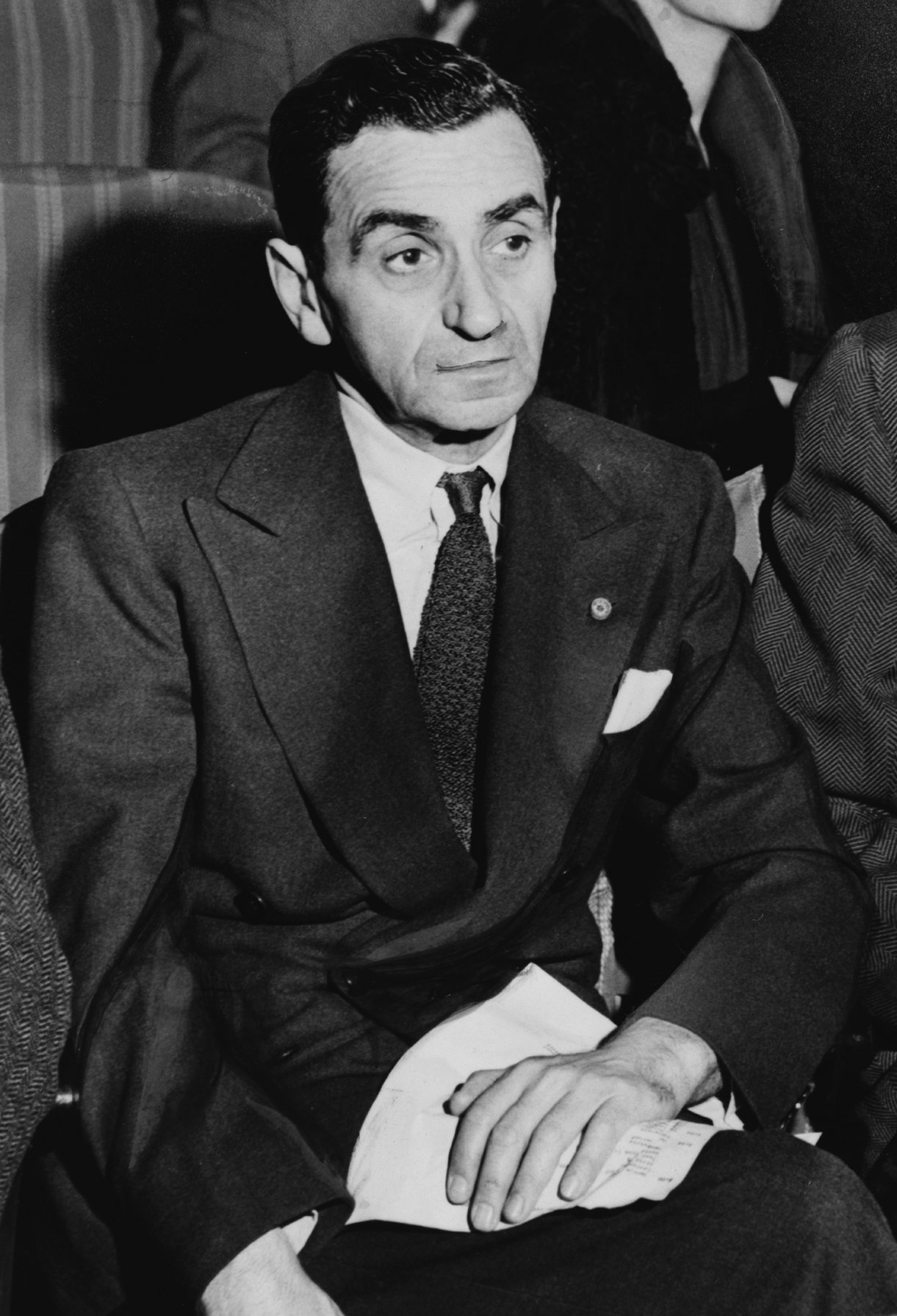
Irving Berlin (born Israel Isidore Beilin; May 11, 1888 – September 22, 1989) was a Russian-born American composer and songwriter. His music forms a large part of the Great American Songbook. Berlin received numerous honors including an Academy Award, a Grammy Award, and a Tony Award. He also received the Presidential Medal of Freedom from President Gerald R. Ford in 1977. The broadcast journalist Walter Cronkite stated he "helped write the story of this country, capturing the best of who we are and the dreams that shape our lives".
Born in Imperial Russia, Berlin arrived in the United States at the age of five. His family left Russia to escape pogroms, one of which destroyed their village. He published his first song, "Marie from Sunny Italy", in 1907, receiving 33 cents for the publishing rights, and became known as the composer of numerous international hits, starting with 1911's "Alexander's Ragtime Band". He also was an owner of the Music Box Theatre on Broadway. For much of his career, Berlin could not read sheet music, and was such a limited piano player that he could only play in the key of F-sharp; he used his custom piano equipped with a transposing lever when he needed to play in keys other than F-sharp. He was known for writing music and lyrics in the American vernacular: uncomplicated, simple and direct, with his stated aim being to "reach the heart of the average American", who he saw as the "real soul of the country".
He wrote hundreds of songs, many becoming major hits, which made him famous before he turned thirty. During his 60-year career he wrote an estimated 1,500 songs, including the scores for 20 original Broadway shows and 15 original Hollywood films, with his songs nominated eight times for Academy Awards. Many songs became popular themes and anthems, including "Alexander's Ragtime Band", "Blue Skies", "Easter Parade", "Puttin' on the Ritz", "Cheek to Cheek", "White Christmas", "Happy Holiday", "Anything You Can Do (I Can Do Better)", and "There's No Business Like Show Business". His Broadway musical This Is the Army (1942) was adapted into the 1943 film of the same name.[user-generated source]
Berlin's songs have reached the top of the US charts 25 times and have been extensively re-recorded by numerous singers. Berlin died in 1989 at the age of 101. Composer Douglas Moore sets Berlin apart from all other contemporary songwriters, and includes him instead with Stephen Foster, Walt Whitman, and Carl Sandburg, as a "great American minstrel"—someone who has "caught and immortalized in his songs what we say, what we think about, and what we believe." Composer George Gershwin called him "the greatest songwriter that has ever lived", and composer Jerome Kern concluded that "Irving Berlin has no place in American music—he is American music."
Berlin was born Israel Beilin on May 11, 1888, in the Russian Empire. Although his family came from the shtetl of Tolochin, Berlin later learned that he was probably born in Tyumen, Siberia, where his father, an itinerant cantor, had taken his family. He was one of eight children of Moses (1848–1901) and Lena Lipkin Beilin (1850–1922).
From Tyumen, the family returned to Tolochin, and from there, they travelled to Antwerp and left the old continent aboard the SS Rhynland from the Red Star Line. On September 14, 1893, the family arrived at Ellis Island in New York City. When they arrived, Israel was put in a pen with his brother and five sisters until immigration officials declared them fit to be allowed into the city. After the family's naturalization, the name "Beilin" was changed to "Baline".
According to biographer Laurence Bergreen, as an adult Berlin admitted to no memories of his first five years in Russia except for one: "he was lying on a blanket by the side of a road, watching his house burn to the ground. By daylight the house was in ashes." As an adult, Berlin said he was unaware of being raised in abject poverty since he had known no other life.
The Berlins were one of hundreds of thousands of Jewish families who emigrated to the United States in the late 19th and early 20th century, escaping discrimination, poverty and brutal pogroms. Other such families included those of George and Ira Gershwin, Al Jolson, Sophie Tucker, L. Wolfe Gilbert, Jack Yellen, Louis B. Mayer (of MGM), and the Warner brothers.
Hub AI
Irving Berlin AI simulator
(@Irving Berlin_simulator)
Irving Berlin
Irving Berlin (born Israel Isidore Beilin; May 11, 1888 – September 22, 1989) was a Russian-born American composer and songwriter. His music forms a large part of the Great American Songbook. Berlin received numerous honors including an Academy Award, a Grammy Award, and a Tony Award. He also received the Presidential Medal of Freedom from President Gerald R. Ford in 1977. The broadcast journalist Walter Cronkite stated he "helped write the story of this country, capturing the best of who we are and the dreams that shape our lives".
Born in Imperial Russia, Berlin arrived in the United States at the age of five. His family left Russia to escape pogroms, one of which destroyed their village. He published his first song, "Marie from Sunny Italy", in 1907, receiving 33 cents for the publishing rights, and became known as the composer of numerous international hits, starting with 1911's "Alexander's Ragtime Band". He also was an owner of the Music Box Theatre on Broadway. For much of his career, Berlin could not read sheet music, and was such a limited piano player that he could only play in the key of F-sharp; he used his custom piano equipped with a transposing lever when he needed to play in keys other than F-sharp. He was known for writing music and lyrics in the American vernacular: uncomplicated, simple and direct, with his stated aim being to "reach the heart of the average American", who he saw as the "real soul of the country".
He wrote hundreds of songs, many becoming major hits, which made him famous before he turned thirty. During his 60-year career he wrote an estimated 1,500 songs, including the scores for 20 original Broadway shows and 15 original Hollywood films, with his songs nominated eight times for Academy Awards. Many songs became popular themes and anthems, including "Alexander's Ragtime Band", "Blue Skies", "Easter Parade", "Puttin' on the Ritz", "Cheek to Cheek", "White Christmas", "Happy Holiday", "Anything You Can Do (I Can Do Better)", and "There's No Business Like Show Business". His Broadway musical This Is the Army (1942) was adapted into the 1943 film of the same name.[user-generated source]
Berlin's songs have reached the top of the US charts 25 times and have been extensively re-recorded by numerous singers. Berlin died in 1989 at the age of 101. Composer Douglas Moore sets Berlin apart from all other contemporary songwriters, and includes him instead with Stephen Foster, Walt Whitman, and Carl Sandburg, as a "great American minstrel"—someone who has "caught and immortalized in his songs what we say, what we think about, and what we believe." Composer George Gershwin called him "the greatest songwriter that has ever lived", and composer Jerome Kern concluded that "Irving Berlin has no place in American music—he is American music."
Berlin was born Israel Beilin on May 11, 1888, in the Russian Empire. Although his family came from the shtetl of Tolochin, Berlin later learned that he was probably born in Tyumen, Siberia, where his father, an itinerant cantor, had taken his family. He was one of eight children of Moses (1848–1901) and Lena Lipkin Beilin (1850–1922).
From Tyumen, the family returned to Tolochin, and from there, they travelled to Antwerp and left the old continent aboard the SS Rhynland from the Red Star Line. On September 14, 1893, the family arrived at Ellis Island in New York City. When they arrived, Israel was put in a pen with his brother and five sisters until immigration officials declared them fit to be allowed into the city. After the family's naturalization, the name "Beilin" was changed to "Baline".
According to biographer Laurence Bergreen, as an adult Berlin admitted to no memories of his first five years in Russia except for one: "he was lying on a blanket by the side of a road, watching his house burn to the ground. By daylight the house was in ashes." As an adult, Berlin said he was unaware of being raised in abject poverty since he had known no other life.
The Berlins were one of hundreds of thousands of Jewish families who emigrated to the United States in the late 19th and early 20th century, escaping discrimination, poverty and brutal pogroms. Other such families included those of George and Ira Gershwin, Al Jolson, Sophie Tucker, L. Wolfe Gilbert, Jack Yellen, Louis B. Mayer (of MGM), and the Warner brothers.
Recent media