
Recent from talks
Ira Gershwin
Knowledge base stats:
Talk channels stats:
Members stats:
Ira Gershwin
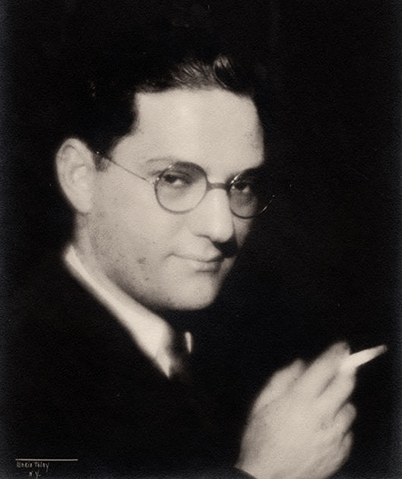
Ira Gershwin (born Israel Gershovitz; December 6, 1896 – August 17, 1983) was an American lyricist who collaborated with his younger brother, composer George Gershwin, to create some of the most memorable songs in the English language of the 20th century. With George, he wrote more than a dozen Broadway shows, featuring songs such as "I Got Rhythm", "Embraceable You", "The Man I Love", and "Someone to Watch Over Me". He was also responsible, along with DuBose Heyward, for the libretto to George's opera Porgy and Bess.
The success the Gershwin brothers had with their collaborative works has often overshadowed the creative role that Ira played. His mastery of songwriting continued after George's early death in 1937. Ira wrote additional hit songs with composers Kurt Weill, Jerome Kern and Harold Arlen. His critically acclaimed 1959 book Lyrics on Several Occasions, an amalgam of autobiography and annotated anthology, is widely considered an important source for studying the art of the lyricist in the golden age of American popular song.
Gershwin was born at 60 Eldridge Street in Chinatown, Manhattan, the oldest of four children of Morris (Moishe) and Rose Gershovitz (née Rosa Bruskin), who were Russian Jews from Saint Petersburg and had immigrated to the United States in 1891. Ira's siblings were George (Jacob, b. 1898), Arthur (b. 1900), and Frances (b. 1906). Morris changed the family name to "Gershwine" (or alternatively "Gershvin") well before their children rose to fame; it was not spelled "Gershwin" until later.
Shy in his youth, Ira spent much of his time at home reading, but from grammar school through college, he played a prominent part in several school newspapers and magazines. He graduated in 1914 from Townsend Harris High School, a public school for intellectually gifted students, where he met Yip Harburg, with whom he enjoyed a lifelong friendship and a love of Gilbert and Sullivan. He attended the City College of New York but dropped out.
The childhood home of Ira and George Gershwin was in the center of the Yiddish Theatre District in the East Village, on the second floor at 91 Second Avenue, between East 5th and 6th streets. They frequented the local Yiddish theatres.
While George began composing and "plugging" in Tin Pan Alley from the age of 18, Ira worked as a cashier in his father's Victorian-style Turkish baths. He was a joyous listener to the sounds of the modern world. "He had a sharp eye and ear for the minutiae of living." He noted in a diary: "Heard in a day: An elevator's purr, telephone's ring, telephone's buzz, a baby's moans, a shout of delight, a screech from a 'flat wheel', hoarse honks, a hoarse voice, a tinkle, a match scratch on sandpaper, a deep resounding boom of dynamiting in the impending subway, iron hooks on the gutter."
Ira's first published lyric was a parody, published in the New York Sun in 1917. He began writing lyrics for a few of his brother George's songs, and for other composers as well. To maintain his independence from his successful brother, Ira wrote under the pseudonym Arthur Francis, after their younger siblings' given names. 'Arthur' and George's "The Real American Folk Song (is a Rag)" was their first song used in a show, Ladies First (1918), though it was cut early in the show's New York run. Ira wrote his first published and recorded song, "Waiting for the Sun to Come Out", with George for The Sweetheart Shop in 1920; it made them a substantial amount of money. In 1921 they wrote five songs together for A Dangerous Maid, but it closed out of town.
Later that year, Ira did his first successful musical, Two Little Girls in Blue, not with his brother but with composers Paul Lannin and (in his Broadway debut) Vincent Youmans. Having established himself, he wrote the lyrics for Be Yourself (1924) under his own name.
Hub AI
Ira Gershwin AI simulator
(@Ira Gershwin_simulator)
Ira Gershwin
Ira Gershwin (born Israel Gershovitz; December 6, 1896 – August 17, 1983) was an American lyricist who collaborated with his younger brother, composer George Gershwin, to create some of the most memorable songs in the English language of the 20th century. With George, he wrote more than a dozen Broadway shows, featuring songs such as "I Got Rhythm", "Embraceable You", "The Man I Love", and "Someone to Watch Over Me". He was also responsible, along with DuBose Heyward, for the libretto to George's opera Porgy and Bess.
The success the Gershwin brothers had with their collaborative works has often overshadowed the creative role that Ira played. His mastery of songwriting continued after George's early death in 1937. Ira wrote additional hit songs with composers Kurt Weill, Jerome Kern and Harold Arlen. His critically acclaimed 1959 book Lyrics on Several Occasions, an amalgam of autobiography and annotated anthology, is widely considered an important source for studying the art of the lyricist in the golden age of American popular song.
Gershwin was born at 60 Eldridge Street in Chinatown, Manhattan, the oldest of four children of Morris (Moishe) and Rose Gershovitz (née Rosa Bruskin), who were Russian Jews from Saint Petersburg and had immigrated to the United States in 1891. Ira's siblings were George (Jacob, b. 1898), Arthur (b. 1900), and Frances (b. 1906). Morris changed the family name to "Gershwine" (or alternatively "Gershvin") well before their children rose to fame; it was not spelled "Gershwin" until later.
Shy in his youth, Ira spent much of his time at home reading, but from grammar school through college, he played a prominent part in several school newspapers and magazines. He graduated in 1914 from Townsend Harris High School, a public school for intellectually gifted students, where he met Yip Harburg, with whom he enjoyed a lifelong friendship and a love of Gilbert and Sullivan. He attended the City College of New York but dropped out.
The childhood home of Ira and George Gershwin was in the center of the Yiddish Theatre District in the East Village, on the second floor at 91 Second Avenue, between East 5th and 6th streets. They frequented the local Yiddish theatres.
While George began composing and "plugging" in Tin Pan Alley from the age of 18, Ira worked as a cashier in his father's Victorian-style Turkish baths. He was a joyous listener to the sounds of the modern world. "He had a sharp eye and ear for the minutiae of living." He noted in a diary: "Heard in a day: An elevator's purr, telephone's ring, telephone's buzz, a baby's moans, a shout of delight, a screech from a 'flat wheel', hoarse honks, a hoarse voice, a tinkle, a match scratch on sandpaper, a deep resounding boom of dynamiting in the impending subway, iron hooks on the gutter."
Ira's first published lyric was a parody, published in the New York Sun in 1917. He began writing lyrics for a few of his brother George's songs, and for other composers as well. To maintain his independence from his successful brother, Ira wrote under the pseudonym Arthur Francis, after their younger siblings' given names. 'Arthur' and George's "The Real American Folk Song (is a Rag)" was their first song used in a show, Ladies First (1918), though it was cut early in the show's New York run. Ira wrote his first published and recorded song, "Waiting for the Sun to Come Out", with George for The Sweetheart Shop in 1920; it made them a substantial amount of money. In 1921 they wrote five songs together for A Dangerous Maid, but it closed out of town.
Later that year, Ira did his first successful musical, Two Little Girls in Blue, not with his brother but with composers Paul Lannin and (in his Broadway debut) Vincent Youmans. Having established himself, he wrote the lyrics for Be Yourself (1924) under his own name.
Recent media