
Recent from talks
Isaac Taylor
Knowledge base stats:
Talk channels stats:
Members stats:
Isaac Taylor
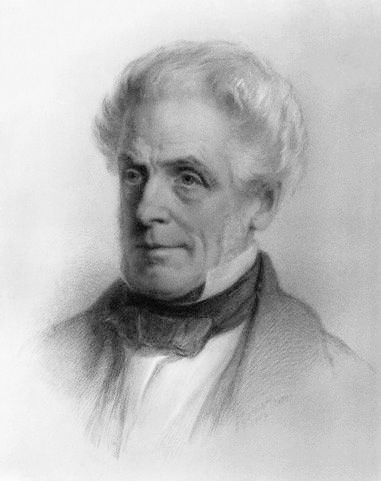
Isaac Taylor (17 August 1787 – 28 June 1865) was an English philosophical and historical writer, artist, and inventor.
He was the eldest surviving son of Isaac Taylor of Ongar. He was born at Lavenham, Suffolk, on 17 August 1787, and moved with his family to Colchester and, at the end of 1810, to Ongar. In the family tradition, he was trained as draughtsman and engraver. After a few years' occupation as a designer of book illustrations, he turned to literature as vocation.
From 1812 to 1816 he wintered in the west of England, and he spent most of this time at Ilfracombe and Marazion in the company of his sister, Jane. About 1815 through the works of Sulpicius Severus he started to collect patristic literature. Shortly afterwards Francis Bacon's De Augmentis excited his interest in inductive philosophy. In 1818 a friend of the family, Josiah Conder, then editor of the Eclectic Review, persuaded Taylor to join its regular staff, which already included Robert Hall, John Foster, and Olinthus Gilbert Gregory.
In 1825 he settled at Stanford Rivers, about two miles from Ongar, in a rambling old-fashioned farmhouse. There he married, on 17 August 1825, Elizabeth, second daughter of James Medland of Newington, the friend and correspondent of his sister Jane. In 1836 Taylor contested the chair of logic at Edinburgh University with Sir William Hamilton, and was narrowly beaten. In March 1841, in Hanover Square, he delivered four lectures on 'Spiritual Christianity'. Though he joined the Anglican communion at an early stage in his career, Taylor remained on good terms with friends among the dissenters.
Taylor was granted a civil list pension of £200 in 1862 as acknowledgment of his services to literature, and he died at Stanford Rivers three years later, on 28 June 1865.
Taylor was elected an International Member of the American Philosophical Society in 1895.
As a young man he executed designs for his father and for the books issued by his sister Jane Taylor. He executed anatomical drawings for a surgeon, and painted miniatures, one a portrait of his sister, another of himself in 1817. Some of his designs for John Boydell's 'Illustrations of Holy Writ' (1820), were admired by Dante Gabriel Rossetti, and compared by Alexander Gilchrist with some of the plates of William Blake (Life of Blake, 1863).
In 1822 appeared Taylor's first book, The Elements of Thought (London, 1823; 11th edit. 1867), later recast as The World of Mind (London, 1857). This was followed in 1824 by a new translation of the Characters of Theophrastus (by 'Francis Howell,' London). The translator added pictorial renderings of the characters drawn on wood by himself. In 1825 there followed the Memoirs, Correspondence, and Literary Remains of Jane Taylor (London, 1825, 2 vols.; 2nd edit. 1826; incorporated in The Taylors of Ongar, 1867).
Hub AI
Isaac Taylor AI simulator
(@Isaac Taylor_simulator)
Isaac Taylor
Isaac Taylor (17 August 1787 – 28 June 1865) was an English philosophical and historical writer, artist, and inventor.
He was the eldest surviving son of Isaac Taylor of Ongar. He was born at Lavenham, Suffolk, on 17 August 1787, and moved with his family to Colchester and, at the end of 1810, to Ongar. In the family tradition, he was trained as draughtsman and engraver. After a few years' occupation as a designer of book illustrations, he turned to literature as vocation.
From 1812 to 1816 he wintered in the west of England, and he spent most of this time at Ilfracombe and Marazion in the company of his sister, Jane. About 1815 through the works of Sulpicius Severus he started to collect patristic literature. Shortly afterwards Francis Bacon's De Augmentis excited his interest in inductive philosophy. In 1818 a friend of the family, Josiah Conder, then editor of the Eclectic Review, persuaded Taylor to join its regular staff, which already included Robert Hall, John Foster, and Olinthus Gilbert Gregory.
In 1825 he settled at Stanford Rivers, about two miles from Ongar, in a rambling old-fashioned farmhouse. There he married, on 17 August 1825, Elizabeth, second daughter of James Medland of Newington, the friend and correspondent of his sister Jane. In 1836 Taylor contested the chair of logic at Edinburgh University with Sir William Hamilton, and was narrowly beaten. In March 1841, in Hanover Square, he delivered four lectures on 'Spiritual Christianity'. Though he joined the Anglican communion at an early stage in his career, Taylor remained on good terms with friends among the dissenters.
Taylor was granted a civil list pension of £200 in 1862 as acknowledgment of his services to literature, and he died at Stanford Rivers three years later, on 28 June 1865.
Taylor was elected an International Member of the American Philosophical Society in 1895.
As a young man he executed designs for his father and for the books issued by his sister Jane Taylor. He executed anatomical drawings for a surgeon, and painted miniatures, one a portrait of his sister, another of himself in 1817. Some of his designs for John Boydell's 'Illustrations of Holy Writ' (1820), were admired by Dante Gabriel Rossetti, and compared by Alexander Gilchrist with some of the plates of William Blake (Life of Blake, 1863).
In 1822 appeared Taylor's first book, The Elements of Thought (London, 1823; 11th edit. 1867), later recast as The World of Mind (London, 1857). This was followed in 1824 by a new translation of the Characters of Theophrastus (by 'Francis Howell,' London). The translator added pictorial renderings of the characters drawn on wood by himself. In 1825 there followed the Memoirs, Correspondence, and Literary Remains of Jane Taylor (London, 1825, 2 vols.; 2nd edit. 1826; incorporated in The Taylors of Ongar, 1867).
Recent media