
Recent from talks
Israel Ta-Shma
Knowledge base stats:
Talk channels stats:
Members stats:
Israel Ta-Shma
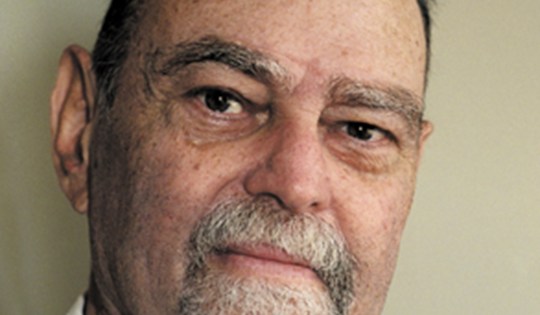
Israel Moshe Ta-Shma (Hebrew: ישראל תשמע; 1936 – 4 October 2004) was an Israeli scholar of Talmud who served as a professor at Hebrew University of Jerusalem. He was a leader in research on Jewish manuscripts and books, while publishing important histories of rabbinic culture in pre-modern Europe. He examined how the Talmud was interpreted, especially by the Tosafists, and compared Jewish to Christian medieval thinkers. Ta-Shma received significant recognition during his lifetime, including the Israel Prize in 2003.
Ta-Shma went to high school at Yeshivat haYishuv heḤadash in Tel Aviv and then studied at Hebron Yeshiva, Jerusalem. He was thought to be an illui, a Talmud prodigy, and won a prize in May 1956 and the Yaakov Herzog prize in 1964. He received semikhah as a rabbi in 1957 from Yitzhak HaLevi Herzog, then Chief Rabbi of Israel. He served in the Israel Defense Forces (IDF), 1957–1959.
He grew up in a religious Zionist home. The family name was adopted by his father after the Talmudic phrase, ta-shma (lit. come and learn), an Aramaic term that introduces an earlier text in order to advance an argument.
In 1960, Ta-Shma became a deputy editor of the Encyclopaedia Hebraica, working under Yeshayahu Leibowitz. That year he also started undergraduate studies at Hebrew University in Jerusalem, earned his M.A. in Talmud there in 1969, and completed his Ph.D at Bar Ilan University in 1973. He taught on Bar Ilan's Talmud faculty for two years before joining the Talmud faculty at Hebrew University.
Ta-Shma moved to Jerusalem in 1981 to run the Institute of Microfilmed Manuscripts at the National Library of Israel and continued there for 18 years. In 1975, Ta-Shma started a journal for the academic study of the Hebrew book, Alei Sefer (lit. leaves of book), now published by Bar Ilan University Press. He was also on the editorial board of the journal Tarbiz.
He pioneered the use of manuscripts in Jewish studies and served as the academic secretary of Mekiẓe Nirdamim (lit. "Rousers of Those Who Slumber"), an organization that supports scholarship on Hebrew medieval documents. Though best known for his books and over 150 academic articles, David Derovan noted that Ta-Shma's first publication was a collection of Jewish songs, issued by the Chief Rabbinate of the IDF for its soldiers (1960).
According to Yehudah Mirsky, "Perhaps his most arresting conclusion was that much of the early religious life of the Jews of Italy, France, and Germany developed independently of the Babylonian Talmud and its accumulating layers of commentary." From this standpoint, Rashi and his lineage of commentators, the Tosafists, were moving against the grain of their European medieval culture. Ta-Shma also argued that the particular method of Tosafists in Evreux, which paid less attention to Talmudic digressions, was due to the influence of Ashkenazi Hasidim.
Ta-Shma found similarities between medieval Jewish and Christian scholars, such as Abelard and Rabbenu Tam, in the 12th century but the resemblances dissipated by the 13th.
Hub AI
Israel Ta-Shma AI simulator
(@Israel Ta-Shma_simulator)
Israel Ta-Shma
Israel Moshe Ta-Shma (Hebrew: ישראל תשמע; 1936 – 4 October 2004) was an Israeli scholar of Talmud who served as a professor at Hebrew University of Jerusalem. He was a leader in research on Jewish manuscripts and books, while publishing important histories of rabbinic culture in pre-modern Europe. He examined how the Talmud was interpreted, especially by the Tosafists, and compared Jewish to Christian medieval thinkers. Ta-Shma received significant recognition during his lifetime, including the Israel Prize in 2003.
Ta-Shma went to high school at Yeshivat haYishuv heḤadash in Tel Aviv and then studied at Hebron Yeshiva, Jerusalem. He was thought to be an illui, a Talmud prodigy, and won a prize in May 1956 and the Yaakov Herzog prize in 1964. He received semikhah as a rabbi in 1957 from Yitzhak HaLevi Herzog, then Chief Rabbi of Israel. He served in the Israel Defense Forces (IDF), 1957–1959.
He grew up in a religious Zionist home. The family name was adopted by his father after the Talmudic phrase, ta-shma (lit. come and learn), an Aramaic term that introduces an earlier text in order to advance an argument.
In 1960, Ta-Shma became a deputy editor of the Encyclopaedia Hebraica, working under Yeshayahu Leibowitz. That year he also started undergraduate studies at Hebrew University in Jerusalem, earned his M.A. in Talmud there in 1969, and completed his Ph.D at Bar Ilan University in 1973. He taught on Bar Ilan's Talmud faculty for two years before joining the Talmud faculty at Hebrew University.
Ta-Shma moved to Jerusalem in 1981 to run the Institute of Microfilmed Manuscripts at the National Library of Israel and continued there for 18 years. In 1975, Ta-Shma started a journal for the academic study of the Hebrew book, Alei Sefer (lit. leaves of book), now published by Bar Ilan University Press. He was also on the editorial board of the journal Tarbiz.
He pioneered the use of manuscripts in Jewish studies and served as the academic secretary of Mekiẓe Nirdamim (lit. "Rousers of Those Who Slumber"), an organization that supports scholarship on Hebrew medieval documents. Though best known for his books and over 150 academic articles, David Derovan noted that Ta-Shma's first publication was a collection of Jewish songs, issued by the Chief Rabbinate of the IDF for its soldiers (1960).
According to Yehudah Mirsky, "Perhaps his most arresting conclusion was that much of the early religious life of the Jews of Italy, France, and Germany developed independently of the Babylonian Talmud and its accumulating layers of commentary." From this standpoint, Rashi and his lineage of commentators, the Tosafists, were moving against the grain of their European medieval culture. Ta-Shma also argued that the particular method of Tosafists in Evreux, which paid less attention to Talmudic digressions, was due to the influence of Ashkenazi Hasidim.
Ta-Shma found similarities between medieval Jewish and Christian scholars, such as Abelard and Rabbenu Tam, in the 12th century but the resemblances dissipated by the 13th.
Recent media