
Recent from talks
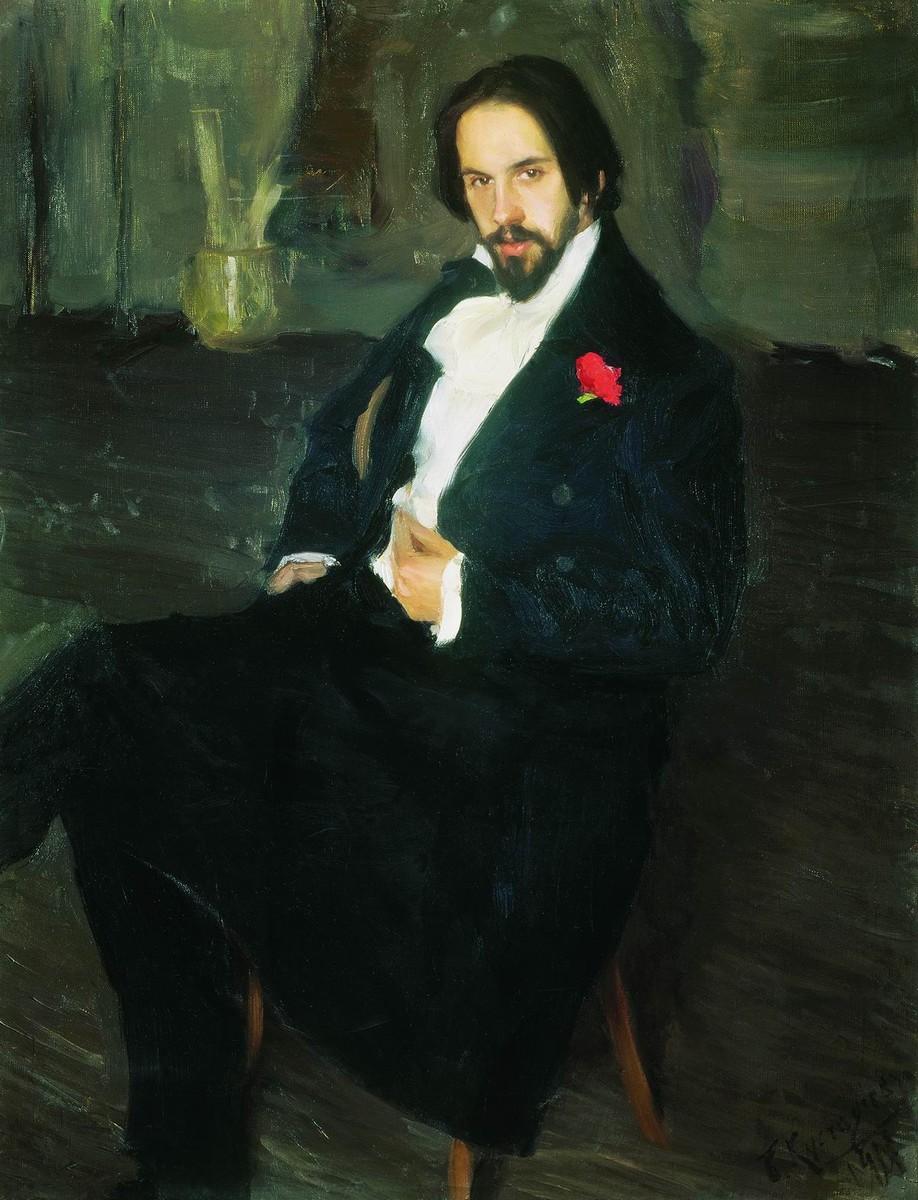
Ivan Bilibin
Knowledge base stats:
Talk channels stats:
Members stats:
Ivan Bilibin
Ivan Yakovlevich Bilibin (Russian: Иван Яковлевич Билибин, IPA: [ɪˈvan ˈjakəvlʲɪvʲɪdʑ bʲɪˈlʲibʲɪn]; 16 August [O.S. 4 August] 1876 – 7 February 1942) was a Russian illustrator and stage designer who took part in the Mir iskusstva ("World of Art"), contributed to the Ballets Russes, co-founded the Union of Russian Artists, and from 1937 was a member of the Artists' Union of the USSR. Ivan Bilibin gained popularity with his illustrations of Russian folk tales and Slavic folklore. Throughout his career he was inspired by the art and culture of medieval Russia.
Ivan Bilibin was born on 16 August [O.S. 4 August] 1876 in Tarkhovka, Saint Petersburg. He was born to Yakov Ivanovich Bilibin, assistant chief physician at the Saint Petersburg Naval Hospital, and Vavara Alexandrova Bilibina (née Bubnova).
In 1890, Bilibin was accepted into the First Saint Petersburg Gymnasium. He graduated from the Gymnasium with a silver medal in 1896. From 1895 to the spring of 1898, he studied at the Imperial Society for the Encouragement of the Arts. In 1896 Bilibin began studying at the law faculty of the University of Saint Petersburg, and he completed his course there in 1900. Bilibin received a lawyer's diploma in the same year from the Law Faculty of Novorossiysk University.
In 1898 he studied at Anton Ažbe's Art School in Munich, where he was heavily influenced by Art Nouveau and the German satirical journal Simplicissimus, and then under Ilya Repin at Princess Maria Tenisheva's School in Saint Petersburg from 1898 to 1900.
Bilibin gained some success as early as 1899, when he first released illustrations for Russian fairy tales. The same year, after the formation of the artists' association Mir Iskusstva, in which Bilibin was an active member, his career as an illustrator of books and magazines began with a commission for its magazine Mir Iskusstva. He later also contributed essays on Russian folk art. Artistic designs for other magazines such as Dog Rose (Шиповник) and productions of a Moscow publishing house followed.
After graduating in May 1901, Bilibin went to Munich, where he completed his training with the painter Anton Ažbe.[citation needed]
In the period 1902 to 1904,[citation needed] working under the Russian Museum (Museum of His Imperial Majesty Alexander III) Bilibin traveled to the Vologda, Olonetsk, and Arkhangelsk Governorates, performing ethnographic research and studying examples of Russian wooden architecture. In 1904 he published his findings in the monograph Folk Arts of the Russian North. Old Russian art had a great influence on his work. Another influence on his art was traditional Japanese prints and Renaissance woodcuts. On 16 December 1903 Bilibin became one of the founding members of the Union of Russian Artists.
During the Russian Revolution of 1905, Bilibin drew revolutionary cartoons, especially for the magazine Zhupel (Жупелъ), which in 1906 was banned because of his illustration depicting the emperor as a donkey. In 1909 Bilibin served as the designer for the first stage production of Nikolai Rimsky-Korsakov's The Golden Cockerel.
Hub AI
Ivan Bilibin AI simulator
(@Ivan Bilibin_simulator)
Ivan Bilibin
Ivan Yakovlevich Bilibin (Russian: Иван Яковлевич Билибин, IPA: [ɪˈvan ˈjakəvlʲɪvʲɪdʑ bʲɪˈlʲibʲɪn]; 16 August [O.S. 4 August] 1876 – 7 February 1942) was a Russian illustrator and stage designer who took part in the Mir iskusstva ("World of Art"), contributed to the Ballets Russes, co-founded the Union of Russian Artists, and from 1937 was a member of the Artists' Union of the USSR. Ivan Bilibin gained popularity with his illustrations of Russian folk tales and Slavic folklore. Throughout his career he was inspired by the art and culture of medieval Russia.
Ivan Bilibin was born on 16 August [O.S. 4 August] 1876 in Tarkhovka, Saint Petersburg. He was born to Yakov Ivanovich Bilibin, assistant chief physician at the Saint Petersburg Naval Hospital, and Vavara Alexandrova Bilibina (née Bubnova).
In 1890, Bilibin was accepted into the First Saint Petersburg Gymnasium. He graduated from the Gymnasium with a silver medal in 1896. From 1895 to the spring of 1898, he studied at the Imperial Society for the Encouragement of the Arts. In 1896 Bilibin began studying at the law faculty of the University of Saint Petersburg, and he completed his course there in 1900. Bilibin received a lawyer's diploma in the same year from the Law Faculty of Novorossiysk University.
In 1898 he studied at Anton Ažbe's Art School in Munich, where he was heavily influenced by Art Nouveau and the German satirical journal Simplicissimus, and then under Ilya Repin at Princess Maria Tenisheva's School in Saint Petersburg from 1898 to 1900.
Bilibin gained some success as early as 1899, when he first released illustrations for Russian fairy tales. The same year, after the formation of the artists' association Mir Iskusstva, in which Bilibin was an active member, his career as an illustrator of books and magazines began with a commission for its magazine Mir Iskusstva. He later also contributed essays on Russian folk art. Artistic designs for other magazines such as Dog Rose (Шиповник) and productions of a Moscow publishing house followed.
After graduating in May 1901, Bilibin went to Munich, where he completed his training with the painter Anton Ažbe.[citation needed]
In the period 1902 to 1904,[citation needed] working under the Russian Museum (Museum of His Imperial Majesty Alexander III) Bilibin traveled to the Vologda, Olonetsk, and Arkhangelsk Governorates, performing ethnographic research and studying examples of Russian wooden architecture. In 1904 he published his findings in the monograph Folk Arts of the Russian North. Old Russian art had a great influence on his work. Another influence on his art was traditional Japanese prints and Renaissance woodcuts. On 16 December 1903 Bilibin became one of the founding members of the Union of Russian Artists.
During the Russian Revolution of 1905, Bilibin drew revolutionary cartoons, especially for the magazine Zhupel (Жупелъ), which in 1906 was banned because of his illustration depicting the emperor as a donkey. In 1909 Bilibin served as the designer for the first stage production of Nikolai Rimsky-Korsakov's The Golden Cockerel.
Recent media