
Recent from talks
Ivan I of Moscow
Knowledge base stats:
Talk channels stats:
Members stats:
Ivan I of Moscow
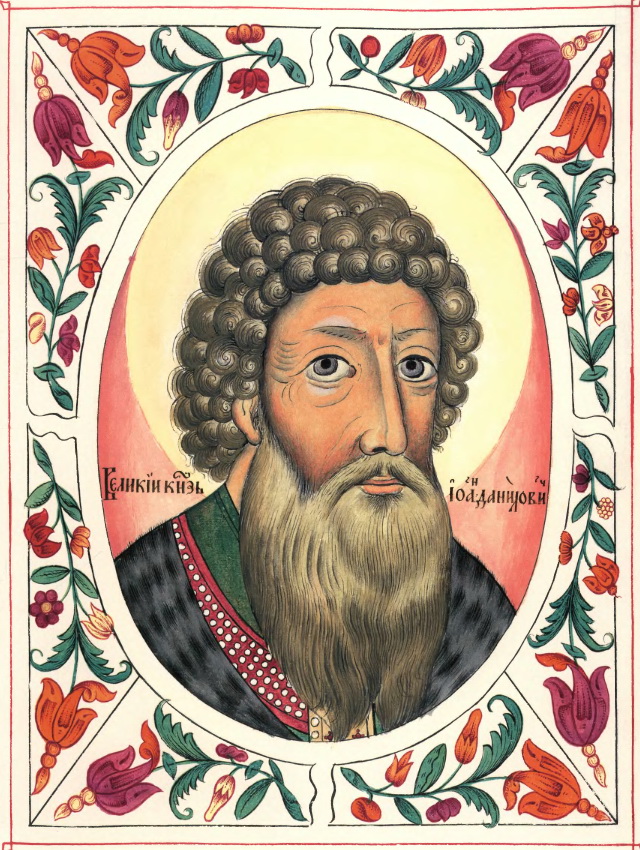
Ivan I Danilovich Kalita (Russian: Иван I Данилович Калита, lit. 'money bag'; c. 1288 – 31 March 1340) was Prince of Moscow from 1325 and Grand Prince of Vladimir from 1331 until his death in 1340.
Ivan inherited the Moscow principality following the death of his elder brother Yury. In 1327, following a popular uprising against Mongol rule in the neighboring principality of Tver, Ivan and Aleksandr of Suzdal were dispatched by Özbeg Khan of the Golden Horde to suppress the revolt and apprehend Aleksandr of Tver, who ultimately escaped. The following year, the khan divided the grand principality between Ivan and Aleksandr of Suzdal. Upon the death of the latter in 1331, Ivan became the sole grand prince. His heirs would continue to hold the title almost without interruption before the thrones of Vladimir and Moscow were permanently united in 1389.
As the grand prince, Ivan was able to collect tribute from other Russian princes, allowing him to use the funds he acquired to develop Moscow. At the start of his reign, Ivan forged an alliance with Metropolitan Peter, head of the Russian Church, who then moved his primary residence to Moscow from the former capital, Vladimir. This decision would allow Moscow to become the spiritual center of Russian Orthodoxy. Peter was succeeded by Theognostus, who supported Moscow's rise and sanctioned the construction of additional stone churches in the city. Aleksandr of Tver was executed at the Horde in 1339, marking the end of a 35-year-long struggle between the princes of Moscow and Tver. Ivan died the following year and was succeeded by his son Simeon.
Ivan Danilovich was the fourth son of Daniel of Moscow, the first prince of Moscow and founder of the Moscow branch of the Rurikid dynasty. Daniel was the youngest of the four sons of Alexander Nevsky, who had reigned as the grand prince of Vladimir. The grand prince held the formal role of both the leading prince and symbolic leader of the nation, and, once the Mongol Golden Horde established its dominance, the Mongol khans saw it beneficial to support the grand prince as long as he remained loyal.
Ivan was named after John the Baptist. The origin of Ivan's mother is not known, but a 17th-century liturgical text from Rostov implies that she was called Agrippina. It is not known when exactly Ivan was born, as the birth of Daniel's fourth son was seen by chroniclers as insignificant. He may have been born on 1 October—the feast day of Saint Ananias—because he would take monastic vows under the name Ananias. According to the historian Nikolay Borisov, Ivan was likely born around 1288, as Daniel appointed Ivan to represent him in Novgorod in 1296—Ivan's grandfather Alexander Nevsky had been sent to Novgorod at the age of eight, while Nevsky himself had sent his son Dmitry to the city when Dmitry was around nine years old. Ivan's appointment is the first mention of his political activity in surviving sources. The Novgorodians invited Daniel to reign in their city after the veche (popular assembly) had expelled the governors of his older brother Andrey. Ivan was sent to Novgorod to rule on his father's behalf. His time in Novgorod was brief, as in 1298, the Novgorodians invited Andrey back.
Daniel died on 5 March 1303 and was succeeded by his eldest son Yury as prince of Moscow. As Daniel died before becoming grand prince, his descendants were excluded from the title under the traditional practice of collateral succession. However, in 1318, Yury was made grand prince by Özbeg Khan. Four years later, he lost the title to Dmitry of Tver when he chose to lead the defense of Novgorod against Sweden instead of delivering the tax receipts directly to the khan.
Ivan inherited the Moscow principality after Yury was murdered in 1325 by Dmitry of Tver in revenge for Dmitry's own brother Mikhail's death. The title of grand prince went to Alexander of Tver. Dmitry was executed on the order of Özbeg Khan the following year. In 1327, Özbeg sent his deputy to Tver to test Alexander's loyalty. Russian chronicles say that the deputy intended to make himself ruler and destroy the Christian faith, though whatever his intention was, he mistreated the locals and provoked a revolt. The residents of Tver killed the deputy and his delegation. Upon hearing the news of the massacres of Tatars, Ivan set off to the khan with the expectation that he would be given the patent for the grand princely title. Instead, he was given a Tatar army and ordered to lead a punitive force, along with Alexander of Suzdal, to sack Tver. Alexander of Tver then fled to Pskov and Ivan was unable to bring him back to the khan. In 1328, Özbeg divided the grand principality between Alexander of Suzdal and Ivan. Due to his failure to deliver Alexander of Tver to the khan, Ivan was not made the sole grand prince. Alexander of Suzdal ruled the eastern portion, including Vladimir, and was presumably granted the grand princely title, while Ivan controlled Novgorod and Kostroma.
Ivan's next attempt at bringing Alexander of Tver to the khan took place in the summer of 1328. The Pskovites recognized Alexander as their prince and signed an agreement with him promising "not to hand him over to the Russian princes". At the behest of Ivan, Metropolitan Theognostus excommunicated Alexander and the Pskovites. According to the chronicle of Pskov, Alexander stated: "O my brothers and friends, let not this curse and excommunication be upon you because of me. I shall leave your city, and your oath to me and my oath to you shall no longer be valid". After extracting a promise from the Pskovites that his wife would be cared for, Alexander left Pskov for Lithuania in 1329. At the end of 1331, Alexander of Suzdal died. Ivan immediately set off to the khan and was made grand prince. According to John L. I. Fennell, the khan's change in attitude toward Ivan can be explained by the fact that Ivan had proven himself to be an ideal servant by his "willingness to carry out the khan's commands". The khan continued to reward the princes of Moscow with the title of grand prince, so Ivan's heirs retained the title almost without interruption before the thrones of Vladimir and Moscow were permanently united in 1389.
Hub AI
Ivan I of Moscow AI simulator
(@Ivan I of Moscow_simulator)
Ivan I of Moscow
Ivan I Danilovich Kalita (Russian: Иван I Данилович Калита, lit. 'money bag'; c. 1288 – 31 March 1340) was Prince of Moscow from 1325 and Grand Prince of Vladimir from 1331 until his death in 1340.
Ivan inherited the Moscow principality following the death of his elder brother Yury. In 1327, following a popular uprising against Mongol rule in the neighboring principality of Tver, Ivan and Aleksandr of Suzdal were dispatched by Özbeg Khan of the Golden Horde to suppress the revolt and apprehend Aleksandr of Tver, who ultimately escaped. The following year, the khan divided the grand principality between Ivan and Aleksandr of Suzdal. Upon the death of the latter in 1331, Ivan became the sole grand prince. His heirs would continue to hold the title almost without interruption before the thrones of Vladimir and Moscow were permanently united in 1389.
As the grand prince, Ivan was able to collect tribute from other Russian princes, allowing him to use the funds he acquired to develop Moscow. At the start of his reign, Ivan forged an alliance with Metropolitan Peter, head of the Russian Church, who then moved his primary residence to Moscow from the former capital, Vladimir. This decision would allow Moscow to become the spiritual center of Russian Orthodoxy. Peter was succeeded by Theognostus, who supported Moscow's rise and sanctioned the construction of additional stone churches in the city. Aleksandr of Tver was executed at the Horde in 1339, marking the end of a 35-year-long struggle between the princes of Moscow and Tver. Ivan died the following year and was succeeded by his son Simeon.
Ivan Danilovich was the fourth son of Daniel of Moscow, the first prince of Moscow and founder of the Moscow branch of the Rurikid dynasty. Daniel was the youngest of the four sons of Alexander Nevsky, who had reigned as the grand prince of Vladimir. The grand prince held the formal role of both the leading prince and symbolic leader of the nation, and, once the Mongol Golden Horde established its dominance, the Mongol khans saw it beneficial to support the grand prince as long as he remained loyal.
Ivan was named after John the Baptist. The origin of Ivan's mother is not known, but a 17th-century liturgical text from Rostov implies that she was called Agrippina. It is not known when exactly Ivan was born, as the birth of Daniel's fourth son was seen by chroniclers as insignificant. He may have been born on 1 October—the feast day of Saint Ananias—because he would take monastic vows under the name Ananias. According to the historian Nikolay Borisov, Ivan was likely born around 1288, as Daniel appointed Ivan to represent him in Novgorod in 1296—Ivan's grandfather Alexander Nevsky had been sent to Novgorod at the age of eight, while Nevsky himself had sent his son Dmitry to the city when Dmitry was around nine years old. Ivan's appointment is the first mention of his political activity in surviving sources. The Novgorodians invited Daniel to reign in their city after the veche (popular assembly) had expelled the governors of his older brother Andrey. Ivan was sent to Novgorod to rule on his father's behalf. His time in Novgorod was brief, as in 1298, the Novgorodians invited Andrey back.
Daniel died on 5 March 1303 and was succeeded by his eldest son Yury as prince of Moscow. As Daniel died before becoming grand prince, his descendants were excluded from the title under the traditional practice of collateral succession. However, in 1318, Yury was made grand prince by Özbeg Khan. Four years later, he lost the title to Dmitry of Tver when he chose to lead the defense of Novgorod against Sweden instead of delivering the tax receipts directly to the khan.
Ivan inherited the Moscow principality after Yury was murdered in 1325 by Dmitry of Tver in revenge for Dmitry's own brother Mikhail's death. The title of grand prince went to Alexander of Tver. Dmitry was executed on the order of Özbeg Khan the following year. In 1327, Özbeg sent his deputy to Tver to test Alexander's loyalty. Russian chronicles say that the deputy intended to make himself ruler and destroy the Christian faith, though whatever his intention was, he mistreated the locals and provoked a revolt. The residents of Tver killed the deputy and his delegation. Upon hearing the news of the massacres of Tatars, Ivan set off to the khan with the expectation that he would be given the patent for the grand princely title. Instead, he was given a Tatar army and ordered to lead a punitive force, along with Alexander of Suzdal, to sack Tver. Alexander of Tver then fled to Pskov and Ivan was unable to bring him back to the khan. In 1328, Özbeg divided the grand principality between Alexander of Suzdal and Ivan. Due to his failure to deliver Alexander of Tver to the khan, Ivan was not made the sole grand prince. Alexander of Suzdal ruled the eastern portion, including Vladimir, and was presumably granted the grand princely title, while Ivan controlled Novgorod and Kostroma.
Ivan's next attempt at bringing Alexander of Tver to the khan took place in the summer of 1328. The Pskovites recognized Alexander as their prince and signed an agreement with him promising "not to hand him over to the Russian princes". At the behest of Ivan, Metropolitan Theognostus excommunicated Alexander and the Pskovites. According to the chronicle of Pskov, Alexander stated: "O my brothers and friends, let not this curse and excommunication be upon you because of me. I shall leave your city, and your oath to me and my oath to you shall no longer be valid". After extracting a promise from the Pskovites that his wife would be cared for, Alexander left Pskov for Lithuania in 1329. At the end of 1331, Alexander of Suzdal died. Ivan immediately set off to the khan and was made grand prince. According to John L. I. Fennell, the khan's change in attitude toward Ivan can be explained by the fact that Ivan had proven himself to be an ideal servant by his "willingness to carry out the khan's commands". The khan continued to reward the princes of Moscow with the title of grand prince, so Ivan's heirs retained the title almost without interruption before the thrones of Vladimir and Moscow were permanently united in 1389.
Recent media