
Recent from talks
Iveco EuroCargo
Knowledge base stats:
Talk channels stats:
Members stats:
Iveco EuroCargo
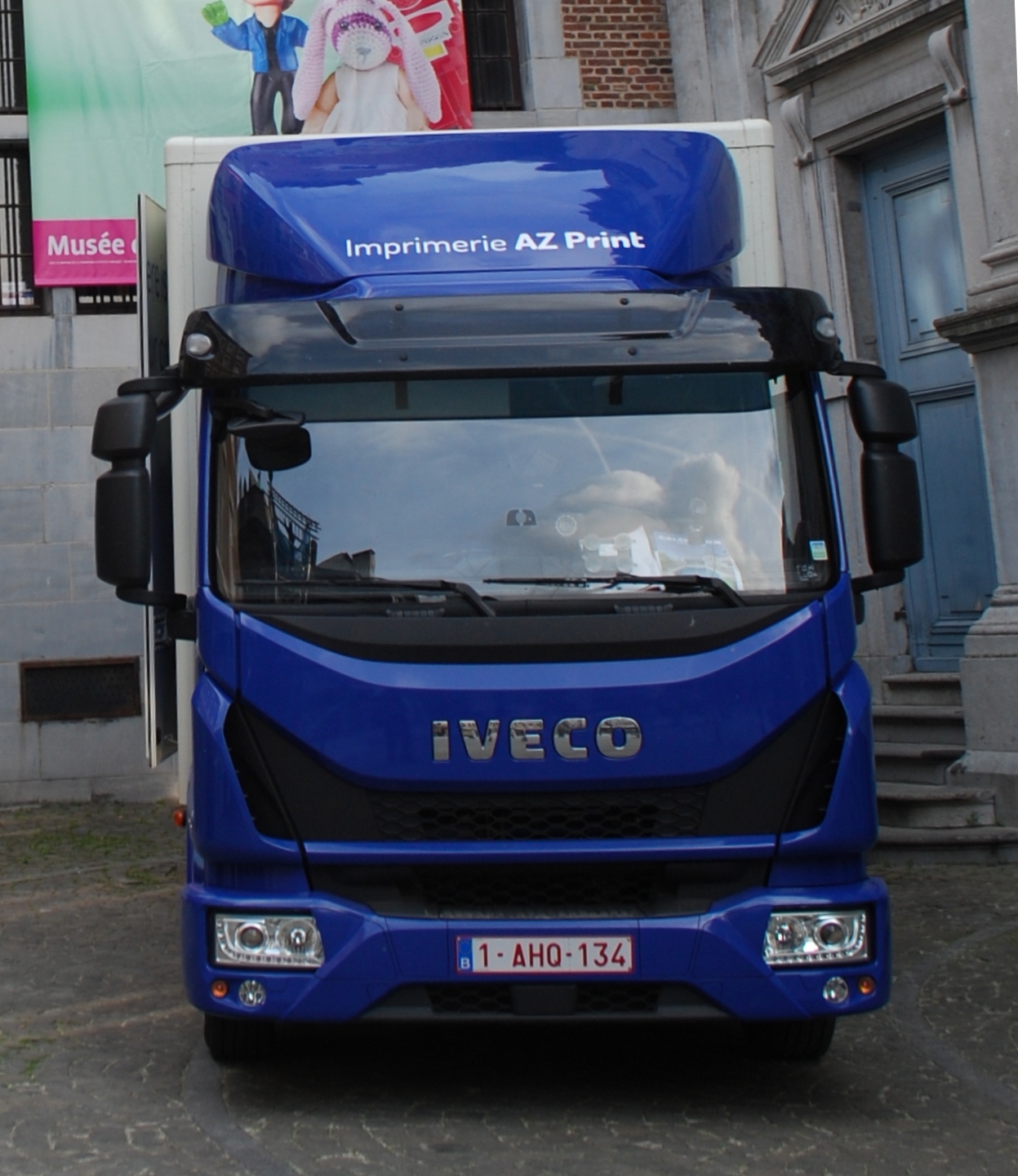
The Iveco EuroCargo is a range of medium-duty trucks produced by the Italian manufacturer Iveco since 1991. The EuroCargo occupies a place between the light Daily and the heavy Stralis in Iveco's lineup. The EuroCargo replaced the Zeta model produced in the 1970s.
The first generation was designed by IVECO Design Centre (Neu Ulm) led by Leonhard Schmude with help from Giorgetto Giugiaro of Italdesign. The maximum gross weight was 6-15 tons, and for models produced in Langley (in Great Britain) up to 17 tons. Both 4x2 and 4x4 (10 and 14 tons) were available.
There were three Iveco engines available, in different power ranges:
In addition, 4 types of cabs were available: standard (length 1,535 mm (60.4 in)), extended bed (2,115 mm (83.3 in)), extended bed (1,535 mm (60.4 in)) and double cab. The 6-10 ton versions were equipped with disc brakes on all wheels, hydraulically assisted. The heavier models had rear drum brakes. They used four types of suspension: parabolic leaf springs, semi-elliptical leaf springs, parabolic springs in the front and rear airbags (in the lighter models), air suspension (for urban distribution). In October 1997 there were updates, focusing on the cab and the braking system. At the same time, production in Langley ended, closing the plant. Production was now concentrated in Brescia.
The second generation of the series, introduced in 2002, was designed by Bertone. It was produced in Brescia in Italy, Sete Lagoas in Brazil (from January 2005 onwards) and in a Ferreyra in Argentina, and also assembled in Venezuela.
The maximum gross weight ranged from 6 to 18 tons. Both of 4x2 and 4x4 (GVW 10 and 14 tons) were available. The Iveco Tector engines were used in many variants, including: R4, 3920 cc, 129–170 hp (96–127 kW; 131–172 PS); R6, 5880 cc, 182–275 hp (136–205 kW; 185–279 PS).
There were 4 types of cabs available: Standard Time (MLC), extended bed (MLL, with one or two bunk beds), augmented bed and Extended Crew (MLD, for 7.5t to 15t models) for the driver and six passengers. All 6-10 ton GVW versions are equipped with disc brakes on all wheels, hydraulically assisted. The heavier models have rear drum brakes. The suspensions are the same as those available on the first series. In 2004 and in 2006 there were updates, especially to the Tector 4 and 6 engine range with the adaptation to the requirements of the Euro 4 and Euro 5 emission standards (with SCR). With the update their maximum power was increased by about 10–20 horsepower (7–15 kW; 10–20 PS). Euromidi bus chassis based on the Eurocargo were produced at the Barcelona plant.
In mid-2008, the Eurocargo was facelifted. The main changes are visible in the design and styling of the cabin. Iveco replaced all its own transmission models with new versions from the German manufacturer ZF with a similar number of ratios (5, 6, 9). The 6-speed versions of the ZF gearbox are also available with Eurotronic automatic or manual (sequential) gearboxes. To advertise the update special All Blacks versions were made. They are characterized by black paint and other details in this color. The engines are part of the Tector family of Fiat Powertrain Technologies. 4-cylinder engines with a displacement of 3900 cc have powers from 140 to 182 hp (104 to 136 kW; 142 to 185 PS). 6-cylinder engines with a displacement of 5900 cc have powers from 217 to 299 hp (162 to 223 kW; 220 to 303 PS). All engines are Euro 5 compliant with SCR. The truck finished second in the competition for the title of International Truck of the Year 2009.
Hub AI
Iveco EuroCargo AI simulator
(@Iveco EuroCargo_simulator)
Iveco EuroCargo
The Iveco EuroCargo is a range of medium-duty trucks produced by the Italian manufacturer Iveco since 1991. The EuroCargo occupies a place between the light Daily and the heavy Stralis in Iveco's lineup. The EuroCargo replaced the Zeta model produced in the 1970s.
The first generation was designed by IVECO Design Centre (Neu Ulm) led by Leonhard Schmude with help from Giorgetto Giugiaro of Italdesign. The maximum gross weight was 6-15 tons, and for models produced in Langley (in Great Britain) up to 17 tons. Both 4x2 and 4x4 (10 and 14 tons) were available.
There were three Iveco engines available, in different power ranges:
In addition, 4 types of cabs were available: standard (length 1,535 mm (60.4 in)), extended bed (2,115 mm (83.3 in)), extended bed (1,535 mm (60.4 in)) and double cab. The 6-10 ton versions were equipped with disc brakes on all wheels, hydraulically assisted. The heavier models had rear drum brakes. They used four types of suspension: parabolic leaf springs, semi-elliptical leaf springs, parabolic springs in the front and rear airbags (in the lighter models), air suspension (for urban distribution). In October 1997 there were updates, focusing on the cab and the braking system. At the same time, production in Langley ended, closing the plant. Production was now concentrated in Brescia.
The second generation of the series, introduced in 2002, was designed by Bertone. It was produced in Brescia in Italy, Sete Lagoas in Brazil (from January 2005 onwards) and in a Ferreyra in Argentina, and also assembled in Venezuela.
The maximum gross weight ranged from 6 to 18 tons. Both of 4x2 and 4x4 (GVW 10 and 14 tons) were available. The Iveco Tector engines were used in many variants, including: R4, 3920 cc, 129–170 hp (96–127 kW; 131–172 PS); R6, 5880 cc, 182–275 hp (136–205 kW; 185–279 PS).
There were 4 types of cabs available: Standard Time (MLC), extended bed (MLL, with one or two bunk beds), augmented bed and Extended Crew (MLD, for 7.5t to 15t models) for the driver and six passengers. All 6-10 ton GVW versions are equipped with disc brakes on all wheels, hydraulically assisted. The heavier models have rear drum brakes. The suspensions are the same as those available on the first series. In 2004 and in 2006 there were updates, especially to the Tector 4 and 6 engine range with the adaptation to the requirements of the Euro 4 and Euro 5 emission standards (with SCR). With the update their maximum power was increased by about 10–20 horsepower (7–15 kW; 10–20 PS). Euromidi bus chassis based on the Eurocargo were produced at the Barcelona plant.
In mid-2008, the Eurocargo was facelifted. The main changes are visible in the design and styling of the cabin. Iveco replaced all its own transmission models with new versions from the German manufacturer ZF with a similar number of ratios (5, 6, 9). The 6-speed versions of the ZF gearbox are also available with Eurotronic automatic or manual (sequential) gearboxes. To advertise the update special All Blacks versions were made. They are characterized by black paint and other details in this color. The engines are part of the Tector family of Fiat Powertrain Technologies. 4-cylinder engines with a displacement of 3900 cc have powers from 140 to 182 hp (104 to 136 kW; 142 to 185 PS). 6-cylinder engines with a displacement of 5900 cc have powers from 217 to 299 hp (162 to 223 kW; 220 to 303 PS). All engines are Euro 5 compliant with SCR. The truck finished second in the competition for the title of International Truck of the Year 2009.
Recent media