


Community hub
Recent from talks
Contribute something
Nothing was collected or created yet.
Sete Lagoas
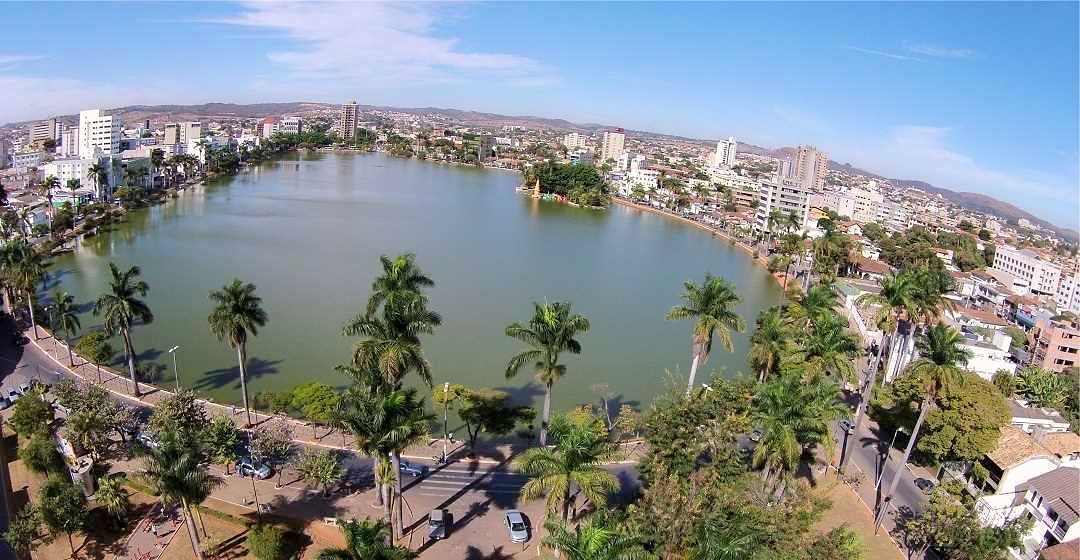
View on WikipediaSete Lagoas (meaning 'Seven Lagoons' in Portuguese) is a city in the Brazilian state of Minas Gerais. The municipal area is 537 km2 while the population was 241,835 in 2020.
Key Information


Geography
[edit]Location
[edit]Sete Lagoas is situated about 70 kilometres from Belo Horizonte, the capital of Minas Gerais. The BR 040 motorway connects Sete Lagoas with Belo Horizonte and the national capital Brasília. The altitude is 761 metres above sea level. It is surrounded by the following municipalities: Araçaí, Funilândia, Prudente de Morais, Capim Branco, Esmeraldas, Inhaúma, Paraopeba, and Caetanópolis.
Climate
[edit]According to data from the meteorological station of the municipality, the average temperature of the city between the years 1961 to 1990 was 20.9 °C.
The coldest month (July) had an average of 17.5 °C while the hottest month (February) had an average of 23.0 °C.
The four lowest temperature records at the Sete Lagoas meteorological station were as follows: 0.8 °C on July 18, 1926; 1.3 °C on October 31, 1942; 1.5 °C on June 26, 1937 and also on May 8, 1942.
| Climate data for Sete Lagoas (1981–2010) | |||||||||||||
|---|---|---|---|---|---|---|---|---|---|---|---|---|---|
| Month | Jan | Feb | Mar | Apr | May | Jun | Jul | Aug | Sep | Oct | Nov | Dec | Year |
| Mean daily maximum °C (°F) | 29.6 (85.3) |
30.2 (86.4) |
29.6 (85.3) |
28.8 (83.8) |
27.1 (80.8) |
26.4 (79.5) |
26.7 (80.1) |
28.2 (82.8) |
29.6 (85.3) |
30.1 (86.2) |
29.0 (84.2) |
28.7 (83.7) |
28.7 (83.7) |
| Daily mean °C (°F) | 23.3 (73.9) |
23.5 (74.3) |
23.1 (73.6) |
21.8 (71.2) |
19.4 (66.9) |
18.0 (64.4) |
18.1 (64.6) |
19.7 (67.5) |
21.7 (71.1) |
23.0 (73.4) |
22.9 (73.2) |
22.9 (73.2) |
21.5 (70.7) |
| Mean daily minimum °C (°F) | 18.9 (66.0) |
18.7 (65.7) |
18.5 (65.3) |
16.8 (62.2) |
14.0 (57.2) |
12.2 (54.0) |
12.0 (53.6) |
13.3 (55.9) |
15.7 (60.3) |
17.7 (63.9) |
18.5 (65.3) |
18.8 (65.8) |
16.3 (61.3) |
| Average precipitation mm (inches) | 260.6 (10.26) |
143.3 (5.64) |
168.7 (6.64) |
51.6 (2.03) |
27.8 (1.09) |
4.5 (0.18) |
6.1 (0.24) |
13.1 (0.52) |
39.5 (1.56) |
87.9 (3.46) |
210.4 (8.28) |
321.3 (12.65) |
1,334.8 (52.55) |
| Average precipitation days (≥ 1.0 mm) | 14 | 10 | 10 | 5 | 3 | 1 | 1 | 2 | 4 | 7 | 13 | 17 | 87 |
| Average relative humidity (%) | 74.8 | 71.9 | 74.3 | 71.9 | 70.7 | 68 | 62.5 | 56.8 | 55.9 | 61.6 | 71.8 | 76.6 | 68.1 |
| Mean monthly sunshine hours | 189.5 | 203.0 | 202.5 | 239.4 | 243.4 | 249.7 | 266.6 | 272.5 | 236.3 | 211.1 | 174.3 | 157.4 | 2,645.7 |
| Source: Instituto Nacional de Meteorologia[3] | |||||||||||||
Distances to other cities in Minas Gerais
[edit]- Montes Claros: 355 km.
- Uberaba: 521 km.
- Uberlândia: 582 km.
- Três Marias: 202 km.
- Governador Valadares: 383 km.
- Juiz de Fora: 331 km.[4]
- Funilândia: 28 km.
Statistical Micro-region of Sete Lagoas
[edit]Sete Lagoas is also a statistical micro-region with 20 municipalities: Araçaí, Baldim, Cachoeira da Prata, Caetanópolis, Capim Branco, Cordisburgo, Fortuna de Minas, Funilândia, Inhaúma, Jaboticatubas, Jequitibá, Maravilhas, Matozinhos, Papagaios, Paraopeba, Pequi, Prudente de Morais, Santana de Pirapama, Santana do Riacho, and Sete Lagoas. In 2000 the population of this area was 341,568 inhabitants in a total area of 8,560.40;km².[5]
Economy
[edit]The economy is based on services, industry and some agriculture. The GDP in 2005 was R$2 billion 800 million, with 1 billion 120 million from services, 1 billion 250 thousand from industry, and 17 million from agriculture. There were 824 transformation industries in 2005 with 15,000 workers. Heavy industry was important with 23 factories producing mainly pig iron.[6] There is an Iveco-Fiat plant, which opened in 2001, that produces trucks and vans.[7]
Health and education
[edit]In 2005 there were 51 public and 53 private health clinics. There were 5 hospitals with 315 beds. Educational needs were met by 86 primary schools (29 private), 30 middle schools (9 private), and 56 pre-primary schools (36 private).[6] In higher education there was the private Centro Universitario de Sete Lagoas, the private Faculdade Cenecista de Sete Lagoas, a campus of the private Faculdade Promove de Sete Lagoas, the private Faculdade Ciências da Vida - FCV, the private Faculdade Sete Lagoas de Minas Gerais - FSLMG, and the private Faculdade Setelagoana de Ciências Gerenciais - FASCIG. See Mundo Vestibular. The city also has a campus of the Universidade Federal de Sao João Del Rei where approximately 300 students are attending Food and Agronomic Engineering in a partnership with the Embrapa Maize and Sorghum.
History
[edit]Evidence of pre-Columbian presence has been found in the Gruta Rei do Mato (Cave of the Forest King).
From around 1700, colonists entered Minas Gerais in search of gold, gems and diamonds. Nowadays, the Santa Luzia quarter is unofficially still called "o garimpo" (meaning "the goldmine").
Between 1780 and 1867, the name 'Sete Lagoas' was used for several regional types of administrations. The municipality of Sete Lagoas was founded in 1867.
Although "Sete Lagoas" means "Seven Lakes", there are currently more than seven lakes in Sete Lagoas (10 within the urban perimeter, 17 in the municipality). Some were dug out while others became part of the town when the town expanded. There are, however, 7 'official' lakes according to a municipal law from 1989. These are: Lagoa da Boa Vista, Lagoa da Catarina, Lagoa da Chácara, Lagoa do Cercadinho, Lagoa José Felix, Lagoa do Matadouro and Lagoa Paulino.

Food
[edit]Food is an important element of the culture of Minas Gerais. In Sete Lagoas, two dishes can be found that are hardly found elsewhere: Galopé and Muchacho. Galopé is a dish of chicken (galo) and pork feet (pé de porco). Muchacho is also composed of chicken and pork but it also contains cheese.
Sports
[edit]Bela Vista Futebol Clube is one of 4 relevant football team in the city. Also is known for being the only football team from Sete Lagoas to tour over Europe in the 1959. Despite severe issues throughout the tour, the club reached some highlights scores in matches such as against Real Madrid in Santiago Bernabéu.
Democrata Futebol Clube is a football club based in Sete Lagoas. The club plays its home matches at the Arena do Jacaré ("Alligator Arena", so named because of Democrata's mascot; the official name is Joaquim Henrique Nogueira stadium).
Both teams used to play the traditional "sete-lagoano" derby being a very famous and known as the "Clássico dos sertões" ( Countryside's Derby ). An interesting fact about both was its old home arenas: it was only one block distance from each, which was an extra spice for the rivality. The old Democrata's Arena was demolished, but the original and glorious BV arena is still there.
In 2010 and 2011, Arena do Jacaré served as a home stadium for Atlético Mineiro, Cruzeiro and América-MG, as both Belo Horizonte stadia - Mineirão and Independência - were going through reforms.
Other smaller, but very competitive clubs are Ideal Sport Club, América Futebol Clube.
See also
[edit]References
[edit]- ^ IBGE 2020
- ^ "Archived copy" (PDF). United Nations Development Programme (UNDP). Archived from the original (PDF) on July 8, 2014. Retrieved August 1, 2013.
{{cite web}}: CS1 maint: archived copy as title (link) - ^ "Normais Climatológicas Do Brasil 1981–2010" (in Portuguese). Instituto Nacional de Meteorologia. Retrieved 21 May 2024.
- ^ Onde Fica
- ^ Citybrazil
- ^ a b IBGE
- ^ Informe Sergipe Archived 2011-07-06 at the Wayback Machine
External links
[edit]
 Sete Lagoas travel guide from Wikivoyage
- Official homepage (Portuguese)


| International | |
|---|---|
| National | |

Sete Lagoas
View on GrokipediaHistory
Etymology and Founding
The name Sete Lagoas translates to "Seven Lakes" in Portuguese and originates from the seven natural lakes identified by Portuguese bandeirantes exploring the region during the colonial gold rush in the 18th century. [7] Although the municipality actually contains more than seven lakes— with estimates indicating 10 within the urban area and up to 17 overall—the name has endured as a reference to these prominent features. The city is affectionately known as the "Cidade dos Sete Lagos Encantados" (City of the Seven Enchanted Lakes), evoking the legendary and mystical qualities attributed to these bodies of water in local folklore. [6] Its official motto, Ad Altiora Nata (Latin for "Born to Higher Things"), reflects the aspirations of a community situated in the elevated Brazilian Highlands. [8] Archaeological evidence points to pre-Columbian human activity in the region, particularly at the Gruta Rei do Mato cave near Sete Lagoas, where rock paintings dating from 4,000 to 6,000 years ago depict scenes of hunting, fishing, and fertility rituals, indicating early indigenous occupation. [9] The area's administrative history began to take shape in the late 18th century, with records showing a military presence as early as 1780, when Joaquim José da Silva Xavier (Tiradentes), a key figure in the Inconfidência Mineira conspiracy, commanded a colonial post in the vicinity during gold prospecting expeditions. [10] Formally, the district of Sete Lagoas was established on April 7, 1841, under Provincial Law No. 211, as part of the broader territorial organization of Minas Gerais. [11] The official founding of the municipality occurred on November 24, 1867, when Provincial Law No. 1.395 elevated the local arraial to the status of vila, detaching it administratively from the neighboring municipality of Santa Luzia and marking the beginning of its independent local governance. [12]Colonial and Early Development
The colonial history of Sete Lagoas is rooted in the broader gold rush that swept through Minas Gerais in the late 17th century, with the first European arrivals occurring around 1667 as part of the Bandeira led by Fernão Dias Paes Leme, known as the "Governor of the Emeralds," who was commissioned by the Portuguese crown to explore for precious metals and gems.[13] These bandeirantes, venturing from São Paulo settlements, traversed the region in search of gold, emeralds, and diamonds, marking the initial incursion into what would become Sete Lagoas territory. By 1700, João Leite da Silva Ortiz, a descendant of Fernão Dias and a prominent sertanista, had arrived in Minas Gerais, contributing to the early prospecting efforts that transformed the area from indigenous lands into a site of colonial exploitation.[13] Pre-colonial evidence indicates the presence of nomadic and peaceful indigenous tribes in the region, which later interacted with the arriving colonists through assimilation and intermarriage.[13] Early settlement patterns emerged from dissident groups within Fernão Dias's expedition, particularly following a rebellion led by his son José Dias in the early 1670s, after which expelled members constructed the first houses near the Ribeirão Matadouro in the várzea do João Corrêa plain.[13] The Santa Luzia quarter, known locally as "o garimpo," became a focal point for gold prospecting activities, symbolizing the informal mining operations that drove initial population growth.[13] Regional administration prior to official municipality status was managed through sesmarias, large land grants issued by the colonial government; for instance, in January 1711, João Leite da Silva Ortiz received the Sesmaria do Cercado, and on February 8, 1711, he was granted the Sesmaria of Sete Lagoas, though the latter's documentation was incomplete, leading him to soon sell it to Antonio Pinto de Magalhães, who confirmed the purchase noting João Leite's initial settlement there around 1700.[13] These grants facilitated organized settlement around key areas like the várzea dos Corrêa and Pereira da Cunha, integrating indigenous populations with Portuguese newcomers and establishing familial lineages that shaped the community's foundation.[13] Key events in the 18th century included the late 17th-century settlement by remnants of an expedition led by D. Rodrigo de Castelo Branco, who had been assassinated in the Sabará region around 1682, which bolstered the emerging village's population and adhered to colonial norms.[13] Throughout the century, the population grew steadily as families formed and infrastructure began to take shape, exemplified by the construction of the Casa Grande at Fazenda das Sete Lagoas, attributed to José Inocêncio Pereira, serving as an early administrative and residential hub.[13] In the 19th century, a pivotal development occurred in the 18th century with the building of the Capela de Santo Antônio das Sete Lagoas, which remains standing and represented a significant advancement in religious and communal infrastructure, reflecting the transition from rudimentary prospecting camps to a more structured settlement; it was elevated to paróquia status in 1841.[13][14] The foundation of Sete Lagoas itself traces back to this era of gold fever, with bandeirantes pushing into the sertões amid conflicts with wildlife and indigenous groups, laying the groundwork for urban expansion up to the late 19th century.[6]Modern Historical Events
In the 20th century, Sete Lagoas underwent significant urban expansion, particularly following the arrival of the Estrada de Ferro Central do Brasil railway in 1896, which spurred demographic growth and commercial development around the station area.[11] This momentum accelerated after 1949, when the urban footprint was initially concentrated within about 1 km of Lagoa Paulino in the city center, expanding eastward by 1965 due to the establishment of traditional industries like Itambé and textiles, as well as the Sidersete steel plant in 1958, marking the city's entry into Minas Gerais' metallurgical sector.[15] Between 1965 and 1972, the city extended approximately 0.5 km in multiple directions, with further northward growth from 1972 to 1989 and northeastward expansion from 1989 to 2010, including the development of the "Cidade de Deus" housing area in 2000, reflecting an average annual population growth rate of 2.44% that outpaced regional and state averages.[15] A key aspect of this urbanization involved the formal recognition and integration of the city's namesake lakes into its urban fabric. On August 11, 1989, Law No. 4,113 designated the seven principal lakes—Boa Vista, Catarina, Chácara, Cercadinho, José Félix, Matadouro, and Paulino—as official municipal landmarks, enhancing their role in local identity and tourism despite the existence of additional lakes in the region.[11] This was followed in 1991 by the creation of the Parque Náutico da Boa Vista, a recovery project that removed 13,000 truckloads of silted earth from the lake and added sports facilities and a beach, promoting urban leisure and environmental rehabilitation.[11] Industrial milestones in the late 20th century laid the groundwork for Sete Lagoas' modern economy, with the secondary sector's growth in the 1960s transforming socioeconomic structures and boosting commerce and services.[11] Entering the 21st century, the opening of the Fiat-Iveco plant in 1997 represented a pivotal event, establishing the city as a hub for automotive manufacturing and contributing to further urban sprawl in the northeast.[15] Similarly, the FPT Industrial plant inaugurated on November 25, 2000, began producing engines and has since manufactured over 725,000 units, solidifying the area's industrial base.[16] Post-2000 milestones included additional industrial and infrastructural advancements, such as the AmBev facility's establishment in 2008, which supported ongoing northeastward expansion, and environmentally, a major water supply project approved in 2008, funded by R$72.9 million from BNDES, aimed to draw from the Rio das Velhas, constructing 28 km of pipelines and a treatment station to deactivate 90% of artesian wells and address urban water needs.[11][15] These developments, building on colonial gold prospecting roots, underscore Sete Lagoas' transition to a modern industrial center.[11]Geography
Location and Topography
Sete Lagoas is a municipality in the central portion of Minas Gerais, Brazil, positioned approximately 70 kilometers northwest of the state capital, Belo Horizonte. This strategic location places it within a key transportation corridor, connected to Belo Horizonte and other regions via the BR-040 federal highway, which supports both passenger and freight movement in the area. The municipality forms part of the broader Metropolitan Region of Belo Horizonte, enhancing its integration into regional economic networks.[17][18] The city is situated in the Brazilian Highlands, with an average altitude of around 761 meters above sea level, though elevations in the municipality range from approximately 750 to 1,000 meters, declining generally from southwest to northeast. This positioning places it near the Espinhaço Mountains, contributing to its placement in a transitional zone of the highlands characterized by moderate relief and varied terrain. The topography is predominantly karstic, featuring limestone formations that influence local landforms and groundwater systems, with general elevation variations creating a landscape of hills and valleys.[19][20] Sete Lagoas is bordered by several neighboring municipalities, including Araçaí to the north, Funilândia and Prudente de Morais to the east, Capim Branco and Esmeraldas to the south, Inhaúma to the southwest, Paraopeba to the west, and Caetanópolis to the northwest. These boundaries define its administrative context within the Immediate Geographic Region of Sete Lagoas, fostering inter-municipal cooperation on shared geographical features and infrastructure. The karst-dominated topography not only shapes the local elevation profile but also contributes to the region's distinctive geological character without specific emphasis on individual formations.[21]Climate and Environmental Features
Sete Lagoas experiences a tropical savanna climate (Aw in the Köppen classification), characterized by warm temperatures year-round with a pronounced dry season in winter and higher precipitation during the summer months. According to historical data from the Instituto Nacional de Meteorologia (INMET) via the EMBRAPA climate station for the period 1961-1990, the average annual temperature is 20.9°C.[22] Monthly averages range from a low of 17.5°C in July, the coldest month, to a high of 22.9°C in February, the warmest.[22] These temperatures reflect the influence of the region's highland location, with occasional cooler nights during the dry winter period. Precipitation in Sete Lagoas totals an annual average of 1,271.8 mm based on 1961-1990 INMET records, with the majority occurring during the rainy season from October to March, accounting for about 89% of the yearly total.[22] The wettest month is December, with 256.7 mm, while the driest is June, receiving only 7.8 mm.[22] Relative humidity varies seasonally, with more humid conditions during the rainy period; data from 1980-2016 indicate that the most humid month is January, where muggy conditions occur on about 16.8 days, while July sees minimal humidity discomfort with only 0.1 such day.[23] Sunshine hours average around 12 hours per day annually, peaking at 13.3 hours in December and dipping to 11.0 hours in June, based on the same period's analysis.[23] Environmentally, Sete Lagoas is situated in a developed karst terrain, considered the largest karst city in Brazil, featuring limestone formations from the Sete Lagoas Formation that contribute to a complex hydrogeological system.[20] This karst area supports significant groundwater resources, with the aquifer serving as the primary source for public water supply, though overexploitation poses risks such as subsidence and reduced permeability at various scales.[24] The geological setting, including outcropping karst aquifers at the base of ridges and over basement horsts, influences local water dynamics and environmental vulnerability to pumping activities.[17]Lakes and Natural Formations
Sete Lagoas derives its name from seven prominent lakes that characterize the local landscape, officially recognized and giving the municipality its identity. These include Lagoa da Boa Vista, Lagoa da Catarina, Lagoa do Cercadinho, Lagoa da Chácara, Lagoa José Félix, Lagoa do Matadouro, and Lagoa Paulino.[25] While the city's moniker refers to these seven, the broader municipality and surrounding karst region feature a significantly larger number of lakes, with geospatial studies identifying 153 lakes in the Lagoa Santa Karst area over the past 35 years, many of which are within or near Sete Lagoas boundaries. Of these, 40 are perennial, maintaining water year-round, while 89 are intermittent, varying with seasonal rainfall, and 19 are newly formed; the lakes primarily originate from natural karst processes, such as dissolution in the limestone of the Sete Lagoas Formation, forming in depressions like sinkholes and uvalas, though some may have been influenced by urban expansion or human activity.[26] Among the notable natural formations is the Gruta Rei do Mato, a karst cave located within the municipality, renowned for its well-preserved speleothems including stalactites, stalagmites, rimstone dams, and columns up to 20 meters high. The cave spans 998 meters in total length, with 220 meters accessible via guided tours through three large chambers developed in an isolated limestone hill; it opened to the public in 1989 and is considered one of the best-decorated caves in Brazil, featuring unique helictites and structures like the "Poco dos Desejos" rimstone pool.[9] Adjacent to Gruta Rei do Mato is the smaller Grutinha cave, which contains pre-Columbian evidence including rock paintings dated 4,000 to 6,000 years old depicting hunting, fishing scenes, and fertility rituals, as well as paleontological remains such as the skeleton of Xenorrinotherium bahiense, an extinct animal from over 10,000 years ago, with a replica displayed in the main cave. These formations highlight the region's rich geological and prehistoric heritage tied to the karst aquifer system.[9]Demographics
Population and Density
As of the 2022 census conducted by the Brazilian Institute of Geography and Statistics (IBGE), the municipality of Sete Lagoas had a resident population of 227,397 inhabitants.[27] The population density at that time was 423.51 inhabitants per square kilometer, calculated over an area of 536.928 km².[27] Prior to the census, IBGE's 2020 estimate placed the population at 241,835, reflecting pre-census projections that accounted for ongoing demographic trends.[28] The demonym for residents of Sete Lagoas is "sete-lagoano." Historical census data from IBGE shows steady growth: in 2010, the population was 214,152; in 2000, it stood at 184,871; and in 1991, it was 144,014.[29][30] This represents an average annual growth rate of approximately 1.5% between 2000 and 2010, slowing slightly to about 0.5% from 2010 to 2022, based on census comparisons.[27] In the broader context of the Sete Lagoas micro-region, the 2000 population totaled 341,568 across an area of 8,560.40 km², highlighting the municipality's role as a population center within this administrative division. IBGE projections indicate continued modest expansion, estimating the population at 238,909 by 2025, which suggests an anticipated annual growth rate of around 1.7% from 2022 onward.[27] These trends underscore Sete Lagoas's position as a growing urban hub in Minas Gerais, with density levels that remain moderate compared to larger metropolitan areas in the state.Ethnic Composition and Human Development
The ethnic composition of Sete Lagoas reflects Brazil's broader demographic patterns, shaped by colonial-era Portuguese settlement, African enslavement during gold prospecting in the 18th century, and subsequent waves of European and internal migration. According to the 2022 Brazilian Census conducted by the Instituto Brasileiro de Geografia e Estatística (IBGE), the majority of the population self-identifies as parda (mixed-race), comprising 58.91% or 133,950 individuals, followed by branca (white) at 29.26% or 66,545 people, with the remaining portions identifying as preta (black), amarela (Asian), or indígena (indigenous).[31] This distribution underscores the historical intermixing of Indigenous, European, and African ancestries, particularly tied to the region's role in Minas Gerais' colonial mining economy, where enslaved Africans formed a significant labor force alongside Portuguese colonizers and later Italian and Lebanese immigrants drawn to industrial opportunities. In terms of human development, Sete Lagoas achieved a Municipal Human Development Index (IDHM) of 0.760 in 2010, classifying it in the high development category according to United Nations standards. This composite score breaks down into three key components: an income dimension (IDH-R) of 0.705, reflecting per capita earnings; an education dimension (IDH-E) of 0.840, indicating strong schooling access and quality; and a longevity dimension (IDH-L) of 0.742, based on life expectancy metrics.[32] These values position Sete Lagoas above the national average for the period, highlighting progress in socioeconomic indicators despite regional disparities in Minas Gerais.[33] Social indicators further illustrate the municipality's development profile, with a literacy rate of 97% among individuals aged 15 and older as reported in the 2022 Census, demonstrating high educational attainment influenced by public investments in schooling. Inequality measures, such as the Gini coefficient for household per capita income, stand at 0.40, indicating moderate income disparities compared to more unequal urban centers in Brazil, though challenges persist in addressing gaps between formal industrial workers and informal sectors.[34][35]Economy
Industrial Sector
The industrial sector forms the backbone of Sete Lagoas' economy, with a strong emphasis on heavy manufacturing, particularly in metallurgy and automotive production.[36] The municipality hosts a significant concentration of transformation industries, contributing substantially to regional employment and output through operations in steel-related activities and vehicle assembly.[37] Heavy industry in Sete Lagoas is dominated by pig iron production, with 22 operational plants as of 2022 contributing to the area's installed capacity of 241,900 metric tons per month.[37] These facilities, part of Minas Gerais' broader network of 51 pig iron plants across 19 municipalities, focus on basic, nodular, and foundry-grade pig iron, supporting both domestic steelmaking and exports.[37] Key producers include Metalsete Siderurgia, established in 1971 with blast furnaces dedicated to pig iron for foundries, and Siderúrgica Betser, which specializes in high-quality pig iron and iron alloys.[38][39] CSS Siderúrgica Setelagoana, incorporated in 2005, further exemplifies the sector's growth by producing pig iron as a raw material for steel manufacturing.[40] The automotive industry is another pillar, highlighted by the Iveco plant, which opened in 1997 in Sete Lagoas and manufactures models such as the Daily van, Tector, Hi-Road, and Hi-Way trucks.[41] Associated with this is the FPT Industrial facility, operational since November 2000, which has produced 725,000 engines by 2025, emphasizing advanced manufacturing for diesel and biofuel technologies.[42] These operations underscore the city's role in Latin America's industrial landscape, with a focus on safety, quality, and sustainability.[16] Post-2005 developments have seen expansions in industrial infrastructure, including the initiation of a circular economy pilot project in Sete Lagoas' industrial districts, aimed at integrating sustainable practices across manufacturing.[43] In 2025, Trevo Lácteos announced a R$100 million investment to modernize its food processing complex in the city, enhancing production capacity in the industrial food sector.[44] Additionally, the FPT plant's milestone celebrations highlight ongoing innovations in engine production aligned with decarbonization strategies.[45]Services, Agriculture, and Recent Developments
The services sector plays a significant role in the economy of Sete Lagoas, contributing 41.7% to the value added of the municipal PIB in recent years, supporting commerce, transportation, and public administration activities.[46] This sector has benefited from the city's position as a subregional commercial center, serving the surrounding agricultural areas through diverse retail and service offerings that enhance local trade and consumption.[46] Agriculture remains a minor component of the local economy, accounting for just 0.3% of the PIB value added, with production focused on crops such as corn and feijão in limited areas.[46] In 2005, the agricultural sector's contribution was estimated at R$17 million, reflecting its secondary status amid the dominance of industry and services.[47] Recent developments have shown robust economic growth, with the total municipal PIB reaching R$14.9 billion in 2023, driven by expansions in services and new investments, including over 1,000 company registrations in 2025 alone.[46] Between 2006 and 2021, nominal economic activity grew by approximately 348%, with formal employment reaching 82,956 jobs as of 2023, underscoring Sete Lagoas's evolving role as a dynamic hub in northern Minas Gerais.[46][27] In comparison to its 2005 total PIB of approximately R$2.8 billion, this represents substantial progress, though services have consistently complemented industrial strengths without overtaking them.[47]Government and Administration
Municipal Governance
Sete Lagoas operates under a municipal government structure typical of Brazilian municipalities, consisting of an executive branch led by the mayor (prefeito) and a legislative branch embodied by the City Council (Câmara Municipal). The mayor is elected by popular vote for a four-year term and is responsible for administering the city's policies, budget, and public services, while the City Council, composed of 19 councilors (vereadores) also elected for four-year terms, enacts local laws, oversees the executive, and represents community interests.[48] The city is divided into administrative quarters or districts, including the central urban area and peripheral neighborhoods such as Santa Luzia, which serves as a key administrative and historical district facilitating local governance and community services. These divisions help manage urban planning, public utilities, and citizen engagement across the municipality's 537 km² area. As of 2025, Douglas Melo of the PSD party serves as mayor, having been elected in the 2024 municipal elections with a focus on infrastructure and economic development; his administration follows a history of political shifts in Sete Lagoas.[49]Regional and Statistical Context
Sete Lagoas forms the core of the Immediate Geographic Region of Sete Lagoas, which is one of the five immediate geographic regions comprising the broader Intermediate Geographic Region of Belo Horizonte in the state of Minas Gerais.[50] This immediate region encompasses 19 municipalities and covers a total area of approximately 9,044 km², with an estimated population of 419,050 inhabitants as of 2021.[50] In terms of connectivity and regional integration, Sete Lagoas is strategically located about 70 km northwest of Belo Horizonte, facilitating its role within Minas Gerais' central-southeast economic corridor. Key road distances from Sete Lagoas include approximately 358 km to Montes Claros to the north and 323 km to Juiz de Fora to the southeast, underscoring its position as a linking hub in the state's transportation network.[51][52] Sete Lagoas plays a significant role in the economy and administration of Minas Gerais' central region, particularly as a prominent industrial center that accounts for 6.9% of total imports in the Belo Horizonte Metropolitan Region (RMBH) as of 2024, with key sectors including automotive manufacturing.[53] This positioning supports regional administrative frameworks, with local governance aligning closely with state-level policies for economic development in the area.Culture
Cuisine and Local Traditions
The cuisine of Sete Lagoas is deeply rooted in the traditional gastronomy of Minas Gerais, emphasizing hearty, flavor-rich dishes that utilize local ingredients such as beans, cheese, and meats, often prepared with slow-cooking methods reflective of colonial influences.[54] Common feijão-based meals, like feijão tropeiro—a stew of beans, manioc flour, bacon, and sausage—have been adapted locally to incorporate regional produce, highlighting the area's agricultural bounty and serving as staples in everyday home cooking.[55] Among the signature dishes of Sete Lagoas is galopé, a rustic preparation combining chicken and pork feet, slow-cooked for tenderness and typically enjoyed in family settings or at local eateries, which underscores its rarity outside the immediate Minas Gerais region.[56] In recent years, several local specialties have been officially recognized as intangible cultural heritage, including the pastel from Clebinho's Pastelaria, the grilled fish from Bar do Peixe, and the stuffed beef croquette from Bar Área Verde, promoting the preservation of these bar and restaurant icons that embody the city's culinary identity.[57] Other honored dishes, such as boneless traíra fish stew and pão com bola sandwich, further illustrate the diversity of street and casual fare tied to community gathering spots.[58] Daily traditions in Sete Lagoas are closely linked to its agricultural heritage and the surrounding lake environments, where residents often incorporate fresh produce from nearby farms and freshwater fish from the natural lagoons into routine meals, fostering a culture of sustainable, farm-to-table eating that sustains both family life and local markets.[59] This connection is evident in communal practices like preparing shared pots of bean stews using seasonal harvests, which reinforce social bonds in rural and urban neighborhoods alike.[54]Festivals and Artistic Heritage
Sete Lagoas hosts the annual Festival Nacional de Arte de Rua (FENAR), a prominent event that brings together numerous artists for street performances, exhibitions, and cultural activities, attracting approximately 20,000 attendees as in the 2025 edition.[60][61] Initially launched in cities including Sete Lagoas, the festival has expanded while emphasizing local artistic expression through free programming such as shows, debates, and formative actions.[60] In its 7th edition in 2025, FENAR dedicated a specific axis to Afro-Brazilian arts and knowledge, featuring spectacles and occupations that highlight Black art at the center of the program until November 23.[62] The event concluded with performances by artists like Mumuzinho, Lagum, and Catuá, alongside samba groups and DJ sets, all held in public spaces to foster community engagement.[63] The city also celebrates traditional June Festivals, known as Festas Juninas, which feature folk dances, music, and quadrilhas, reflecting rural Brazilian customs adapted to local traditions.[64] These events remain community-oriented rather than large-scale spectacles.[64] In terms of artistic heritage, Sete Lagoas has produced notable musicians who have gained national and international recognition. Paula Fernandes, a renowned Brazilian singer-songwriter born in the city on August 28, 1984, specializes in sertanejo and country pop genres, blending rock and MPB influences in her work.[65] Her career highlights include early albums and collaborations that have made her a prominent figure in Brazilian music, with polls recognizing her as one of the top artists in her field.[65] Similarly, baritone Samuel Ferreira, originating from Sete Lagoas, graduated in vocal performance from the Federal University of Minas Gerais and has performed internationally, contributing to the classical music scene.[66] Cultural institutions in Sete Lagoas support this heritage through initiatives like the Cimento Nacional Cultural Circuit, which sponsors local artists and provides platforms for showcasing work on a national scale.[60] These efforts, backed by state cultural incentive laws, help preserve and promote the city's artistic expressions, including visual arts and performing traditions unique to the region.[60]Sports
Football and Major Clubs
Football in Sete Lagoas is prominently represented by several historic clubs, with Bela Vista Futebol Clube and Democrata Futebol Clube standing out due to their longstanding rivalry and contributions to local sports culture. Bela Vista Futebol Clube, based in the city, gained international recognition through its ambitious 1958 European tour, during which the team played exhibition matches against prominent European sides.[67] A highlight of Bela Vista's tour was an exhibition match against Real Madrid at the Santiago Bernabéu Stadium in Madrid on August 7, 1958, which attracted a large crowd and showcased the club's daring spirit despite logistical challenges during the trip.[67] The tour involved encounters with over 20 teams across Europe, marking one of the most notable excursions by a Brazilian interior club at the time.[67] Democrata Futebol Clube, founded on July 14, 1914, in Sete Lagoas, holds the distinction of being one of the oldest clubs in the region, emerging from meetings at local gathering spots like Bar Chique and quickly establishing itself with early victories, such as a 4-1 win in its debut match on September 6, 1914.[68] The club has participated in various tournaments, including a notable excursion to Bahia in 1959 where it won a quadrangular in Ilhéus by defeating Vitória-BA 3-2 in the final.[68] The rivalry between Democrata and Bela Vista, known as the "Clássico dos Sertões," is a cornerstone of Sete Lagoas football, featuring intense local derbies that have captivated fans for decades. This matchup, often highlighting the competitive spirit of the region's countryside football tradition, has been a traditional fixture in the city's sporting calendar. Other notable clubs in Sete Lagoas include Ideal Sport Club, founded in 1948, and América Futebol Clube, established in 1984, which contribute to the vibrant local football scene through competitive participation in regional leagues.[69][70]Stadiums and Sporting Events
The primary sports facility in Sete Lagoas is the Estádio Joaquim Henrique Nogueira, commonly known as Arena do Jacaré, a football stadium with a capacity of approximately 20,000 spectators.[71] Inaugurated on January 28, 2006, it serves as the home ground for local club Democrata Sete Lagoas and has been utilized for various regional matches.[71] During the 2010-2011 period, while the Mineirão stadium in nearby Belo Horizonte underwent renovations for the 2014 FIFA World Cup, Arena do Jacaré hosted home games for major teams including Atlético Mineiro, Cruzeiro, and América-MG from Minas Gerais.[72] Notable matches included Cruzeiro's 6-1 victory over Atlético Mineiro on December 4, 2011, in the Brazilian Série A, and Atlético Mineiro's encounters with América-MG in the Campeonato Mineiro.[73][74] Post-2011, Arena do Jacaré has continued to host football events, such as matches in the Campeonato Mineiro and community tournaments, while also accommodating multi-sport gatherings.[75] For instance, in 2025, it hosted the "Desafio das Lendas" on August 16, a celebrity football challenge event aimed at promoting sports and community engagement.[76] Additionally, the stadium supported the Copa Aproximar in October 2025, a family-oriented event combining football with gastronomy, music, and charitable activities.[77] Beyond Arena do Jacaré, Sete Lagoas features other facilities for diverse sporting activities, particularly non-football events. The Complexo Esportivo da Lagoa da Boa Vista has emerged as a key venue for urban sports, hosting the Minas Urbano project in September 2025, which included free access to skateboarding, basketball, BMX, climbing, and football clinics from September 19 to 23.[78][79] The Ginásio Coberto Márcio Paulino supports indoor events, such as the 1° Festival Esportivo in 2022, which involved multiple age groups in activities like volleyball and futsal to promote physical activity across diverse publics.[80] These initiatives, often backed by the municipal government, highlight Sete Lagoas's growing emphasis on inclusive and community-driven sporting events post-2011.[81]Education and Health
Educational Institutions
Sete Lagoas hosts a variety of educational institutions, ranging from primary and secondary schools to higher education centers, contributing to a literacy rate of 97% among residents aged 15 and older as of the 2022 census.[34] The municipality's education system is supported by both public and private entities, with significant enrollment in basic education exceeding 30,000 students across local schools.[27] In higher education, the Universidade Estadual de Montes Claros (Unimontes) maintains a presence in Sete Lagoas through a distance learning pole (polo EAD).[82] Additionally, the Centro Universitário de Sete Lagoas (UNIFEMM), a private institution, provides degrees in business administration, law, and nursing, with an emphasis on vocational training aligned with the local industrial economy; it has expanded its offerings since 2015 to include distance learning options. Public higher education is further bolstered by the presence of the Instituto Federal do Triângulo de Minas Gerais (IFTM), which operates a campus focused on technical courses in mechanics and informatics.[83] At the primary and secondary levels, the municipal network includes over 50 schools managed by the Secretaria Municipal de Educação, with key institutions like the Escola Estadual Professor Cândido Azeredo and Colégio Estadual Dom Pedro II providing education to thousands of students; these schools have seen improvements in infrastructure through federal programs post-2010. Vocational training is prominent at centers such as the Serviço Nacional de Aprendizagem Industrial (SENAI) unit in Sete Lagoas, which offers courses in manufacturing and automation, training over 2,000 apprentices yearly to support the region's heavy industry sector. Recent developments include initiatives to reduce dropout rates and integrate digital learning tools amid the COVID-19 pandemic.Healthcare System and Facilities
Sete Lagoas maintains a robust network of healthcare facilities as part of the Sistema Único de Saúde (SUS), with a total of 614 registered health establishments according to the Cadastro Nacional de Estabelecimentos de Saúde (CNES). These include approximately 60 Unidades Básicas de Saúde (UBS) and Estratégias de Saúde da Família (ESF) units focused on primary care, about 150 ambulatory clinics providing specialized outpatient services, and 5 hospitals offering inpatient care.[84] The hospitals in Sete Lagoas comprise the public Hospital Municipal Monsenhor Flávio D'Amato (CNES 2109867), the philanthropic Hospital Nossa Senhora das Graças (CNES 2206528), the private Hospital Unimed Unidade Sete Lagoas (CNES 9937625), the temporary Hospital de Campanha COVID-19 (CNES 0272957) established during the pandemic, and the Hospital Libertae Medical Center (CNES 7663285). Recent CNES data indicate varying bed capacities across these facilities, with a total of around 100 clinical beds and 23 surgical beds reported for general categories, though comprehensive totals for all specialties exceed 300 when including ICU and other units.[85][86] Public health initiatives in Sete Lagoas emphasize primary prevention and vaccination, including the "Vacina Mais Minas" project launched by the state in 2023 to boost immunization coverage amid post-pandemic declines. These efforts contribute to the municipality's health dimension of the Índice de Desenvolvimento Humano Municipal (IDHM), with a longevity index of 0.840 reflecting improved life expectancy metrics aligned with national averages.[87][88] Post-2020, significant improvements include ongoing construction of the Hospital Regional de Sete Lagoas, authorized for municipal operation in 2025 and slated to add nearly 200 beds (including 50 ICU beds) by 2026, addressing regional capacity gaps exposed by the COVID-19 crisis. However, challenges persist, such as low vaccination coverage rates and elevated maternal mortality indicators, prompting local conferences in 2025 to discuss enhancements in primary care regulation and worker health support.[89][90][91][92]Notable People
Sports Figures
Sete Lagoas has produced several notable athletes who have achieved recognition at national and international levels, particularly in football and track and field. Among them, Marcos Rocha stands out as a prominent footballer born on December 11, 1988, in the city, who developed his skills through local youth setups before rising to prominence. Rocha, a right-back known for his defensive solidity and contributions to major Brazilian clubs, began his professional career with Atlético Mineiro after joining their academy in 2005 from hometown side Bela Vista FC, eventually earning two caps for the Brazilian national team.[93][94][95] Another key figure in football from Sete Lagoas is Thiago Heleno, born on September 17, 1988, who emerged from Cruzeiro's youth system and debuted in Série A in 2006. As a center-back, Heleno gained acclaim for his tenure at Athletico Paranaense, where he contributed to multiple domestic titles, including the 2018 Copa do Brasil, and also had over 300 appearances in Brazil's top flight, showcasing his aerial prowess and leadership on the field.[96][97] In athletics, Franck Caldeira de Almeida, born on February 6, 1983, in Sete Lagoas, has left a mark in long-distance running. Specializing in the marathon, Almeida secured the gold medal at the 2007 Pan American Games in Rio de Janeiro with a time of 2:14:03, marking a significant achievement for Brazilian endurance running. He also participated in the 2008 Beijing Olympics but did not finish the marathon, and holds a personal best of 2:12:03 in the marathon, underscoring his dedication to the sport.[98][99][100] Esmeralda de Jesus Freitas Garcia Silami, born on February 16, 1959, in Sete Lagoas, represents an earlier generation of track and field excellence, competing in sprints, long jump, and triple jump. She participated in the 1984 Los Angeles Olympics in sprints and long jump, and set a non-ratified world record in the triple jump of 13.68 meters in 1986. Silami's achievements also include medals at the Pan American Games, highlighting her versatility and impact on women's athletics in Brazil.[101][102][103] Emerging talent Kauã Diniz, a midfielder born on March 7, 2004, in Sete Lagoas, is gaining attention in Brazilian football through his performances with América Mineiro. Standing at 1.84 meters, Diniz has featured in CONMEBOL Libertadores matches and is noted for his defensive midfield role, contributing to the club's campaigns in Série A since his youth promotion.[104][105][106]Artists, Musicians, and Public Figures
Sete Lagoas has produced several notable figures in the arts, music, and public life, contributing to Brazil's cultural and religious landscape. Among musicians, Paula Fernandes stands out as a prominent sertanejo and country singer-songwriter. Born in Sete Lagoas on August 28, 1984, she began her career at age eight and released her self-titled debut album at ten, blending traditional Brazilian genres with pop influences to achieve national and international success.[107] Her work has garnered millions of streams and collaborations with global artists, establishing her as one of Minas Gerais' most recognized voices in contemporary music.[108] In the realm of gospel music, Stella Laura has emerged as a rising star. Born in Sete Lagoas in 1999, she discovered her passion for singing at age three within a faith-centered family environment, later specializing in Christian music collaborations.[109] Her songs, such as "Deus Nao Vai Parar," reflect themes of spirituality and resilience, earning her a dedicated following through platforms like Spotify and live performances across Brazil.[110] Classical music is represented by baritone Samuel Ferreira, a native of Sete Lagoas who began his musical training at age 12. Graduating in vocal performance from the Federal University of Minas Gerais, he has performed internationally in operas and concerts, winning awards for his interpretations of roles in works by Verdi and Puccini.[66] His career highlights include appearances with major orchestras, showcasing the operatic talent nurtured in the region.[111] On the artistic front, comedian Mauro Faccio Gonçalves, better known as Zacarias, brought humor to Brazilian television and film. Born in Sete Lagoas on January 18, 1934, he rose to fame as a member of the iconic comedy group Os Trapalhões from 1976 to 1990, entertaining generations with slapstick routines and character portrayals.[112] His contributions to popular culture remain influential, with his legacy honored through tributes in his hometown.[113] As a public figure in religious leadership, Dom Mosé João Pontelo has served prominently in the Catholic Church. Born in Sete Lagoas on September 18, 1942, he was ordained a priest in 1967 and later became Bishop of Cruzeiro do Sul from 2001 to 2018, focusing on missionary work in the Amazon region.[114] His emeritus status underscores his enduring impact on ecclesiastical administration and community outreach in Brazil.[115]References
- https://en.wikivoyage.org/wiki/Sete_Lagoas