Hubbry Logo
Iyabo ObasanjoIyabo ObasanjoMain
Open search
Iyabo Obasanjo
Community hub
Iyabo Obasanjo
logo
8 pages, 0 posts
0 subscribers
Be the first to start a discussion here.
Iyabo Obasanjo
Iyabo Obasanjo
from Wikipedia

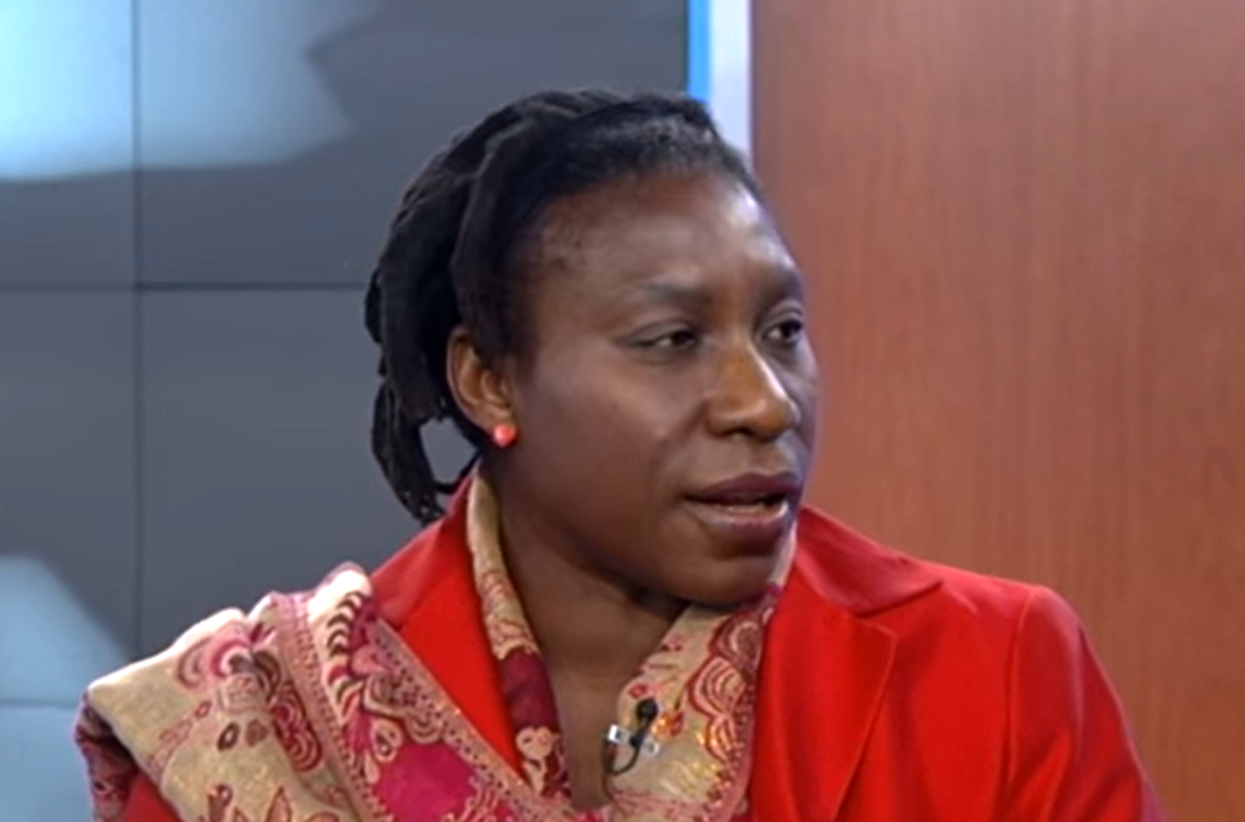
Iyabo ObasanjoListen (born 27 April 1967) is a Nigerian academic, epidemiologist, and former senator. She is the daughter of former president of Nigeria Olusegun Obasanjo and his wife Oluremi Obasanjo.[1][2]

Key Information

Early life and education

[edit]

Obasanjo attended Corona School in Victoria Island, Lagos, Capital School in Kaduna, and Queen's College in Lagos. She obtained a degree in veterinary medicine from the University of Ibadan in 1988, a master's degree in epidemiology from University of California, Davis in Davis, California, United States, in 1990, and a PhD in the same subject from Cornell University in Ithaca, New York, in 1994.[3]

Political career

[edit]

Before her senatorial election, Obasanjo was Ogun State Commissioner for Health.[4] She was elected as a Nigerian Senator representing Ogun Central Senatorial District of Ogun State in April 2007.[4] She ran for re-election April 2011 on the PDP platform, but was defeated by Olugbenga Onaolapo Obadara of the Action Congress of Nigeria (ACN), who gained 102,389 votes to Obasanjo Bello's 56,312.[5][6][7]

Senate career

[edit]

Obasanjo was elected to the Senate on 28 April 2007 on a People's Democratic Party (PDP) platform; her Action Congress (AC) opponent Remilekun Bakare challenged this outcome, but the Ogun State Election Petition Tribunal upheld her victory.[8]

She was the Chairman of the Senate's Health Committee, and a member of the Security & Intelligence, Land Transport, Science & Technology, Education, National Planning, and Inter-Parliamentary Committees.[4] She lost her seat during the National Assembly Elections on 9 April 2011.

Her political reign finally came to a halt in 2015 when she was ‘crushed’ by Senator Gbenga Obadara who snatched the Ogun Central Senatorial district from her.[9][10]

Assassination attempt

[edit]

In April 2003, on the day of the general elections her car was shot at on Ifo Road in Ogun State. Although she was not in the car, 3 adults and 2 children in the car died. The perpetuators were never caught.[11][12]

EFCC investigation

[edit]

In April 2008, Obasanjo came under investigation by Nigeria's Economic and Financial Crimes Commission (EFCC) due to the investigations involving the former minister of health, Prof. Adenike Grange, and the minister of state for health, Gabriel Aduku, for the embezzlement of public funds.[13] The ministry at the end of the financial year did not return all unspent funds to the government coffers. The amount was 300 million Naira, which was allegedly distributed among the minister, her minister of state and top civil servants on the Senate and House health committee she chairs. The minister and her deputy were forced to resign after returning their share of the money; they were later arrested and posted bail. Obasanjo refused to return her portion of this money, 10 million naira. She claimed that the nine members of her committee "lobbied" for funds from the ministry they oversaw. She maintained this money was spent on a conference on capacity building some members of the health committee attended in Ghana. She has so far refused to appear before the EFCC. Although summoned, along with the minister and other civil servants, she refused to appear in court. A week later a high drama ensued when officials of the EFCC tried to arrest her at her home in the Maitama district of Abuja city, after several simultaneous stake outs by law enforcement officials that had her jumping over her fence to evade arrest by Nigerian law enforcement officers. In 2009 the case was thrown out of the High Court in Abuja as having no merit.[14][15][16]

Obasanjo described the allegation as "blackmail", and said she was being targeted because she was the daughter of the former president.[17]

Post-senate career

[edit]

In 2018, a letter from Obasanjo to her father in 2013 resurfaced following a statement sent by her father to President Muhammadu Buhari, which she blamed on supporters of the Buhari administration. She also urged the Buhari administration to heed her father's advice and not seek re-election.[7][18]

Academic career

[edit]

She worked in Clinical Research in the US before returning to Nigeria in 2003. she was a Fellow and for 2013[19] a Senior Fellow at Harvard's Advanced Leadership Initiative. She is currently an assistant professor at the College of William & Mary Department of Health Sciences.[20] Her noted works include:

  • Olowonyo, MT; MA Adekanmbi and Iyabo Obasanjo-Bello (2004). "Findings on the Use of Antenatal Facilities in Ogun State". Nigerian Medical Practitioner. 45 (5): 68–71. Retrieved 22 December 2007.
  • Olowonyo, MT; S Oshin and Iyabo Obasanjo-Bello (2006). "Some factors associated with low birthweight in Ogun State, Nigeria". Nigerian Medical Practitioner. 49 (6): 154–157. doi:10.4314/nmp.v49i6.28823. Retrieved 22 December 2007.[21]

Personal life

[edit]

Obasanjo married Oluwafolajimi Akeem Bello in September 1999. The couple separated after Obasanjo filed for divorce on 19 May 2003. They both have one child; Jimi Bello born on 1 January 2000 in Chatham County, North Carolina.[22]

References

[edit]
Revisions and contributorsEdit on WikipediaRead on Wikipedia
from Grokipedia

Iyabo Obasanjo (born 27 April 1967) is a Nigerian epidemiologist, public health expert, and former politician, best known for her tenure as a senator representing Ogun Central Senatorial District in the Nigerian National Assembly from 2007 to 2011. As the daughter of former Nigerian president Olusegun Obasanjo, she previously served as Commissioner for Health in Ogun State from 2003 to 2007, where she focused on healthcare administration and policy implementation. Obasanjo holds a PhD in epidemiology from Cornell University and has pursued an academic career, currently as an associate professor at the University of Maryland, Baltimore, with research emphasizing the intersections of governance, corruption, and health outcomes in developing nations.
During her senatorial term, Obasanjo chaired the Senate Committee on Health, overseeing national healthcare budgeting and preventive health initiatives amid Nigeria's challenges with disease outbreaks and infrastructure deficits. Her political involvement drew significant scrutiny due to her familial ties, culminating in a widely circulated open letter to her father in December 2013, in which she accused him of authoritarian tendencies, hypocrisy in anti-corruption stances, and personal failings, reflecting deep familial and ideological rifts. This document, rooted in firsthand observations, highlighted tensions between inherited political legacy and independent critique, though it sparked debates on its motivations amid Nigeria's polarized elite dynamics. Transitioning to academia post-politics, Obasanjo has contributed to global discussions on public health governance, prioritizing empirical analysis over partisan narratives.

Early life and education

Birth and upbringing

Iyabo Obasanjo was born on April 27, 1967, in Lagos, Nigeria, as the eldest child of Olusegun Obasanjo, a colonel in the Nigerian Army at the time, and his first wife, Oluremi Obasanjo. Her early childhood unfolded within a military family environment amid Nigeria's post-independence instability, including the 1966 military coups and the onset of ethnic tensions that presaged the Biafran War. Olusegun Obasanjo's rising military role exposed the household to the rigors of army life, with frequent relocations and the overarching influence of national political turbulence on family dynamics. The family faced significant disruptions when Olusegun and Oluremi Obasanjo separated, culminating in divorce in 1976 while Iyabo was nine years old; Oluremi later described in her autobiography the marital strains, including domestic conflicts and Olusegun's extramarital relationships that fostered a polygamous household structure.

Formal education and early influences

Iyabo Obasanjo attended primary school at Corona School in Victoria Island, Lagos, followed by Capital School in Kaduna. She completed her secondary education at Queen's College in Lagos, a prestigious institution known for rigorous academic standards. In 1988, Obasanjo earned a Doctor of Veterinary Medicine (DVM) from the University of Ibadan, Nigeria's premier institution for veterinary sciences at the time. This undergraduate qualification laid the foundation for her subsequent focus on public health and disease prevention, reflecting an early orientation toward applied sciences amid Nigeria's evolving challenges with infectious diseases and veterinary needs in the post-colonial era. Pursuing advanced studies abroad, she obtained a Master of Preventive Veterinary Medicine (MPVM) from the University of California, Davis, in 1992, emphasizing epidemiological methods and population health. She then completed a PhD in Epidemiology from Cornell University in 1995, with research centered on zoonotic diseases and surveillance systems. These graduate achievements were facilitated by her family's prominence, which provided access to international opportunities during periods of domestic political turbulence, including military rule in Nigeria that disrupted local academic and economic stability. Early intellectual development was shaped by a familial ethos prioritizing education as a means of self-reliance, instilled by her father Olusegun Obasanjo, who himself advanced through military and scholarly pursuits despite systemic barriers in post-independence Nigeria. This influence directed her toward interdisciplinary fields bridging veterinary practice and public policy, fostering a commitment to evidence-based interventions in health governance.

Pre-political professional career

Initial work in the United States

Following her doctoral studies, Iyabo Obasanjo held several professional positions in the United States during the mid-to-late 1990s, focusing on clinical research, statistical analysis, and epidemiological applications in health sciences. From 1994 to 1996, she served as a Research Fellow in the Department of Comparative Medicine at Wake Forest University School of Medicine in Winston-Salem, North Carolina, conducting research on non-human primates, authoring grant proposals and scientific papers, and overseeing the care of research animals. In January 1997, Obasanjo joined Trilogy Consulting Corp as a Statistical Consultant in Research Triangle Park, North Carolina, a role she held until November 1997; there, she programmed statistical analyses using SAS software and provided guidance on suitable statistical methods for research projects. Later that year, from 1997 to 1998, she worked as a Clinical Research Scientist at Glaxo-Wellcome, also in Research Triangle Park, managing Phase IV post-market studies on HIV treatments, conducting literature reviews on off-label drug usage, and recommending areas for further post-market surveillance research. These roles emphasized empirical data handling and project management in epidemiology-related fields, fostering skills in evidence-based public health analysis during a period of professional autonomy away from familial political ties in Nigeria.

Return to Nigeria and health sector entry

After over a decade working as a clinical research project manager in the United States during the 1990s, Iyabo Obasanjo returned to Nigeria in 2003. This relocation occurred amid her father Olusegun Obasanjo's presidency (1999–2007), which created avenues for her to apply her professional skills toward national priorities, including public health improvement. Obasanjo's background, encompassing a Doctor of Veterinary Medicine from the University of Ibadan (1988) and a Master's in Preventive Veterinary Medicine from the University of California, Davis (1992), along with subsequent training in epidemiology, positioned her to tackle Nigeria's pressing health issues such as infectious disease control and healthcare system inefficiencies. Her U.S. experience in research project management emphasized evidence-based approaches to public health, which she sought to integrate into domestic efforts upon repatriation. Prior to formal administrative roles, Obasanjo engaged in preliminary health sector activities in Ogun State, including consultations on disease prevention strategies and leveraging international best practices to inform local initiatives. This preparatory phase bridged her international expertise with Nigeria's contextual needs, facilitating her transition into public health leadership without immediate immersion in governance execution.

Political career

Appointment as Ogun State Health Commissioner

Iyabo Obasanjo was appointed as Commissioner for Health in Ogun State in July 2003 by Governor Gbenga Daniel, serving until 2007. Prior to this role, she had worked in clinical research project management in the United States and provided consultancy services for Therapy Edge, a U.S.-based firm. She publicly denied that her father, then-President Olusegun Obasanjo, played a role in securing the appointment, attributing it instead to her professional qualifications in veterinary medicine and epidemiology. In her position, Obasanjo prioritized public health reforms, including the eradication of Guinea worm disease within the state through targeted eradication campaigns. She also advanced vaccination drives and preventive health programs, contributing to expanded immunization coverage and strengthened hospital services amid resource limitations typical of subnational governments in Nigeria. These efforts aligned with broader state objectives under Daniel's administration to improve healthcare infrastructure, such as equipment procurement for facilities, though specific outcomes like increased service accessibility were constrained by fiscal realities in a developing economy. Early in her tenure, Obasanjo encountered criticisms regarding procurement practices in healthcare equipment acquisition, with some stakeholders alleging the purchase of used medical devices as a cost-saving measure that compromised quality. Defenders, including administration supporters, countered that such decisions reflected pragmatic responses to budget shortfalls, prioritizing affordability over ideal specifications to sustain service delivery in underfunded public health systems. These debates highlighted tensions between fiscal prudence and standards in resource-scarce settings, though no formal investigations into her state-level procurement occurred during her service.

Election to the Senate

Iyabo Obasanjo-Bello secured the senatorial nomination for Ogun Central Senatorial District through the People's Democratic Party (PDP) primaries in 2007, amid factional divisions within the party where her slate prevailed unopposed in a parallel process. She won the general election on April 28, 2007, defeating Remilekun Bakare of the Action Congress (AC), reflecting the PDP's dominance in Ogun State politics at the time, which relied on established patronage networks and incumbency advantages from her father's prior presidency. Her victory faced legal challenges, but the Election Petition Tribunal in Abeokuta upheld it on December 11, 2007, confirming her mandate for the 2007–2011 term. As a senator, Obasanjo-Bello was appointed chair of the Senate Committee on Health in July 2007, leveraging her background in veterinary medicine and epidemiology to oversee national health policy, budget allocations, and ministry performance. In this role, she contributed to debates on healthcare funding and infrastructure, including scrutiny of federal health expenditures during a period of oil revenue windfalls that enabled expanded programs but also raised efficiency concerns. She also served on committees related to science, technology, and education, where she advocated for investments in medical research and public health training, aligning with Nigeria's post-2007 efforts to address disease outbreaks and maternal mortality through legislative oversight rather than direct funding. Her tenure emphasized evidence-based policy inputs, drawing on empirical data from epidemiological studies to inform bills on health sector reforms, though specific legislative outputs were constrained by the Senate's collective dynamics and executive dominance in Nigeria's presidential system.

Assassination attempt

On April 20, 2003, during Nigeria's general elections, gunmen ambushed a vehicle from the convoy of Iyabo Obasanjo, a senator representing Ogun Central, on Ifo Road in Ogun State. The targeted sport utility vehicle, believed to be carrying Obasanjo, contained instead her driver, a police orderly providing security, and two children aged 10 and 14 who were passengers. Obasanjo escaped injury because she had switched to a different vehicle moments before the attack, a decision prompted by unspecified security concerns. The assault resulted in five fatalities, including the driver, the police orderly—who was shot in the head despite wearing a bulletproof vest—and the two children, with assailants firing indiscriminately at the vehicle before fleeing. Police investigations led to arrests, including that of armed robber Amani Tidjani, who was implicated in accosting the convoy, though some suspects reportedly confessed only to secondary acts like shooting the guard and looting nearby properties without identifying the primary orchestrators. Perpetrators remained at large, with no conclusive attribution to specific actors despite probes into potential links with Ogun State's gubernatorial rivalries, where Obasanjo's family prominence as daughter of President Olusegun Obasanjo heightened her visibility amid tense polls between the ruling People's Democratic Party and opposition contenders. This incident exemplified the widespread electoral violence in Nigeria's 2003 polls, which Human Rights Watch documented as claiming scores of lives nationwide through targeted attacks on politicians and their associates, often tied to disputes over governorships and legislative seats without effective accountability mechanisms. Empirical patterns of such risks to public figures underscored vulnerabilities in Ogun State, where pre-election clashes and post-voting reprisals were reported, though direct causal evidence for Obasanjo's attack stayed limited to circumstantial political context rather than proven conspiracies.

EFCC investigation and corruption allegations

In December 2007, the (EFCC) began investigating Iyabo Obasanjo-Bello, then a senator and former for , following a from Austrian medical firm regarding alleged in contracts worth approximately N3.5 billion awarded during her tenure as from 2003 to 2005. The accused her of corrupt practices, including manipulation of processes for , prompting EFCC questioning and of related expenditures. The probe expanded in early 2008 to encompass her role as chair of the Senate Committee on Health, where she faced charges of conspiracy and retaining proceeds of crime involving N10 million (about $85,000–$100,000) in unspent funds from a N300 million health ministry budget allocation intended for oversight activities. Obasanjo-Bello was declared wanted by the EFCC in April 2008 after evading summons, going into hiding amid claims from her supporters that the investigation represented political retaliation by the incoming Umaru Yar'Adua administration against allies of her father, former President Olusegun Obasanjo, in the wake of PDP internal power shifts. She surrendered to authorities in May 2008, facing a 56-count indictment alongside former health ministers and civil servants for defrauding health sector budgets. Defenses from Obasanjo-Bello and Senate colleagues emphasized procedural legitimacy of the funds as committee allowances, with the Senate Ethics Committee clearing her of direct wrongdoing in the N300 million allocation, attributing issues to ministry-level irregularities rather than senatorial malfeasance. No convictions resulted from the charges, consistent with a pattern of abandoned high-profile EFCC cases from the Obasanjo era under subsequent administrations, highlighting institutional challenges in sustaining prosecutions amid political interference and selective enforcement. While the absence of judicial outcomes precludes proven guilt, the episode underscores vulnerabilities in Nigeria's anti-corruption framework, where probes often serve partisan ends without addressing underlying nepotistic appointments in state roles, as Obasanjo-Bello's positions benefited from familial influence during her father's presidency.

Post-Senate political activities

Following her defeat in the April 2011 senatorial election for Ogun Central District on the People's Democratic Party (PDP) platform, Iyabo Obasanjo disengaged from active partisan politics. This retreat aligned with broader PDP turmoil, including electoral disputes and leadership rifts that eroded the party's dominance after 2011, contributing to its eventual loss of power in 2015. Obasanjo offered limited public commentary on Nigerian politics thereafter, eschewing endorsements for major elections such as those in 2015, 2019, or 2023. In a November 2016 interview, she critiqued the country's reliance on "old ideas" in governance, highlighting inefficiencies in the patronage-driven system that perpetuated stagnation despite resource abundance. Such remarks underscored personal disillusionment with entrenched political practices, though she pursued no formal roles or campaigns. Her political reappearances remained minimal and non-partisan, with no verified involvement in electoral activities or party restructuring by 2023. A rare public sighting in December 2023 at a private event in Lagos marked her low-profile status, distant from the factional PDP dynamics or opposition maneuvers that defined the period. This shift signaled a deliberate pivot away from Nigeria's volatile patronage networks toward private endeavors.

Academic and research career

Advanced degrees and academic positions

Obasanjo obtained a Master of Preventive Veterinary Medicine from the University of California, Davis, in 1992, followed by a PhD in Epidemiology from Cornell University in 1995. After her tenure in the Nigerian Senate ended in 2007, she pursued advanced academic engagements, including a fellowship in Harvard University's Advanced Leadership Initiative in 2012 and a senior fellowship there in 2013. She also completed coursework in leadership and writing at Harvard institutions during this period. In 2016, Obasanjo joined the College of William & Mary as the Thomas Bahnson and Anne Bassett Stanley Visiting Professor in Global Health, serving until June 2017. She was appointed Assistant Professor in the Department of Kinesiology and Health Sciences at William & Mary in August 2017, advancing to tenured Associate Professor of Public Health, where she became the institution's only faculty member with a PhD in Epidemiology. Obasanjo has also held the position of Associate Professor at the University of Maryland School of Graduate Studies.

Contributions to public health and epidemiology

Obasanjo's epidemiological research emphasizes data-driven analyses of disease burdens in low-resource settings, particularly in Africa. In a 2023 study published in Global Health, Epidemiology and Genomics, she examined spatiotemporal patterns of COVID-19 cases and deaths across 54 African countries from March 2020 to December 2021, identifying low education levels and high unemployment rates as key correlates of higher mortality, independent of case incidence. This work highlighted the limitations of isolated pandemic interventions, advocating instead for integrated socioeconomic and health system strengthening to address underlying vulnerabilities. Her contributions extend to evaluating public health workforce dynamics, including a 2023 qualitative study on community health workers' roles, motivations, and perceptions during health crises in Nigeria. Co-authored with Alison Scott and others, the research utilized photovoice methods in Kaduna, Kwara, and Ogun States to document frontline experiences amid COVID-19, revealing gaps in training, resources, and psychological support that hinder effective outbreak response in decentralized systems. These findings underscore the value of localized, community-embedded strategies over top-down models often promoted by international bodies. Obasanjo has also critiqued idealized global health frameworks, arguing in policy analyses that Africa's relatively muted COVID-19 impact stemmed from demographic factors like younger populations and prior immunity from endemic diseases, rather than advanced surveillance alone. In a 2020 Diplomatic Courier piece and related commentary, she stressed that sustainable pandemic resilience requires bolstering routine health infrastructure—such as primary care access and vaccination coverage—over reactive, high-cost measures mismatched to resource constraints. Her veterinary epidemiology background informs zoonotic risk assessments, fostering US-Nigeria collaborations on animal-human disease interfaces, though empirical outputs prioritize pragmatic reforms grounded in local data.

Controversies and public disputes

Open letter to Olusegun Obasanjo

On December 16, 2013, Iyabo Obasanjo-Bello, daughter of former Nigerian President Olusegun Obasanjo, released an 11-page open letter addressed to her father, amid escalating political friction following his own public missive criticizing incumbent President Goodluck Jonathan's administration. In the letter, Iyabo leveled severe personal and political accusations, portraying Obasanjo as a "liar, manipulator, [and] two-faced hypocrite" whose actions exemplified hypocrisy in preaching moral rectitude while associating with individuals of questionable character. She claimed his interventions in the People's Democratic Party (PDP) were ego-driven, exacerbating internal divisions and prioritizing personal influence over party unity, such as through maneuvers that fragmented opposition to his preferred outcomes. Iyabo explicitly condemned Obasanjo's pursuit of a third presidential term during his 1999–2007 tenure, recounting a 2007 confrontation where she challenged him directly on the agenda, which she described as a manifestation of unchecked power lust that undermined democratic norms. On a personal level, she alleged familial neglect and cruelty, including abandonment of children and grandchildren, failure to make provisions for his family during his 1999 inauguration, and a pattern of maltreatment toward women that fostered an environment tolerant only of low-esteem associates. These claims painted a picture of a domineering figure whose private failings mirrored broader authoritarian impulses in Nigerian post-colonial politics, where elite accountability was subordinated to individual dominance. Obasanjo did not issue a detailed public rebuttal at the time, though his family members and aides dismissed the letter as a forgery designed to tarnish his reputation, with some attributing it to political inducements linked to Jonathan's camp. Iyabo initially disavowed authorship via social media, labeling it "malicious lies," but subsequently confirmed the letter's authenticity in interviews, insisting it stemmed from irreconcilable personal disillusionment rather than political orchestration and vowing no further communication with her father. The exchange highlighted entrenched familial power dynamics within Nigeria's political class, where public airing of grievances exposed tensions between paternal authority and demands for transparency in leadership legacies.

Family and personal criticisms

In her December 16, 2013, open letter to Olusegun Obasanjo, Iyabo detailed allegations of paternal neglect, stating that her father had failed to communicate with several of his children for five years and had minimal contact with many grandchildren, whose exact number she questioned as between 19 and 21 children total. She portrayed family interactions as marked by disrespect, with children treated harshly except for those who manipulated him, and cited a lack of support during his imprisonment period, where the family bore emotional and practical burdens without reciprocal benefits. Iyabo attributed relational strains to the impacts of her father's polygamous household, describing her mother Oluremi—his first wife—as a "long-suffering" figure who raised her in Yoruba traditions amid implied hardships from competing familial loyalties and resource divisions. She referenced Obasanjo's "legendary reputation" for mistreating women, suggesting gender-based biases in family dynamics that prioritized certain offspring, such as those of his late daughter Stella, over others during key events like his 1999 inauguration. Obasanjo dismissed the letter in a 2014 statement, claiming Iyabo was politically induced to author it as a "dirty job," and linked her grievances to inherent character issues compounded by her mother's influence, without directly addressing the specific family allegations. Initial family responses labeled the letter a forgery intended to discredit Obasanjo, though Iyabo neither confirmed nor denied authorship publicly. These personal claims reflect patterns of intra-family discord in polygamous structures, where uneven parental investment and authority imbalances foster resentment, as evidenced by Obasanjo's documented multiple wives and divided progeny without mechanisms for equitable resolution. Critics of Iyabo's narrative, however, point to her documented self-reliance in obtaining a veterinary doctorate and pursuing independent professional paths as mitigating against total familial dependency, suggesting opportunism in airing private grievances publicly.

Personal life and later years

Family background and relationships

Iyabo Obasanjo is the eldest daughter of Olusegun Obasanjo, former president of Nigeria, and his first wife, Oluremi Obasanjo (née Esther Oluremi Akinlawon), whom he married in 1963 and divorced in 1976. Born on April 27, 1967, she is the first of six children born to Oluremi from the union, including siblings Busola Obasanjo, Olusegun Obasanjo Jr., Olugbenga (Gbenga) Obasanjo, Enitan Obasanjo, and Damilola Obasanjo. Olusegun Obasanjo has fathered at least 20 children across multiple relationships and marriages, positioning Iyabo within a large blended family that includes numerous half-siblings from her father's other partners, such as the late Stella Obasanjo and others. Oluremi Obasanjo, daughter of a railway station master, provided a stable matrilineal foundation amid the patriarch's extensive familial and public obligations. Iyabo's own marital history involves a union with Oluwafolajimi Akeem Bello, resulting in one son; the marriage ended in divorce proceedings initiated by Obasanjo on May 19, 2003, in a North Carolina court. Post-divorce, limited verifiable public details exist regarding her partnerships or family life, reflecting a deliberate emphasis on privacy following her political tenure and relocation to the United States.

Public profile and recent developments

Following her tenure in the Nigerian Senate and the public open letter in December 2013, Iyabo Obasanjo has largely withdrawn from the political spotlight, maintaining a low public profile centered on academic pursuits in the United States. She has focused on research and teaching in public health and epidemiology, with affiliations including associate professorships at the University of Maryland, Baltimore since January 2024 and previously at the College of William & Mary. Her work emphasizes global health governance, community health systems, women's health, and the long-term effects of COVID-19 policies, including ongoing projects in South Africa's Eastern Cape Province. Obasanjo's recent engagements remain sporadic and non-political, such as her involvement in a Federal High Court property dispute in Abuja, where she and others were summoned in January 2025, with a hearing scheduled for November 6, 2025. This legal matter represents one of her few documented connections to Nigerian affairs amid her U.S.-based career. She has published peer-reviewed articles as recently as October 2024 on topics in global public health, underscoring a commitment to empirical contributions in epidemiology over renewed political involvement. Absent major scandals or attempts to re-enter Nigerian politics since , Obasanjo's highlights a shift toward scholarly in , critiquing structures through on and health outcomes in underserved populations. This focus aligns with her examination of systemic issues like detachment in , as evidenced in studies on community-based interventions and translational biomedical . Her selective presence prioritizes data-driven health advancements amid Nigeria's ongoing political .

References

Add your contribution
Related Hubs
User Avatar
No comments yet.