



Community hub
Recent from talks
Knowledge base stats:
Talk channels stats:
Members stats:
James Hackett (shipbuilder)
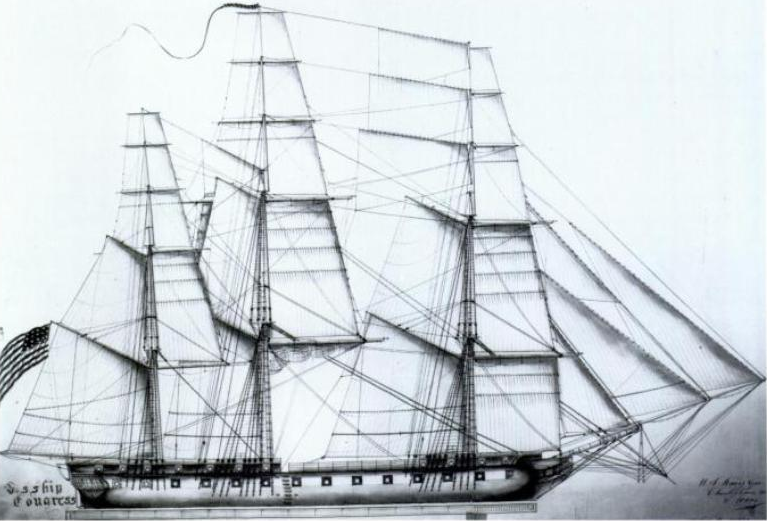
James Hackett (1739–1802) was an American shipbuilder in New Hampshire in the late 18th century. He was responsible for the construction of a number of significant Revolutionary War-era warships for the fledgling country, including the Raleigh, Ranger, America, Congress, Portsmouth, two cutters for the United States Revenue Cutter Service, as well as the Crescent, built for Algiers as tribute. As a teenager, he served with Rogers' Rangers during the French and Indian War. His later military service included serving as lieutenant colonel in the New Hampshire Militia during the Revolutionary War and after in several different units.
Colonel James Hackett was born in Amesbury, Massachusetts on November 29, 1739, to a family of accomplished shipbuilders. He apprenticed as a merchant shipwright.
When he was only 15 years old he joined Rogers' Rangers. Hackett saw more brutal combat before the age of 21 than many career soldiers saw in a lifetime. In a small corps where promotion came hard, he earned the silver lace of a sergeant in John Stark's Company while still a teenager. He fought at the head of the British army as it pushed its way up Lake Champlain toward Canada. In 1758 he was one of two survivors of an 11-man patrol ambushed by an enemy war party numbering more than 50. A year later on August 27, 1759, Hackett himself was taken prisoner in the battle near St. John and remained a prisoner at Montreal until being released in a prisoner exchange on Nov 15, 1759. He continued to serve his company until Nov. 1, 1760, when it was disbanded.
Hackett lived and owned property in Exeter, New Hampshire from 1760 to 1802. He spent a lot of his professional career working at Langdon’s Shipyard in Kittery ME / Portsmouth NH. Later in life he moved to Brookfield, New Hampshire and sold the Exeter property in 1802.
At the beginning of the American Revolution James Hackett participated in the raid at Fort William & Mary in New Castle, New Hampshire in December of 1774. Then as a Captain, he led a company of 108 men to Cambridge, Massachusetts, in April 1775 following the attacks on Lexington and Concord. On July 4, 1776, he was appointed Colonel in Wingate’s Regiment. He turned down command of a New Hampshire regiment in 1776 to “fit out” armed vessels built in New Hampshire. In 1778, he volunteered for duty under General Sullivan in Rhode Island in a company raised by Colonel John Langdon in Portsmouth and was made lieutenant. He served as Colonel in the battle Saratoga with Langdon’s New Hampshire Independent Company.
For his indispensable services, Hackett was given command of a battalion of artillery of three companies in Portsmouth. He had the honor of receiving General Washington with a “grand salute” at the occasion of his Excellency’s reception at Portsmouth on October 31, 1789.
Source:
Colonel Hackett is best known as a Master Shipbuilder completing an incomparable list of vessels for the Continental Navy. With the assistance of his compatriots James Hill and Stephen Paul, he constructed the frigate RALEIGH, the ship that appears under construction on the seal and flag of the State of New Hampshire.
Hub AI
James Hackett (shipbuilder) AI simulator
(@James Hackett (shipbuilder)_simulator)
James Hackett (shipbuilder)
James Hackett (1739–1802) was an American shipbuilder in New Hampshire in the late 18th century. He was responsible for the construction of a number of significant Revolutionary War-era warships for the fledgling country, including the Raleigh, Ranger, America, Congress, Portsmouth, two cutters for the United States Revenue Cutter Service, as well as the Crescent, built for Algiers as tribute. As a teenager, he served with Rogers' Rangers during the French and Indian War. His later military service included serving as lieutenant colonel in the New Hampshire Militia during the Revolutionary War and after in several different units.
Colonel James Hackett was born in Amesbury, Massachusetts on November 29, 1739, to a family of accomplished shipbuilders. He apprenticed as a merchant shipwright.
When he was only 15 years old he joined Rogers' Rangers. Hackett saw more brutal combat before the age of 21 than many career soldiers saw in a lifetime. In a small corps where promotion came hard, he earned the silver lace of a sergeant in John Stark's Company while still a teenager. He fought at the head of the British army as it pushed its way up Lake Champlain toward Canada. In 1758 he was one of two survivors of an 11-man patrol ambushed by an enemy war party numbering more than 50. A year later on August 27, 1759, Hackett himself was taken prisoner in the battle near St. John and remained a prisoner at Montreal until being released in a prisoner exchange on Nov 15, 1759. He continued to serve his company until Nov. 1, 1760, when it was disbanded.
Hackett lived and owned property in Exeter, New Hampshire from 1760 to 1802. He spent a lot of his professional career working at Langdon’s Shipyard in Kittery ME / Portsmouth NH. Later in life he moved to Brookfield, New Hampshire and sold the Exeter property in 1802.
At the beginning of the American Revolution James Hackett participated in the raid at Fort William & Mary in New Castle, New Hampshire in December of 1774. Then as a Captain, he led a company of 108 men to Cambridge, Massachusetts, in April 1775 following the attacks on Lexington and Concord. On July 4, 1776, he was appointed Colonel in Wingate’s Regiment. He turned down command of a New Hampshire regiment in 1776 to “fit out” armed vessels built in New Hampshire. In 1778, he volunteered for duty under General Sullivan in Rhode Island in a company raised by Colonel John Langdon in Portsmouth and was made lieutenant. He served as Colonel in the battle Saratoga with Langdon’s New Hampshire Independent Company.
For his indispensable services, Hackett was given command of a battalion of artillery of three companies in Portsmouth. He had the honor of receiving General Washington with a “grand salute” at the occasion of his Excellency’s reception at Portsmouth on October 31, 1789.
Source:
Colonel Hackett is best known as a Master Shipbuilder completing an incomparable list of vessels for the Continental Navy. With the assistance of his compatriots James Hill and Stephen Paul, he constructed the frigate RALEIGH, the ship that appears under construction on the seal and flag of the State of New Hampshire.