
Recent from talks
James Roosevelt Bayley
Knowledge base stats:
Talk channels stats:
Members stats:
James Roosevelt Bayley
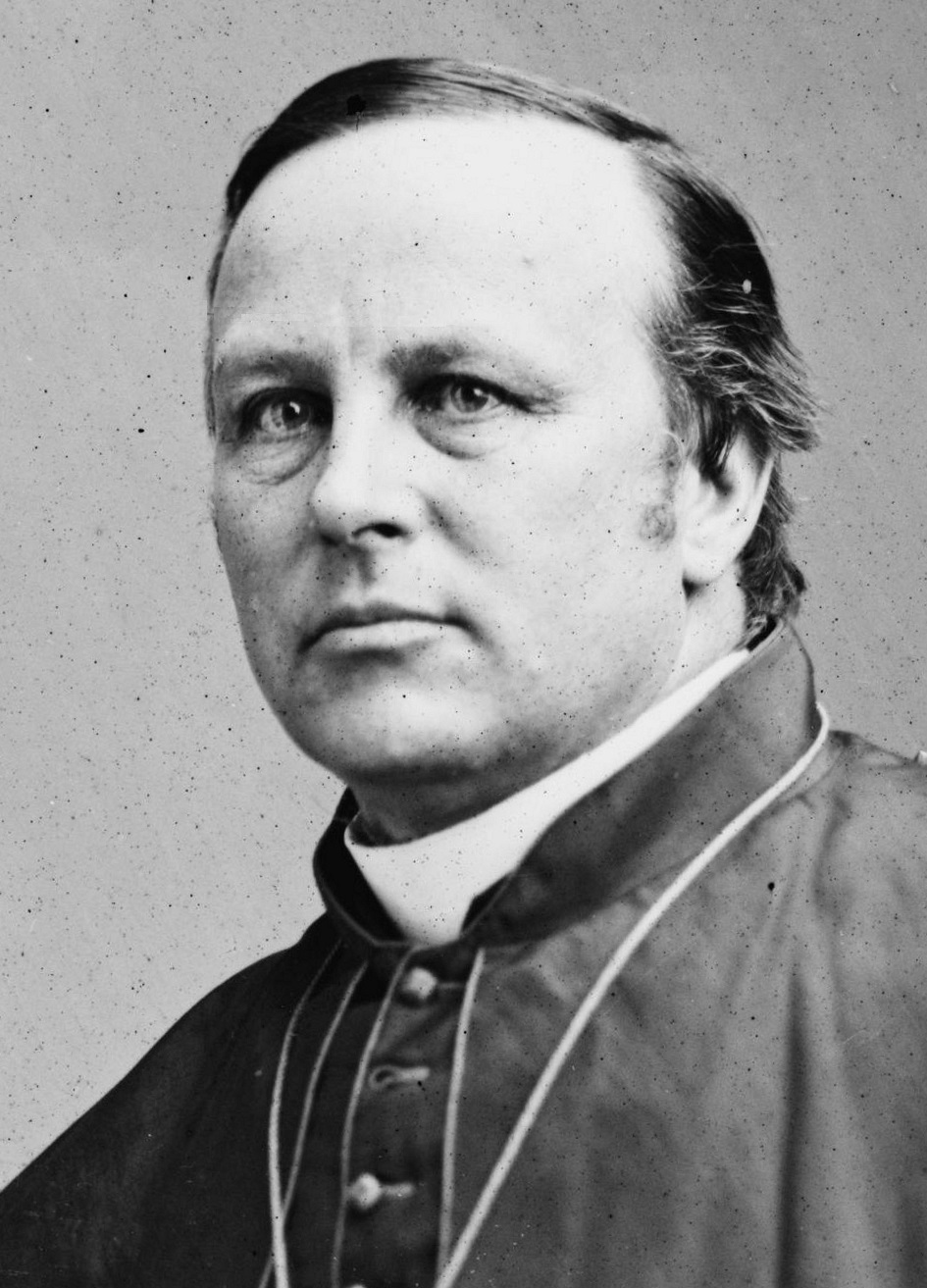
James Roosevelt Bayley (August 23, 1814 – October 3, 1877) was an American Catholic prelate who served as the first Bishop of Newark (1853–1872) and as Archbishop of Baltimore (1872–1877).
Bayley's paternal grandfather, Dr. Richard Bayley, was a professor at Columbia College who created New York's quarantine system. Dr. Bayley had three children by his first wife, among whom was Elizabeth Ann Seton, who was canonized in 1975 as the first American-born Catholic saint. After his first wife's death, Dr. Bayley married Charlotte Amelia Barclay, a member of the Roosevelt family, and the couple had seven children, the sixth of whom was Archbishop Bayley's father, Guy Carleton Bayley, born in 1786. Guy Carleton Bayley, a physician like his father, married his second cousin Grace Roosevelt, six years his junior, on November 4, 1813. Grace Roosevelt was the daughter of Jacobus Roosevelt and Maria Eliza Walton, and her brother, Isaac Roosevelt, was the grandfather of future President Franklin D. Roosevelt, making Archbishop Bayley a first cousin to President Roosevelt's father James Roosevelt I, and a fourth cousin twice removed of future President Theodore Roosevelt.
Bayley was the couple's first child, born at their home at 65 Chambers Street, New York City, on August 23, 1814, and baptized at Trinity Church on September 21. A brother Richard was born on October 25, 1816, while the family was living at 331 Pearl Street, beside Grandfather Roosevelt's place of business at 333 Pearl Street. The following year, Dr. Bayley, probably desiring more healthful surroundings for his family than the city, purchased three pieces of land in Mamaroneck in Westchester County, and the family made their new home on one of these, a fifty-acre plot known as Nelson Hill. In this home, three other children were born: Carleton in November 1818, William Augustus in May 1821, and the only daughter, Maria Eliza, on March 1, 1823.
One writer asserts that Bayley's early school days were spent at Mendham Township, New Jersey. Another relates that he received a fair elementary education in the "public schools" of New York and displayed great studiousness and "an extraordinary love of miscellaneous reading." This may have referred to the schools in Mamaroneck or in New York City, where he may have lived with his grandfather. A later biographer infers he may have begun his earliest education in New Jersey and continued it in New York.
Bayley's mother died on March 28, 1828, and by 1830 the Bayleys had left their home at Mamaroneck and had moved back to New York, or at least nearer to it. In the autumn of 1828 or 1829, Bayley left for boarding school, spending some time at the Mount Pleasant Classical Institute in Amherst, Massachusetts. A classmate there later recalled, "he then had a great fancy for the sea, and actually obtained a commission of midshipman in the navy. When he appeared before us in his uniform preparatory to leaving school, I well remember our admiration and envy of the naval hero. But upon mature deliberation he reconsidered the matter, packed his uniform away, and devoted himself to his studies more earnestly than ever." For many years after, his friends called him by the nickname "the commodore." The same classmate recalled that "I do not remember that the commodore was ever counted in when there was a quarrel, for he was everybody's friend." Bayley kept up his friendships from this school until the end of his life, and regularly sent letters to class reunions even when he could not attend in person.
In 1831, Bayley matriculated at Amherst College, studying there for two years. A classmate later recalled that he "sustained good rank as a scholar" and "possessed decided talent." There, he became an active member of the Alexandrian Literary Society, in which he was given an opportunity to practice public speaking as a participant in its debates. After leaving Amherst, Bayley matriculated in the fall of 1833 at Washington College in Hartford, Connecticut, a young institution with only seven undergraduates in Bayley's senior class. His classmate Robert Tomes, expressing surprise at Bayley's subsequent position as an archbishop, recalled of Bayley:
"[He] was no student, and, in fact, seemed to think of nothing but the care, inside and out, of his own lusty, handsome person, and of the cigar he was perpetually puffing. He had a broad and ruddy face, and was always of a jovial humor."
Shortly after his matriculation at Washington College, Bayley became a member of another literary society, the Athenaeum, and during his years there, he helped found a literary and social society, the I.K.A. Bayley's final examinations lasted twenty hours, distributed as follows as recorded by Bayley in a notebook: four hours devoted to the classics—Livy, Cicero, Homer, Tacitus, Juvenal; seven to mathematics and natural science, including navigation, surveying, conic sections, mechanics, chemistry, astronomy, and optics; three to moral and intellectual philosophy and political economy; four to belles-lettres and rhetoric; and one each to jurisprudence (James Kent's Commentaries on American Law) and to Christian evidences (William Paley's). Bayley received his bachelor's degree on August 6, 1835. He had decided to follow in the footsteps of his father and grandfather by studying medicine.
Hub AI
James Roosevelt Bayley AI simulator
(@James Roosevelt Bayley_simulator)
James Roosevelt Bayley
James Roosevelt Bayley (August 23, 1814 – October 3, 1877) was an American Catholic prelate who served as the first Bishop of Newark (1853–1872) and as Archbishop of Baltimore (1872–1877).
Bayley's paternal grandfather, Dr. Richard Bayley, was a professor at Columbia College who created New York's quarantine system. Dr. Bayley had three children by his first wife, among whom was Elizabeth Ann Seton, who was canonized in 1975 as the first American-born Catholic saint. After his first wife's death, Dr. Bayley married Charlotte Amelia Barclay, a member of the Roosevelt family, and the couple had seven children, the sixth of whom was Archbishop Bayley's father, Guy Carleton Bayley, born in 1786. Guy Carleton Bayley, a physician like his father, married his second cousin Grace Roosevelt, six years his junior, on November 4, 1813. Grace Roosevelt was the daughter of Jacobus Roosevelt and Maria Eliza Walton, and her brother, Isaac Roosevelt, was the grandfather of future President Franklin D. Roosevelt, making Archbishop Bayley a first cousin to President Roosevelt's father James Roosevelt I, and a fourth cousin twice removed of future President Theodore Roosevelt.
Bayley was the couple's first child, born at their home at 65 Chambers Street, New York City, on August 23, 1814, and baptized at Trinity Church on September 21. A brother Richard was born on October 25, 1816, while the family was living at 331 Pearl Street, beside Grandfather Roosevelt's place of business at 333 Pearl Street. The following year, Dr. Bayley, probably desiring more healthful surroundings for his family than the city, purchased three pieces of land in Mamaroneck in Westchester County, and the family made their new home on one of these, a fifty-acre plot known as Nelson Hill. In this home, three other children were born: Carleton in November 1818, William Augustus in May 1821, and the only daughter, Maria Eliza, on March 1, 1823.
One writer asserts that Bayley's early school days were spent at Mendham Township, New Jersey. Another relates that he received a fair elementary education in the "public schools" of New York and displayed great studiousness and "an extraordinary love of miscellaneous reading." This may have referred to the schools in Mamaroneck or in New York City, where he may have lived with his grandfather. A later biographer infers he may have begun his earliest education in New Jersey and continued it in New York.
Bayley's mother died on March 28, 1828, and by 1830 the Bayleys had left their home at Mamaroneck and had moved back to New York, or at least nearer to it. In the autumn of 1828 or 1829, Bayley left for boarding school, spending some time at the Mount Pleasant Classical Institute in Amherst, Massachusetts. A classmate there later recalled, "he then had a great fancy for the sea, and actually obtained a commission of midshipman in the navy. When he appeared before us in his uniform preparatory to leaving school, I well remember our admiration and envy of the naval hero. But upon mature deliberation he reconsidered the matter, packed his uniform away, and devoted himself to his studies more earnestly than ever." For many years after, his friends called him by the nickname "the commodore." The same classmate recalled that "I do not remember that the commodore was ever counted in when there was a quarrel, for he was everybody's friend." Bayley kept up his friendships from this school until the end of his life, and regularly sent letters to class reunions even when he could not attend in person.
In 1831, Bayley matriculated at Amherst College, studying there for two years. A classmate later recalled that he "sustained good rank as a scholar" and "possessed decided talent." There, he became an active member of the Alexandrian Literary Society, in which he was given an opportunity to practice public speaking as a participant in its debates. After leaving Amherst, Bayley matriculated in the fall of 1833 at Washington College in Hartford, Connecticut, a young institution with only seven undergraduates in Bayley's senior class. His classmate Robert Tomes, expressing surprise at Bayley's subsequent position as an archbishop, recalled of Bayley:
"[He] was no student, and, in fact, seemed to think of nothing but the care, inside and out, of his own lusty, handsome person, and of the cigar he was perpetually puffing. He had a broad and ruddy face, and was always of a jovial humor."
Shortly after his matriculation at Washington College, Bayley became a member of another literary society, the Athenaeum, and during his years there, he helped found a literary and social society, the I.K.A. Bayley's final examinations lasted twenty hours, distributed as follows as recorded by Bayley in a notebook: four hours devoted to the classics—Livy, Cicero, Homer, Tacitus, Juvenal; seven to mathematics and natural science, including navigation, surveying, conic sections, mechanics, chemistry, astronomy, and optics; three to moral and intellectual philosophy and political economy; four to belles-lettres and rhetoric; and one each to jurisprudence (James Kent's Commentaries on American Law) and to Christian evidences (William Paley's). Bayley received his bachelor's degree on August 6, 1835. He had decided to follow in the footsteps of his father and grandfather by studying medicine.
Recent media