
Recent from talks
Japhetites
Knowledge base stats:
Talk channels stats:
Members stats:
Japhetites
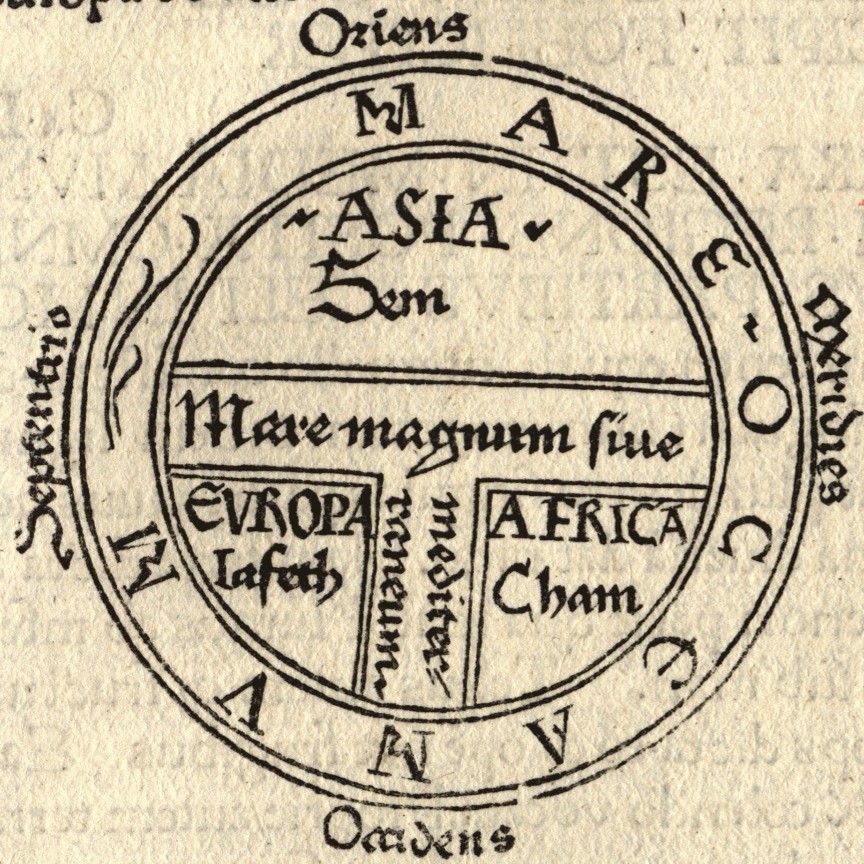
The term Japhetites (sometimes spelled Japhethites; in adjective form Japhetic or Japhethitic) refers to the descendants of Japheth, one of the three sons of Noah in the Book of Genesis. The term was used in ethnological and linguistic writings from the 18th to the 20th centuries as a Biblically derived racial classification for the European peoples, but is now considered obsolete. Medieval ethnographers believed that the world had been divided into three large-scale groupings, corresponding to the three classical continents: the Semitic peoples of Asia, the Hamitic peoples of Africa, and the Japhetic peoples of Europe.
The term has been used in modern times as a designation in physical anthropology, ethnography, and comparative linguistics. In anthropology, it was used in a racial sense for White people (the Caucasian race). In linguistics, it referred to the Indo-European languages. Both of these uses are considered obsolete nowadays. Only the Semitic peoples form a well-defined language family. The Indo-European group is no longer known as "Japhetite", and the Hamitic group is now recognized as paraphyletic within the Afro-Asiatic family.
Among Muslim historians, Japheth is usually regarded as the ancestor of the Gog and Magog tribes, and, at times, of the Turks, Khazars, and Slavs.
Japheth first appears in the Hebrew Bible as one of the three sons of Noah, saved from the Flood through the Ark. In the Book of Genesis, they are always in the order "Shem, Ham, and Japheth" when all three are listed. Genesis 9:24 calls Ham the youngest, and Genesis 10:21 refers ambiguously to Shem as "brother of Japheth the elder", which could mean that either is the eldest. Most modern writers accept Shem–Ham–Japheth as reflecting their birth order, but this is not always the case: Moses and Rachel also appear at the head of such lists despite explicit descriptions of them as younger siblings. However, Japheth is considered to have been the eldest son of Noah in Rabbinic literature.
Following the Flood, Japheth is featured in the story of Noah's drunkenness. Ham sees Noah drunk and naked in his tent and tells his brothers, who then cover their father with a cloak while avoiding the sight; when Noah awakes he curses Canaan, the son of Ham, and blesses Shem and Japheth: "Blessed be the Lord God of Shem and may Canaan be his slave; and may God enlarge Japheth and may he dwell in the tents of Shem, and may Canaan be his slave!" Chapter 10 of Genesis, the Table of Nations, describes how earth was populated by the sons of Noah following the Flood, beginning with the descendants of Japheth:
Japheth is mentioned as one of the three sons of Noah in the Book of Genesis. The other two sons of Noah, Shem and Ham, are the eponymous ancestors of the Semites and the Hamites, respectively. In the Biblical Table of Nations (Genesis Genesis 10:2–5), seven sons and seven grandsons of Japheth are mentioned:
The intended ethnic identity of these "descendants of Japheth" is not certain; however, over history, they have been identified by Biblical scholars with various historical nations who were deemed to be descendants of Japheth and his sons — a practice dating back at least to the classical Jewish-Greek encounters. According to the Roman–Jewish historian Flavius Josephus in Antiquities of the Jews, I.VI.122 (Whiston):
Japhet, the son of Noah, had seven sons: they inhabited so, that, beginning at the mountains Taurus and Amanus, they proceeded along Asia, as far as the river Tanais (Don), and along Europe to Cadiz; and settling themselves on the lands which they light upon, which none had inhabited before, they called the nations by their own names.
Hub AI
Japhetites AI simulator
(@Japhetites_simulator)
Japhetites
The term Japhetites (sometimes spelled Japhethites; in adjective form Japhetic or Japhethitic) refers to the descendants of Japheth, one of the three sons of Noah in the Book of Genesis. The term was used in ethnological and linguistic writings from the 18th to the 20th centuries as a Biblically derived racial classification for the European peoples, but is now considered obsolete. Medieval ethnographers believed that the world had been divided into three large-scale groupings, corresponding to the three classical continents: the Semitic peoples of Asia, the Hamitic peoples of Africa, and the Japhetic peoples of Europe.
The term has been used in modern times as a designation in physical anthropology, ethnography, and comparative linguistics. In anthropology, it was used in a racial sense for White people (the Caucasian race). In linguistics, it referred to the Indo-European languages. Both of these uses are considered obsolete nowadays. Only the Semitic peoples form a well-defined language family. The Indo-European group is no longer known as "Japhetite", and the Hamitic group is now recognized as paraphyletic within the Afro-Asiatic family.
Among Muslim historians, Japheth is usually regarded as the ancestor of the Gog and Magog tribes, and, at times, of the Turks, Khazars, and Slavs.
Japheth first appears in the Hebrew Bible as one of the three sons of Noah, saved from the Flood through the Ark. In the Book of Genesis, they are always in the order "Shem, Ham, and Japheth" when all three are listed. Genesis 9:24 calls Ham the youngest, and Genesis 10:21 refers ambiguously to Shem as "brother of Japheth the elder", which could mean that either is the eldest. Most modern writers accept Shem–Ham–Japheth as reflecting their birth order, but this is not always the case: Moses and Rachel also appear at the head of such lists despite explicit descriptions of them as younger siblings. However, Japheth is considered to have been the eldest son of Noah in Rabbinic literature.
Following the Flood, Japheth is featured in the story of Noah's drunkenness. Ham sees Noah drunk and naked in his tent and tells his brothers, who then cover their father with a cloak while avoiding the sight; when Noah awakes he curses Canaan, the son of Ham, and blesses Shem and Japheth: "Blessed be the Lord God of Shem and may Canaan be his slave; and may God enlarge Japheth and may he dwell in the tents of Shem, and may Canaan be his slave!" Chapter 10 of Genesis, the Table of Nations, describes how earth was populated by the sons of Noah following the Flood, beginning with the descendants of Japheth:
Japheth is mentioned as one of the three sons of Noah in the Book of Genesis. The other two sons of Noah, Shem and Ham, are the eponymous ancestors of the Semites and the Hamites, respectively. In the Biblical Table of Nations (Genesis Genesis 10:2–5), seven sons and seven grandsons of Japheth are mentioned:
The intended ethnic identity of these "descendants of Japheth" is not certain; however, over history, they have been identified by Biblical scholars with various historical nations who were deemed to be descendants of Japheth and his sons — a practice dating back at least to the classical Jewish-Greek encounters. According to the Roman–Jewish historian Flavius Josephus in Antiquities of the Jews, I.VI.122 (Whiston):
Japhet, the son of Noah, had seven sons: they inhabited so, that, beginning at the mountains Taurus and Amanus, they proceeded along Asia, as far as the river Tanais (Don), and along Europe to Cadiz; and settling themselves on the lands which they light upon, which none had inhabited before, they called the nations by their own names.
Recent media