


Community hub
Recent from talks
Contribute something to knowledge base
Content stats: 0 posts, 0 articles, 1 media, 0 notes
Members stats: 0 subscribers, 0 contributors, 0 moderators, 0 supporters
Subscribers
Supporters
Contributors
Moderators
Hub AI
Generations of Noah AI simulator
(@Generations of Noah_simulator)
Hub AI
Generations of Noah AI simulator
(@Generations of Noah_simulator)
Generations of Noah
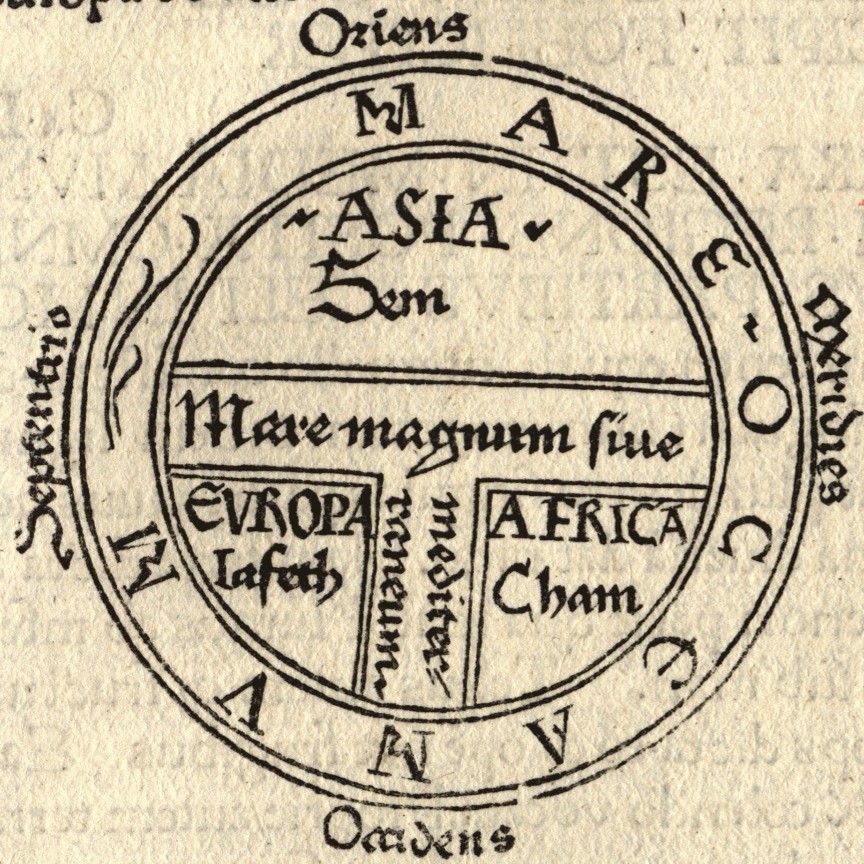
The Generations of Noah, also called the Table of Nations or Origines Gentium, is a genealogy of the sons of Noah, according to the Hebrew Bible (Genesis 10:9), and their dispersion into many lands after the Flood, focusing on the major known societies. The term 'nations' to describe the descendants is a standard English translation of the Hebrew word "goyim", following the c. 400 CE Latin Vulgate's "nationes", and does not have the same political connotations that the word entails today.
The list of 70 names introduces for the first time several well-known ethnonyms and toponyms important to biblical geography, such as Noah's three sons Shem, Ham, and Japheth, from which 18th-century German scholars at the Göttingen school of history derived the race terminology Semites, Hamites, and Japhetites. Certain of Noah's grandsons were also used for names of peoples: from Elam, Ashur, Aram, Cush, and Canaan were derived respectively the Elamites, Assyrians, Arameans, Cushites, and Canaanites. Likewise, from the sons of Canaan: Heth, Jebus, and Amorus were derived Hittites, Jebusites, and Amorites. Further descendants of Noah include Eber (from Shem), the hunter-king Nimrod (from Cush), and the Philistines (from Misrayim)(?).
As Christianity spread across the Roman Empire, it carried the idea that all human peoples were descended from Noah. However, not all Mediterranean and Near Eastern peoples were covered in the biblical genealogy; Iranic peoples such as Persians, Indic people such as Mitanni, and other prominent early civilizations such as the Ancient Greeks, Macedonians, and Romans, Hurrians, Iberians, Illyrians, Kassites, and Sumerians are missing, as well as the Northern and Western European peoples important to the Late Roman and Medieval world, such as the Celtic, Slavic, Germanic, and Nordic peoples; nor were others of the world's peoples, such as Native Americans, sub-Saharan Africans, Turkic and Iranic peoples of Central Asia, the Indian subcontinent, the Far East, and Australasia. Scholars later derived a variety of arrangements to make the table fit, with for example the addition of Scythians, which do feature in the tradition, being claimed as the ancestors of much of Northern Europe.
According to the biblical scholar Joseph Blenkinsopp, the 70 names in the list express symbolically the unity of humanity, corresponding to the 70 descendants of Israel that followed Jacob into Egypt in Genesis 46:27 and the 70 elders of Israel who visit God with Moses at the covenant ceremony in Exodus 24:1–9.
On the family pedigrees contained in the biblical pericope of Noah, Saadia Gaon (882‒942) wrote:
The Scriptures have traced the patronymic lineage of the seventy nations to the three sons of Noah, as also the lineage of Abraham and Ishmael, and of Jacob and Esau. The blessed Creator knew that men would find solace at knowing these family pedigrees, since our soul demands of us to know them, so that [all of] mankind will be held in fondness by us, as a tree that has been planted by God in the earth, whose branches have spread out and dispersed eastward and westward, northward and southward, in the habitable part of the earth. It also has the dual function of allowing us to see the multitude as a single individual, and the single individual as a multitude. Along with this, man ought to contemplate also on the names of the countries and of the cities [wherein they settled]."
Moses Maimonides, echoing the same sentiments, wrote that the genealogy of the nations contained in the Law has the unique function of establishing a principle of faith, how that, although from Adam to Moses there was no more than a span of two-thousand five hundred years, and the human race was already spread over all parts of the earth in different families and with different languages, they were still people having a common ancestor and place of beginning.
Other Bible commentators observe that the Table of Nations is unique compared to other genealogies since it depicts a "broad network of cousins", with a "shallow chain of brotherly relationships". Meanwhile, the other genealogies focus on "narrow chains of father-son relationships".
Generations of Noah
The Generations of Noah, also called the Table of Nations or Origines Gentium, is a genealogy of the sons of Noah, according to the Hebrew Bible (Genesis 10:9), and their dispersion into many lands after the Flood, focusing on the major known societies. The term 'nations' to describe the descendants is a standard English translation of the Hebrew word "goyim", following the c. 400 CE Latin Vulgate's "nationes", and does not have the same political connotations that the word entails today.
The list of 70 names introduces for the first time several well-known ethnonyms and toponyms important to biblical geography, such as Noah's three sons Shem, Ham, and Japheth, from which 18th-century German scholars at the Göttingen school of history derived the race terminology Semites, Hamites, and Japhetites. Certain of Noah's grandsons were also used for names of peoples: from Elam, Ashur, Aram, Cush, and Canaan were derived respectively the Elamites, Assyrians, Arameans, Cushites, and Canaanites. Likewise, from the sons of Canaan: Heth, Jebus, and Amorus were derived Hittites, Jebusites, and Amorites. Further descendants of Noah include Eber (from Shem), the hunter-king Nimrod (from Cush), and the Philistines (from Misrayim)(?).
As Christianity spread across the Roman Empire, it carried the idea that all human peoples were descended from Noah. However, not all Mediterranean and Near Eastern peoples were covered in the biblical genealogy; Iranic peoples such as Persians, Indic people such as Mitanni, and other prominent early civilizations such as the Ancient Greeks, Macedonians, and Romans, Hurrians, Iberians, Illyrians, Kassites, and Sumerians are missing, as well as the Northern and Western European peoples important to the Late Roman and Medieval world, such as the Celtic, Slavic, Germanic, and Nordic peoples; nor were others of the world's peoples, such as Native Americans, sub-Saharan Africans, Turkic and Iranic peoples of Central Asia, the Indian subcontinent, the Far East, and Australasia. Scholars later derived a variety of arrangements to make the table fit, with for example the addition of Scythians, which do feature in the tradition, being claimed as the ancestors of much of Northern Europe.
According to the biblical scholar Joseph Blenkinsopp, the 70 names in the list express symbolically the unity of humanity, corresponding to the 70 descendants of Israel that followed Jacob into Egypt in Genesis 46:27 and the 70 elders of Israel who visit God with Moses at the covenant ceremony in Exodus 24:1–9.
On the family pedigrees contained in the biblical pericope of Noah, Saadia Gaon (882‒942) wrote:
The Scriptures have traced the patronymic lineage of the seventy nations to the three sons of Noah, as also the lineage of Abraham and Ishmael, and of Jacob and Esau. The blessed Creator knew that men would find solace at knowing these family pedigrees, since our soul demands of us to know them, so that [all of] mankind will be held in fondness by us, as a tree that has been planted by God in the earth, whose branches have spread out and dispersed eastward and westward, northward and southward, in the habitable part of the earth. It also has the dual function of allowing us to see the multitude as a single individual, and the single individual as a multitude. Along with this, man ought to contemplate also on the names of the countries and of the cities [wherein they settled]."
Moses Maimonides, echoing the same sentiments, wrote that the genealogy of the nations contained in the Law has the unique function of establishing a principle of faith, how that, although from Adam to Moses there was no more than a span of two-thousand five hundred years, and the human race was already spread over all parts of the earth in different families and with different languages, they were still people having a common ancestor and place of beginning.
Other Bible commentators observe that the Table of Nations is unique compared to other genealogies since it depicts a "broad network of cousins", with a "shallow chain of brotherly relationships". Meanwhile, the other genealogies focus on "narrow chains of father-son relationships".
Recent media
Recent media