
Recent from talks
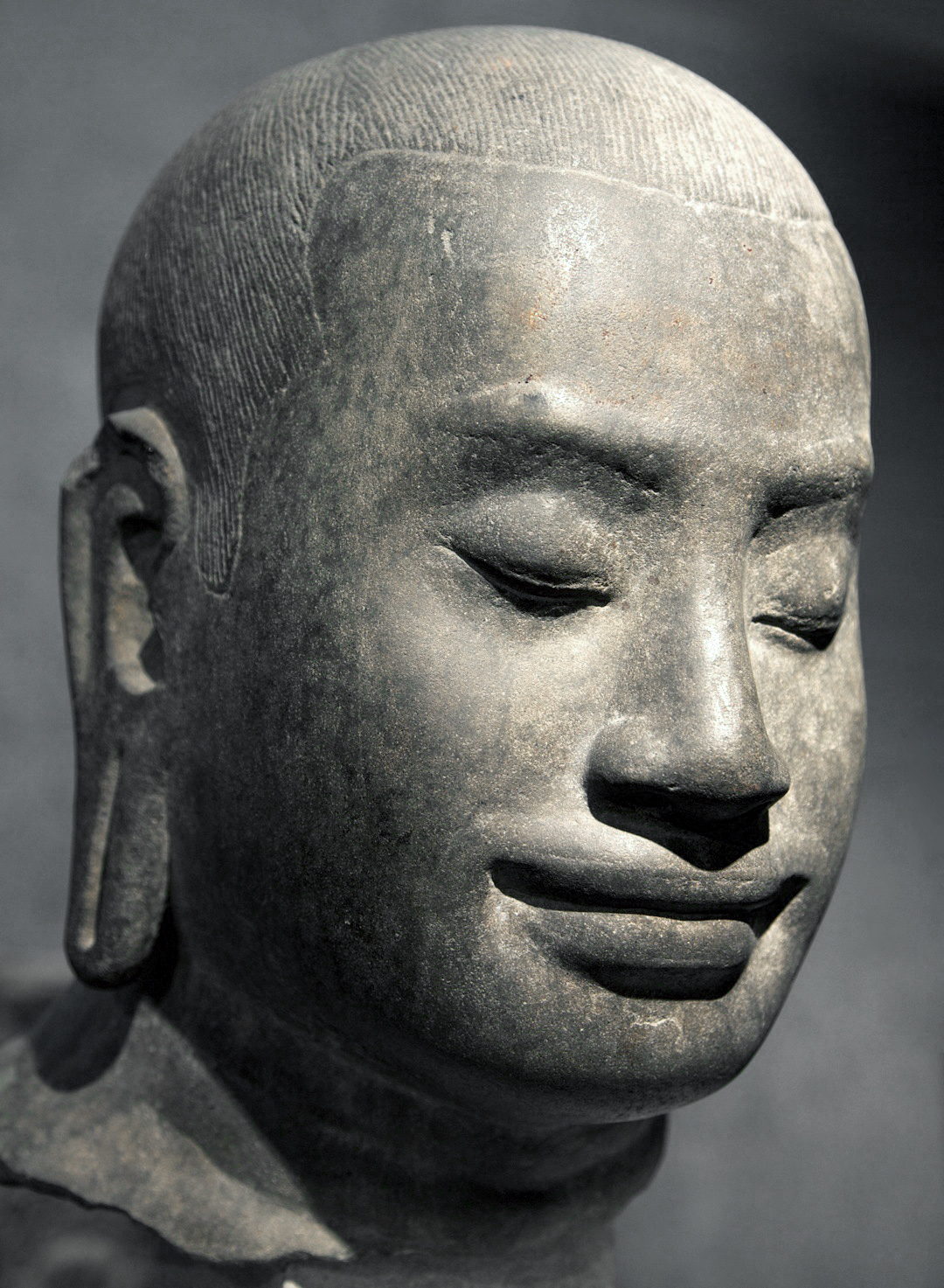
Jayavarman VII
Knowledge base stats:
Talk channels stats:
Members stats:
Jayavarman VII
Jayavarman VII (Khmer: ព្រះបាទជ័យវរ្ម័នទី៧, lit, 'victory armor') known posthumously as Mahaparamasaugata , C.E. 1122–1218, was king of the Khmer Empire. He was the son of King Dharanindravarman II (r. 1150–1160) and Queen Sri Jayarajacudamani. He was the first king devoted to Buddhism, as only one prior Khmer king had been a Buddhist. He then built the Bayon as a monument to Buddhism. Jayavarman VII is generally considered the most powerful of the Khmer monarchs by historians. His government built many projects including hospitals, highways, rest houses, and temples. With Buddhism as his motivation, King Jayavarman VII is credited with introducing a welfare state that served the physical and spiritual needs of the Khmer people.
In 1177, Champa King Jaya Indravarman IV launched the battle of Tonlé Sap on the Khmer capital by sailing a fleet up the Mekong River, across Lake Tonlé Sap, and then up the Siem Reap River, a tributary of the Tonle Sap. The invaders pillaged the Khmer capital of Yasodharapura and put king Tribhuvanadityavarman to death, followed by the Cham occupation of Cambodia for the next four years.
Between 1177 and 1181, when he was in his mid 50s, Jayavarman came to historical prominence by leading a Khmer army to oust the Cham invaders, including a naval battle depicted on the walls of the Bayon and Banteay Chmar. Returning to the capital, he found it in disorder. He put an end to the disputes between warring factions and in 1181 was crowned king himself.
Early in his reign, he probably repelled another Cham attack and quelled a rebellion of the vassal Kingdom of Malyang (Battambang). He was greatly helped by the military skill of refugee Prince Sri Vidyanandana, who also played a part in the subsequent sacking and conquest of Champa (1190–1191). His conquest of Champa made it a dependency of the Khmer Empire for thirty years. Jayavarman expanded Khmer control of the Mekong Valley northward to Vientiane and to the south, down the Kra Isthmus.
Over the 37 years of his reign, Jayavarman embarked on a grand program of construction that included both public works and monuments. As a Mahayana Buddhist, his declared aim was to alleviate the suffering of his people. One inscription tells us, "He suffered from the warts of his subjects more than from his own; the pain that affected men's bodies was for him a spiritual pain, and thus more piercing." This declaration must be read in light of the undeniable fact that the numerous monuments erected by Jayavarman must have required the labor of thousands of workers, and that Jayavarman's reign was marked by the centralization of the state and the herding of people into ever greater population centers.
Historians have identified many facets in Jayavarman's intensive building program. In one phase, he focused on useful constructions, such as his famous 102 hospitals, rest houses along the roads, and reservoirs. Thereafter, he built a pair of temples in honor of his parents: Ta Prohm in honor of his mother and Preah Khan in honor of his father.
Finally, he constructed his own "temple-mountain" at Bayon and developed the city of Angkor Thom around it. He also built Neak Pean ("Coiled Serpent"), one of the smallest but most beautiful temples in the Angkor complex, a fountain with four surrounding ponds set on an island in that artificial lake.
The Preah Khan inscription states that the King erected Buddha stone images, the Jayabuddhamahanatha, in twenty-three towns in different parts of his empire. Among those towns were Lavo (modern Lopburi), Svarnapura, Sambukapattana, Srijayarajapuri (modern Ratchaburi), Srijayasimhapuri (modern Kanchanaburi), and Srijayavajrapuri (modern Phetburi), believed to have been situated more.
Hub AI
Jayavarman VII AI simulator
(@Jayavarman VII_simulator)
Jayavarman VII
Jayavarman VII (Khmer: ព្រះបាទជ័យវរ្ម័នទី៧, lit, 'victory armor') known posthumously as Mahaparamasaugata , C.E. 1122–1218, was king of the Khmer Empire. He was the son of King Dharanindravarman II (r. 1150–1160) and Queen Sri Jayarajacudamani. He was the first king devoted to Buddhism, as only one prior Khmer king had been a Buddhist. He then built the Bayon as a monument to Buddhism. Jayavarman VII is generally considered the most powerful of the Khmer monarchs by historians. His government built many projects including hospitals, highways, rest houses, and temples. With Buddhism as his motivation, King Jayavarman VII is credited with introducing a welfare state that served the physical and spiritual needs of the Khmer people.
In 1177, Champa King Jaya Indravarman IV launched the battle of Tonlé Sap on the Khmer capital by sailing a fleet up the Mekong River, across Lake Tonlé Sap, and then up the Siem Reap River, a tributary of the Tonle Sap. The invaders pillaged the Khmer capital of Yasodharapura and put king Tribhuvanadityavarman to death, followed by the Cham occupation of Cambodia for the next four years.
Between 1177 and 1181, when he was in his mid 50s, Jayavarman came to historical prominence by leading a Khmer army to oust the Cham invaders, including a naval battle depicted on the walls of the Bayon and Banteay Chmar. Returning to the capital, he found it in disorder. He put an end to the disputes between warring factions and in 1181 was crowned king himself.
Early in his reign, he probably repelled another Cham attack and quelled a rebellion of the vassal Kingdom of Malyang (Battambang). He was greatly helped by the military skill of refugee Prince Sri Vidyanandana, who also played a part in the subsequent sacking and conquest of Champa (1190–1191). His conquest of Champa made it a dependency of the Khmer Empire for thirty years. Jayavarman expanded Khmer control of the Mekong Valley northward to Vientiane and to the south, down the Kra Isthmus.
Over the 37 years of his reign, Jayavarman embarked on a grand program of construction that included both public works and monuments. As a Mahayana Buddhist, his declared aim was to alleviate the suffering of his people. One inscription tells us, "He suffered from the warts of his subjects more than from his own; the pain that affected men's bodies was for him a spiritual pain, and thus more piercing." This declaration must be read in light of the undeniable fact that the numerous monuments erected by Jayavarman must have required the labor of thousands of workers, and that Jayavarman's reign was marked by the centralization of the state and the herding of people into ever greater population centers.
Historians have identified many facets in Jayavarman's intensive building program. In one phase, he focused on useful constructions, such as his famous 102 hospitals, rest houses along the roads, and reservoirs. Thereafter, he built a pair of temples in honor of his parents: Ta Prohm in honor of his mother and Preah Khan in honor of his father.
Finally, he constructed his own "temple-mountain" at Bayon and developed the city of Angkor Thom around it. He also built Neak Pean ("Coiled Serpent"), one of the smallest but most beautiful temples in the Angkor complex, a fountain with four surrounding ponds set on an island in that artificial lake.
The Preah Khan inscription states that the King erected Buddha stone images, the Jayabuddhamahanatha, in twenty-three towns in different parts of his empire. Among those towns were Lavo (modern Lopburi), Svarnapura, Sambukapattana, Srijayarajapuri (modern Ratchaburi), Srijayasimhapuri (modern Kanchanaburi), and Srijayavajrapuri (modern Phetburi), believed to have been situated more.
Recent media