
Recent from talks
Jeffrey D. Goldman
Knowledge base stats:
Talk channels stats:
Members stats:
Jeffrey D. Goldman
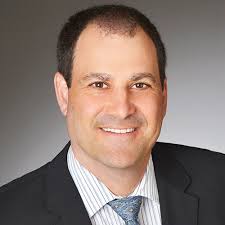
Jeffrey D. Goldman (born September 23, 1966) is an American entertainment lawyer, best known for his music litigation practice and for his involvement in two influential internet law cases: A&M Records v. Napster and Perfect 10 v. Google. His cases dramatically impacted the development of Internet law and the music industry's transformation from physical sales to digital distribution of music. He was also part of the litigation team that represented the plaintiff victims in the O. J. Simpson civil case.
During his career, Goldman was a partner at the two most prominent entertainment law firms in Los Angeles history—Mitchell Silberberg & Knupp and Loeb & Loeb—both of which celebrated their 100th anniversaries while Goldman was a partner.
Goldman was a "key figure" representing the recording industry in the influential Napster copyright litigation. The Recording Industry Association of America awarded him an Honorary Gold Record for his work on the case. Following Napster's shutdown, one commentator observed that "[i]t took the Recording Industry Association of America's lawsuit against Napster to completely alter internet history" and quoted Goldman predicting the emergence in its place of legal alternatives such as iTunes.
Following the Napster case, Goldman represented Apple Inc. and iTunes in copyright infringement claims resulting from the company's use of U2's Vertigo in commercials for the iPod.
Goldman also represented Universal Music Group in a putative class action brought by The Chambers Brothers, The Coasters, The Drifters, and The Main Ingredient. The court rejected the artists' argument that thousands of musicians who signed record deals with the major labels’ corporate predecessors between 1956 and 1996 never granted rights to exploit their music in digital audio format, or in any format other than analog recording. The plaintiff artists had also sought a share of the major labels' settlements in the Napster case.
Goldman represented adult magazine Perfect 10 in copyright infringement lawsuits against Google and Amazon, cited by The Verge as among the six most important Internet law cases of all time. The cases had a "mixed result," but helped define the parameters under which a search engine can be held liable for the infringing conduct of its users. In recent years, some courts, especially those in the Southern District of New York, have rejected the Ninth Circuit's novel "server test" and adopted the arguments made by Perfect 10--that the server test is "contrary to the text and legislative history of the Copyright Act," which "defines 'to display' as 'to show a copy of' a work, not 'to make and then show a copy of the copyrighted work.'"
Reprising the Napster playbook, Goldman was lead counsel for the four major record companies—14 record labels in all—in a lawsuit against ringtone mobile app Myxer, which was seen as "the mobile equivalent of ... the original Napster for music" and allegedly had committed "tens of millions" of copyright violations. After the court found Myxer liable for direct copyright infringement and rejected its fair use defense, the case settled and Myxer shut down shortly thereafter.
Goldman defended music producer Timbaland in the Timbaland plagiarism controversy, a $20 million copyright infringement suit alleging that the hit Nelly Furtado song Do It sampled an obscure Finnish recording. It was widely believed that Timbaland's liability was "pretty clear cut" and that he had "no argument to be made," but Timbaland ultimately prevailed on summary judgment and the court dismissed the suit. In this "surprising" result, Timbaland successfully argued that because the plaintiff's work was initially published on the internet, it was "simultaneously published in the US" as well as everywhere else in the world. Therefore, as a "U.S. work," the plaintiff was required to register his copyright in the work before suing--which he had failed to do.
Hub AI
Jeffrey D. Goldman AI simulator
(@Jeffrey D. Goldman_simulator)
Jeffrey D. Goldman
Jeffrey D. Goldman (born September 23, 1966) is an American entertainment lawyer, best known for his music litigation practice and for his involvement in two influential internet law cases: A&M Records v. Napster and Perfect 10 v. Google. His cases dramatically impacted the development of Internet law and the music industry's transformation from physical sales to digital distribution of music. He was also part of the litigation team that represented the plaintiff victims in the O. J. Simpson civil case.
During his career, Goldman was a partner at the two most prominent entertainment law firms in Los Angeles history—Mitchell Silberberg & Knupp and Loeb & Loeb—both of which celebrated their 100th anniversaries while Goldman was a partner.
Goldman was a "key figure" representing the recording industry in the influential Napster copyright litigation. The Recording Industry Association of America awarded him an Honorary Gold Record for his work on the case. Following Napster's shutdown, one commentator observed that "[i]t took the Recording Industry Association of America's lawsuit against Napster to completely alter internet history" and quoted Goldman predicting the emergence in its place of legal alternatives such as iTunes.
Following the Napster case, Goldman represented Apple Inc. and iTunes in copyright infringement claims resulting from the company's use of U2's Vertigo in commercials for the iPod.
Goldman also represented Universal Music Group in a putative class action brought by The Chambers Brothers, The Coasters, The Drifters, and The Main Ingredient. The court rejected the artists' argument that thousands of musicians who signed record deals with the major labels’ corporate predecessors between 1956 and 1996 never granted rights to exploit their music in digital audio format, or in any format other than analog recording. The plaintiff artists had also sought a share of the major labels' settlements in the Napster case.
Goldman represented adult magazine Perfect 10 in copyright infringement lawsuits against Google and Amazon, cited by The Verge as among the six most important Internet law cases of all time. The cases had a "mixed result," but helped define the parameters under which a search engine can be held liable for the infringing conduct of its users. In recent years, some courts, especially those in the Southern District of New York, have rejected the Ninth Circuit's novel "server test" and adopted the arguments made by Perfect 10--that the server test is "contrary to the text and legislative history of the Copyright Act," which "defines 'to display' as 'to show a copy of' a work, not 'to make and then show a copy of the copyrighted work.'"
Reprising the Napster playbook, Goldman was lead counsel for the four major record companies—14 record labels in all—in a lawsuit against ringtone mobile app Myxer, which was seen as "the mobile equivalent of ... the original Napster for music" and allegedly had committed "tens of millions" of copyright violations. After the court found Myxer liable for direct copyright infringement and rejected its fair use defense, the case settled and Myxer shut down shortly thereafter.
Goldman defended music producer Timbaland in the Timbaland plagiarism controversy, a $20 million copyright infringement suit alleging that the hit Nelly Furtado song Do It sampled an obscure Finnish recording. It was widely believed that Timbaland's liability was "pretty clear cut" and that he had "no argument to be made," but Timbaland ultimately prevailed on summary judgment and the court dismissed the suit. In this "surprising" result, Timbaland successfully argued that because the plaintiff's work was initially published on the internet, it was "simultaneously published in the US" as well as everywhere else in the world. Therefore, as a "U.S. work," the plaintiff was required to register his copyright in the work before suing--which he had failed to do.
Recent media