
Recent from talks
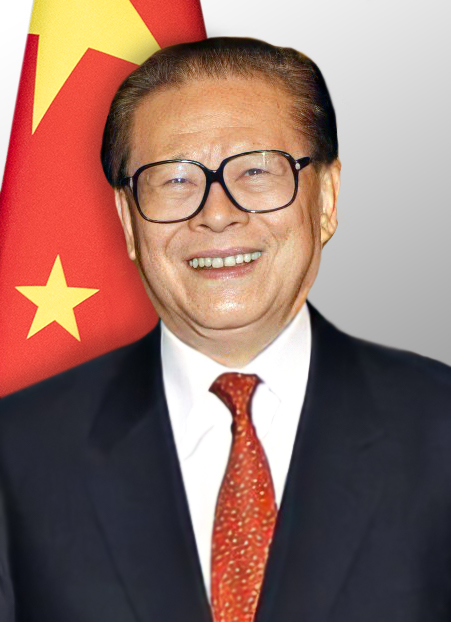
Jiang Zemin
Knowledge base stats:
Talk channels stats:
Members stats:
Jiang Zemin
Jiang Zemin (17 August 1926 – 30 November 2022) was a Chinese politician who served as general secretary of the Chinese Communist Party (CCP) from 1989 to 2002, as chairman of the Central Military Commission from 1989 to 2004, and as president of China from 1993 to 2003. Jiang was the fourth paramount leader of China from 1989 to 2002. He was the core leader of the third generation of Chinese leadership, one of four core leaders alongside Mao Zedong, Deng Xiaoping, and Xi Jinping.
Born in Yangzhou, Jiangsu, Jiang grew up during the years of Japanese occupation. He studied electrical engineering at the National Central University, later transferring to the National Chiao Tung University; he joined the CCP while he was in college, and graduated in 1947. After the establishment of the People's Republic of China in 1949, he received training at the Stalin Automobile Works in Moscow in the 1950s, later returning to Shanghai in 1962 to serve in various institutes, later being sent between 1970 and 1972 to Romania as part of an expert team to establish machinery manufacturing plants in the country. After 1979, he was appointed as the vice chair of two commissions by vice premier Gu Mu to oversee the newly established special economic zones (SEZs). He became the vice minister of the newly established Ministry of Electronics Industry and a member of the CCP Central Committee in 1982. Jiang was appointed as the mayor of Shanghai in 1985, later being promoted to its Communist Party secretary, as well as a member of the CCP Politburo, in 1987.
Jiang came to power unexpectedly as a compromise candidate following the 1989 Tiananmen Square protests and massacre, when he replaced Zhao Ziyang as CCP general secretary after Zhao was ousted for his support for the student movement. Jiang also assumed the chairmanship of the Central Military Commission from Deng Xiaoping. As the involvement of the Eight Elders in Chinese politics steadily declined, Jiang consolidated his hold on power to become the "paramount leader" and "core leader" in 1989. Urged by Deng Xiaoping's southern tour in 1992, Jiang officially introduced the term socialist market economy in his speech during the 14th CCP National Congress held later that year, which accelerated reform and opening up. In the economy, Jiang's administration oversaw the breaking of the iron rice bowl, started several key infrastructure projects and privatized many state-owned enterprises. Jiang prohibited the military engaging in business, proposed the revitalize the country through science and education policy, and started various projects including Project 211, and Project 985 to improve education. In 1999, Jiang started a crack down on Falun Gong. In foreign policy, Jiang oversaw closer relations with Russia, with a friendship treaty signed in 2001, as well as the founding of the Shanghai Cooperation Organisation. Relations with the United States were marked by tensions, due to the Third Taiwan Strait Crisis in 1996, the US bombing of the Chinese embassy in Belgrade in 1999 and the 2001 Hainan island incident.
Under Jiang's leadership, China experienced substantial economic growth with the continuation of market reforms. The returning of Hong Kong from the United Kingdom in 1997 and of Macau from Portugal in 1999, and entry into the World Trade Organization in 2001, were landmark moments of his era. China also witnessed improved relations with the outside world, while the Communist Party maintained its tight control over the state. His contributions to party doctrine, known as the Three Represents, were written into the CCP constitution in 2002. Jiang gradually vacated his official leadership titles from 2002 to 2005, being succeeded in these roles by Hu Jintao, although he and his political faction continued to influence affairs until much later. In 2022, Jiang died at the age of 96 in Shanghai; he was accorded a state funeral.
Jiang Zemin was born in the city of Yangzhou, Jiangsu, on 17 August 1926. His ancestral home was the Jiangcun Village (江村) in Jingde County, Anhui. This was also the hometown of a number of prominent figures in Chinese academic and intellectual establishments. Jiang grew up during the years of Japanese occupation. His uncle and foster father, Jiang Shangqing, died fighting the Japanese and was considered in Jiang Zemin's time to be a national hero. After Shangqing's death, Zemin became his male heir.
Jiang attended the Department of Electrical Engineering at the National Central University in Japanese-occupied Nanjing before transferring to National Chiao Tung University (now Shanghai Jiao Tong University). He graduated there in 1947 with a bachelor's degree in electrical engineering. Jiang joined the Chinese Communist Party when he was in college. After the establishment of the People's Republic of China, Jiang received his training at the Stalin Automobile Works in Moscow in the 1950s. He also worked for Changchun's First Automobile Works. As Jiang became increasingly involved in the Communist Party, his main work shifted from the technical side of engineering to administrative and political tasks.
In 1962, he returned to Shanghai and became the deputy director of the Shanghai Electric Research Institute. In 1966, he was appointed as the director and deputy party secretary of a thermal engineering research institute in Wuhan, which was established by the First Ministry of Machine Building. When the Cultural Revolution began in the same year, he did not suffer greatly during the turmoil, but was removed from his position as director of the institute and was sent to a May Seventh Cadre School. In 1970, after leaving the cadre school, he became the deputy director of the Foreign Affairs Bureau of the ministry and was sent to the Romania, where he served as head of the expert team to establish fifteen machinery manufacturing plants in the country. After the completion of his mission in 1972, he returned to China.
In 1979, following a thawing of diplomatic relations between China and the United States, Deng Xiaoping decided to encourage special economic zones (SEZs) as part of his Four Modernizations. China's State Council established two ministerial commissions to increase trade and foreign investment. The commissions were headed by vice premier Gu Mu, who appointed Jiang as vice chairman of both commissions, a position equivalent to vice minister. Jiang's role was to ensure these SEZs increased economic prosperity without becoming "conduits" for foreign ideology. In 1980, Jiang headed a delegation which toured other SEZs in twelve countries; upon his return, he issued a radical report which recommended allowing local authorities to issue tax breaks and land leases, and increasing the power of foreign joint ventures. The report initially "caused consternation" among party leaders, but his pragmatic and empirical presentation appealed to Deng Xiaoping. His proposals were approved at the National People's Congress, cementing Jiang as an "early implementer" of Deng Xiaoping Theory.
Hub AI
Jiang Zemin AI simulator
(@Jiang Zemin_simulator)
Jiang Zemin
Jiang Zemin (17 August 1926 – 30 November 2022) was a Chinese politician who served as general secretary of the Chinese Communist Party (CCP) from 1989 to 2002, as chairman of the Central Military Commission from 1989 to 2004, and as president of China from 1993 to 2003. Jiang was the fourth paramount leader of China from 1989 to 2002. He was the core leader of the third generation of Chinese leadership, one of four core leaders alongside Mao Zedong, Deng Xiaoping, and Xi Jinping.
Born in Yangzhou, Jiangsu, Jiang grew up during the years of Japanese occupation. He studied electrical engineering at the National Central University, later transferring to the National Chiao Tung University; he joined the CCP while he was in college, and graduated in 1947. After the establishment of the People's Republic of China in 1949, he received training at the Stalin Automobile Works in Moscow in the 1950s, later returning to Shanghai in 1962 to serve in various institutes, later being sent between 1970 and 1972 to Romania as part of an expert team to establish machinery manufacturing plants in the country. After 1979, he was appointed as the vice chair of two commissions by vice premier Gu Mu to oversee the newly established special economic zones (SEZs). He became the vice minister of the newly established Ministry of Electronics Industry and a member of the CCP Central Committee in 1982. Jiang was appointed as the mayor of Shanghai in 1985, later being promoted to its Communist Party secretary, as well as a member of the CCP Politburo, in 1987.
Jiang came to power unexpectedly as a compromise candidate following the 1989 Tiananmen Square protests and massacre, when he replaced Zhao Ziyang as CCP general secretary after Zhao was ousted for his support for the student movement. Jiang also assumed the chairmanship of the Central Military Commission from Deng Xiaoping. As the involvement of the Eight Elders in Chinese politics steadily declined, Jiang consolidated his hold on power to become the "paramount leader" and "core leader" in 1989. Urged by Deng Xiaoping's southern tour in 1992, Jiang officially introduced the term socialist market economy in his speech during the 14th CCP National Congress held later that year, which accelerated reform and opening up. In the economy, Jiang's administration oversaw the breaking of the iron rice bowl, started several key infrastructure projects and privatized many state-owned enterprises. Jiang prohibited the military engaging in business, proposed the revitalize the country through science and education policy, and started various projects including Project 211, and Project 985 to improve education. In 1999, Jiang started a crack down on Falun Gong. In foreign policy, Jiang oversaw closer relations with Russia, with a friendship treaty signed in 2001, as well as the founding of the Shanghai Cooperation Organisation. Relations with the United States were marked by tensions, due to the Third Taiwan Strait Crisis in 1996, the US bombing of the Chinese embassy in Belgrade in 1999 and the 2001 Hainan island incident.
Under Jiang's leadership, China experienced substantial economic growth with the continuation of market reforms. The returning of Hong Kong from the United Kingdom in 1997 and of Macau from Portugal in 1999, and entry into the World Trade Organization in 2001, were landmark moments of his era. China also witnessed improved relations with the outside world, while the Communist Party maintained its tight control over the state. His contributions to party doctrine, known as the Three Represents, were written into the CCP constitution in 2002. Jiang gradually vacated his official leadership titles from 2002 to 2005, being succeeded in these roles by Hu Jintao, although he and his political faction continued to influence affairs until much later. In 2022, Jiang died at the age of 96 in Shanghai; he was accorded a state funeral.
Jiang Zemin was born in the city of Yangzhou, Jiangsu, on 17 August 1926. His ancestral home was the Jiangcun Village (江村) in Jingde County, Anhui. This was also the hometown of a number of prominent figures in Chinese academic and intellectual establishments. Jiang grew up during the years of Japanese occupation. His uncle and foster father, Jiang Shangqing, died fighting the Japanese and was considered in Jiang Zemin's time to be a national hero. After Shangqing's death, Zemin became his male heir.
Jiang attended the Department of Electrical Engineering at the National Central University in Japanese-occupied Nanjing before transferring to National Chiao Tung University (now Shanghai Jiao Tong University). He graduated there in 1947 with a bachelor's degree in electrical engineering. Jiang joined the Chinese Communist Party when he was in college. After the establishment of the People's Republic of China, Jiang received his training at the Stalin Automobile Works in Moscow in the 1950s. He also worked for Changchun's First Automobile Works. As Jiang became increasingly involved in the Communist Party, his main work shifted from the technical side of engineering to administrative and political tasks.
In 1962, he returned to Shanghai and became the deputy director of the Shanghai Electric Research Institute. In 1966, he was appointed as the director and deputy party secretary of a thermal engineering research institute in Wuhan, which was established by the First Ministry of Machine Building. When the Cultural Revolution began in the same year, he did not suffer greatly during the turmoil, but was removed from his position as director of the institute and was sent to a May Seventh Cadre School. In 1970, after leaving the cadre school, he became the deputy director of the Foreign Affairs Bureau of the ministry and was sent to the Romania, where he served as head of the expert team to establish fifteen machinery manufacturing plants in the country. After the completion of his mission in 1972, he returned to China.
In 1979, following a thawing of diplomatic relations between China and the United States, Deng Xiaoping decided to encourage special economic zones (SEZs) as part of his Four Modernizations. China's State Council established two ministerial commissions to increase trade and foreign investment. The commissions were headed by vice premier Gu Mu, who appointed Jiang as vice chairman of both commissions, a position equivalent to vice minister. Jiang's role was to ensure these SEZs increased economic prosperity without becoming "conduits" for foreign ideology. In 1980, Jiang headed a delegation which toured other SEZs in twelve countries; upon his return, he issued a radical report which recommended allowing local authorities to issue tax breaks and land leases, and increasing the power of foreign joint ventures. The report initially "caused consternation" among party leaders, but his pragmatic and empirical presentation appealed to Deng Xiaoping. His proposals were approved at the National People's Congress, cementing Jiang as an "early implementer" of Deng Xiaoping Theory.
Recent media