Hubbry Logo
Jim BurwellJim BurwellMain
Open search
Jim Burwell
Community hub
Jim Burwell
logo
8 pages, 0 posts
0 subscribers
Be the first to start a discussion here.
Jim Burwell
Jim Burwell
from Wikipedia

James M. Burwell (March 23, 1898 – September 8, 1974), also known as Jim B., was an American man who was one of Alcoholics Anonymous (AA) founding members. He was among the first ten members of AA on the East Coast, and was responsible for starting Alcoholics Anonymous in Philadelphia and Baltimore. Later in life, he and Rosa, his wife, moved to San Diego, California and were instrumental in the growth of AA there.

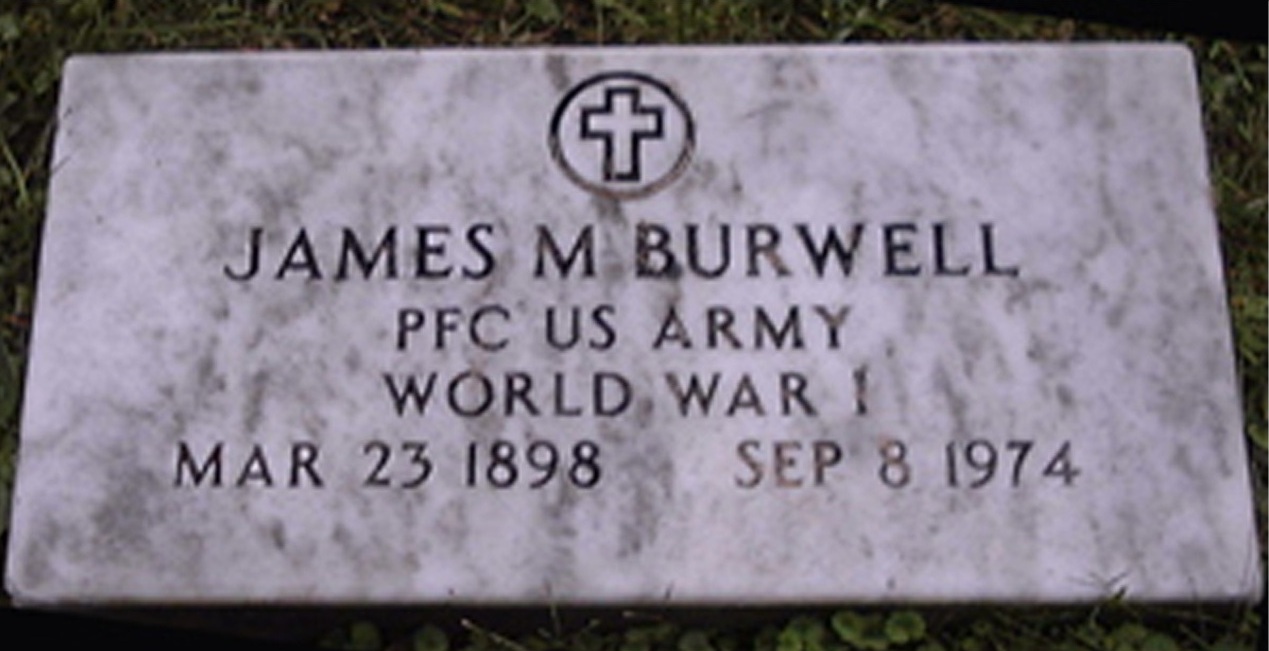
James Burwell's Grave

His most crucial contribution at the founding of AA came from his atheism—or as he later termed it, his "militant agnosticism". He argued strongly with the early group in New York that it needed to tone down what he called the "God bit". This resulted in the much more inclusive "Higher Power" and "God as we understand Him" concepts that are now so closely associated with Alcoholics Anonymous.

Although after a relapse, Burwell came to accept the spiritual aspects of Alcoholics Anonymous.

"My brilliant agnosticism vanished, and I saw for the first time that those who really believed, or at least honestly tried to find a Power greater than themselves, were much more composed and contented than I had ever been, and they seemed to have a degree of happiness I had never known."[1]

He was instrumental in the publication of the all important Saturday Evening Post article by Jack Alexander that first brought nationwide publicity to AA in March 1941. As mentioned by Bill W. in the Twelve Steps and Twelve Traditions (pp. 143 – 145), Jim B. is credited with the adoption of AA's Third Tradition: "The only requirement for A.A. membership is a desire to stop drinking." In the foreword to the first edition of the book "Alcoholics Anonymous", historically prior to the standardization of the 12 Traditions, it is stated that "the only requirement for membership is an honest desire to stop drinking" [emphasis added]. The long form of the Third Tradition now reads:

Our membership ought to include all who suffer from alcoholism. Hence we may refuse none who wish to recover. Nor ought AA membership ever depend on money or conformity. Any two or three alcoholics gathered together for sobriety may call themselves an AA group, provided that, as a group, they have no other affiliation.

According to Clarence Snyder (an early AA member from Cleveland): "Jimmy remained steadfast, throughout his life and 'preached' his particular [non-God] brand of AA wherever he went."[2]

His story, "The Vicious Cycle," was published in the 2nd, 3rd and 4th editions of the AA Big Book.

Burwell is buried in the Christ Episcopal Church cemetery in Owensville, Maryland, near his boyhood friend, John Henry Fitzhugh Mayo, known as "Fitz M.", (AA Big Book Story "Our Southern Friend"). Burwell and Fitz M. were among the first members of AA to get and stay sober with Bill W. in New York.

See also

[edit]

References

[edit]

Literature

[edit]
[edit]
Revisions and contributorsEdit on WikipediaRead on Wikipedia
from Grokipedia
James MacCaleb Burwell (March 23, 1898 – September 8, 1974), known as Jim B. or Jimmy B., was an early and influential member of Alcoholics Anonymous (AA), recognized as one of the program's first prominent atheists and a key figure in shaping its inclusive approach to spirituality. Achieving sobriety on June 16, 1938, after a long struggle with alcoholism, Burwell remained sober for 36 years and contributed significantly to AA's foundational literature and early expansion, including advocating for language that accommodated non-religious members. His personal story, titled "The Vicious Cycle," appears in the AA Big Book (Alcoholics Anonymous), detailing his descent into addiction and recovery through the fellowship. Born in Baltimore, Maryland, to Robert Lemmon Burwell, a physician and grain merchant, and Nellie S. Chapman, Burwell grew up in relative prosperity and attended public schools before a Protestant boarding school in . He entered at age 17 to study but experienced his first drink there, marking the beginning of a decades-long battle with alcohol that led to blackouts, job losses, and personal ruin. Serving as a in the U.S. Army's 6th Medical Evacuation Hospital during from 1917 to 1919, including campaigns in , Burwell's drinking worsened post-service, resulting in over 40 job terminations in eight years, from roles in finance to oil sales. By early 1938, evicted, jobless, and abandoned by his wife in Washington, D.C., he was introduced to AA through friend Fitzhugh Mayo and joined the New York group in , initially resisting its spiritual elements due to his . A brief relapse in June 1938 solidified his commitment upon return. Burwell's outspoken profoundly influenced AA's development; he vehemently opposed mandatory religious , famously declaring the "God stuff" as "malarkey for weak folks" and insisting on the qualifying phrase "as we understood Him" in Steps 3 and 11 of the Twelve Steps to ensure inclusivity for atheists. Active in early debates for the Big Book (1938–1939), he helped establish AA groups in (1940), , and Washington, D.C., and co-authored aspects of the text, including contributions to the chapter "To Wives." Later marrying fellow AA member Rosa Curtiss in 1946, Burwell authored the first AA history, The Evolution of Alcoholics Anonymous (covering 1935–1940), and remained involved until his death in , , where he is buried in Christ Cemetery, .

Early Life

Birth and Family

James MacCaleb Burwell, commonly known as Jim Burwell, was born on March 23, 1898, in , Maryland, into a prosperous family consisting of four children, including two brothers and one sister. His father, Robert Lemmon Burwell (1855–1925), was a 43-year-old physician and grain merchant whose successful professions ensured a stable upper-middle-class upbringing for the family in early 20th-century . Burwell's mother, Nell Chapman Burwell (1866–1941), oversaw the household in a reasonably harmonious setting typical of the era's socioeconomic context. The family's conventional Protestant environment shaped Burwell's initial religious encounters, particularly through his attendance at a in beginning at age 13, where required study and multiple weekly church services instilled an early rebellion against that influenced his later agnostic views.

Education and Upbringing

James M. Burwell, known as Jim B., was born on March 23, 1898, in , , where he spent his early childhood in a prosperous household. His father worked as a physician and grain merchant, providing a comfortable life for the family of four children, while his mother was described as high-strung and demanding. Both parents were Episcopalians but not overly religious, though the family's affiliation exposed Burwell to church activities from a young age, aligning with societal expectations in their community. Burwell attended public schools in until the age of thirteen, where he maintained average grades without demonstrating any particular talents or ambitions. At thirteen, his parents sent him to an Episcopal boarding school for boys in , where he remained for four years, graduating at seventeen without notable achievements. The experience fostered his independence and self-sufficiency—he never felt homesick and adapted quickly—while he participated in sports like track and , becoming sociable among peers but forming no intimate friendships. During his time at the , Burwell developed a strong aversion to , shaped by mandatory readings before meals and church services four times each . This repetitive exposure led him to vow never to join a church except for weddings and funerals, cultivating a skeptical that influenced his later . By age seventeen, as he transitioned to young adulthood, these formative years had instilled in him a sense of and intellectual wariness toward institutional , marking the end of his primary educational influences.

Pre-AA Career and Alcoholism

Professional Beginnings

Following his and , Jim Burwell entered the as a solicitor for a newly established national finance company, becoming one of its first ten employees shortly after . His role involved sales and promotion in the commercial finance sector, where he quickly demonstrated aptitude for . Within three years, Burwell achieved significant success, earning a promotion that led him to open and manage the company's branch office around 1923. At age 25, he relocated to to oversee operations, a position that highlighted his and resulted in substantial financial rewards, with income exceeding any he would later attain. This early leadership role solidified his reputation in sales and finance, providing financial stability during a period of professional ascent. Burwell's socioeconomic status during this phase reflected the prosperous family background from which he came, with his father serving as a physician and grain merchant in , enabling a comfortable entry into professional life.

Onset and Progression of Alcoholism

Burwell's introduction to alcohol occurred during his early adulthood, when he took his first drink at age 17 while attending , experiencing an immediate and profound effect that initiated a pattern of social drinking. Born in 1898 in , , he initially managed his consumption during weekends and one-nighters, but blackouts emerged early, signaling the onset of dependency. His studies were interrupted by service in the U.S. Army from 1917 to 1919, during which his drinking progressed to periodic , including an incident of going absent without leave. Post-discharge, the dependency intensified amid the professional demands of the . In contrast to his early career successes in business management, where he oversaw a office by age 25 and earned a substantial income, the stresses of sales roles began to fuel escalation, transforming occasional indulgence into compulsive behavior by his late 20s. As Burwell navigated the economic turbulence of the and , his progressed relentlessly, leading to severe career instability marked by over 40 job losses or forced resignations in just eight years. High-performing periods of intense work were invariably followed by alcoholic "rewards," resulting in incidents such as crashing company vehicles, public binges at professional conventions, and ultimate in his industry by age 27. These episodes culminated in demotions, financial depletion from the 1929 stock market crash compounded by drinking-related setbacks, and a cycle of remorse-driven sobriety attempts that inevitably failed. By 1937, the destructive trajectory of Burwell's alcoholism had wrought personal and financial ruin, leaving him broke, evicted, and sequestered in inexpensive hotels after his wife departed and he attempted suicide on two occasions. Failed efforts at moderation included self-imposed abstinence, such as a month-long sober stretch shattered by a relapse at a business convention, alongside multiple hospitalizations that provided temporary relief but no lasting control over his compulsion. By early 1938, following a severe binge, Burwell found himself destitute and desperate at his mother's home in Washington, D.C., his life in complete disarray.

Entry into Alcoholics Anonymous

Initial Contact with AA

In January 1938, Jim Burwell arrived in New York City from Washington, D.C., prompted by the depths of his alcoholism and professional setbacks, where he was introduced to the nascent Alcoholics Anonymous group through his acquaintance Fitzhugh Mayo, an early member who had recently achieved sobriety. Mayo, who had connected with Bill Wilson and Hank Parkhurst in New York, encouraged Burwell to join the fledgling fellowship, enticing him with both the promise of a supportive group for alcoholics and a potential job at Honor Dealers, a business venture backed by Wilson and Parkhurst. Upon arrival, Burwell met Wilson, the co-founder of AA, and was immediately thrust into the small circle of three to four sober members, including Wilson, Parkhurst, and Mayo, marking his entry into what was then an unnamed, experimental assembly of recovering alcoholics detached from the Oxford Group. Burwell began attending the group's initial meetings, held informally on Tuesday evenings at Wilson's home on Clinton Street in Brooklyn, where gatherings typically drew about 15 people, including family members, for open discussions on as an illness and the role of spiritual regeneration in recovery. These early sessions, comprising just six to eight core members, emphasized sharing personal stories of drinking and sobriety in a casual, exploratory atmosphere without a formal program or creed, reflecting AA's transitional phase just months after its split from the . Interactions with pioneers like Wilson, Parkhurst, and Mayo were direct and intense, as Burwell engaged in conversations that highlighted the group's tight-knit, supportive dynamics amid its uncertain beginnings. Despite these encounters, Burwell approached AA with profound skepticism rooted in his self-proclaimed atheism, viewing the spiritual elements—such as references to God and the presence of a Bible at meetings—as incompatible with his rejection of religion and conventional beliefs. His militant agnosticism led to open resistance, as he challenged the group's religious undertones during discussions, creating tension and arguments with members who favored a faith-based approach to recovery. Burwell's doubts manifested in a staunch opposition to what he called the "God bit," prompting him to question the inclusivity of AA and even face consideration for expulsion by some elders, though the group's emerging principle of openness ultimately prevailed. This initial phase underscored his personal internal conflict, as he grappled with the fellowship's spiritual framework while navigating its informal, trial-and-error environment.

Achieving Sobriety

Burwell's journey to sobriety culminated on June 16, 1938, following his introduction to earlier that year, after maintaining sobriety for several months through attendance at meetings in the nascent New York group but experiencing a brief during a business trip in early June. After the relapse, he returned chastened and committed to the program. Introduced to AA by Fitzhugh Mayo in January 1938, he initially struggled with the program's spiritual elements due to his atheistic worldview but persisted through informal self-examination and making amends, practices that later informed the Twelve Steps and helped break his cycle of and relapse. This milestone marked the end of his active after years of professional and personal decline as a salesman. Within the New York group, centered around Bill Wilson's Clinton Street home, Burwell developed sponsorship-like relationships that provided crucial guidance and accountability; Mayo served as an informal sponsor, while interactions with Wilson and other early members fostered mutual support during meetings. A key breakthrough came in his adoption of the inclusive spiritual concept "God as we understood Him," a phrase he proposed during Big Book manuscript revisions in 1938 to accommodate diverse beliefs, reflecting his own interpretation shaped by prior . These experiences emphasized practical application over , helping him integrate the program's principles into daily life. Over the initial 19 months of sobriety in New York, from June 1938 to early 1940, Burwell gradually built emotional stability and self-confidence through consistent group participation, including Tuesday evening meetings and collaborative efforts on AA literature. This period solidified his recovery foundation, transitioning him from isolation to a sense of belonging and purpose within the fellowship. During this time, he authored his personal story, detailing his obstinacy and breakthrough, which was later included in the second edition of the Big Book (1955) as "The Vicious Cycle," offering an early example of how the program addressed and led to lasting sobriety.

Contributions to AA

Founding Regional Groups

In February 1940, Jim Burwell relocated to for a new traveling sales position, leveraging his sobriety from New York—achieved in 1938—to initiate activities beyond the original group. He founded the city's first AA group on February 26, 1940, beginning with informal meetings in his home at 322 South 16th Street. By June 1940, the group had solidified with Burwell and three other members, marking the formal establishment of AA in Philadelphia. Early meetings in faced significant hurdles, including sparse attendance—sometimes limited to just Burwell and a single visitor—and logistical constraints of hosting in a private residence. These challenges reflected broader difficulties in East Coast expansion, where small groups struggled with inconsistent participation and the need for personal outreach to attract prospects. Burwell addressed this by mentoring newcomers directly, drawing on his experience to guide them through the program's principles. Burwell extended AA's reach to , his hometown, in the early 1940s, organizing the first meeting on June 16, 1940, at the home of Jim Ridgely, a sober acquaintance. A second gathering followed on June 22 at the Munsey Building, where Burwell recruited three additional early members to form the core group. The Baltimore group grew rapidly, reaching about 50 members by 1941, including its first women attendees. Formation in Baltimore encountered obstacles such as severe financial limitations—initial funds totaled only six dollars—and logistical disruptions from , which caused overcrowding and prompted relocations from private homes to venues like the Altamont Hotel and eventually 857 in 1941. Burwell provided hands-on mentorship to these pioneers, fostering commitment amid the instability. Throughout this period, Burwell coordinated closely with Bill Wilson, exchanging letters on group development; for instance, in March 1940, Wilson requested Burwell's assistance in outreach at Delaware State Hospital near and sent financial support along with AA literature. By late 1940 and into 1941, Wilson planned visits to , , and Washington to bolster these nascent groups, discussing strategies to overcome low engagement and promote AA's expansion. This collaboration underscored Burwell's pivotal role in sustaining early East Coast growth.

Influence on AA Traditions and Publications

Jim Burwell, an avowed atheist and one of ' (AA) earliest members, played a pivotal role in shaping the organization's inclusive traditions, particularly the Third Tradition, which states that "the only requirement for A.A. membership is a desire to stop drinking." His advocacy stemmed from personal experience with exclusionary attitudes toward nonbelievers in early AA meetings, where he challenged co-founder Bill Wilson directly to ensure atheists could participate without religious prerequisites. This insistence helped solidify the tradition's emphasis on inclusivity, as illustrated in Burwell's own account in Twelve Steps and Twelve Traditions, where he recounts arriving intoxicated to a meeting and being welcomed solely based on his desire for sobriety. Burwell also contributed to the flexible spiritual language in AA's foundational text, the Big Book (Alcoholics Anonymous), by pushing for the phrase "God as we understood Him" in Steps Three and Eleven. This wording, appearing on page 59 of the first edition (1939) and retained in subsequent editions, allowed members like Burwell to interpret a through secular lenses, such as the AA fellowship itself, rather than traditional religious concepts. His input addressed concerns among agnostic and atheist members, promoting a program accessible to diverse beliefs without mandating . In 1941, Burwell's efforts to establish an AA group in Philadelphia indirectly facilitated one of the organization's most significant publicity breakthroughs: Jack Alexander's article "Alcoholics Anonymous: The Story of How Many Thousands of Men and Women Have Recovered from Alcoholism" in the Saturday Evening Post. While traveling as a salesman, Burwell's attempt to stock the Big Book at a local bookstore was overheard by Helen Hammer, whose husband, Dr. A. Weise Hammer, connected him to Saturday Evening Post owner Judge Curtis Bok, leading to Alexander's assignment. The March 1, 1941, article generated over 6,000 inquiries to AA's New York office, dramatically increasing national awareness and membership from about 2,000 to 8,000 within months. Burwell's personal narrative, "The Vicious Cycle," further influenced AA literature by appearing in the second (1955, pp. 238–250), third (1976, p. 219), and fourth (2001, p. 221) editions of the Big Book. The story explores the interplay between and , posing the central question of "which came first," and describes Burwell's cycle of isolation, rebellion against routine, and progressive drinking that led to over 40 job losses and before AA intervention in 1938. Through this account, it underscores themes of fueling and the redemptive role of group support, providing a model for members grappling with underlying psychological factors.

Later Life and Legacy

Relocation and Continued Service

In the 1950s, Jim Burwell relocated to , , with his wife Rosa, whom he had married in 1946 after meeting her through a Twelfth Step call. The couple settled at 4193 Georgia Street and became key figures in expanding in the region, drawing on Burwell's extensive experience from founding groups on the East Coast. Their efforts helped foster a supportive network for recovering alcoholics in , where AA meetings were still developing beyond the initial 1940 gathering. Burwell extended his East Coast model of structured, literature-focused groups by establishing the Torrey Pines Thursday Night Discussion Group at the VA Medical Center in , a meeting that continues today and emphasized open discussion and adherence to AA principles. He and Rosa, often called the "Book People" for their dedication to the Big Book and other publications, took on multiple roles, including elected positions, and actively sponsored newcomers, promoting inclusive practices that echoed his earlier advocacy for flexible interpretations of AA traditions. Their service work strengthened local fellowship, making a hub for long-term recovery support. Despite health challenges in later years that confined him to a , Burwell remained committed to AA through the , participating in talks and events that shared his nearly four decades of . In , he delivered a recorded address on AA history from , and in 1968, he contributed the article "Sober Thirty Years" to the AA Grapevine, reflecting on the program's evolution and his personal path. His ongoing involvement, including memorials and group leadership, underscored a sustained dedication to service until his final years.

Death and Lasting Impact

Jim Burwell died on September 8, 1974, at the age of 76 in the hospital in , , after maintaining 36 years of sobriety since his last drink on June 16, 1938. He was buried in the cemetery of in Owensville, , near his childhood friend and fellow early AA member Fitz Mayo. Following his death, a memorial gathering was held by the AA community in September 1974, where attendees honored Burwell's pioneering role as an early agnostic member and his foundational contributions to the fellowship's growth. Burwell's enduring influence on lies in his advocacy for spiritual inclusivity, particularly for agnostics and atheists, which helped shape the program's broad appeal and remains evident in his personal story, "The Vicious Cycle," included in the second, third, and fourth editions of the Big Book.
Add your contribution
Related Hubs
User Avatar
No comments yet.