


Community hub
Recent from talks
Contribute something
Nothing was collected or created yet.
Joe Walton
View on Wikipedia
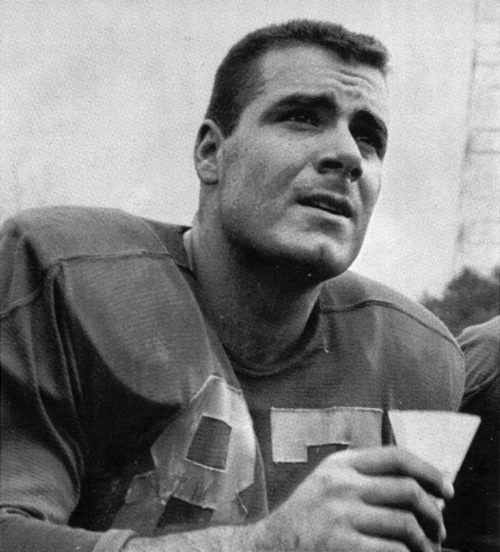
Joseph Frank Walton (December 15, 1935 – August 15, 2021) was an American professional football player and coach who retired after 20 years as the head coach and creator of the football program at Robert Morris University. Walton played eight seasons in the National Football League (NFL) as a pass catching tight end for the Redskins and Giants. He served as head coach of the New York Jets for seven seasons, guiding them to the playoffs twice. He also served as an assistant coach for the New York Giants, the Washington Redskins, the New York Jets and the Pittsburgh Steelers during a 20-year period.
Key Information


Early life and playing career
[edit]Walton was born in Beaver Falls, Pennsylvania, in 1935, the son of former Washington Redskins guard Frank "Tiger" Walton. Like his father, Walton was a football star at Beaver Falls High School; both also starred at the University of Pittsburgh before playing in the NFL for the Washington Redskins, followed by coaching the Redskins and Pittsburgh Steelers.[1]
After initially enrolling at Indiana University Bloomington, Walton attended the University of Pittsburgh on a football scholarship.[2][3] While there, Walton helped lead the Pittsburgh Panthers to the 1956 Sugar Bowl following the 1955 season and then to the 1956 Gator Bowl in his senior season. In 1955, his junior year Walton was selected an All-American. In 1956, he was named the co-captain of Pitt's team, was a unanimous selection as a first-team All-American and was named to the Academic All-American team.
Walton was selected in the second round with the 14th overall pick of the 1957 NFL draft by the Redskins and played with them from 1957 to 1960. In July 1961, he was involved in a three-team trade with the Redskins, Dallas Cowboys and New York Giants. The Giants received Walton and end Jim Podoley from the Redskins, the Redskins received Fred Dugan from the Cowboys and placekicker John Aveni, end Jerry Daniels, and defensive halfback Dave Whitsell from the Giants, and the Cowboys received placekicker Allen Green and a sixth round for the 1962 NFL draft from the Giants that the team later used to draft George Andrie.[4] [5] Walton played for the Giants from 1961 to 1963. He was placed on injured reserve due to shoulder and knee injures during the 1964 season. He announced his retirement as an active player on June 21, 1965.[6]
Walton scored three touchdowns catches as a TE in one game. He did so twice during the 1962 season: October 28, 1962 against Washington and December 16, 1962, against Dallas. Walton's record was tied on September 25, 2014, by Larry Donnell of the New York Giants. October 28, 1962, Walton also caught teammate quarterback Y. A. Tittle's single-game record-tying seventh touchdown pass.
Coaching career
[edit]NFL
[edit]Walton began his NFL coaching career as a scout for the New York Giants (1965–1968), then transitioned to wide receivers coach (1969–1973). To gain coaching experience from George Allen he moved on to the Redskins as running backs coach (1974–1977) then offensive coordinator from 1978 to 1980. Walton moved to the New York Jets and served as offensive coordinator there for the 1981 and 1982 seasons. His work as offensive coordinator led the Jets to hand over the head-coaching position to him on February 10, 1983, when he succeeded Walt Michaels whose retirement had been announced the previous day.[7] Walton served as the head coach of the New York Jets from 1983 to 1989 and his teams achieved a 53–57–1 record. He guided the Jets into the NFL postseason twice.
After the 1988 season, the Jets gave Walton a three-year extension deal. The 1989 season proved to be a nightmare for Walton and the Jets. They lost six of their first seven games of the season and never recovered on their way to a 4–12 finish (the worst record since 1980), with the last two home games being shutout losses. Fan discontent with the team led to chants of "Joe Must Go" that urged owner Leon Hess to fire him. On December 23, 1989 (three days after the final game), Walton and his staff was fired by Jets general manager Dick Steinberg, who had been hired to manage the team a week earlier.[8] He was replaced by Bruce Coslet.
Walton was recruited by head coach Chuck Noll in 1990 to serve as the offensive coordinator for the Pittsburgh Steelers. He served for two years until Chuck Noll retired after the 1991 season.[9] Walton's NFL protégés include Rich Kotite, Bud Carson, Joe Theismann, Fran Tarkenton, Norm Snead, Ken O'Brien and Richard Todd.
College
[edit]On July 27, 1993, Walton was named the head coach at Robert Morris University of its newly formed Colonials football team. He remained in this position until the conclusion of the 2013 season.
Walton was hired in 1993 to build the program from scratch. After posting 13 wins as an independent his first two years at the helm, Walton led the Colonials into NEC football in 1996 by winning the first of five consecutive conference championships. During the five-year run, Robert Morris posted a 39–13 overall record and 26–2 mark in league play, and recorded the only undefeated season in school history with a 10–0 mark in the 2000 campaign. The Colonials won back-to-back ECAC Bowls in 1996 and 1997, and were crowned NCAA I-AA non-scholarship national champions in both 1999 and 2000.
The Colonials would go on to win a sixth NEC title in 2010 and earn the first-ever FCS playoff bid for the conference. The winningest coach in NEC history, Walton retired with 114 career victories and a 74–47 record against conference opponents during his 20-year run. He was four times as NEC Coach of the Year (1996, 1997, 1999 and 2010), and was an Eddie Robinson Coach of the Year candidate in 2010.
Walton has also helped a fledgling program send three of its brightest stars to the National Football League (NFL). Inaugural running back Tim Hall (1994–95) was drafted by the Oakland Raiders in the sixth round (183rd player overall) of the 1996 NFL Draft. Hall played two years for the Oakland Raiders in 1996–97. Former offensive lineman Hank Fraley (1996–1999), a member of the NEC's first Hall of Fame induction class in 2010, spent 10 years in the NFL from 2000 to 2010 with the Philadelphia Eagles, the Cleveland Browns and the St. Louis Rams. Fraley has been Offensive Line coach for the Minnesota Vikings since 2015. Former defensive back Robb Butler played with the San Diego Chargers in 2004. Also to see time in NFL camps from Robert Morris under Walton include former wide receiver DeLonte Perkins (Green Bay Packers), former quarterback Tim Levcik (Miami Dolphins, Pittsburgh Steelers), AJ Dalton (Detroit Lions).
In 2005, Robert Morris University opened Joe Walton Stadium, the new home to the RMU Colonials. Walton's contract to remain the head coach at Robert Morris ran through 2013.[10] In January 2012, RMU announced that Walton would retire at the end of the 2013 season, which would mark his 20th year as Robert Morris Head Coach, and assistant head coach and former Steelers defensive lineman John Banaszak would replace Walton upon his retirement.[11]
Personal life and honors
[edit]After returning to the Pittsburgh area in 1990 to coach for the Steelers, Walton moved back to his hometown Beaver Falls with his late wife, Ginger, who died in September 2007 after 47 years of marriage. They have two daughters, Jodi and Stacy, and one son, Joe and six grandchildren.
Walton lived in Beaver Falls with his wife Patty Sheehan Walton, whom he married December 10, 2011.
Since retiring from coaching, Walton was inducted into the RMU Athletic Hall of Fame in November 2013. Joe Theismann emceed the dinner banquet honoring Walton. He was named to the Northeast Conference 2013-14 Hall of Fame class and was the 2014 Recipient of the Bob Prince Award presented to him by Steeler Owner Dan Rooney at the Art Rooney Award Dinner in Pittsburgh in April 2014. [12] Joe Walton was inducted into the Larry Bruno Foundation's Hall of Achievement in 2012.
He died on August 15, 2021, at age 85.[13]
Head coaching record
[edit]NFL
[edit]| Team | Year | Regular season | Postseason | |||||||
|---|---|---|---|---|---|---|---|---|---|---|
| Won | Lost | Ties | Win % | Finish | Won | Lost | Win % | Result | ||
| NYJ | 1983 | 7 | 9 | 0 | .438 | 5th in AFC East | - | - | - | |
| NYJ | 1984 | 7 | 9 | 0 | .438 | 3rd in AFC East | - | - | - | |
| NYJ | 1985 | 11 | 5 | 0 | .688 | 2nd in AFC East | 0 | 1 | .000 | Lost to the New England Patriots in AFC Wild-card Game |
| NYJ | 1986 | 10 | 6 | 0 | .625 | 2nd in AFC East | 1 | 1 | .500 | Lost to the Cleveland Browns in AFC Divisional Game |
| NYJ | 1987 | 6 | 9 | 0 | .400 | 5th in AFC East | - | - | - | |
| NYJ | 1988 | 8 | 7 | 1 | .533 | 4th in AFC East | - | - | - | |
| NYJ | 1989 | 4 | 12 | 0 | .250 | 5th in AFC East | - | - | - | |
| NYJ Total | 53 | 57 | 1 | .482 | 1 | 2 | .333 | |||
| Total | 53 | 57 | 1 | .482 | 1 | 2 | .333 | |||
College
[edit]| Year | Team | Overall | Conference | Standing | Bowl/playoffs | ||||
|---|---|---|---|---|---|---|---|---|---|
| Robert Morris Colonials (NCAA Division I-AA independent) (1994–1995) | |||||||||
| 1994 | Robert Morris | 7–1–1 | |||||||
| 1995 | Robert Morris | 6–4 | |||||||
| Robert Morris Colonials (Northeast Conference) (1996–2013) | |||||||||
| 1996 | Robert Morris | 9–2 | 3–1 | T–1st | W ECAC Bowl | ||||
| 1997 | Robert Morris | 8–3 | 4–0 | 1st | W ECAC Bowl | ||||
| 1998 | Robert Morris | 4–6 | 4–1 | T–1st | |||||
| 1999 | Robert Morris | 8–2 | 7–0 | 1st | |||||
| 2000 | Robert Morris | 10–0 | 8–0 | 1st | |||||
| 2001 | Robert Morris | 6–3 | 6–1 | 2nd | |||||
| 2002 | Robert Morris | 3–7 | 2–5 | T–6th | |||||
| 2003 | Robert Morris | 6–4 | 4–3 | T–3rd | |||||
| 2004 | Robert Morris | 6–5 | 3–4 | T–4th | |||||
| 2005 | Robert Morris | 2–8 | 1–6 | 8th | |||||
| 2006 | Robert Morris | 7–4 | 5–2 | T–2nd | |||||
| 2007 | Robert Morris | 4–6 | 3–3 | T–3rd | |||||
| 2008 | Robert Morris | 5–6 | 4–3 | T–3rd | |||||
| 2009 | Robert Morris | 5–6 | 5–3 | T–3rd | |||||
| 2010 | Robert Morris | 8–3 | 7–1 | T–1st | L NCAA Division I First Round | ||||
| 2011 | Robert Morris | 2–9 | 2–6 | 8th | |||||
| 2012 | Robert Morris | 4–7 | 3–5 | T–6th | |||||
| 2013 | Robert Morris | 5–6 | 3–3 | 3rd | |||||
| Robert Morris: | 115–92–1 | 74–47 | |||||||
| Total: | 115–92–1 | ||||||||
| National championship Conference title Conference division title or championship game berth | |||||||||
References
[edit]- ^ "Frank "Tiger" Walton". Beaver County Sports Hall of Fame. Retrieved June 27, 2012.
- ^ "Tiger Walton's Son Enrolls at Indiana". Pittsburgh Post-Gazette. July 30, 1953. Retrieved June 27, 2021 – via Newspapers.com.
- ^ Gordon, Dick (September 30, 1954). "In '33 It Was Frank Walton; Now Son Joe Faces Gophers". The Minneapolis Star. Retrieved June 27, 2021 – via Newspapers.com.
- ^ "Giants Land Redskin Ends". The Tuscaloosa News. July 6, 1961. p. 8. Retrieved October 18, 2015.
- ^ "Giants, Cowboys, Redskins In Deal". The Washington Observer. July 7, 1961. p. 17. Retrieved October 18, 2015.
- ^ "Joe Walton Retires As Giants Gridman," The Associated Press (AP), Tuesday, June 22, 1965. Retrieved February 24, 2023.
- ^ Durso, Joseph. "Walton to Call Plays as Jets' Coach," The New York Times, Friday, February 11, 1983. Retrieved November 20, 2020
- ^ "Jets fire Joe Walton - UPI Archives".
- ^ Walton, Coach Joe. "Joe Walton's RMU Bio". Robert Morris University. Sports Information Director (Athletics).
- ^ Emert, Rich (September 27, 2011). "Robert Morris football coach Walton to step down after 2013 season". Pittsburgh Post-Gazette. Retrieved September 28, 2011.
- ^ "Steeler Banaszak will replace RMU's Walton". Pittsburgh Post-Gazette. September 27, 2011. Retrieved September 14, 2012.
- ^ Walton, Joe. "NEC Hall of Fame". www.Northeastconference.org. Retrieved May 20, 2019.
- ^ "Longtime Robert Morris coach Joe Walton dies at 85". Pittsburgh Tribune-Review. August 15, 2021. Retrieved August 15, 2021.
External links
[edit]- Career statistics from NFL.com · Pro Football Reference
| International | |
|---|---|
| National | |

Joe Walton
View on GrokipediaEarly life and playing career
Early life and education
Joseph Frank Walton was born on December 15, 1935, in Beaver Falls, Pennsylvania, to Frank "Tiger" Walton and Ida Hendrickson Walton.[9] His father, a former NFL guard, had played professionally for the Portsmouth Spartans in 1933, the Chicago Cardinals that same year, and later for the Boston Redskins in 1934 and the Washington Redskins in 1944 after a hiatus to coach.[10] Growing up in a football-centric household in western Pennsylvania's steel country, Walton was immersed in the sport from an early age, with his father's legacy providing a strong familial influence on his athletic pursuits.[11] Walton attended Beaver Falls High School, where he excelled as a multi-position player, lining up at end, halfback, and fullback during his tenure from 1949 to 1953.[11] He earned All-Western Pennsylvania Interscholastic Athletic League (WPIAL) and All-State honors as a senior, establishing himself as one of the region's top prospects and a standout in local football circles.[12] His high school performance, marked by versatility and skill, drew attention from college recruiters and solidified his reputation as a football star in Beaver Falls.[9] Walton received a football scholarship to the University of Pittsburgh, where he played as an end for the Pittsburgh Panthers from 1954 to 1956.[13] In his junior year of 1955, he was selected as a first-team All-American, helping lead the team to a 7-4 record and a berth in the Sugar Bowl, where they faced Georgia Tech.[13] As a senior in 1956, Walton served as co-captain, earned unanimous first-team All-American honors, and was also named to the Academic All-American team; that season, he recorded 36 receptions for 541 yards and 14 touchdowns over his college career, including a record-breaking performance in touchdown catches during the regular season.[13][14] One notable game came against Syracuse on September 29, 1956, where a 19-yard touchdown reception from him contributed to an early lead in Pitt's 14-7 victory. His college success culminated in being drafted by the Washington Redskins in the second round of the 1957 NFL Draft.[13]Professional playing career
Joe Walton was selected by the Washington Redskins in the second round (21st overall) of the 1957 NFL Draft out of the University of Pittsburgh.[15] He began his professional career as a tight end with the Redskins, appearing in 45 games from 1957 to 1960 and establishing himself as a reliable target in their passing offense. Over those four seasons, Walton recorded 83 receptions for 1,307 yards and 11 touchdowns, with standout performances including a career-high 532 receiving yards and five touchdowns in 1958, when he led the team in receiving.[1] In 1960, he contributed 27 receptions for 401 yards and three touchdowns, ranking second on the team in receiving yards as the Redskins struggled to a 1-9-2 record.[1] In July 1961, Walton was traded to the New York Giants in a three-team deal involving the Redskins and Dallas Cowboys, alongside end Jim Podoley, in exchange for end Gene Cronin, a draft choice, and other considerations.[16] With the Giants, he played 37 games from 1961 to 1963, thriving as a key component of quarterback Y.A. Tittle's high-powered offense that led the NFL in scoring during that span. Walton amassed 95 receptions for 1,321 yards and 17 touchdowns over those years, highlighted by a league-leading nine receiving touchdowns in 1962, when he posted 33 catches for 406 yards.[1] That season, he achieved a rare feat by scoring three touchdowns in a single game on two occasions—October 28 against the Redskins and December 16 against the Cowboys—both in victories that helped propel the Giants to the NFL Championship Game.[7] Walton's overall NFL career spanned seven seasons and 82 games, culminating in 178 receptions for 2,628 yards and 28 touchdowns, solidifying his reputation as a productive tight end during the league's early passing eras.[1] He retired from playing on June 21, 1965, at age 29 due to accumulating injuries, transitioning immediately to a scouting role with the Giants.[17]Coaching career
NFL assistant and head coaching roles
Walton began his NFL career in coaching as a scout for the New York Giants from 1965 to 1968, following his retirement as a player with the team.[17] He transitioned to on-field coaching in 1969 as the Giants' wide receivers coach, a role he held through 1970, before being promoted to offensive coordinator from 1971 to 1973.[18] During his time coaching the Giants' receiving corps, the team featured emerging talents like running back Ron Johnson, who recorded 48 receptions for 487 yards in 1970 while contributing to the offense's development.[19] In 1974, Walton joined the Washington Redskins as running backs coach, serving in that position through 1977.[18] He was elevated to offensive coordinator for the 1978 through 1980 seasons, where his schemes helped quarterback Joe Theismann's growth and emphasized creative play-calling that adapted to defensive pressures.[20] Walton moved to the New York Jets in 1981 as offensive coordinator, a position he held through 1982, where he implemented schemes focused on balanced attacks and quarterback protection to support young talent.[18] His success led to his promotion to head coach in 1983, a role he maintained until 1989, compiling a regular-season record of 53–57–1.[18] Under Walton, the Jets reached the playoffs in 1985 with an 11–5 record, though they lost in the wild-card round to the New England Patriots, 26–14; they returned in 1986 at 10–6, defeating the Kansas City Chiefs 35–15 in the wild-card game before falling to the Cleveland Browns 23–20 in the divisional round, for an overall postseason mark of 1–2.[21][22] Walton was fired by the Jets after a 4–12 finish in 1989, concluding his head coaching tenure amid organizational changes.[23] He returned to a coordinator role as offensive coordinator for the Pittsburgh Steelers from 1990 to 1991, where he continued to advocate for tight end involvement in the passing game.[18] Throughout his NFL coaching career, Walton was recognized for offensive innovations, including multiple tight end formations that created mismatches and an emphasis on passing efficiency to maximize yards after catch.[2][20]College head coaching role
On July 27, 1993, Joe Walton was hired as the inaugural head coach of the Robert Morris University football program, tasked with establishing the Colonials from the ground up as the university launched its first varsity team.[24] Drawing on his extensive NFL background, Walton assembled a staff, recruited players, and oversaw the conversion of facilities, including the John Jay Center into football operations headquarters.[25] The program debuted in the 1994 season at the NCAA Division I-AA level, quickly building regional competitiveness through disciplined play and innovative strategies adapted from professional ranks.[3] Walton's tenure spanned 20 seasons from 1994 to 2013, during which he compiled an overall record of 114–92–1 (.553) and a Northeast Conference (NEC) mark of 74–47, establishing RMU as a consistent contender in FCS football.[26] His teams captured six NEC championships—shared titles in 1996, 1998, and 2010, and outright victories in 1997, 1999, and 2000—including perfect 10–0 regular seasons in 1999 and 2000 that earned national mid-major titles from Don Hansen's Gazette.[24] Key milestones under Walton included the program's first NEC title in 1996, back-to-back ECAC Bowl wins in 1996 and 1997, his 100th career victory in 2010 alongside the Colonials' inaugural NCAA FCS playoff appearance, and the opening of Joe Walton Stadium in 2005, named in his honor.[27] He was named NEC Coach of the Year four times (1996, 1997, 1999, 2010) for these achievements.[3] Walton's recruiting prowess brought in talent from across the nation, fostering a pipeline of skilled athletes who elevated the program's profile; a prime example was running back Tim Hall, whom he developed into an All-NEC performer drafted by the Oakland Raiders in 1996.[24] This focus on player development contributed to sustained success, with RMU becoming the winningest program in NEC history during his era.[26] In November 2013, Walton announced his retirement effective after the season, concluding two decades of leadership that transformed a startup initiative into a regional powerhouse.[24]Personal life and death
Family and marriages
Joe Walton was married to his first wife, Ginger Walton, for 47 years until her death in September 2007.[3][28] The couple had three children: daughters Jodi and Stacy, and son Joe Jr.[3][13] From these children, Walton had six grandchildren.[3][13] In 2011, Walton remarried Patty Sheehan Walton at Riverview United Methodist Church in Beaver Falls, Pennsylvania.[9][28] Walton maintained strong ties to the Beaver Falls community, where he and Ginger had returned to reside in 1990 after his early coaching career.[3] The family was deeply rooted in the area, reflecting Walton's lifelong connection to his hometown.[9]Death and later years
After retiring as head coach of the Robert Morris University Colonials football team at the conclusion of the 2013 season, Walton served as a special assistant to the university's athletic director, continuing his involvement with the program he had founded two decades earlier.[24] Walton spent his later years in Englewood, Florida, a relocation from his longtime base in Pennsylvania where he had coached at Robert Morris near his Beaver Falls hometown.[18][8] He died on August 15, 2021, in Englewood, Florida, at the age of 85, from complications of Alzheimer's disease.[29][4]Head coaching record
New York Jets
Joe Walton served as head coach of the New York Jets from 1983 to 1989, following his promotion from offensive coordinator in 1982.[2] During his tenure, the Jets compiled a regular season record of 53 wins, 57 losses, and 1 tie, yielding a .482 winning percentage.[18] The team qualified for the playoffs twice, posting a postseason record of 1 win and 2 losses (.333 winning percentage).[30] Walton's leadership marked a period of offensive enhancement for the Jets, highlighted by their 1985 performance when the team ranked fourth in the NFL in total offensive yards (5,896).[21] In 1986, the offense ranked 11th in points scored (364), supporting a 10-6 regular season finish.[22] The following table summarizes Walton's year-by-year results with the Jets:| Year | Wins-Losses-Ties | Division Finish (AFC East) | Notable Events |
|---|---|---|---|
| 1983 | 7-9-0 | 5th | No playoffs |
| 1984 | 7-9-0 | 3rd | No playoffs |
| 1985 | 11-5-0 | 2nd | Lost AFC Wild Card to New England Patriots, 14-26[30] |
| 1986 | 10-6-0 | 2nd | Won AFC Wild Card vs. Kansas City Chiefs, 17-10; lost AFC Divisional to Cleveland Browns, 20-23 (2OT)[30] |
| 1987 | 6-9-0 | 5th | No playoffs |
| 1988 | 8-7-1 | 4th | No playoffs |
| 1989 | 4-12-0 | 5th | No playoffs |
Robert Morris Colonials
Joe Walton served as the inaugural head coach of the Robert Morris Colonials football team from 1994 to 2013, compiling an overall record of 114 wins, 92 losses, and 1 tie, for a .553 winning percentage.[3] In the Northeast Conference (NEC), his teams achieved 74 wins and 47 losses, reflecting sustained dominance in league play.[31] Walton's tenure emphasized conference success, with six NEC championships: shared titles in 1996 and 1998, outright victories in 1997, 1999, and 2000, and a shared title in 2010.[31][24] These accomplishments included a streak of five consecutive NEC titles from 1996 to 2000, the longest in conference history at the time, and a perfect 10-0 season in 2000 that earned a mid-major national championship recognition from Don Hansen's National Weekly Football Gazette.[31][32] Note: Records include all games (regular season and postseason). The following table summarizes Walton's year-by-year record at Robert Morris, highlighting championship seasons (conference records omitted due to verification issues with individual years; see total above):| Year | Overall Record | Notes |
|---|---|---|
| 1994 | 7–1–1 | Inaugural season; no conference affiliation |
| 1995 | 6–4 | Independent |
| 1996 | 9–2 | NEC co-champion; ECAC Bowl win |
| 1997 | 8–3 | NEC champion; ECAC Bowl win |
| 1998 | 4–6 | NEC co-champion |
| 1999 | 8–2 | NEC champion; mid-major national champion |
| 2000 | 10–0 | NEC champion; undefeated regular season; mid-major national champion |
| 2001 | 6–3 | - |
| 2002 | 3–7 | - |
| 2003 | 6–4 | - |
| 2004 | 6–5 | - |
| 2005 | 2–8 | - |
| 2006 | 7–4 | - |
| 2007 | 4–6 | - |
| 2008 | 5–6 | - |
| 2009 | 5–6 | - |
| 2010 | 8–3 | NEC co-champion; NCAA FCS playoff appearance |
| 2011 | 2–9 | - |
| 2012 | 4–7 | - |
| 2013 | 5–6 | - |